As orthopedic distributors, hospital procurement managers, and OEM brand directors evaluate next-generation spine implants, the global shift from solid PEEK and machined metal cages to porous titanium additive implants is accelerating. Ortix Medical Devices Co., Ltd. engineered this definitive guide to address critical procurement questions regarding mechanical stability, biomimetic porosity, cost structures, and global supply chain strategies for 3D Printed Spinal Fusion Cage systems.
60,000 m² Facility450+ Precision Machines & SLM Printers
Global DistributionFull Registration Dossier Support
Biomechanical Paradigm Shift
Why 3D Printed Titanium Cages Are Replacing Traditional PEEK & Solid Metal
In modern spinal fusion surgery (ACDF, TLIF, PLIF, ALIF, and LLIF), interbody cages serve dual purposes: maintaining disc height and establishing bony bridge stability. For two decades, PEEK (Polyetheretherketone) dominated the market due to its radiolucency. However, clinical evidence highlights PEEK's hydrophobic nature, which promotes fibrous encapsulation and increases non-union risks.
Performance Criteria
3D Printed Porous Titanium (Ortix Medical)
Traditional PEEK Cages
Machined Smooth Titanium Cages
Bone Ingrowth (Osteoconduction)
Superior: 3D porous lattice (600–700 µm) supports vascularization & bony bony architecture throughout the implant.
Poor: Bio-inert & hydrophobic; induces fibrous encapsulation rather than direct bone contact.
Moderate: Limited to surface roughness; no internal bone growth capability.
Low (~3.6 GPa): Similar to bone, but lacks osteoconductive scaffold benefits.
High (~110 GPa): High risk of stress shielding, local bone reabsorption, and implant subsidence.
Primary Mechanical Interlocking
High: Rough, high-friction 3D micro-textured surface prevents early implant migration.
Low: Requires machined teeth; smooth PEEK surface is prone to micro-sliding.
Moderate: Relies on surface serrations; lacks continuous cellular grip.
Radiographic Assessment
Optimized: Controlled lattice density minimizes artifact shadow under CT and MRI scans.
Radiolucent: Requires tantalum marker pins to visualize exact placement under X-ray.
Opaque: Significant metal artifact scatter hampers clear bony bridge evaluation.
Long-term Fusion Success
Accelerated solid bony bridging; reduced revision surgery rate in clinical studies.
Higher risk of pseudoarthrosis and delayed fusion in complex patient anatomies.
Good mechanical strength but elevated risk of vertebral endplate subsidence.
65-75%Controlled Porosity
Additive TechTi-6Al-4V ELI Sintering
Porous Titanium Architecture
The Science Behind Ortix Medical 3D Printed Spinal Fusion Cages
At Ortix Medical Devices Co., Ltd., our engineering team utilizes Selective Laser Melting (SLM) technology to manufacture titanium interbody fusion devices that blend macro-structural stability with micro-structural biomimicry.
Standard machined titanium cannot achieve internal porosity. Through advanced laser additive manufacturing, we engineer continuous 3D open-pore matrix structures with a controlled pore size between 500 and 700 microns and an overall porosity of 65% to 75%. Research demonstrates that this specific geometric range provides optimal capillary action for blood plasma absorption, osteoblast proliferation, and nutrient transport throughout the entire volume of the cage.
Macro-graft windows for supplementary bone graft packing
Anatomically contoured endplates to match vertebral lordosis
Smooth insertion nose to protect neurological structures
Validated under 5+ million dynamic load fatigue cycles
Ortix Medical 3D Printed Spinal Fusion Cage Recommended Series
Every clinical technique requires tailored interbody footprints, lordotic options, and targeted instrumentation. Ortix Medical Devices Co., Ltd. manufactures a full catalog of 3D printed cages covering cervical and thoracolumbar spine procedures.
3D Printed Cervical Interbody Cage (ACDF)
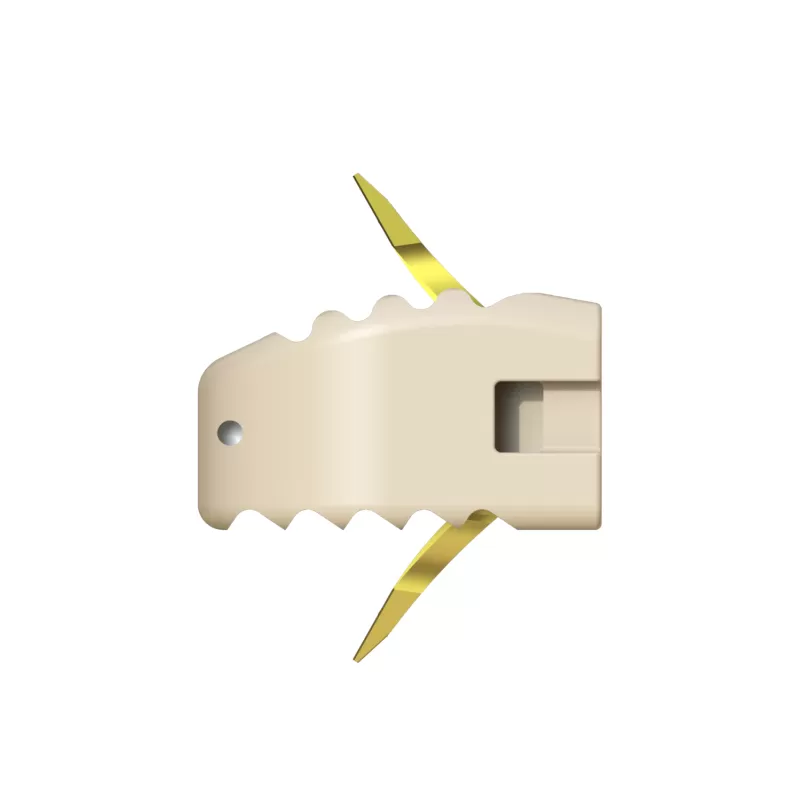
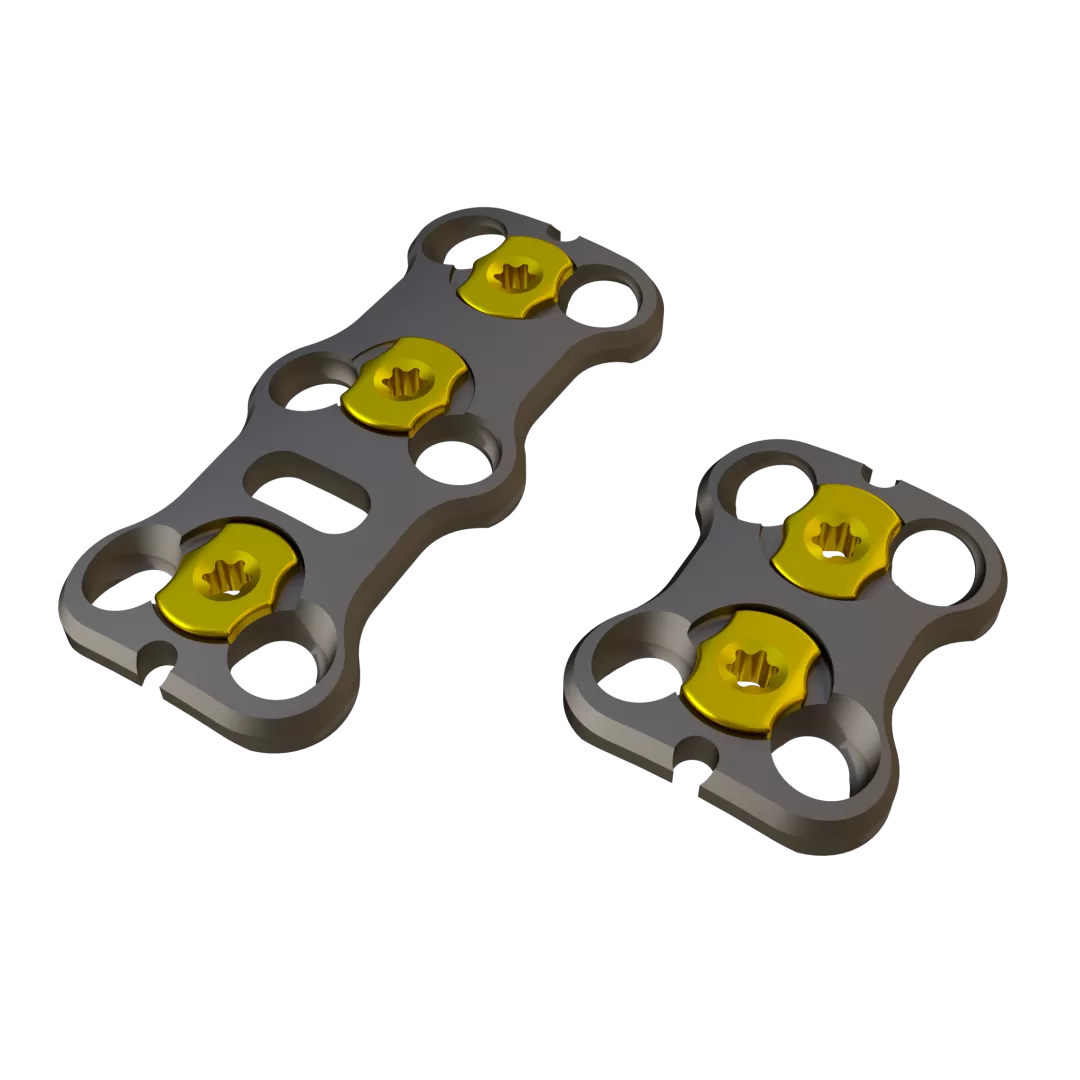
Engineered for Anterior Cervical Discectomy and Fusion. Features anatomical endplate curvature, lordotic angles (0°, 4°, 8°), integrated anti-expulsion serrations, and central graft cavity. Works seamlessly with our Anterior Cervical Plate Systems.
Designed for Transforaminal and Posterior Lumbar Interbody Fusion. Bulleted lead edge facilitates smooth distraction through tight disc spaces. Porous lattice contact pads maximize endplate coverage and immediate friction stability.
Large-footprint interbody implants for anterior and direct lateral approaches. Maximizes contact on the strong peripheral cortical rim of lumbar vertebrae, significantly lowering subsidence risks in multi-level reconstruction.
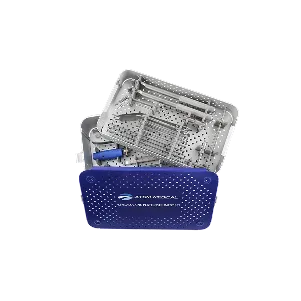
Standardized, color-coded trial sets, trial rasps, inserters, and quick-connect drivers manufactured from German stainless steel. Ensures exact tactile feedback and surgical accuracy during cage placement.
Global Procurement Trends & Development Direction (2025–2032)
Understanding shifting market dynamics helps medical device importers and distributor partners make strategic catalog decisions. Based on global health tender data and surgeon feedback, key development trends include:
1. Rapid Replacement of PEEK in Hospital Tenders
Public and private hospital systems in Europe, North America, and Latin America are increasingly specifying porous metal implants in tender criteria. Importers offering 3D printed titanium cages gain immediate competitive scoring over legacy PEEK suppliers.
2. Hybrid Expandable + 3D Porous Structures
The fusion of internal mechanical expansion mechanisms with additive porous endplates represents the fastest-growing surgical segment. This combination allows insertion through minimal incision sizes while delivering maximum post-expansion disc height restoration.
3. Cost Parity Through Mass Additive Production
Industrial metal 3D printers, combined with optimized post-processing and heat treatment workflows, have lowered per-unit manufacturing costs. Ortix Medical Devices Co., Ltd. passes these scale efficiencies to distributors, delivering high-tier biomimetic cages at highly accessible price points.
4. Streamlined Regulatory Dossiers & OEM Labeling
Regulatory bodies require rigorous validation for additive products (powder removal verification, chemical cleanliness, fatigue testing). Procurement teams favor turnkey OEM partners like Ortix Medical who provide complete technical files and FDA/ISO documentation.
Expand Your Spine Portfolio with Ortix Medical 3D Printed Cages
Whether you require standard catalog replenishment, mixed-SKU low MOQ batches, or private-label OEM manufacturing for your local market, our export specialists provide fast quotations and technical support.
Why Global Importers Partner with Ortix Medical Devices Co., Ltd.
Sourcing medical devices requires absolute confidence in product quality, lot-to-lot consistency, regulatory compliance, and post-sales delivery reliability.
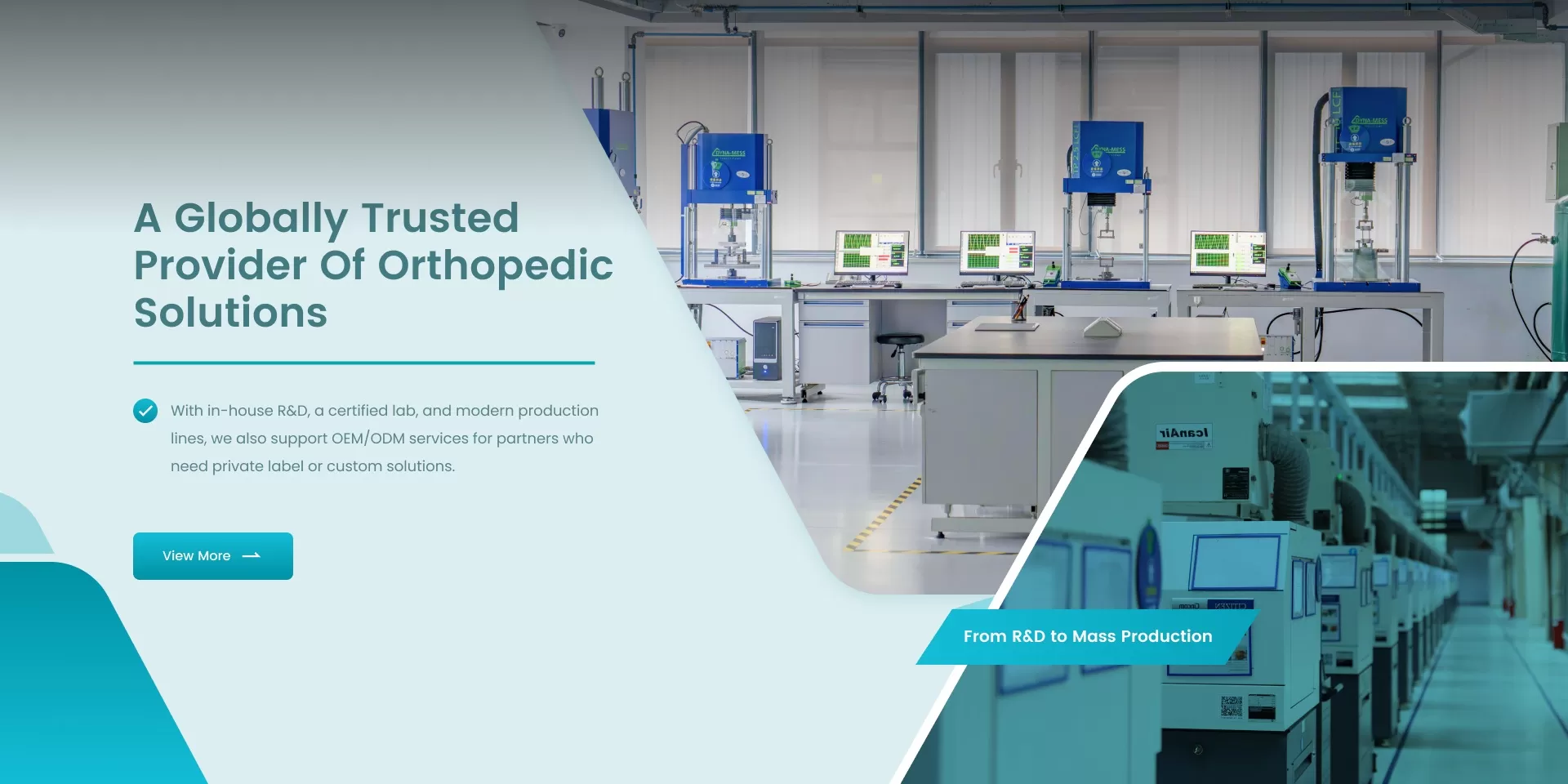
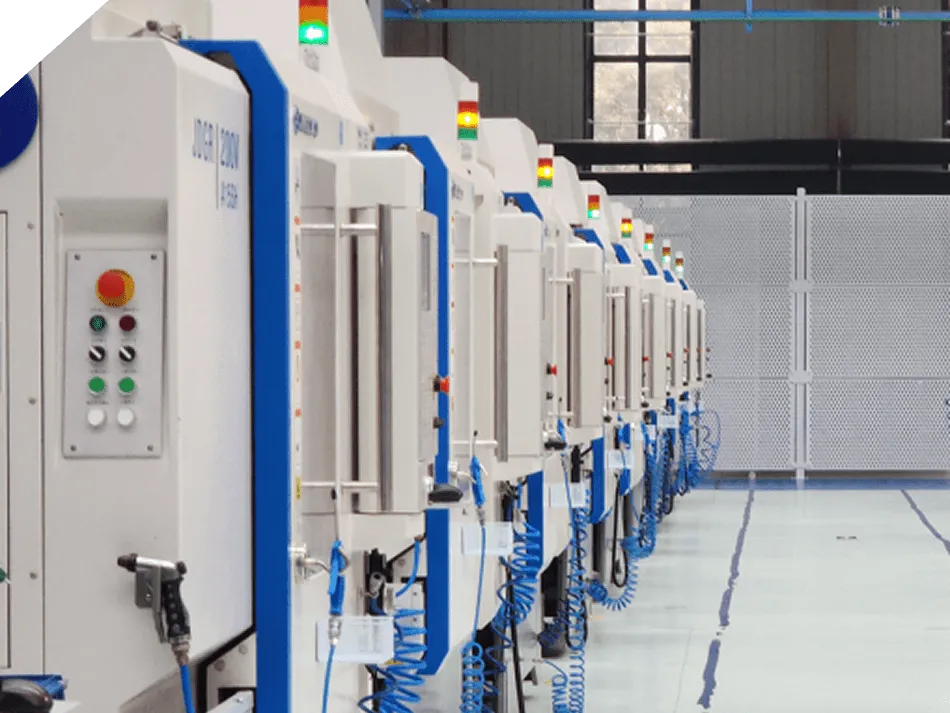
Ortix Medical Devices Co., Ltd. operates a 60,000 m² state-of-the-art manufacturing facility equipped with over 450 precision CNC machining units and industrial additive manufacturing systems. Supported by an in-house R&D staff of over 70 qualified engineers and a dedicated mechanical test laboratory, we maintain complete control over raw material verification, laser sintering, thermal stress relief, ultrasonic cleaning, and cleanroom packaging.
Strict 100% inspection for dimensional tolerance & powder clearance
ISO 13485 certified quality management & FDA establishment registration
Low MOQ flexibility for distributor market entry
Complete matching instrument kits for every implant system
Why are global procurement teams shifting from PEEK cages to 3D printed titanium spinal fusion cages?
3D printed titanium cages feature interconnected porous structures (60-70% porosity with 500-700 micron pore sizes) that mimic human trabecular bone. Unlike hydrophobic PEEK, which induces fibrous encapsulation and risks non-union, porous titanium supports direct osteoblast adhesion, osteoconduction, and early mechanical interlocking, significantly accelerating solid fusion rates.
What mechanical and quality standards do Ortix Medical 3D printed cages meet?
Our 3D printed spinal fusion cages are manufactured using Ti-6Al-4V ELI powder under ISO 13485 quality systems. They undergo rigorous mechanical validation according to ASTM F2077 (static/dynamic compression and shear testing) and ASTM F2267 (subsidence testing), exceeding 5 million dynamic loading cycles without failure.
Can Ortix Medical Devices Co., Ltd. provide OEM/ODM private labeling for 3D printed spinal cages?
Yes. Ortix Medical Devices Co., Ltd. offers full OEM/ODM services including custom lattice geometry adaptation, proprietary footprint sizing, high-precision laser marking, private label sterile blister packaging, and complete technical dossier support for local regulatory registration.
What is the minimum order quantity (MOQ) and lead time for evaluation samples?
We offer low MOQ starting options and mixed-SKU ordering, enabling hospital procurement departments and orthopedic distributors to evaluate complete cervical and lumbar cage portfolios alongside matching surgical trial instruments before committing to large contract volumes.
How does additive manufacturing prevent implant subsidence in osteoporotic bone?
The elastic modulus of our 3D printed porous titanium structure (approx. 1.5–3.0 GPa) closely matches cancellous bone, eliminating stress shielding. Combined with anatomically contoured endplates and anti-migration surface micro-textures, force distribution is optimized across vertebral endplates to minimize subsidence risk.