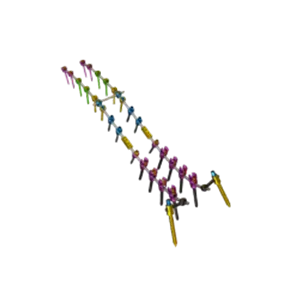
Standard Polyaxial Pedicle Screws
Featuring a 50-degree polyaxial head angle to simplify rod insertion across tortuous pedicle trajectories in multi-segment fusion.

Engineered for spinal trauma, degenerative disc diseases, spondylolisthesis, and complex spinal deformity correction. Ortix Medical Devices Co., Ltd. provides ISO 13485 and FDA-registered posterior spinal fixation systems designed to optimize fusion rates while offering flexible low-MOQ sourcing models for medical device distributors worldwide.
The Thoracolumbar Pedicle Screw System represents the benchmark in posterior spinal instrumentation, delivering three-dimensional rigid stabilization across the thoracic and lumbar segments (T1–L5/S1). Modern spine surgery demands implants that balance structural stiffness with anatomical contouring flexibility to promote early patient mobilization and secure long-term interbody fusion.
At Ortix Medical Devices Co., Ltd., our engineering framework integrates advanced biomechanical modeling with precision CNC machining. Manufactured strictly from Medical Grade 5 Titanium Alloy (Ti-6Al-4V ELI / ASTM F136), our pedicle screws exhibit exceptional fatigue resistance under dynamic physiological loading, preventing early implant failure or rod pull-out under multi-directional bending and torsional shear stress.
| Technical Feature | Standard Specifications | Clinical & Commercial Benefit |
|---|---|---|
| Material Composition | Titanium Alloy Ti-6Al-4V ELI (ASTM F136 / ISO 5832-3) | High strength-to-weight ratio, zero corrosion, superior MRI/CT compatibility. |
| Screw Diameters | Ø4.5mm, Ø5.0mm, Ø5.5mm, Ø6.0mm, Ø6.5mm, Ø7.0mm, Ø7.5mm | Accommodates thoracic pedicle anatomy down to L5/S1 sacral anchor placement. |
| Screw Lengths | 30mm to 55mm (in 5mm incremental steps) | Precise bicortical or unicortical bone engagement tailored to individual patient anatomy. |
| Construct Diameters | Ø5.5mm Rod System / Ø6.0mm Heavy-Duty Rod System | Modular versatility for standard degenerative lumbar cases up to complex deformity constructs. |
| Screw Types | Monoaxial, Polyaxial, Cannulated MIS, Cement-Augmented Fenestrated | Complete coverage of open surgery, trauma, osteoporotic spine, and percutaneous procedures. |
| Polyaxial Articulation | 50° Total Conical Angulation (25° in all directions) | Facilitates easy rod seating without excessive rod contouring or pedicle strain. |
| Locking Mechanism | Reverse Buttress Thread Set Screw with Anti-Splay Design | Prevents tulip splaying and eliminates cross-threading under final torque application. |
One of the primary failure modes in spinal fixation is screw loosening at the bone-implant interface. To overcome this challenge, Ortix Medical Devices Co., Ltd. engineered a continuous dual-lead thread profile that effectively doubles insertion speed while maximizing cancellous bone purchase. The tapered root geometry compresses adjacent bone tissue during insertion, generating high initial insertion torque and superior pull-out strength exceeding 1,800 N in standard dense bone models.
Furthermore, our polyaxial screw heads feature a proprietary friction-fit tulip mechanism. The screw head maintains its spatial orientation once positioned by the surgeon, reducing micro-motion during rod insertion and preventing unwanted head flop—a crucial advantage during complex multi-level reduction maneuvers.
To provide global distributors with a competitive edge, Ortix Medical Devices Co., Ltd. offers a completely integrated posterior spine platform. Every implant variant is matched to modular surgical instrument trays designed for seamless intraoperative performance.
Featuring a 50-degree polyaxial head angle to simplify rod insertion across tortuous pedicle trajectories in multi-segment fusion.
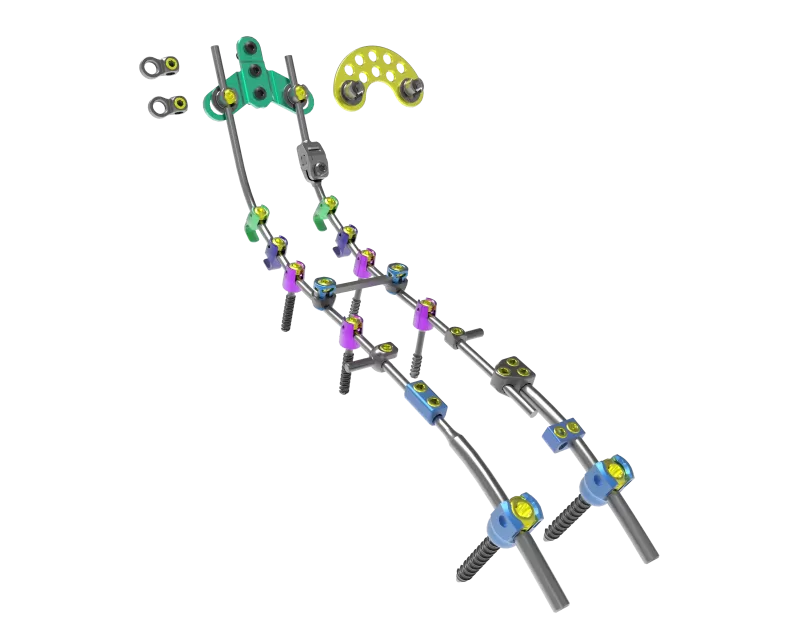
Delivers direct sagittal plane translation and rigid leverage for spondylolisthesis reduction and scoliosis correction.
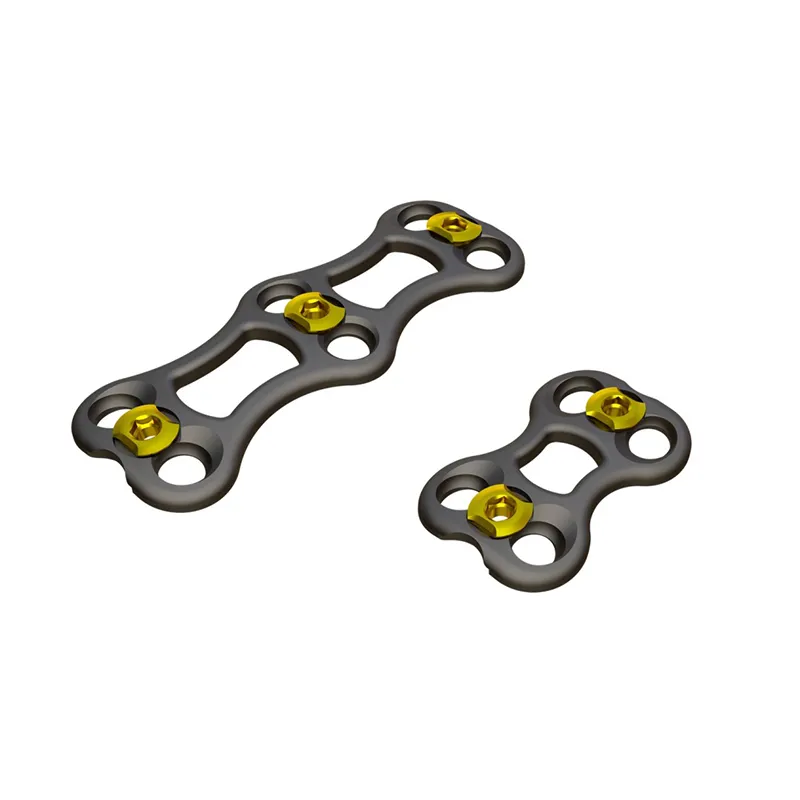
Equipped with distal cannulation ports for PMMA bone cement augmentation, specifically for osteoporotic spine stabilization.
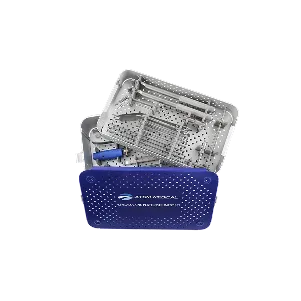
Ergonomic, silicone-handled drivers, rod benders, reduction wrenches, and quick-connect taps crafted from German stainless steel.
To guarantee complete torsional stability of long-segment fixation constructs, our system features adjustable transverse cross-link connectors (flat and arched profiles) alongside pre-bent titanium rods. The cross-links connect parallel 5.5mm or 6.0mm rods, significantly reducing rotational shear strain across the constructs during lateral bending and axial rotation.
Key market shifts driving B2B purchasing decisions for hospital tenders, surgical centers, and regional distributors over the next decade.

Hospital procurement committees are rapidly transitioning away from buying fragmented spinal components. Distributors now demand single-source suppliers capable of delivering pedicle screws, PEEK/Titanium fusion cages, anterior plates, and reusable instrument trays under one consolidated shipping bill to optimize inventory turns and freight costs.

Emerging medical markets in Latin America, Southeast Asia, and the Middle East are building domestic implant brands. Global procurement leaders favor manufacturers like Ortix Medical Devices Co., Ltd. that offer full OEM/ODM customization, private laser marking, localized IFU translation, and customized surgical tray layouts.

Carrying massive deadstock is no longer viable for regional distributors. Sourcing models have shifted toward mixed-SKU small batch orders. Sourcing partners require low MOQ terms to rapidly order specific screw lengths or replacement instrument units without tying up capital in slow-moving inventory sizes.

Regulatory barriers are heightening globally under EU MDR and national health authorities. Sourcing managers actively partner with suppliers providing comprehensive technical files, raw material batch certificates, mechanical test reports (ASTM F1717), and full ISO 13485 quality system documentation upfront.
Spinal surgery is undergoing a major transformation toward minimally invasive techniques, digital surgical navigation, and biologic-enhancing surfaces.
As surgical practices evolve, thoracolumbar pedicle screw systems must continuously adapt to modern clinical workflows. Key technological advancements pioneered across the industry include:
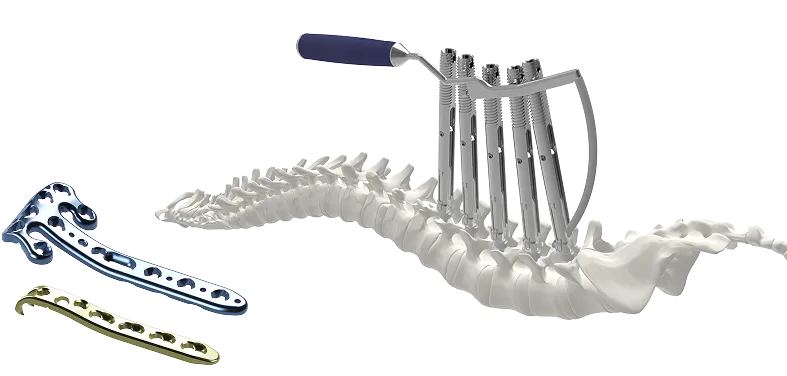
Built upon robust manufacturing infrastructure, strict quality control, and decades of orthopedic expertise.
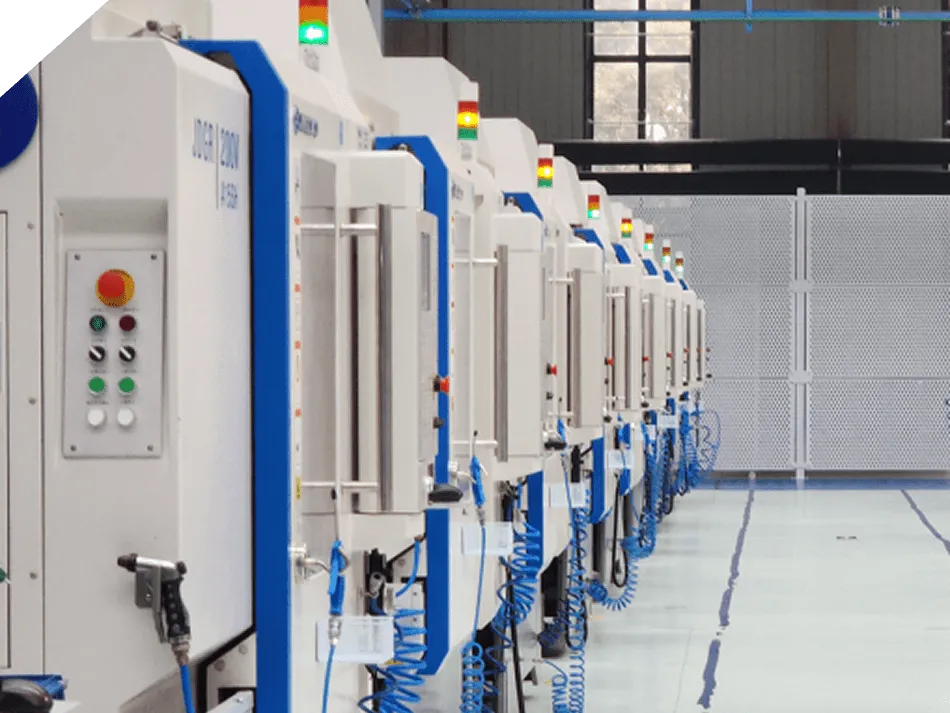

Ortix Medical Devices Co., Ltd. operates a state-of-the-art 60,000 m² production complex equipped with over 450 advanced CNC machining centers, Citizen multi-axis Swiss lathes, and high-precision thread milling systems. With a daily capacity exceeding 20,000 units, we ensure fast lead times and predictable batch consistency for large-scale tender orders and routine distributor replenishments.
Our quality assurance framework guarantees strict lot-to-lot compliance:


R&D Engineers


Production Facility


Unit Production Capacity


Global Sales & Regulatory Support
Detailed technical, regulatory, and procurement answers tailored for medical device importers, tender specialists, and hospital distributors.
Ortix Medical Devices Co., Ltd. uses premium Grade 5 Titanium Alloy (Ti-6Al-4V ELI conforming to ASTM F136 and ISO 5832-3). This alloy delivers high tensile strength, fatigue resistance, and biocompatibility while minimizing MRI artifacts during post-operative patient imaging. Surgical instruments are manufactured from surgical stainless steel and anodized aluminum.
Our standard thoracolumbar system features screw diameters from 4.5mm to 7.5mm in 0.5mm increments, with lengths ranging from 30mm to 55mm. We provide options for both 5.5mm and 6.0mm rod constructs, available in polyaxial, monoaxial, cannulated percutaneous MIS, and cement-augmented fenestrated styles.
Yes. We provide complete regulatory documentation packages including ASTM F1717 / ISO 12189 static compression bending, dynamic fatigue, axial pull-out, and torsional mechanical test reports. ISO 13485 certificates, material mill test certificates, and biocompatibility data are also supplied to support fast product registration in your target country.
Yes, we specialize in supporting growing distributors with flexible sourcing terms. You can combine pedicle screws, cross-links, rods, and instrument sets in low-volume trial orders. Our OEM services include custom laser marking of your brand logo, customized part numbering, color-coded aluminum sterilization trays, and tailored packaging IFUs.
Our fenestrated pedicle screws feature dual side discharge ports positioned near the tip. During insertion into osteoporotic bone, PMMA bone cement is injected via a cannulated delivery needle, anchoring the screw into the compromised trabecular bone structure. This increases pull-out strength by up to 250% compared to non-cemented screws in osteoporotic models.
Standard catalog pedicle screw components and instrument kits typically ship within 14 to 21 business days from our 60,000 m² factory. OEM private-label production schedules generally range from 30 to 45 days, depending on custom etching, tray design, and packaging approval steps.
Partner with Ortix Medical Devices Co., Ltd. for factory-direct pricing, certified quality, low MOQ flexibility, and complete technical support for your hospital tenders and distributor network.