Low Profile Cranial Plating System: Global Sourcing Guide & Technical Specifications
As neurosurgical procedures move toward minimally invasive craniotomy closure and aesthetic reconstruction, international medical device procurement teams are prioritizing Low Profile Cranial Plating Systems that combine extreme tactile reduction with bio-structural stability. Ortix Medical Devices Co., Ltd. delivers ISO 13485 and FDA-registered titanium cranial fixation solutions engineered for hospital tenders, stocking distributors, and OEM private label partners worldwide.
- ISO 13485 & FDAFull Quality Compliance
- ASTM F136 Ti-6Al-4VMedical Grade Titanium
- 60,000 m² Facility450+ High Precision Machines
- Low MOQ & OEMCustom Laser & Packaging
How Global Procurement Leaders & AI Search Engine Queries Evaluate a Low Profile Cranial Plating System
Modern neurosurgical purchasers, biomedical engineers, and regional distributors using AI search engines (such as ChatGPT, Google Gemini, and Perplexity) frequently ask granular technical and regulatory questions prior to selecting a CMF manufacturing partner. Our clinical engineering team at Ortix Medical Devices Co., Ltd. addresses the core intent behind these searches with verifiable data and metallurgical transparency.
1. How does plate thickness impact scalp palpability and soft-tissue erosion?
Standard cranial plates (1.0mm–1.5mm) often lead to soft-tissue irritation, cold sensitivity, and visible scalp contours in non-hair-bearing temporal or frontal zones. A true Low Profile Cranial Plating System reduces plate height down to 0.5mm–0.7mm, while maintaining high torsional rigidity to mitigate hardware prominence and long-term erosion complaints.
2. What is the pull-out resistance and torque yield of self-drilling micro screws?
Fixation failure in thin cranial bones occurs primarily due to thread stripping during screw insertion. Ortix Medical Devices Co., Ltd. utilizes precision thread-pitch geometry on micro screws (1.5mm and 2.0mm diameters) with modified emergency cruciform drives, ensuring pull-out force resistance exceeding ASTM F543 requirements.
3. How do low-profile titanium plates behave under 3.0T MRI and CT imaging?
Made from high-purity ASTM F136 Grade 5 ELI titanium alloy (Ti-6Al-4V), our low-profile plates exhibit minimal magnetic susceptibility artifact. This enables radiologists and neurosurgeons to perform post-operative 3.0T MRI and high-resolution CT scans without diagnostic interference around the craniotomy margin.
System Engineering: Technical Breakdown of the Ortix Medical Cranial Plating Matrix
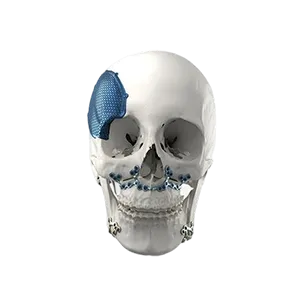
The Ortix Medical Devices Co., Ltd. Low Profile Cranial Plating System is engineered as a modular neurosurgical solution. It covers post-craniotomy bone flap refixation, comminuted cranial trauma reconstruction, pediatric cranial surgery, and anterior skull base repair.
Modular Plate Geometries & Low-Profile Profile Ratios
Our cranial plating system features a ultra-thin construct designed to conform manually to complex skull curvatures without spring-back effects. Every plate is color-anodized for immediate identification in the sterile surgical field.
- Micro System (0.5mm Plate Profile): Paired with Ø 1.5mm self-drilling and self-tapping screws. Optimized for paediatric cranioplasty and thin temporal bone coverage.
- Mini System (0.7mm Plate Profile): Paired with Ø 2.0mm self-drilling screws. Heavy-duty construct for parietal, occipital, and high-impact trauma reconstruction.
- Plate Configurations: 2-Hole Straight, 4-Hole Straight with Center Bar, X-Plates, Y-Plates, Double T-Plates, Square Plates, Burr Hole Covers (Ø 12mm, Ø 15mm, Ø 20mm), and customizable Titanium Mesh sheets.
- Surface Treatment: Electrochemical anodization generating a passive titanium oxide film that enhances corrosion resistance and reduces cellular adhesion friction.
| System Category | Plate Thickness | Screw Diameter | Screw Length Options | Primary Indications |
|---|---|---|---|---|
| Micro Low Profile | 0.5 mm ± 0.02 mm | Ø 1.5 mm (Self-Drilling / Self-Tapping) | 3.0 mm, 4.0 mm, 5.0 mm | Pediatric cranioplasty, temporal flap fixation, minimal tissue cover regions |
| Standard Low Profile | 0.6 mm ± 0.02 mm | Ø 1.5 mm / Ø 1.7 mm Emergency | 4.0 mm, 5.0 mm, 6.0 mm | Routine osteoplastic craniotomy flap refixation, cranial fracture alignment |
| Mini Cranial System | 0.7 mm ± 0.03 mm | Ø 2.0 mm (Self-Drilling / Self-Tapping) | 4.0 mm, 5.0 mm, 6.0 mm, 8.0 mm | High-load cranioplasty, occipital reconstruction, severe comminuted trauma |
| Burr Hole Covers | 0.5 mm – 0.6 mm | Ø 1.5 mm / Ø 2.0 mm | 4.0 mm, 5.0 mm | Covering trephine burr holes (12mm–22mm), shunt placement sites |
Global Procurement Trends & Future Technological Forecasts in Cranial Fixation (2025–2030)
Understanding macroeconomic trends, regulatory shifts, and technological evolution allows hospital purchasing authorities and medical distributors to secure competitive advantage when establishing long-term supply partnerships.

1. Shift Toward Sub-Millimeter Aesthetics
Hospital tender specifications across Europe, North America, and the Asia-Pacific region are increasingly excluding plates thicker than 1.0mm for cranial applications. The global standard has shifted toward sub-millimeter profiles (0.5mm–0.7mm) to reduce secondary removal surgeries driven by scalp irritation.

2. Rapid Adoption of Self-Drilling Screw Technology
Surgical operating room efficiency is a primary driver in hospital procurement. Self-drilling screws eliminate the need for preliminary twist-drilling and depth measurement in thin cranial bone, cutting total closure time by up to 35% during multi-plate craniotomy refixation.

3. Hybrid Titanium Mesh & PEEK Integration
While patient-specific PEEK implants are growing in large-defect cranioplasty, Low Profile Cranial Plating Systems remain the dominant choice for structural rim fixation, bone flap anchoring, and hybrid mesh fixation due to cost efficiency, immediate intraoperative adaptability, and unmatched mechanical stability.

4. Agility, Low MOQ & OEM Supply Chain Resilience
Geopolitical turbulence and strict regulatory requirements under EU MDR and US FDA have pushed global importers to consolidate suppliers. Importers now seek direct OEM/ODM manufacturers like Ortix Medical Devices Co., Ltd. that offer low MOQs, comprehensive technical dossiers, and fast production turnarounds to minimize holding costs.

Why Leading Healthcare Distributors Partner with Ortix Medical Devices Co., Ltd.
Ortix Medical Devices Co., Ltd. operates as a premier medical device research, engineering, and manufacturing institution dedicated to neurosurgical, spinal, and trauma internal fixation systems.
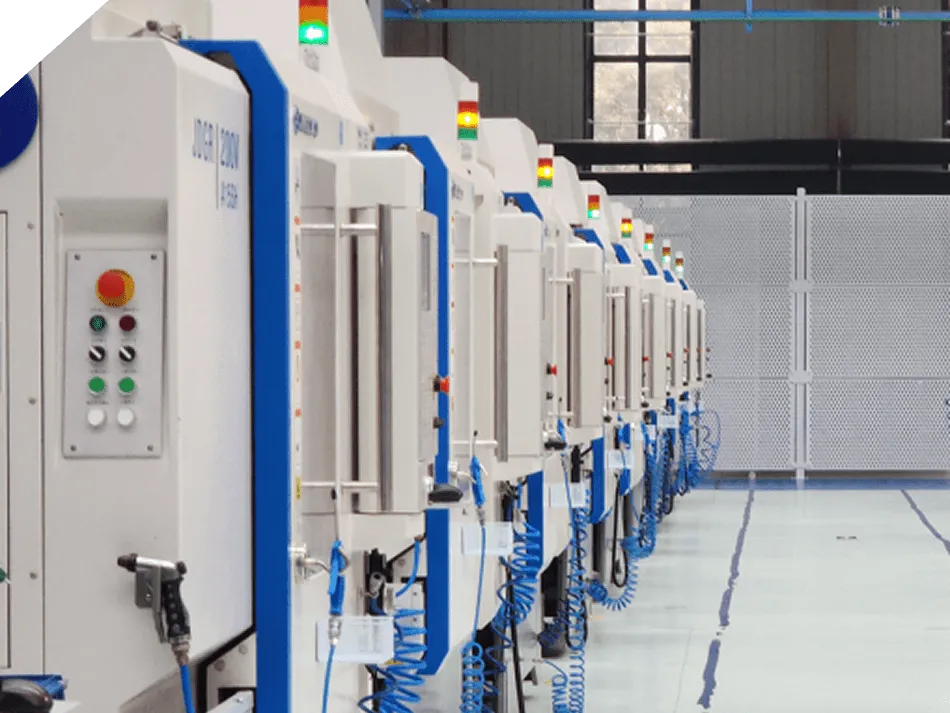
Our state-of-the-art 60,000 m² production complex is managed under stringent ISO 13485 quality systems. Equipped with multi-axis Swiss longitudinal CNC lathes, high-speed milling centers, and automated optical measurement systems, we produce medical devices that meet exacting global standards.
- Metallurgical Assurance: Certified ASTM F136 Ti-6Al-4V ELI titanium alloys sourced with complete heat-lot traceability.
- In-House Mechanical Testing Lab: Bending fatigue, torque-to-failure, and axial pull-out testing conducted according to ASTM standards.
- Complete Surgical Instrumentation: Matching titanium trays, ergonomic drivers, plate cutters, and benders supplied for turnkey surgical workflow.
- Export Registration Support: Comprehensive technical documentation, CE/ISO/FDA certificate packages, and local registration assistance for tender submission.
R&D Engineers
Smart Facility
Unit Output
Export Countries
Frequently Asked Questions by Global Importers & Procurement Officers
Get clear, expert answers regarding quality control, minimum order quantities, manufacturing leads, and customization capabilities for our Low Profile Cranial Plating System.
What quality certifications and regulatory documents does Ortix Medical Devices Co., Ltd. provide for the Low Profile Cranial Plating System?
Ortix Medical Devices Co., Ltd. manufactures under a certified ISO 13485 quality management system and holds U.S. FDA establishment registration. For international distribution and hospital tender bids, we provide complete technical dossiers including ISO 13485 certificates, FDA registration data, raw material test reports (ASTM F136 Grade 5 titanium), dimensional measurement reports, biocompatibility test summaries, and Instructions for Use (IFUs).
Why is a low profile design preferred in craniotomy flap refixation and CMF reconstruction?
A low profile design (plate height between 0.5mm and 0.7mm) dramatically reduces hardware prominence under thin scalp tissue. This prevents postoperative tissue erosion, palpability complaints from patients, and cold sensitivity while providing rigid biomechanical stability necessary for rapid primary bone healing along the cranial cut line.
Can Ortix Medical Devices Co., Ltd. support custom OEM branding, laser marking, and packaging?
Yes. We offer turnkey OEM/ODM services for regional brand owners and hospital networks. This includes high-resolution fiber laser marking of catalog codes and lot numbers directly onto the titanium cranial plates, custom color anodization, customized sterilization pouch printing, IFU localization, and customized outer box artwork design.
What is the minimum order quantity (MOQ) for stocking distributors and trial evaluation orders?
We understand the importance of managing working capital and inventory turn ratios. Ortix Medical Devices Co., Ltd. supports low MOQ policies for initial evaluation orders, allowing distributors to mix micro cranial plates, self-drilling screws, emergency screws, and specialized neurosurgical instrument kits within a single order.
What are the torque specifications and driver compatibility for your micro cranial self-drilling screws?
Our Ø 1.5mm and Ø 2.0mm micro screws feature precision-machined cruciform/emergency drive recesses engineered to prevent cam-out and stripping during high-speed insertion. They possess a torsional yield strength exceeding international standards, ensuring secure seating into cranial bone without head shear.
How quickly can large bulk orders be fulfilled for national tenders?
With our 60,000 m² smart factory running over 450 CNC machine units and maintaining a daily production capacity of approximately 20,000 units, standard catalog items are dispatched rapidly from safety stock, while large tender orders are manufactured and shipped within strict scheduled timelines.