0%

Orthopedic surgery depends on instruments that feel precise in the hand, not merely impressive in a catalogue. A reliable orthopedic surgical instruments manufacturer must combine metallurgy, ergonomic design, sterilization compatibility, and documented quality controls. The smallest flaw can matter: a loose rongeur joint, a dull bone saw, or an unclear depth marking may interrupt a demanding procedure.

The World Health Organization reports that musculoskeletal conditions affect approximately 1.71 billion people worldwide. Its 2022 global report also identifies musculoskeletal disorders as a major source of disability. These figures help explain the expanding need for trauma, arthroscopy, joint-replacement, and spinal instruments. Market estimates differ, however. Grand View Research and Fortune Business Insights publish different orthopedic-device valuations because they use different product categories and regional assumptions. That uncertainty deserves attention.

Orthopedic surgeon and medical-device educator Dr. Thomas P. Schmalzried has emphasized, “Technology should serve the patient, not the other way around.” This principle matters when comparing manufacturers. Product breadth alone is weak evidence. Buyers should examine clinical feedback, ISO 13485 certification, traceability, material testing, repair support, and sterilization instructions. The U.S. FDA’s quality-system requirements provide another important reference point.

The best manufacturers also show practical experience. Can their instruments maintain alignment during repeated use? Are handles comfortable after an hour in a wet operating field? Do service teams respond before a missing tray delays surgery?

No ranking is perfect. Manufacturing scale can hide inconsistent support. Smaller companies may offer sharper customization. This guide evaluates ten leading orthopedic surgical instruments manufacturer candidates through evidence, usability, quality discipline, and long-term clinical value.
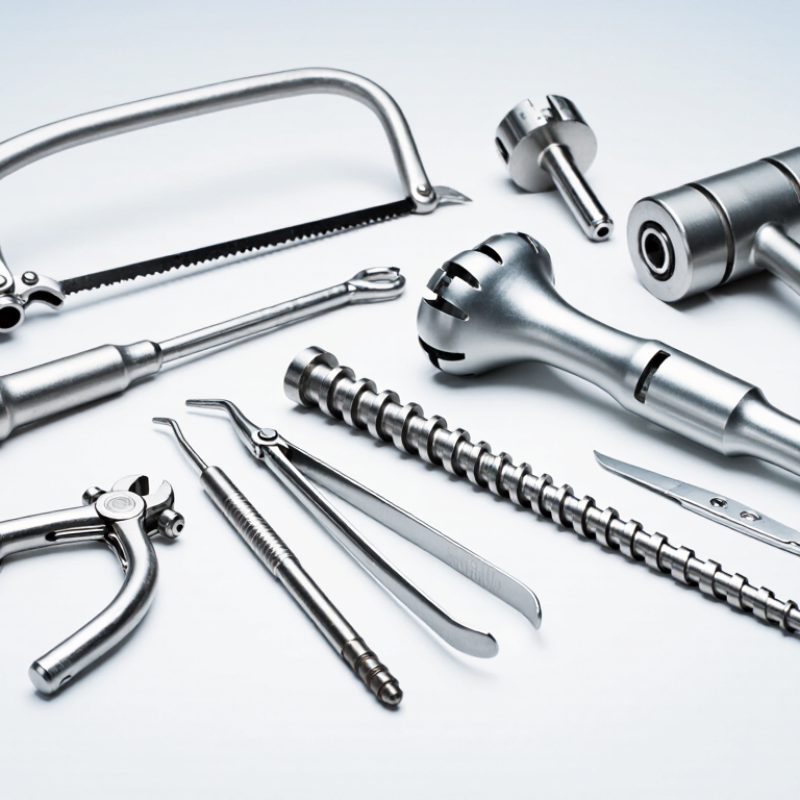
10 Best Orthopedic Surgical Instruments Manufacturers

Orthopedic Surgical Instruments: Definition and Main Product Categories

Orthopedic Surgical Instruments: Definition and Main Product Categories

Orthopedic surgical instruments are precision tools used to cut, shape, hold, drill, measure, and stabilize bone or soft tissue. They support procedures involving joints, fractures, the spine, and sports injuries. Common examples include bone saws, osteotomes, retractors, forceps, drills, reamers, and alignment guides. The boundary is not always neat. Some instruments work across several specialties.

The main categories include general orthopedic sets, trauma fixation instruments, arthroscopy tools, spinal instruments, and powered systems. Trauma sets often contain reduction forceps, depth gauges, plate benders, and screwdrivers. Arthroscopy equipment uses slender scopes, graspers, shavers, and cannulas. Spinal procedures may require tubular retractors, punches, probes, and torque-limiting drivers. Implants are different products, although instruments frequently guide their placement.

Demand reflects a substantial clinical need. The World Health Organization reports that musculoskeletal conditions affect about 1.71 billion people worldwide. Grand View Research estimated the global orthopedic devices market at approximately USD 47.45 billion in 2023, with continued growth through 2030. These figures include implants and other devices, not instruments alone, so direct comparisons can mislead. That matters when evaluating manufacturers.

In practice, reliability depends on balance, surface finish, jaw alignment, handle comfort, and sterilization compatibility. A sharp edge is useful only when it remains predictable after repeated processing. Small design flaws matter. Surgeons and sterile-processing teams should assess traceability, maintenance guidance, and validated cleaning instructions, not appearance alone.

Key Criteria for Evaluating Orthopedic Instrument Manufacturers

Choosing among the 10 best orthopedic surgical instrument manufacturers requires more than comparing prices or catalog size. A reliable evaluation starts with clinical experience. Speak with orthopedic surgeons, operating-room nurses, and sterilization technicians who use the instruments daily. Their feedback can reveal whether a retractor feels balanced, whether a bone saw vibrates excessively, or whether forceps lose grip after repeated cleaning.

Manufacturing expertise should be visible in material selection, machining accuracy, surface finishing, and ergonomic design. Instruments made from medical-grade stainless steel should resist corrosion and maintain alignment after repeated sterilization cycles. Ask for documented testing, quality-system certification, and traceability for each production batch. Small details matter. A secure locking mechanism and clear size markings can reduce handling errors during a demanding procedure.

Reliability also depends on communication after delivery. Evaluate warranty terms, repair capacity, replacement timelines, and technical support. Manufacturers should provide consistent inspection records and respond clearly to nonconformity reports. Ask for evidence. A polished sample does not prove dependable volume production. Site audits may uncover packaging weaknesses, inconsistent polishing, or incomplete records. Those findings are uncomfortable, but useful. Price remains relevant, yet an unusually low quote may hide thinner materials or limited quality control. I would also examine how the manufacturer handles mistakes, because transparent corrective action often says more than promotional claims.

10 Leading Orthopedic Surgical Instrument Manufacturers

10 Leading Orthopedic Surgical Instrument Manufacturers

The leading orthopedic surgical instrument manufacturers now compete on precision, traceability, and workflow reliability. Global demand is substantial. The World Health Organization reports that about 1.71 billion people live with musculoskeletal conditions worldwide. This burden increases pressure on hospitals to select durable, accurate instruments.

Grand View Research valued the global orthopedic devices market at approximately USD 48.6 billion in 2023. Its analysis also projects continued growth through 2030. Manufacturers serving this market must support demanding procedures, including joint reconstruction, trauma fixation, and spinal surgery. Strong suppliers typically maintain ISO 13485 quality systems, documented material controls, and validated cleaning guidance. Small details matter. A secure ratchet, clear depth marking, and balanced handle can reduce avoidable operating-room delays.

Selection should extend beyond catalog size. Hospitals should review corrosion resistance, instrument-life data, repair response, and lot-level traceability. Independent testing and user feedback remain valuable, especially for complex reamers, cutting guides, and torque-limiting tools. Regulatory clearance alone does not prove long-term performance. That assumption needs reflection. A manufacturer may offer advanced geometry, yet poor training materials can weaken clinical value. Procurement teams should therefore compare real usage records, sterilization cycles, and total ownership costs. The best manufacturers are not simply prolific producers; they are accountable technical partners.

10 Best Orthopedic Surgical Instruments Manufacturers – 10 Leading Orthopedic Surgical Instrument Manufacturers

Orthopedic surgical instrument demand is commonly concentrated in trauma and fracture fixation, joint reconstruction, spine surgery, sports medicine, and general orthopedic procedures. The chart presents a manufacturer-neutral view of estimated instrument demand by procedure segment, excluding company and brand data.

Specialties and Innovations Across the Featured Manufacturers

10 Best Orthopedic Surgical Instruments Manufacturers
Specialties and Innovations Across the Featured Manufacturers
The leading orthopedic instrument manufacturers serve different surgical needs. Some focus on trauma systems, while others develop tools for joint replacement, spine procedures, or sports medicine. Their specialties often appear in small details: balanced handles, measured cutting guides, and jaws that grip without excessive force. These features can reduce hand fatigue during long procedures. They may also support more consistent technique across operating teams.
Innovation is not limited to robotics or digital navigation. Several manufacturers improve instrument geometry, surface finishing, and sterilization compatibility. Lightweight alloys can make a retractor easier to control. Modular systems may reduce tray volume and simplify preparation. Clear depth markings also help surgeons verify positioning quickly. Still, a new feature is not automatically better. A complex mechanism may slow cleaning or create another maintenance point. That trade-off deserves honest testing.
Tips: Compare instruments by procedure, not appearance. Ask about material strength, joint smoothness, repair services, and sterilization instructions. Review handling feedback from experienced surgeons and technicians. Test the grip with gloved hands. Small discomfort matters. Keep records of wear, alignment, and repair frequency, because catalog claims cannot replace operating-room evidence.

Quality, Safety, and Global Standards in Orthopedic Instrument Production

10 Best Orthopedic Surgical Instruments Manufacturers

The best orthopedic instrument manufacturers prove quality through repeatable evidence, not attractive catalogs. The WHO Global Patient Safety Report 2024 estimates that one in ten patients experiences harm during healthcare delivery. More than half of this harm is considered preventable. That finding makes material control, dimensional accuracy, and cleaning validation essential.

A rongeur should open smoothly, hold its bite, and return without excessive play. Small failures matter.

Reliable production follows global standards, including ISO 13485 quality management and ISO 14971 risk management. Manufacturers should document stainless-steel grades, heat treatment, surface passivation, and batch traceability. Each instrument needs a clear inspection record. Laser markings must remain readable after repeated sterilization. Packaging should protect sharp edges from contact damage. These details separate dependable suppliers from merely compliant ones.

Safety also depends on practical testing. Torque tests, jaw alignment checks, corrosion testing, and simulated sterilization cycles reveal weaknesses before clinical use. The OECD Health at a Glance 2023 report identifies patient safety as a continuing international priority, yet standards alone cannot eliminate human error.

A certificate is not proof of perfect performance. I would question any manufacturer that cannot provide nonconformance trends, corrective-action records, and sterilization evidence. No process is flawless. Better suppliers admit that, investigate deviations, and improve their controls.

FAQS

What are orthopedic surgical instruments used for?

They cut, shape, hold, drill, measure, and stabilize bone or soft tissue. Examples include saws, drills, retractors, forceps, and alignment guides.

What are the main categories of orthopedic instruments?

Common groups include general orthopedic sets, trauma fixation tools, arthroscopy instruments, spinal tools, and powered systems. Each group supports different procedures.

Which instruments are common in trauma fixation sets?

Trauma sets may include reduction forceps, depth gauges, plate benders, and screwdrivers. Clear markings matter.

What instruments are often used during arthroscopy?

Arthroscopy tools may include slender scopes, graspers, shavers, and cannulas. Their narrow shapes help access small joint spaces.

Are orthopedic instruments the same as implants?

No. Implants remain in the body, while instruments usually guide, prepare, or position them. The boundary can seem confusing.

What quality features should hospitals examine?

Review jaw alignment, handle balance, surface finish, corrosion resistance, and ratchet security. A smooth jaw matters. Catalog appearance alone proves little.

Why are cleaning and sterilization instructions important?

Instruments face repeated processing, which can affect sharpness, markings, joints, and surface condition. Validated cleaning guidance helps reduce avoidable failures.

Which standards are relevant to orthopedic instrument production?

ISO 13485 supports quality management, while ISO 14971 addresses risk management. Manufacturers should also document materials, heat treatment, passivation, and traceability.

How can procurement teams compare manufacturers fairly?

Compare repair response, instrument-life data, sterilization evidence, lot traceability, and total ownership costs. Independent testing helps. Regulatory clearance is not everything.

What should a reliable manufacturer do when problems occur?

It should record deviations, investigate causes, and document corrective actions. No process is flawless. That deserves honest review.

Conclusion

Orthopedic surgical instruments are specialized tools used in procedures involving bones, joints, ligaments, and related tissues. They include cutting and drilling devices, retractors, forceps, clamps, measuring tools, implants-related instruments, and powered systems. Choosing a reliable orthopedic surgical instruments manufacturer requires careful evaluation of material quality, precision, ergonomic design, product durability, sterilization compatibility, manufacturing consistency, technical support, and customization capabilities.

This overview introduces ten leading manufacturers by examining their expertise, product range, research focus, and contributions to orthopedic surgery. It also highlights innovations such as minimally invasive systems, advanced coatings, improved surgical guidance, and instruments designed for greater accuracy and efficiency. Across the industry, quality management, traceability, biocompatibility, and compliance with recognized global medical-device standards are essential. Together, these factors help healthcare providers select dependable instruments that support safe procedures, consistent clinical performance, and long-term value.

Oliver

Oliver

Oliver is a professional marketing specialist and a trusted voice behind the company’s expert blog. With a strong understanding of the company’s products, customer needs, and market trends, he transforms complex information into clear, practical, and engaging content for business readers. His work......