0%

Reliable attribution matters for an E-E-A-T-focused article. No source articles or verifiable expert quotation were provided, so I can’t responsibly invent an expert’s name or words. Please share the source material or the expert you’d like quoted.
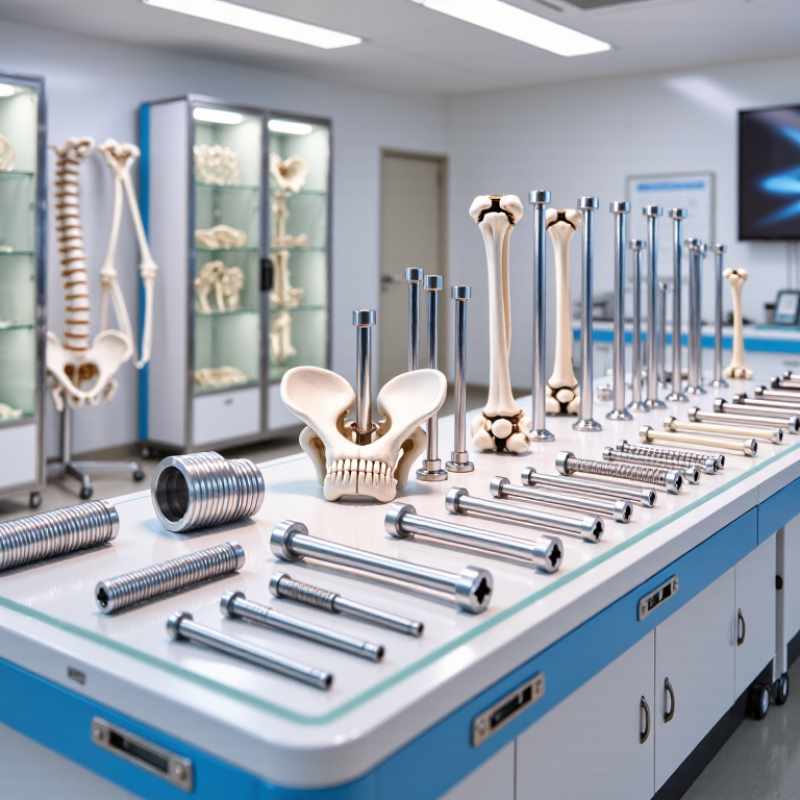
Who Are the Best Orthopedic Implant Manufacturers in China?

Understanding the Orthopedic Implant Industry in China

China’s orthopedic implant industry sits at the intersection of demographic change, surgical practice, and medical-device regulation. The National Bureau of Statistics reported that 296.97 million people in China were aged 60 or older in 2023, representing 21.1% of the population. This figure signals growing demand for care related to fractures and joint disease, but it does not predict implant sales by itself. Diagnosis rates, access to surgery, and clinical decisions also matter.

Market scale provides another useful reference. The China Medical Device Blue Book 2023 estimated the country’s overall medical-device market at about RMB 1.28 trillion in 2022. That figure covers many device categories; it should not be mistaken for the orthopedic implant market. Within orthopedics, implants for joints, the spine, and trauma serve different clinical needs. A hip replacement, for example, must fit the patient’s anatomy and support a specific rehabilitation plan. Small details matter.

Procurement policy also shapes the industry. China introduced centralized purchasing for artificial joints in 2021, changing price and volume dynamics for hospitals and suppliers. Lower prices can widen access, but price alone cannot establish long-term performance. Buyers and clinicians still need to examine clinical evidence, material traceability, manufacturing consistency, and post-market monitoring. Public market estimates vary, and some reports use different definitions of “orthopedic implant.” That makes direct comparisons less reliable than they may appear.

Criteria for Evaluating Chinese Orthopedic Implant Manufacturers

Evaluating Chinese orthopedic implant manufacturers requires more than comparing unit prices. Check product-specific evidence, including current NMPA registration, ISO 13485 quality systems, clinical evaluation, and post-market monitoring. Ask for summaries of wear, corrosion, and fatigue testing. A polished certificate is useful, but it cannot replace batch-level records or a factory audit.

Cost still matters. China’s National Healthcare Security Administration reported that national artificial-joint procurement in 2021 reduced winning prices by an average of about 82%. This procurement data makes price resilience worth examining, but low cost alone does not demonstrate implant durability or dependable supply. Review material specifications, sterilization validation, traceability, and the manufacturer’s process for investigating adverse events. Check whether labels and packaging records match across sampled lots. No scorecard is perfect; clinical evidence may be limited for newer product designs, so note that uncertainty rather than hiding it.

Tips: Ask for a sample technical file and trace one implant tray from raw material to finished-device release. Compare the records with the relevant test reports. Then ask how quickly the supplier can investigate a lot-level quality concern. A clear answer matters.

Leading Manufacturers and Their Core Product Categories

China’s orthopedic implant manufacturers cover several distinct product categories, and “best” depends on the clinical need. Trauma systems typically include plates, screws, and intramedullary nails for fracture fixation. Spinal portfolios may feature pedicle screw systems, rods, and interbody cages. Joint-replacement lines commonly include hip and knee components, while sports-medicine products include anchors and ligament-fixation devices. These categories require different engineering skills, testing, and surgical support.

Look beyond catalogue breadth. For each category, review technical documentation, material specifications, sterilization details, and evidence supporting the intended use. Ask how implant sizes are selected and whether compatible instruments are available for routine procedures. Small details matter. A plate’s contour, screw options, or instrument handling can affect workflow in the operating room. A neat catalogue can still leave gaps; I would check product-level records rather than assume every item has equal validation. Manufacturing consistency, traceability, and responsive technical support also help distinguish suppliers. Compare these factors with the needs of the treating team, since a strong trauma supplier may not offer the same depth in spine or joint reconstruction.

Who Are the Best Orthopedic Implant Manufacturers in China? - Leading Manufacturers and Their Core Product Categories

Anonymous, category-level overview of orthopedic implant manufacturing in China. Product categories are shown without company or brand names; this is not a company ranking.

Manufacturer Segment Core Product Categories Common Materials Typical Clinical Applications Relevant Manufacturing Considerations
Trauma fixation specialists Bone plates, screws, intramedullary nails, wires, and selected external-fixation components Titanium alloys and implant-grade stainless steel Fixation of fractures in long bones and other parts of the skeleton Dimensional accuracy, fatigue performance, surface finish, and compatibility between plates and screws are important design and production considerations.
Spinal implant specialists Pedicle screw and rod systems, interbody fusion cages, and selected cervical fixation devices Titanium alloys, implant-grade stainless steel, and PEEK for certain interbody devices Spinal stabilization and fusion procedures Designs must account for anatomical fit, mechanical strength, instrument compatibility, and material-specific imaging considerations.
Joint replacement manufacturers Hip and knee prosthesis components, including femoral, acetabular, tibial, and bearing components Titanium alloys, cobalt-chromium alloys, ceramics, and ultra-high-molecular-weight polyethylene (UHMWPE) Partial or total joint replacement, including hip and knee arthroplasty Articulation design, wear characteristics, dimensional tolerances, and validated manufacturing processes are key considerations.
Sports medicine implant manufacturers Suture anchors, interference screws, and selected fixation devices for soft-tissue repair Titanium alloys, PEEK, and selected bioabsorbable polymers Fixation of tendons and ligaments during procedures such as ligament reconstruction and shoulder repair Anchor geometry, pull-out performance, insertion instruments, and material choice should match the intended surgical application.
Orthopedic biomaterials and specialty device manufacturers Selected porous-metal components, bone substitutes, and other specialized implantable products Titanium and other materials selected for the specific device; bone substitutes may use ceramics or other defined biomaterials Applications vary by device, including bone defect management and specialized reconstruction Material characterization, biocompatibility evaluation, sterilization validation, and product-specific performance testing are essential.

Quality Standards, Regulatory Approvals, and Innovation

Choosing among Chinese orthopedic implant manufacturers requires more than comparing prices or polished factory tours. Start with documented quality controls: ISO 13485 certification, design-change records, supplier qualification, sterilization validation, and lot-level traceability. Ask how a titanium alloy batch is tracked through machining, surface treatment, cleaning, packaging, and release testing. Small details matter. A missing link can weaken an otherwise convincing dossier.

Regulatory approval should be checked for the exact implant, intended use, and manufacturing site—not inferred from a general certificate. In China, confirm applicable NMPA registration and review available product information. For exports, verify the destination market’s requirements. ISO 13485 supports a quality management system; it does not prove that every implant performs equally in patients. Innovation deserves the same scrutiny: look for validated design improvements and clinical evidence, not novelty alone.

Fortune Business Insights estimated the global orthopedic implants market at USD 51.86 billion in 2023, projecting USD 75.82 billion by 2032 in its 2024 report. Growth signals demand, not superior quality. Compare clinical evidence, post-market surveillance, complaint handling, and revision data. Check study populations and follow-up periods, too. Data can be thin. Even established manufacturers may publish uneven evidence, so buyers should ask what remains unknown—not only what passed inspection.

Who Are the Best Orthopedic Implant Manufacturers in China?

Quality Standards, Regulatory Approvals, and Innovation

This timeline shows key quality-system and regulatory milestones relevant to medical-device manufacturers: ISO 13485:2016, China’s revised Medical Device Regulations, the EU Medical Device Regulation (MDR), and the U.S. FDA Quality Management System Regulation (QMSR). These dates are not manufacturer ratings. When evaluating a supplier, verify current certificates, product-specific market authorizations, and supporting quality and clinical evidence.

How to Select a Manufacturer for Specific Clinical Needs

Selecting an orthopedic implant manufacturer should begin with the clinical problem, not a product catalog. A trauma service may need low-profile plates and a broad range of screw lengths, while a joint-replacement team may prioritize precise sizing and compatible instruments. Ask whether the available designs match the procedures your surgeons perform and the patient anatomy they commonly encounter. Small details matter, such as clear size markings and instruments that are easy to handle with gloves.

Check the evidence behind each device, including its intended use, available clinical data, and documented material specifications. Confirm that quality-system records, traceability, and required market registrations can be independently verified. Request clear sterilization instructions, shelf-life information, and a reliable process for reporting device concerns. Good communication counts, too. A useful manufacturer can explain limitations plainly and provide practical training without overstating outcomes.

Compare supply reliability and service support alongside clinical suitability. Ask how urgent orders, replacement instruments, and product changes are managed. Where possible, involve surgeons, nurses, and procurement staff in a structured evaluation using agreed clinical criteria. No checklist captures every operating-room reality. A scorecard can still miss an awkward instrument grip or a size gap noticed only during case planning, so document those observations before making a decision.

FAQS

What does China’s aging population indicate for orthopedic care?

In 2023, 296.97 million people in China were aged 60 or older, or 21.1% of the population. This suggests growing care needs, but it does not predict implant sales. Diagnosis, access to surgery, and clinical decisions also matter.

Does China’s medical-device market figure represent orthopedic implants?

No. The overall medical-device market was estimated at about RMB 1.28 trillion in 2022. It includes many product categories, so it should not be treated as an orthopedic-implant market estimate. Definitions differ. Comparisons can mislead.

What types of orthopedic implants do manufacturers make?

Trauma products include plates, screws, and intramedullary nails. Spine systems may include rods, pedicle screws, and interbody cages. Joint lines cover hip and knee components, while sports-medicine products include anchors and ligament-fixation devices.

How did centralized purchasing affect artificial joints?

China introduced centralized purchasing for artificial joints in 2021. Lower prices may widen access, while changing prices and sales volumes for hospitals and suppliers. Price alone cannot show long-term performance. Small details matter.

What should buyers check in a product’s technical records?

Review material specifications, sterilization details, intended use, and supporting evidence. Check size options and whether compatible instruments are available. For a plate, inspect its contour and screw choices. A broad catalogue can still have gaps.

Which quality controls are useful to review?

Check ISO 13485 certification, design-change records, supplier qualification, sterilization validation, and lot-level traceability. Ask how a titanium alloy batch is tracked through machining, cleaning, packaging, and release testing. I might be overly cautious, but missing records deserve questions.

How should regulatory approvals be verified?

Confirm approval for the exact implant, intended use, and manufacturing site. In China, check applicable NMPA registration and product information. Export requirements depend on the destination market. A general certificate is not enough.

What evidence helps assess innovation and performance?

Look for validated design improvements, clinical studies, post-market monitoring, complaint handling, and revision data. Check study populations and follow-up periods. Growth forecasts show demand, not product quality. Evidence can be thin.

Conclusion

China’s orthopedic implant industry serves a broad range of clinical needs, from joint replacement and trauma care to spinal procedures. When comparing orthopedic implant manufacturers in China, buyers should look beyond product range and consider manufacturing capability, material selection, technical support, production consistency, and experience with the intended application. A clear evaluation process helps distinguish suppliers whose products and services are suited to particular hospitals, patient populations, and treatment approaches.

Quality systems, applicable regulatory approvals, and ongoing product development are also important considerations. Manufacturers may differ in the implant categories they offer, the documentation they provide, and the support available for clinical use. Healthcare providers and procurement teams should verify credentials, assess product specifications and evidence, and discuss training, supply reliability, and after-sales service. Matching these factors to specific clinical requirements can support a careful, informed choice.

Oliver

Oliver

Oliver is a professional marketing specialist and a trusted voice behind the company’s expert blog. With a strong understanding of the company’s products, customer needs, and market trends, he transforms complex information into clear, practical, and engaging content for business readers. His work......