0%

Choosing an orthopedic implants supplier is a clinical and operational decision, not merely a price comparison. Implants must fit surgical needs, arrive reliably, and come with clear technical documentation. Buyers also need to assess manufacturing consistency, surgeon support, and the supplier’s ability to serve different markets. Small details matter: a delayed instrument tray can disrupt a scheduled procedure.

Industry data shows why careful sourcing matters. Grand View Research estimated the global orthopedic implants market at approximately USD 47.6 billion in 2023 and forecast continued growth through 2030. This estimate reflects rising demand for joint reconstruction and other orthopedic procedures, though market forecasts vary by source and methodology. The World Health Organization’s 2022 Global Report on Assistive Technology also highlights the broader importance of access to appropriate assistive products. Implants are not a substitute for clinical judgment, but dependable supply helps care teams deliver planned treatment.

As orthopedic surgeon and outcomes researcher Dr. Joshua J. Jacobs has emphasized in his work, implant decisions should be judged by patient outcomes and value, not purchase price alone. This is a paraphrase, not a verified direct quotation. That distinction matters. A credible supplier comparison should separate documented capabilities from marketing claims and should acknowledge where evidence is limited. The following list examines ten suppliers through practical criteria, including product range, quality systems, global service, and publicly available company information. No ranking can replace a hospital’s own clinical and procurement review.
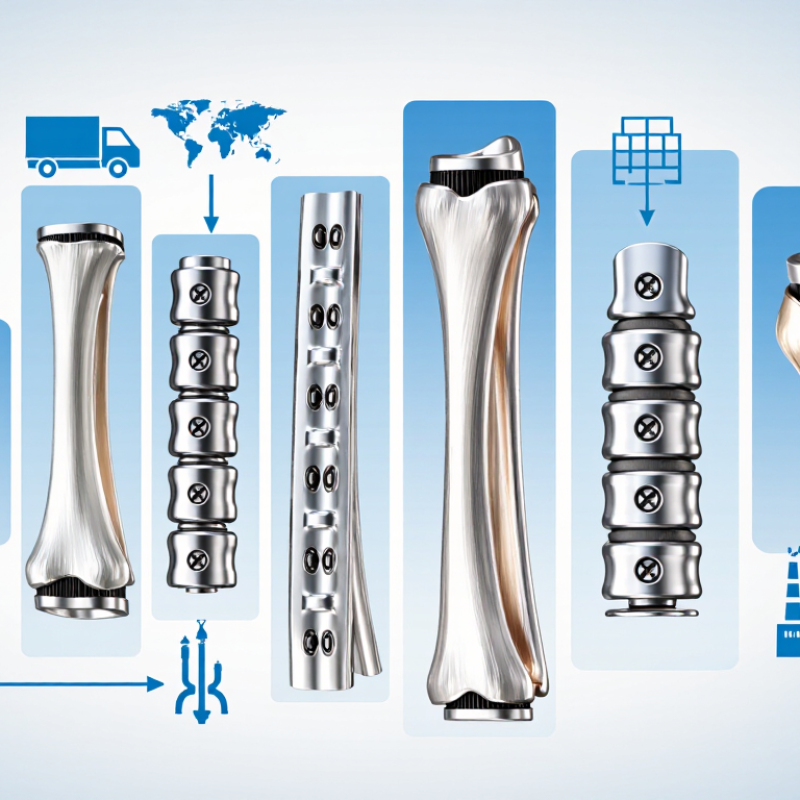
10 Best Orthopedic Implants Suppliers for Global Buyers

What Makes an Orthopedic Implant Supplier Reliable?

A reliable orthopedic implant supplier should offer more than a polished catalogue. Buyers need traceable materials, consistent manufacturing records, and clear instructions for storage and handling. Ask how each lot is identified, what inspection records accompany it, and how quickly the supplier can investigate a quality concern. Specific answers matter. Vague promises do not.

Independent evidence helps. The UK National Joint Registry’s 2024 Annual Report draws on more than 3.5 million recorded joint replacement procedures, showing why long-term implant performance data matters. A supplier should explain whether its products appear in relevant registries and how outcomes are monitored. Registry results need careful interpretation; patient health and surgical technique also affect outcomes. Still, a supplier unwilling to discuss available evidence deserves closer scrutiny.

Check quality systems and practical support, too. ISO 13485 certification can indicate a medical-device quality management system, but it does not prove that every implant suits every patient. Review the scope of certification, product documentation, and change-control process. Ask whether technical staff can respond to questions during planning or after delivery. Test the basics: can the supplier provide consistent sizes, readable labels, and dependable delivery dates? A missed detail can disrupt an operating schedule. And no supplier is flawless; transparent reporting of limitations may be more credible than claims of perfect performance.

Which Implant Categories Serve Different Clinical Needs?

Orthopedic implants serve different clinical needs, so buyers should compare more than material or price. Joint replacement systems, such as hip and knee implants, are designed to restore movement when damaged joint surfaces cause pain or limited function. Trauma implants, including plates, screws, and intramedullary nails, help stabilize fractures while bone heals. Spinal devices support procedures addressing instability or deformity. Small-joint and extremity implants may suit hand, wrist, foot, or ankle reconstruction, where space and movement demands differ. No category fits every patient.

Material choice, implant geometry, fixation method, and instrument compatibility all matter. Surgeons assess anatomy, bone quality, activity level, and the procedure planned. Buyers can ask suppliers for technical specifications, material documentation, sterilization details, and evidence supporting intended use. These records help clinical teams assess suitability; they do not replace professional judgment. Fit can be complicated.

Tips: Match each implant category to the procedures and patient populations served. Check that available sizes cover realistic anatomical variation, and confirm compatible instruments before ordering. Review packaging and traceability information with the clinical and procurement teams. A catalog may look complete, yet leave gaps in sizes or configurations. That deserves a closer look.

Orthopedic Implant Materials: Matching Stiffness to Clinical Needs

Approximate elastic modulus (GPa) helps explain why different materials are used across orthopedic implant categories. Values are representative estimates; actual properties vary by alloy, processing, and measurement conditions.

Clinical context: Titanium alloys are commonly used in fixation devices and joint components where strength and lower stiffness are useful. Cobalt-chromium and stainless-steel alloys are used in load-bearing components and fixation hardware. UHMWPE is a low-stiffness polymer used as a bearing material in joint replacements. Cortical bone is shown for comparison.

How the Top Ten Global Suppliers Compare

Comparing ten orthopedic implant suppliers means looking beyond catalog size. Their strengths often differ by implant type, manufacturing scale, and support after delivery. Some offer broad portfolios for hips, knees, trauma, and spine. Others concentrate on a narrower range, which can mean deeper product knowledge but fewer alternatives. Buyers should compare materials, available sizes, instrument compatibility, and documented quality controls. Small details matter. A trial component that is hard to source can delay a procedure.

Global reach is not the same as dependable local service. Check how suppliers manage regional inventory, shipping timelines, training, and technical questions. Ask for clear product documentation and traceability records. For surgeons, handling and fit matter; for procurement teams, consistency and predictable lead times matter too. A supplier may perform well on price but offer limited support nearby. That trade-off deserves attention.

A practical comparison should include evidence, not broad claims. Review product specifications, quality certifications, clinical evidence where available, and service commitments. Confirm that the offered implant matches local clinical needs and the facility’s existing instruments. Talk with clinical and logistics teams before selecting a supplier. One weakness in this comparison: published information rarely reveals how quickly a difficult case gets real support. Request references and test response times with specific questions.

What Quality and Regulatory Standards Should Buyers Check?

10 Best Orthopedic Implants Suppliers for Global Buyers

What Quality and Regulatory Standards Should Buyers Check?

When comparing orthopedic implant suppliers, buyers should inspect evidence, not promises. The WHO Global Atlas of Medical Devices reports more than two million medical device types worldwide. This complexity makes product classification and regulatory documentation essential.

Start with the quality system. ISO’s 2023 Survey recorded more than 30,000 ISO 13485 certificates globally. However, certification alone is not enough. Request recent audit findings, corrective-action records, supplier controls, and batch traceability. Check whether implants follow ISO 14971 risk management, ISO 10993 biocompatibility testing, and relevant ASTM mechanical standards. Review sterilization validation, packaging integrity, shelf-life data, and titanium or cobalt-chromium material certificates.

Regulatory status needs equal attention. For the United States, verify the correct FDA pathway, such as 510(k) clearance or PMA approval. For Europe, check conformity with Regulation (EU) 2017/745, clinical evaluation, post-market surveillance, and the notified-body certificate. Ask for unique device identification records where applicable. Small details matter. A missing lot number can delay a hospital investigation. A weak packaging seal can compromise sterility. Buyers should also compare complaint rates and recall history, not only sales figures. No checklist is perfect. Supplier responses may look complete while practical controls remain weak. A site audit or independent technical review can reveal that gap.

10 Best Orthopedic Implants Suppliers for Global Buyers - What Quality and Regulatory Standards Should Buyers Check?
A comparison framework of ten supplier capability profiles—not a ranked or named vendor list. Requirements vary by device, supplier role, and destination market.
Supplier capability profile Typical implant scope Quality and technical evidence to check Regulatory checks for global buyers Practical buyer questions
1. Joint reconstruction specialist Hip, knee, shoulder, and related replacement components. ISO 13485 quality-management certification within the relevant scope; risk-management records under ISO 14971; material, wear, fatigue, and packaging-validation evidence appropriate to the device. Verify market-specific authorization. In the EU, check applicable MDR (EU) 2017/745 conformity assessment and CE documentation; in the US, confirm the applicable FDA pathway and status for the device. Are the exact implant models, sizes, and compatible components covered by the documentation? Can the supplier provide current instructions for use and traceability records?
2. Trauma-fixation specialist Plates, screws, intramedullary nails, and fracture-fixation systems. Check material specifications and mechanical-test methods relevant to the product. ASTM F136 covers wrought Ti-6Al-4V ELI alloy for surgical implant applications; confirm the actual material form and grade used. Check device-specific market clearance or conformity evidence, labeling, UDI obligations where applicable, and local importer or registration requirements. Are dimensions, tolerances, and material certificates traceable to each production lot? How are changes to materials or manufacturing controlled?
3. Spine-implant specialist Interbody devices, spinal fixation systems, and related implants. Review design verification, mechanical testing, risk management, sterilization validation where supplied sterile, and biological evaluation appropriate to patient contact under the ISO 10993 series. Confirm the device’s intended use and claims match its authorizations in each market; verify applicable clinical, labeling, and post-market obligations. Does the supplier provide evidence for the marketed configuration and intended use, including any graft or accessory components supplied as part of the system?
4. Sports-medicine implant specialist Anchors, interference screws, and soft-tissue fixation devices. Check polymer or metal material identification, strength and fatigue testing, biocompatibility rationale, and shelf-life or packaging evidence where relevant. Confirm whether the product is supplied sterile or non-sterile and that labeling, sterilization claims, and market authorization correspond to that configuration. Can the supplier document material composition, sterilization method, and validated shelf life for the specific catalog item?
5. External-fixation specialist Fixation frames, pins, wires, clamps, and related components. Review material and corrosion controls, mechanical performance, validated cleaning or reprocessing instructions for reusable parts, and component compatibility evidence. Check applicable device classifications and market-specific technical documentation; confirm reusable-device instructions and labeling are suitable for the destination market. Are reusable components clearly identified, and are cleaning, disinfection, or sterilization instructions validated for their intended use?
6. Maxillofacial and craniofacial implant specialist Facial plates, fixation screws, and selected patient-specific implants. For patient-specific or additively manufactured devices, assess design controls, manufacturing validation, material traceability, post-processing controls, and device-specific risk management. Determine whether the product is standard, custom-made, or patient-matched under the applicable jurisdiction; these categories can have different regulatory requirements. What patient data and design approvals are required, and how does the supplier preserve the approved design and production records?
7. Additively manufactured implant specialist Porous or lattice-structured orthopedic implants made by additive manufacturing. Check process validation, powder or feedstock controls, build records, post-processing, dimensional inspection, and mechanical testing. ASTM F3001 specifies Ti-6Al-4V ELI alloy for additive manufacturing of surgical implants. Confirm that the approved technical documentation covers the manufacturing process and the marketed implant design; additive manufacturing alone does not establish regulatory compliance. Can every build be linked to its material lot, machine parameters, post-processing, inspection results, and final device identifiers?
8. Metallic implant-material specialist Implants using stainless steel, titanium alloys, or cobalt-chromium alloys. Check the exact alloy, product form, and applicable specification. Examples include ISO 5832-3 for wrought titanium-6aluminium-4vanadium alloy and ISO 5832-4 for cobalt-chromium-molybdenum casting alloy; verify applicability to the finished device. Request current declarations and traceable material certificates, but do not treat a material standard as a substitute for device-level regulatory authorization. Do certificates identify the grade, lot, manufacturing route, and test results, and do they match the material specified in the device documentation?
9. Contract manufacturer or OEM Manufacturing services for implants or components designed and marketed by another legal manufacturer. Audit quality-system scope, supplier controls, process validation, nonconformance handling, change control, and record retention. ISO 13485 certification is useful evidence but does not itself authorize a device for sale. Clarify which party is the legal manufacturer and who holds registrations, technical documentation, UDI responsibilities, and post-market duties in each market. Does the quality agreement define notification and approval of changes, access to records, audit rights, and responsibility for complaints or recalls?
10. Implant-system and instrument supplier Implants supplied with dedicated instruments, trays, or reusable surgical tools. Review implant-instrument compatibility, instrument durability, cleaning and sterilization validation, packaging configuration, and clear identification of sterile versus non-sterile products. Verify regulatory status and labeling for both implants and instruments; reusable instruments may have separate reprocessing and conformity requirements. Are all required instruments available in the destination market, and are validated reprocessing instructions provided in the required language?
Core buyer checks: Verify the supplier’s legal identity and role; inspect the scope and validity of quality certificates; confirm device-specific regulatory status in each target market; review risk-management, biocompatibility, performance, sterilization, packaging, and traceability evidence as applicable. For the United States, FDA registration or device listing is not, by itself, FDA approval or clearance. The FDA Quality Management System Regulation (QMSR) took effect on February 2, 2026. For the European Union, assess the applicable requirements of Regulation (EU) 2017/745 (MDR).

How Should Global Buyers Select the Right Supplier?

Selecting an orthopedic implant supplier is a clinical-risk decision, not just a catalog comparison. WHO’s 2022 musculoskeletal health fact sheet estimates that 1.71 billion people live with musculoskeletal conditions worldwide. Its 2023 low-back-pain report estimates 619 million affected people in 2020. These figures signal broad need, not proof that any implant suits every patient or market.

Check the supplier’s quality-system certificate and confirm its scope covers the products you plan to buy. Review traceability, material specifications, sterilization validation, clinical evidence, and post-market monitoring. Ask how the supplier handles complaints and product changes. Ask for evidence. A polished brochure is not enough. Request a sample batch record and test whether one component can be traced from production through delivery.

Then assess practical support: instrument availability, staff training, delivery reliability, and response times when a case is delayed. Compare total landed cost, not unit price alone; freight, replacement parts, and instrument logistics can change the calculation. Ask for realistic lead times in writing. One caveat: a supplier may meet every document check and still be a poor fit for a hospital’s workflow. A small trial order can reveal gaps that a presentation will not.

FAQS

What should buyers check before choosing an orthopedic implant supplier?

Check material traceability, manufacturing records, inspection documents, and storage instructions. Ask how each product lot is identified.

Why do traceability records matter?

They help teams investigate quality concerns and identify affected products. Clear records are more useful than vague promises.

Does ISO 13485 certification guarantee an implant is suitable for every patient?

No. It indicates a quality management system, but buyers should review its scope and product documentation.

How can long-term implant performance be assessed?

Review relevant registry data and ask how outcomes are monitored. Interpret results carefully; patient health and surgical technique also matter.

What practical details should procurement teams compare?

Compare sizes, labels, instrument compatibility, delivery dates, and regional inventory. A missing trial component can delay a procedure.

Does global reach guarantee reliable local support?

Not necessarily. Ask about local stock, shipping times, training, and access to technical staff.

What evidence should support a supplier’s claims?

Request product specifications, quality records, certifications, and clinical evidence where available. Broad claims alone are not enough.

How can a team test support before making a decision?

Send specific questions and record response times. Request references, too; published information may not show support during a difficult case.

Is the lowest-price option always the best choice?

No. A lower price may come with limited nearby support or longer lead times. That trade-off deserves honest review.

Conclusion

Choosing the right orthopedic implants supplier requires more than comparing prices. Buyers should evaluate a supplier’s manufacturing consistency, technical support, delivery capabilities, and experience serving different clinical needs. Product categories may include joint replacement systems, trauma fixation devices, spinal implants, and sports medicine solutions, each designed for distinct procedures and patient requirements. Comparing suppliers across these areas can help clarify which best fits a facility’s needs.

Before making a decision, buyers should verify relevant quality management certifications, product documentation, traceability, and applicable regulatory approvals for the intended markets. They should also assess material specifications, customization options, inventory reliability, communication, and after-sales support. A careful selection process balances product quality and clinical suitability with dependable service, transparent documentation, and long-term supply capacity, helping global buyers build a practical and reliable sourcing partnership.

Amelia

Amelia

Amelia is a dedicated marketing professional with a strong understanding of the company’s products, customers, and industry landscape. Through a combination of market research, thoughtful communication, and practical product knowledge, she helps transform complex information into clear, useful......