No matching category. Email [email protected] and our product specialists will help you locate it.
China’s orthopedic manufacturing sector is gaining attention as hospitals seek reliable, cost-conscious clinical solutions. The World Health Organization estimates that musculoskeletal conditions affect approximately 1.71 billion people worldwide. This burden supports continuing demand for orthopedic implants and instruments, including trauma plates, spinal systems, joint replacements, and surgical tools.
Market forecasts show strong commercial potential, although estimates vary by product scope. Grand View Research valued the global orthopedic devices market at about USD 47 billion in 2023. Its report projects continued growth through 2030, supported by aging populations, sports injuries, and improved surgical access. Fortune Business Insights also identifies joint reconstruction, trauma fixation, and spinal devices as important market segments. These reports provide useful context for evaluating Chinese suppliers, but they do not create a definitive national ranking.
This guide examines ten notable Chinese manufacturers through practical procurement criteria. These include product registration, ISO 13485 quality systems, clinical evidence, research investment, manufacturing capacity, and international distribution. Hospital adoption and after-sales support also matter. A polished catalogue is not enough. Buyers should review sterilization records, instrument compatibility, traceability, and surgeon feedback before making decisions. Public financial data remain uneven across private companies. That limitation deserves attention. Therefore, the following selection should be viewed as an informed industry shortlist, rather than an official league table. It aims to help distributors, hospitals, and medical-device professionals compare capabilities with greater clarity and appropriate caution.
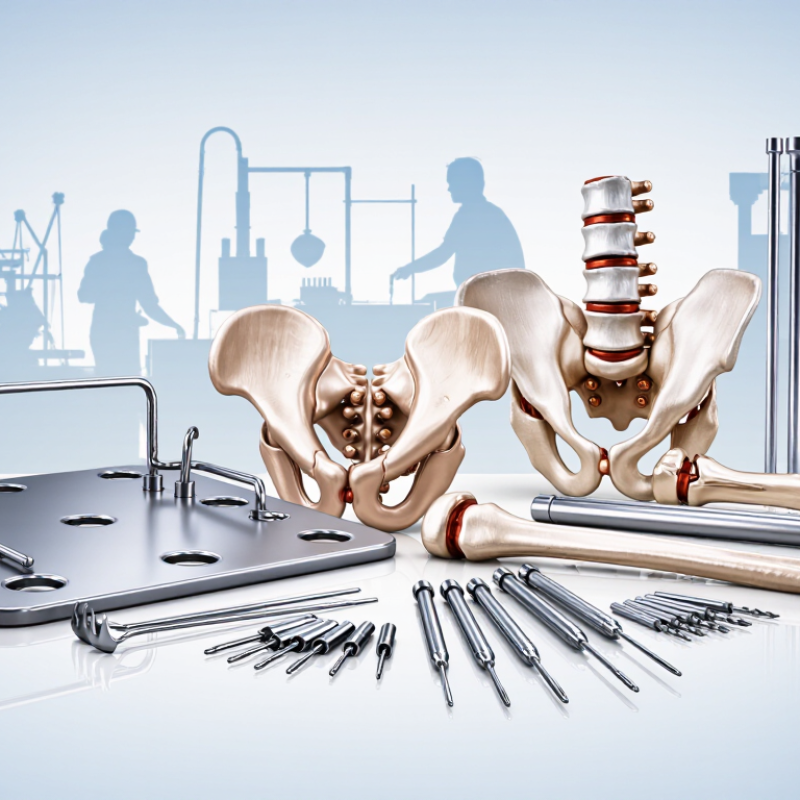
China’s orthopedic implant and instrument market is expanding with population aging, urban healthcare demand, and wider hospital procurement. China’s National Bureau of Statistics reported 310 million people aged 60 or above in 2023, representing 22.0% of the population. This demographic shift supports demand for joint replacements, trauma fixation systems, spinal devices, and surgical instruments.
Industry estimates differ. A Frost & Sullivan market analysis places China’s orthopedic implant market in the tens of billions of yuan, with continued growth through the late 2020s. Grand View Research also identifies China as a major Asia-Pacific growth market for orthopedic devices. However, figures are not perfectly comparable. Some reports measure factory sales, while others include hospital procurement value. That difference matters.
A credible China top-ten supplier review should examine more than revenue. Useful indicators include NMPA registration status, hospital tender performance, product traceability, instrument compatibility, and surgeon training support. In a real operating room, small details matter: a clearly marked tray, smooth screw handling, and dependable delivery can affect workflow. Domestic suppliers increasingly compete in trauma, spine, and joint reconstruction, while regional distribution networks remain uneven. Rankings can change after centralized procurement. They should be viewed as a practical screening tool, not a clinical endorsement. More transparent reporting would improve market comparisons.
China’s aging population is a major structural driver of demand for orthopedic implants, surgical instruments, and related clinical services. This chart presents official demographic indicators rather than company or brand data.
Indicator: share of China’s total population aged 60 and above or 65 and above, 2020–2024. Source: National Bureau of Statistics of China, annual national economic and social development statistical communiqués.
China Top 10 Orthopedic Implants and Instruments Suppliers
Selecting the top Chinese suppliers requires more than comparing prices or factory photographs. Start with verified manufacturing experience in orthopedic implants and surgical instruments. Review product classifications, quality certificates, testing records, and regulatory registrations for each target market. A reliable supplier should explain material grades, sterilization controls, surface finishing, and design verification clearly. Ask for recent audit reports, not only downloadable certificates.
Production evidence matters. Visit the facility when possible, or request a live video audit. Check machining areas, clean packaging rooms, calibration labels, and batch traceability records. Request sample inspection reports showing dimensions, hardness, surface condition, and packaging integrity. Review complaint handling, corrective actions, delivery history, and minimum order terms. Technical engineers should answer practical questions without avoiding difficult details.
Tips: Compare at least three suppliers using the same checklist. Confirm whether testing is internal or independently verified. Ask how rejected components are isolated and recorded. A polished website proves little. I have seen attractive presentations hide incomplete traceability, so skepticism is useful. Also, do not rank suppliers by export volume alone; a smaller manufacturer may offer stronger engineering support, but its capacity could be limited. Check current compliance requirements in the destination market and document every decision.
Profiles of China’s Top 10 Orthopedic Suppliers
China’s orthopedic supply base now covers trauma fixation, spinal systems, joint replacement, sports medicine, and surgical instruments. The top ten suppliers usually differ by clinical focus, manufacturing depth, and export readiness. Several specialize in titanium plates and screws, while others develop spinal cages, artificial joints, or minimally invasive tools. Some also provide sterilization services and surgical training. That detail matters.
Industry reports from Grand View Research and MarketsandMarkets identify Asia-Pacific as a major growth region for orthopedic devices. China’s aging population, rising fracture treatment demand, and expanding hospital networks support this trend. However, rankings can change quickly. Public data often mixes manufacturers, distributors, and contract producers. This creates an imperfect comparison.
A careful profile should review NMPA registration records, ISO 13485 certification, clinical evidence, product traceability, and complaint-handling procedures. The best suppliers should also show stable batch control and documented material testing. Their capabilities may look impressive online, but factory audits can reveal gaps. Price alone is a weak signal.
Tips: Compare ten suppliers by product category, not revenue alone. Request recent test reports, sterilization records, and export references. Confirm whether technical support covers the full implant lifecycle. Always check current regulatory status before procurement.
China’s top orthopedic implant and instrument suppliers increasingly compete through product depth, clinical support, and manufacturing control. Their portfolios often include trauma plates, intramedullary nails, spinal fixation systems, joint replacements, bone screws, and surgical instruments. Fit matters. Implant geometry should match local anatomy, surgical access, and expected loading conditions.
Key technologies include titanium and cobalt-chromium processing, porous surfaces, additive manufacturing, and computer-assisted planning. Porous structures may encourage bone integration when design and sterilization remain consistent. Navigation systems can improve alignment during spine, knee, and hip procedures. Some suppliers also provide patient-specific guides, reusable instrument trays, and digital sizing tools. These products require careful validation, not attractive specifications alone.
Clinical applications range from fracture fixation and deformity correction to joint reconstruction and spinal stabilization. In a busy operating room, clear tray labeling and reliable instrument handling can save valuable minutes. Surgeons should review fatigue testing, biocompatibility data, sterilization instructions, and post-market surveillance records. Hospital buyers should also examine training quality, delivery stability, and traceability. Evidence matters.
A supplier may have strong engineering but limited clinical follow-up. That weakness deserves attention. Independent evaluations, surgeon feedback, and long-term registry data can reveal problems that brochures cannot. Selection should consider the complete treatment pathway, from preoperative planning to revision management. Regional regulatory approval and hospital procurement requirements must be confirmed before clinical use. Small errors matter.
Choosing among China’s leading orthopedic suppliers requires more than comparing prices. A reliable manufacturer should hold ISO 13485 certification and demonstrate controlled design, production, sterilization, and complaint procedures. Check certificate scopes carefully.
Some cover instruments but exclude implants. That difference matters.
For products entering regulated markets, verify applicable NMPA, CE under the EU Medical Device Regulation, or FDA requirements. Certification alone does not prove clinical suitability.
Material evidence should be specific. Request titanium or stainless-steel grades, mill certificates, surface-treatment records, and biocompatibility data aligned with ISO 10993.
Review fatigue testing, dimensional inspection, packaging validation, and sterilization records. During a factory audit, inspect laser markings, sealed trays, clean areas, and batch segregation. Small details reveal process discipline.
Ask how the supplier handles nonconforming products and engineering changes. Written answers are better than confident promises.
Procurement teams should also assess traceability, minimum order quantities, tooling ownership, lead times, and technical support.
A quality agreement should define inspection standards, audit access, notification periods, and recall responsibilities. Sample approval should include realistic surgical simulations, not only photographs.
I once underestimated packaging risks because the implants looked flawless; later, seal strength required closer review. That mistake is worth remembering.
Supplier rankings can change after an audit, failed test, or documentation gap. Reliable purchasing depends on evidence that remains consistent from quotation to delivery.
Compare at least three suppliers with the same checklist. Review product scope, manufacturing evidence, certifications, testing, traceability, and delivery history. Price alone is weak evidence.
Request current certificates, registration records, material certificates, test reports, sterilization records, and complaint-handling procedures. Check each document’s scope carefully. Some certificates exclude implants.
Confirm titanium or stainless-steel grades through mill certificates. Review hardness, dimensions, fatigue performance, surface condition, and biocompatibility evidence. Details matter.
Visit the facility or request a live video audit. Inspect machining areas, clean packaging rooms, calibration labels, and batch records. Factory photographs are not enough.
Check dimensions, markings, hardness, surface finish, packaging integrity, and sterilization status. Use realistic surgical simulations when possible. Photographs can hide problems.
It is essential. Each batch should connect materials, inspections, packaging, and delivery records. Ask how rejected components are isolated and documented.
Confirm minimum order quantities, lead times, tooling ownership, inspection rules, audit access, and technical support. Written agreements reduce later confusion. I once underestimated packaging risks.
Sometimes. A smaller supplier may offer stronger engineering support and faster communication. However, its capacity may be limited. Check production continuity before committing.
China’s orthopedic implant and instrument market has expanded through advances in medical manufacturing, clinical research, and hospital demand. This article presents a practical overview of the market and explains how to evaluate leading Chinese suppliers based on product reliability, material quality, research and development capabilities, manufacturing capacity, technical support, delivery performance, and customer service. It also introduces the general profiles of ten representative suppliers without focusing on brand promotion.
The discussion covers key products and technologies, including trauma fixation systems, spinal devices, joint replacement components, surgical instruments, and related solutions for different clinical applications. It further examines quality management, product registration, applicable certifications, production controls, traceability, and procurement considerations. By comparing supplier strengths, product ranges, compliance practices, and after-sales support, hospitals, distributors, and healthcare purchasers can make more informed decisions when sourcing orthopedic implants and instruments for safe, efficient, and long-term clinical use.