0%

Choosing among top orthopedic implant manufacturers is not a logo comparison. It is a clinical and operational decision, shaped by the procedure, the patient’s anatomy, and the evidence behind each device. As a paraphrase of orthopedic surgeon Daniel J. Berry’s patient-focused clinical perspective: implant selection should serve the patient’s needs and be supported by sound evidence. This is a paraphrase, not a direct quotation.

Look beyond polished product brochures. Compare implant materials, design options, published clinical outcomes, and the quality of long-term follow-up data. Ask how a manufacturer supports surgeon training, instrument availability, traceability, and clear communication when a device concern arises. A well-made knee component still needs to fit the surgical plan and the patient in front of the team. Details matter.

So does restraint. A newer design is not automatically better, and a familiar brand is not automatically the right choice. Manufacturer claims deserve careful review against independent research and the judgment of qualified clinicians. This guide outlines practical criteria for assessing suppliers, evaluating evidence, and asking sharper questions before a purchasing decision. There is no perfect checklist. Real-world needs vary.
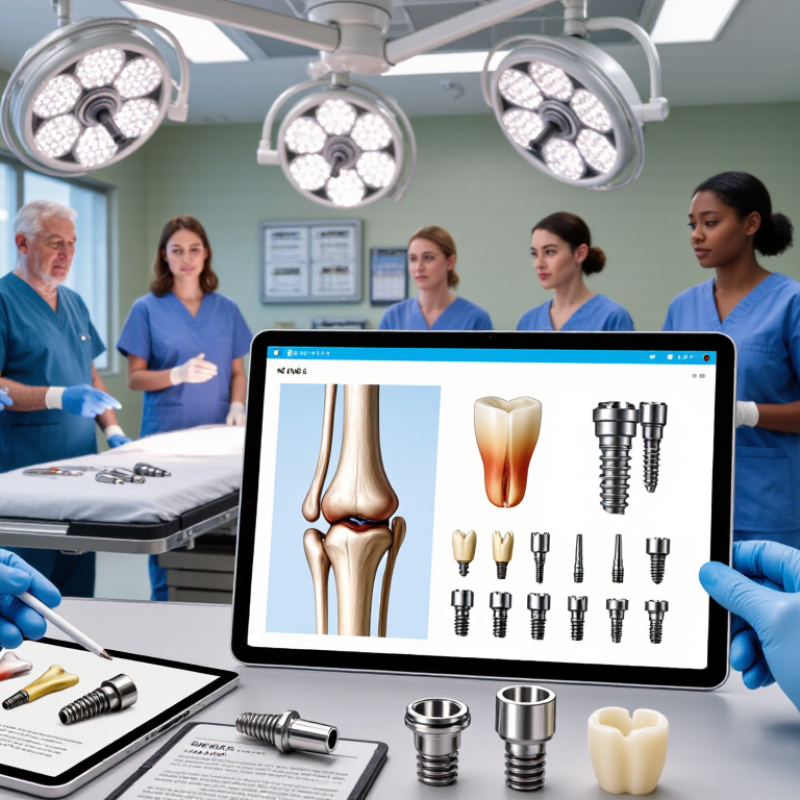
How to Choose Top Orthopedic Implant Manufacturers

Define the Clinical and Procedural Requirements for the Implant

Before comparing manufacturers, define the clinical problem precisely. Is the implant intended for primary or revision surgery? Specify the patient’s anatomy, bone quality, activity level, and relevant comorbidities. For a knee case, document alignment goals, constraint needs, and whether bone loss requires augmentation. Small details matter.

Procedural requirements matter just as much. Confirm the planned surgical approach, available instruments, fixation method, and whether the implant fits the hospital’s sterilization and imaging workflows. The UK National Joint Registry’s 2024 Annual Report draws on more than three million recorded joint replacement procedures. Such large-scale registry data can help teams examine implant use and outcomes across real clinical practice, but they cannot predict an individual patient’s result. Fit is personal.

Translate these requirements into questions for each manufacturer: What evidence covers the intended patient group? How are revisions and adverse outcomes tracked? Can the system accommodate the surgeon’s technique without adding unnecessary steps? Request clear instructions, training details, and traceability information. Then review feedback from the operating room, not only demonstrations. A polished brochure cannot settle every question; bench testing may miss practical issues, too. No checklist is perfect, and local experience can be uneven. Record unresolved concerns before procurement, and revisit them after early cases.

Assess Regulatory Approvals and Quality Management Systems

When comparing orthopedic implant manufacturers, check whether the specific implant and its intended use are covered by applicable regulatory approvals. A company’s general registration does not automatically confirm that every model is cleared for every market. Ask for current certificates, product lists, and approval details, then verify them with the relevant regulatory authority where possible. Details matter. Confirm that sizes, materials, and intended indications match the product you are evaluating. A polished document can still leave gaps.

Assess the manufacturer’s quality management system, not just its certificate. Look for a current, independently audited system and ask how it controls design changes, suppliers, production records, and nonconforming products. For an implant, traceability should connect the finished device to key materials, manufacturing steps, and inspection results. Ask how complaints are investigated and corrective actions are checked for effectiveness. These answers reveal more than a logo on a certificate. Also review how sterilization processes are validated and monitored, when relevant to the product. No system is flawless. A supplier may have strong procedures yet still face a process failure, so examine recent audit findings and documented responses. If records are vague or difficult to match to the exact implant, pause and request clarification.

Compare Product Design, Materials, and Clinical Evidence

When comparing orthopedic implant manufacturers, inspect the design beyond its brochure drawings. Ask how component geometry supports fit, stability, and surgical placement, and whether wear and corrosion testing reflects realistic loading. Materials matter at the contact surface: titanium alloys, cobalt-chromium alloys, ceramics, and polyethylene each have distinct mechanical and biological considerations. Request test methods, sample sizes, and failure criteria. A polished finish is not proof.

Clinical evidence should match the intended patient group and procedure. The UK National Joint Registry’s 2023 annual report draws on more than three million joint replacement procedures, offering a substantial basis for examining revision patterns. Look for results by implant type, patient age, fixation method, and follow-up period—not a single headline survival figure. The OECD’s Health at a Glance 2023 also reports substantial variation in hip replacement rates across countries, a reminder that patient populations and care settings differ. Compare like with like.

Check whether studies include independent registry data, patient-reported outcomes, and clear accounting for losses to follow-up. Ask what changed after a design revision, and whether evidence covers that exact version. Small details matter. Metal sensitivity, imaging artifacts, or limited long-term data may deserve discussion, even when a device performs well in testing. No implant is perfect; evidence should make its limits visible.

Evaluate Manufacturing Capacity, Traceability, and Support

Manufacturing capacity is more than a stated annual output. Ask how the facility handles demand spikes, equipment maintenance, and production bottlenecks. Request recent capacity data and compare it with actual delivery times. A supplier may have modern machines, yet rely on one critical process or a single shift. Small gaps matter.

Traceability should connect each implant to its material lot, production steps, inspections, and release records. Ask for a sample record and follow one item from incoming material to finished product. Check how the manufacturer documents deviations and communicates process changes. A tidy spreadsheet is not enough if key links are missing. I might still overlook a weak handoff, so involve quality staff in the review.

Support matters after the order is placed. Confirm who handles technical questions, delivery changes, and documentation requests. Ask how quickly the team responds, and whether support continues when production staff change. Clear answers are useful. Vague promises are not. A short conversation with the people who manage records and production can reveal more than a polished sales presentation.

Select Manufacturers Using Risk, Performance, and Cost Criteria

Choosing an orthopedic implant manufacturer starts with risk, not a catalog. Review documented quality controls, supplier oversight, sterilization records, and lot-level traceability. Ask how design changes are reviewed and how product complaints reach clinical and engineering teams. A credible answer includes records, responsible contacts, and response times—not broad assurances. Check whether performance evidence applies to the intended procedure and patient population. Do not mistake a polished presentation for proof. During an audit, compare sample production records with written procedures; small gaps can matter.

Performance also depends on practical details: instrument availability, handling consistency, training materials, and dependable delivery. Ask for evidence from relevant testing and, where available, post-market monitoring. Details matter. Compare total costs, including instruments, training, shipping, service, and the effects of delays—not only the unit price. Request a clear breakdown and confirm which costs may change over time. A low quote is not necessarily efficient; it may shift expenses downstream. No supplier is free of risk, and a checklist cannot replace clinical judgment. Revisit the criteria when product specifications, demand, or support needs change.

FAQS

How can I confirm an implant has the right regulatory approvals?

Request current certificates, product lists, and approval details. Check that the exact model, materials, sizes, and intended use match. Verify details with the relevant authority when possible.

What should I review in a manufacturer’s quality system?

Ask for recent audit findings and documented responses. Review controls for design changes, suppliers, production records, and nonconforming products. A certificate alone is not enough.

How can I check implant traceability?

Request a sample record and follow one implant from incoming material to final release. Confirm that material lots, production steps, inspections, and release records connect. Missing links matter.

How should I assess manufacturing capacity?

Ask for recent capacity data, maintenance plans, and actual delivery times. Check whether production depends on one machine or shift. Small bottlenecks can disrupt supply.

What support should I expect after placing an order?

Confirm who handles technical questions, delivery changes, and document requests. Ask how quickly the team responds and whether support continues when staff change. Vague promises are not reassuring.

How can I compare manufacturer costs fairly?

Compare the unit price with instruments, training, shipping, service, and possible delay costs. Request a clear breakdown. A low quote may move costs elsewhere.

What performance evidence should I request?

Ask for relevant testing and available post-market monitoring. Confirm the evidence applies to the intended procedure and patient group. A polished presentation is not proof.

Can a checklist identify every supplier risk?

No. Review records, procedures, and practical support, but involve quality staff and use clinical judgment. I may still miss a weak handoff. Recheck criteria when needs change.

Conclusion

Choosing top orthopedic implant manufacturers starts with defining the intended clinical use, patient needs, surgical approach, and performance requirements. These factors help narrow the field to suppliers whose implant designs and available options suit the procedure. Next, review relevant regulatory approvals and the strength of each manufacturer’s quality management system, while checking that product claims are supported by appropriate clinical evidence.

Compare implant materials, design features, and documented performance, then assess manufacturing capacity, product traceability, delivery reliability, and technical support. A structured evaluation helps identify potential risks, such as limited supply continuity or insufficient product documentation. Finally, balance clinical performance, quality, service, and total cost rather than relying on price alone. Using consistent criteria and input from clinical and procurement teams can support a well-informed decision focused on patient needs and dependable long-term collaboration.

Oliver

Oliver

Oliver is a professional marketing specialist and a trusted voice behind the company’s expert blog. With a strong understanding of the company’s products, customer needs, and market trends, he transforms complex information into clear, practical, and engaging content for business readers. His work......