Choosing the right orthopedic implant company requires more than comparing product catalogs or market share. Global buyers must examine clinical evidence, manufacturing controls, regulatory status, and long-term service. A reliable supplier should explain implant materials, sterilization methods, traceability systems, and quality certifications clearly. It should also provide evidence from real surgical settings, not only polished marketing claims.
This guide introduces leading orthopedic implant companies serving hospitals, distributors, and healthcare systems worldwide. It considers joint replacement, trauma fixation, spinal devices, and supporting instruments. Product consistency matters. So does surgeon training. A well-designed hip stem can still create problems if instruments are poorly matched or technical support is unavailable. Buyers should review local registration requirements, import procedures, warranty terms, and post-market surveillance records before making commitments.
Details matter most.
No company is perfect. Even established manufacturers may face supply delays, regional limitations, or changing approval requirements. Some public information may also be incomplete or difficult to compare. That uncertainty deserves attention. The companies discussed here are therefore assessed through practical criteria, including engineering experience, clinical reputation, production capacity, documentation quality, and responsiveness to healthcare professionals. Readers should verify current approvals and performance data with regulators, surgeons, and procurement specialists. A careful decision protects more than a purchasing budget; it supports surgical consistency, patient safety, and trust across the healthcare supply chain.
What Orthopedic Implants Are and How the Market Is Organized
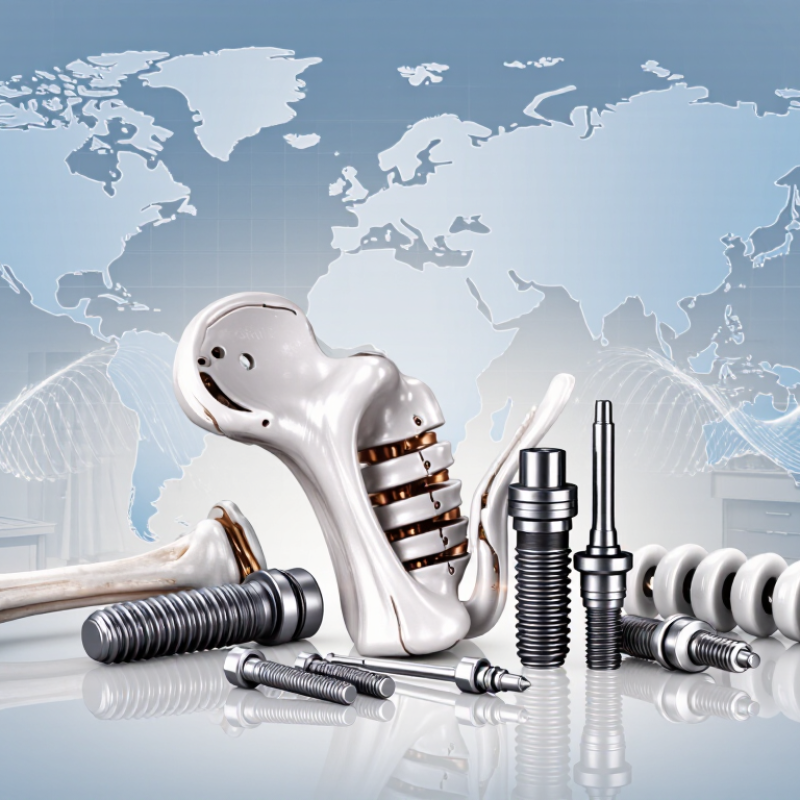
Orthopedic implants are medical devices designed to support, replace, or stabilize damaged bones and joints. Common examples include joint replacements, fixation plates, screws, spinal systems, and trauma nails. Each device must match anatomy, surgical technique, material performance, and patient needs. Small differences matter. A few millimeters can affect movement, alignment, or recovery.
The orthopedic implant market is organized by application, material, procedure, and buyer type. Hospitals often purchase through tenders, distributor networks, or direct supplier agreements. Surgeons may influence product selection, while procurement teams assess cost, documentation, training, and supply reliability. Materials include titanium alloys, stainless steel, cobalt-based alloys, ceramics, and medical polymers. Manufacturing quality remains critical, especially for surfaces that contact bone or moving joints.
In practical procurement reviews, technical evidence should sit beside commercial data. Buyers commonly examine clinical studies, traceability records, sterilization information, and post-market support. Regulatory pathways differ across countries, so one approval does not guarantee access everywhere. A neat market map can mislead. Some suppliers serve several categories, while others focus on one procedure. Pricing also changes with instruments, surgeon training, service contracts, and replacement schedules. The lowest quoted price may not represent the lowest total cost. That point is easy to miss. Market comparisons should therefore use consistent product definitions and verified documents, not promotional claims alone.
Top Orthopedic Implant Companies for Global Buyers - What Orthopedic Implants Are and How the Market Is Organized
| Market Segment | Main Implant Types | Typical Anatomical Application | Common Materials | Typical Fixation or Use Method | Primary Clinical Objective | Key Buyer Considerations |
|---|---|---|---|---|---|---|
| Joint Reconstruction | Total joint systems, partial joint systems, resurfacing components | Hip, knee, shoulder, ankle, and selected small joints | Titanium alloys, cobalt-chromium alloys, stainless steel, ceramics, ultra-high-molecular-weight polyethylene | Cemented, cementless, hybrid, or press-fit fixation | Restoration of joint motion and reduction of pain caused by severe degeneration or trauma | Range of sizes, bearing-pair options, surgical approach compatibility, instrument availability, clinical evidence, and revision strategy |
| Trauma Fixation | Plates, screws, intramedullary nails, wires, pins, staples, and external fixation components | Long bones, periarticular fractures, hand, foot, pelvis, and spine-related trauma | Titanium alloys, stainless steel, cobalt-chromium alloys, and bioabsorbable polymers for selected applications | Internal fixation, intramedullary fixation, or external stabilization | Fracture reduction, alignment, stabilization, and support for bone healing | System compatibility, locking options, strength-to-weight ratio, sterile packaging, emergency availability, and tray completeness |
| Spinal Implants | Pedicle screws, rods, interbody cages, plates, hooks, and vertebral augmentation devices | Cervical, thoracic, lumbar, and sacral spine | Titanium alloys, cobalt-chromium alloys, polyether ether ketone, ceramics, and specialized polymers | Fusion, deformity correction, stabilization, or motion-preserving procedures | Stabilization of the spinal column, restoration of alignment, and support for fusion when clinically indicated | Implant geometry, radiolucency, imaging compatibility, navigation integration, surgeon training, and procedure-specific instrumentation |
| Sports Medicine | Suture anchors, interference screws, ligament fixation devices, meniscal repair devices, and soft-tissue fixation systems | Knee, shoulder, hip, elbow, ankle, and other soft-tissue repair sites | Titanium alloys, stainless steel, bioabsorbable polymers, polyether ether ketone, and high-strength sutures | Anchoring, interference fixation, compression, or soft-tissue approximation | Reattachment or reconstruction of ligaments, tendons, cartilage, and other soft tissues | Insertion technique, pull-out strength, absorbability profile, MRI considerations, and compatibility with minimally invasive procedures |
| Orthobiologics and Bone Repair | Bone graft substitutes, demineralized bone matrix, bone void fillers, and selected growth-factor products | Fracture gaps, spinal fusion sites, revision procedures, and bone defects | Calcium phosphate, calcium sulfate, collagen, allograft-derived materials, and synthetic polymers | Packed into a defect, applied around an implant, or delivered through a specialized system | Filling bone defects and supporting bone formation or fusion | Product classification, biological mechanism, handling properties, storage conditions, shelf life, and evidence for the intended indication |
| Dental and Maxillofacial Reconstruction | Dental implants, craniofacial plates, fixation screws, meshes, and patient-specific reconstruction components | Jaw, facial bones, cranial structures, and oral rehabilitation sites | Titanium, titanium alloys, cobalt-chromium alloys, ceramics, and medical polymers | Osseointegration, rigid fixation, reconstruction, or guided tissue support | Restoration of structural integrity, function, and appearance | Anatomical fit, imaging requirements, sterilization, digital workflow compatibility, and availability of custom manufacturing |
How the Orthopedic Implant Market Is Organized
| Organization Dimension | Main Categories | What It Means for Global Buyers | Important Evaluation Criteria |
|---|---|---|---|
| Product Function | Joint replacement, trauma fixation, spine, sports medicine, orthobiologics, and reconstruction | Different segments require different clinical expertise, instruments, regulatory files, and distribution capabilities | Intended use, surgical technique, patient population, product completeness, and post-market support |
| Material Platform | Metals, ceramics, polymers, composites, absorbable materials, and biological materials | Material selection affects strength, wear, imaging characteristics, biocompatibility, and expected degradation behavior | Material standards, corrosion resistance, wear testing, sterilization compatibility, and traceability |
| Manufacturing Model | Machined, forged, cast, molded, additive-manufactured, coated, or patient-specific products | Production method influences design flexibility, surface structure, lead time, quality controls, and minimum order requirements | Process validation, dimensional consistency, surface treatment, inspection records, and production capacity |
| Regulatory Pathway | Market authorization, conformity assessment, registration, listing, and post-market surveillance | Requirements differ by jurisdiction and may depend on risk class, intended use, novelty, and whether the product is sterile or implantable | Technical documentation, quality management certification, clinical evidence, labeling, UDI requirements, and local representative arrangements |
| Commercial Channel | Direct sales, authorized distributors, hospital tenders, group purchasing, and private healthcare procurement | The purchasing route affects pricing, inventory responsibility, training, tender eligibility, and service coverage | Distributor authorization, territory coverage, inventory model, tender history, technical support, and response time |
| Procurement Basis | Clinical performance, total cost of ownership, supply reliability, service, and compliance | The lowest purchase price may not represent the lowest overall cost when instruments, training, revisions, and inventory are included | Unit price, procedure cost, warranty, revision support, delivery performance, complaint handling, and lifecycle documentation |
FAQS
Compare suppliers by product category, clinical evidence, quality records, and supply reliability. A large catalog proves little. Category fit matters more.
Review wear data, revision rates, fixation performance, and surgeon feedback. Confirm the evidence matches the intended patient population. Brochures can be incomplete.
Check plate, screw, nail, and locking-system strength. Review material quality under repeated loading. Request test results and traceable production records.
Assess cage design, rod systems, biological compatibility, and surgical technique fit. Confirm regional regulatory requirements. Technical familiarity should not replace evidence.
Request market authorization, device classification, technical files, and surveillance procedures. Verify the ISO 13485 certificate scope and expiration date. Check the manufacturing address.
Review sterilization validation, packaging integrity, and shelf-life evidence. Trace each product from raw material lot to final shipment. Small gaps matter.
Audits reveal nonconformities, corrective actions, complaint response times, and inconsistent manufacturing. Certificates are only one checkpoint. I might still miss something.
Confirm replacement instruments, training support, and delivery timing. A technically excellent implant is less useful when instruments arrive late. Hospitals need dependable replenishment.
Not always. Lower prices may create higher revision, training, or logistics costs. Sometimes, less choice is safer. Review total practical cost.
Match the implant to anatomy, surgical technique, hospital capacity, and local rules. Compare audits with clinical evidence and user training plans. No portfolio is perfect.
Conclusion
Orthopedic implants are medical devices designed to restore, support, or replace damaged bones and joints, with the market organized by product type, surgical application, material, and regional demand. This overview explains how to compare an orthopedic implant company by examining product quality, manufacturing capabilities, clinical evidence, innovation, supply reliability, and after-sales support. It also reviews major product categories, including joint replacement systems, spinal implants, trauma fixation devices, and sports medicine solutions, while highlighting the different needs of hospitals, distributors, and specialized clinics.
For international buyers, regulatory approval, quality management systems, traceability, product documentation, and compliance with applicable market requirements are essential considerations. Buyers should assess supplier experience, production capacity, certification status, communication efficiency, customization options, delivery performance, and long-term partnership potential. A structured evaluation process, supported by technical due diligence and transparent commercial discussions, can help global buyers identify dependable suppliers and select partners capable of delivering safe, consistent, and clinically appropriate orthopedic implant solutions.