No matching category. Email [email protected] and our product specialists will help you locate it.
An orthopedic device manufacturer develops, produces, and supports products that help restore movement, stability, or comfort. These products may include joint implants, bone plates, spinal systems, braces, surgical instruments, and rehabilitation devices. The work extends far beyond shaping metal or molding polymer. It connects engineering decisions with anatomy, surgical technique, manufacturing controls, and patient needs.
A reliable orthopedic device manufacturer begins with a defined clinical problem. Engineers may study how a knee implant bears repeated loads or how a brace fits around swelling tissue. Materials are selected for strength, wear resistance, sterilization compatibility, and patient safety. Prototypes undergo dimensional checks, fatigue testing, surface inspections, and packaging evaluations. Manufacturing teams also maintain traceability, documented procedures, supplier controls, and quality systems aligned with recognized medical-device requirements.
The details matter.
A small burr, inconsistent coating, or unclear instruction can affect clinical performance. Experienced manufacturers therefore work with surgeons, therapists, quality specialists, and patients during development and review. They examine complaints, monitor product performance, and investigate unexpected results instead of dismissing them. No manufacturer gets every decision right. That reality deserves honest attention. A strong company learns from design revisions, production errors, and field feedback while protecting patient welfare. Understanding this role helps readers distinguish a medical-device producer from an ordinary industrial supplier. It also provides a practical way to evaluate expertise, evidence, manufacturing discipline, and long-term responsibility.
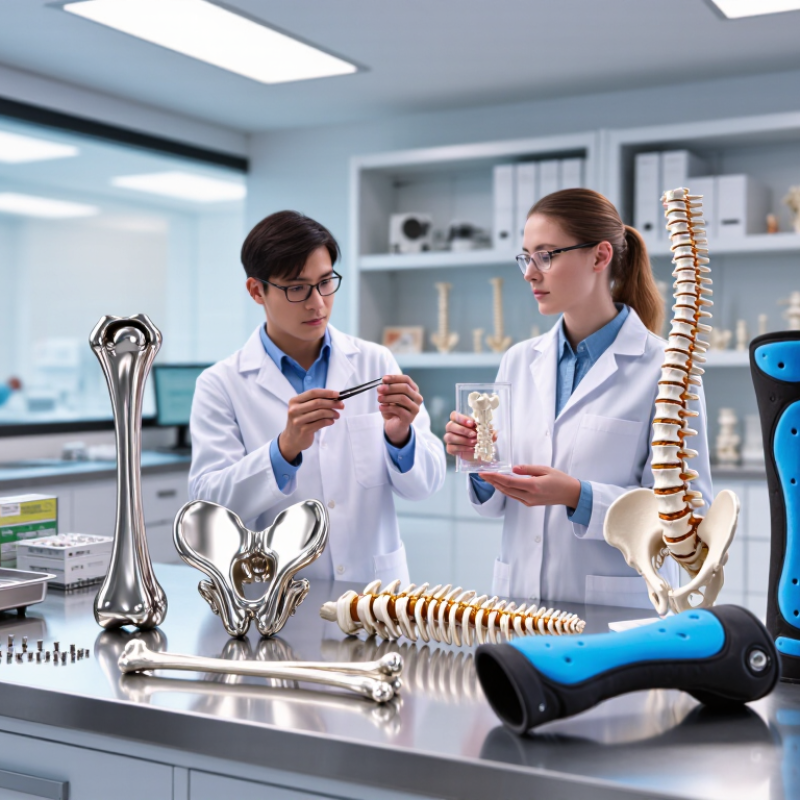
An orthopedic device manufacturer develops, produces, and supports products that help restore movement or protect damaged bones and joints. Its role extends beyond machining metal or molding polymer parts. Engineers study anatomy, clinical needs, materials, and expected loads before creating a design. A knee implant, fixation plate, or surgical instrument must fit the body and perform consistently.
The manufacturer also controls testing, production, packaging, and traceability. Each stage needs documented procedures and skilled inspection. For example, a small change in a plate’s thickness can affect strength, weight, and surgical handling. Quality teams review measurements, surface finishes, sterilization processes, and packaging integrity. Clinical feedback can reveal practical problems, such as an instrument that feels awkward through a wet surgical glove. Good manufacturers listen and improve. No process is flawless. That reality deserves honest review, not polished promises.
Tips: Look for clear quality records, material information, validation evidence, and responsive technical support. Ask how the company manages design changes and customer feedback. Check whether instructions are practical and easy to follow. A reliable partner explains limitations openly. It should also protect patient safety through consistent monitoring after products reach hospitals. Small details matter. A missing label or unclear measurement can create avoidable confusion. Manufacturers must therefore combine engineering discipline with clinical awareness, careful communication, and continuous learning.
An orthopedic device manufacturer develops tools that support bones, joints, muscles, and the spine. Its work combines engineering, material science, clinical feedback, and strict quality control. Engineers may study X-rays, surgical movement, and long-term wear before creating a device. Surgeons and rehabilitation specialists often provide practical feedback during development. Patient safety remains central.
Fracture fixation devices include plates, screws, nails, and wires. They stabilize broken bones while natural healing progresses.
Joint replacement components can restore movement in damaged hips, knees, or shoulders. Spinal implants may support alignment or reduce pressure on affected nerves.
External fixators help manage complex fractures, especially when swelling or soft-tissue injury limits internal surgery. Braces and orthoses provide support without entering the body.
A screw must provide reliable grip without weakening the bone. A joint component should move smoothly and tolerate repeated daily loading. Materials also require testing for strength, corrosion resistance, and tissue compatibility.
Manufacturing includes precise machining, cleaning, sterilization, and traceable inspections.
No device is perfect. Fit, surgical technique, patient activity, and healing can influence results. Some designs appear promising in testing but need more long-term evidence. Healthcare professionals must match each device to the patient’s anatomy, diagnosis, risks, and treatment plan.
What Is an Orthopedic Device Manufacturer?
An orthopedic device manufacturer turns clinical needs into safe, usable medical products. The work begins with design input from surgeons, engineers, therapists, and patients. A clear problem guides every decision. A replacement component may need to fit bone geometry, resist repeated loading, and remain comfortable during movement. Designers create digital models and physical prototypes. They examine dimensions, materials, surface finishes, and cleaning requirements. Small details matter.
Development includes risk analysis, material evaluation, and performance testing. Engineers may use mechanical fixtures to simulate thousands of loading cycles. Biocompatibility assessments help determine whether materials are suitable for body contact. Usability reviews can reveal awkward edges or confusing handling steps. No prototype is perfect. A minor tolerance error can affect assembly or clinical use. That finding should improve the design, not disappear in a report.
Manufacturing converts the approved design into consistent production. Processes may include precision machining, molding, forming, surface treatment, cleaning, packaging, and final inspection. Trained operators follow controlled work instructions. Calibrated tools measure critical dimensions. Each batch needs traceable records, including material certificates and inspection results. Manufacturing engineers also study process capability and investigate unexpected variation. Sometimes, production exposes a weakness that testing missed. That is uncomfortable, but valuable. Reliable manufacturers keep learning through documented corrective actions, supplier controls, and ongoing process monitoring.
| Process Stage | Primary Activities | Typical Technical Outputs | Applicable Standards or Controls | Key Quality Evidence | Common Manufacturing Considerations |
|---|---|---|---|---|---|
| 1. Clinical Need and Product Definition | Identify the anatomical problem, intended patient population, clinical use, surgical technique, and performance requirements. | Intended use statement, user needs, preliminary product requirements, clinical risk assumptions, and target indications. | ISO 13485 ISO 14971 Clinical evaluation planning | User needs are documented, measurable, traceable, and consistent with the intended clinical application. | Requirements should account for anatomy, implant fixation, load transfer, surgical access, sterilization, and patient variability. |
| 2. Design and Engineering | Develop the geometry, materials, interfaces, fixation features, instrumentation, and design controls for the orthopedic device. | CAD models, engineering drawings, material specifications, design inputs, design outputs, and design-review records. | Design controls Tolerance analysis Human factors | Design outputs satisfy approved inputs and include inspection criteria, labeling requirements, and production specifications. | Design decisions may address fatigue strength, wear, corrosion, fretting, micromotion, manufacturability, and instrument compatibility. |
| 3. Material Selection | Select materials based on mechanical performance, biocompatibility, corrosion resistance, wear behavior, sterilization compatibility, and processing capability. | Approved material list, material certificates, chemical composition requirements, surface-finish specifications, and supplier controls. | ISO 10993 ASTM material standards Biocompatibility assessment | Material identity, grade, lot traceability, and incoming verification are controlled throughout the supply chain. | Common orthopedic material categories include implant-grade metals, engineering polymers, ceramics, and resorbable materials, depending on the application. |
| 4. Prototype Development | Build early prototypes to evaluate fit, function, surgical handling, interfaces, and manufacturing feasibility. | Prototype parts, anatomical models, test fixtures, design-iteration records, and preliminary usability feedback. | Design verification planning Usability engineering Risk analysis | Prototype results are recorded with configuration identification, test conditions, deviations, and design actions. | Prototype methods may differ from final production methods, so prototype results must be interpreted within their process limitations. |
| 5. Verification and Validation | Confirm that the device meets engineering specifications and is suitable for its intended use under simulated or representative conditions. | Verification protocols, validation reports, mechanical test data, simulated-use results, packaging studies, and biological evaluation records. | ISO 14971 ISO 10993 ASTM test methods IEC 62366-1 | Testing uses approved protocols, calibrated equipment, predefined acceptance criteria, and complete traceability to the design version. | Testing may evaluate static strength, fatigue, wear, range of motion, insertion force, pull-out strength, torsion, corrosion, or particulate generation. |
| 6. Process Development | Define how approved designs will be consistently produced, inspected, cleaned, packaged, and sterilized. | Process flow diagrams, work instructions, equipment specifications, inspection plans, process parameters, and control plans. | ISO 13485 Process validation Statistical process control | Critical processes have defined operating ranges, acceptance criteria, monitoring methods, and documented personnel qualifications. | Special processes may include heat treatment, additive manufacturing, machining, coating, cleaning, passivation, bonding, and sterilization. |
| 7. Manufacturing and Assembly | Produce components using controlled equipment and approved procedures, then assemble devices and associated surgical instruments where applicable. | Production batches, device history records, traveler documents, assembly records, equipment logs, and in-process inspection results. | Good manufacturing practice Lot traceability Environmental controls | Each batch can be traced to raw materials, equipment, operators, process conditions, inspections, and final release decisions. | Manufacturing controls help limit dimensional variation, burrs, contamination, surface damage, improper assembly, and mix-ups. |
| 8. Cleaning and Surface Treatment | Remove manufacturing residues and apply controlled surface treatments when needed for corrosion resistance, wear performance, fixation, or tissue interaction. | Cleaning validation, residue limits, surface roughness records, coating specifications, treatment records, and inspection results. | Cleaning validation Surface characterization Chemical residue controls | Validated methods demonstrate that residues and process contaminants remain within established limits. | Surface characteristics can influence osseointegration, wear, corrosion, friction, coating adhesion, and fatigue performance. |
| 9. Packaging and Sterilization | Protect the device from damage and contamination while establishing a validated sterilization and shelf-life system when supplied sterile. | Packaging specifications, seal-strength results, sterilization cycle records, aging studies, and package-integrity data. | ISO 11607 ISO 11135 ISO 11137 ISO 17665 | Packaging and sterilization processes are validated for the device configuration, load pattern, and claimed shelf life. | The selected sterilization method must be compatible with materials, coatings, packaging, residues, and product functionality. |
| 10. Final Inspection and Release | Confirm product conformity before release through dimensional inspection, functional checks, documentation review, and batch disposition. | Inspection records, certificates of conformity, nonconformance records, release authorization, and device history documentation. | Final acceptance criteria Calibration control Record review | Only conforming products with complete records are released for distribution or clinical use. | Inspection may include critical dimensions, surface condition, marking, packaging integrity, cleanliness, and functional fit with instruments. |
| 11. Regulatory Submission and Market Authorization | Compile technical, clinical, risk-management, manufacturing, labeling, and quality-system information required by the target market. | Technical documentation, regulatory submissions, risk-management file, clinical evidence, labeling, and post-market plans. | Quality-system requirements Risk management Device classification | Claims, intended use, test results, manufacturing controls, and labeling are internally consistent and supported by evidence. | Regulatory pathways and evidence requirements vary according to device classification, intended use, risk, and jurisdiction. |
| 12. Post-Market Surveillance | Monitor field performance, complaints, adverse events, returns, corrective actions, and opportunities for product improvement. | Complaint files, trend reports, field-action records, periodic reviews, corrective actions, and design-change assessments. | Complaint handling CAPA Change control | Safety and performance signals are evaluated using documented procedures, escalation criteria, and regulatory reporting rules. | Feedback can identify issues involving wear, breakage, loosening, corrosion, packaging damage, labeling, instruments, or surgical technique. |
An orthopedic device manufacturer designs, produces, and supports implants, braces, instruments, or mobility products. Its responsibility extends beyond machining a precise component. Patient safety depends on controlled materials, trained operators, traceable records, and evidence-based decisions.
Quality systems commonly follow ISO 13485 principles. Risk management should address breakage, wear, contamination, misuse, and delayed healing. Engineers may inspect dimensions with calibrated gauges and examine surfaces under magnification. Testing can include fatigue, tensile strength, corrosion resistance, packaging integrity, and simulated use. Biocompatibility evaluations help assess tissue contact risks. Sterilization requires validated cycles, defined load patterns, and routine monitoring. Small changes can matter.
Regulatory compliance depends on the intended market and device classification. Manufacturers typically prepare technical documentation, clinical evidence, labeling, and post-market surveillance records. Audits examine whether procedures match actual practice, not merely whether documents look complete. That distinction is important. In real facilities, training records can lag behind production changes, or a supplier may alter material consistency without clear notice. These weaknesses require investigation, corrective action, and honest review. No test predicts every patient experience. Good manufacturers keep complaint channels open, trend failures, and reassess risks throughout the product lifecycle.
An orthopedic device manufacturer develops tools that help restore movement, protect injured tissue, or support bone healing. Its work includes research, material selection, testing, production, and quality control. Manufacturers study clinical needs before creating a device. They also evaluate comfort, durability, fit, and handling in realistic care settings. Documentation and traceability support reliable use. Small details matter.
Support continues after production. Manufacturers may provide fitting guidance, procedure education, and technical assistance for clinical teams. Clear instructions help providers prepare devices correctly and reduce avoidable handling mistakes. Reliable supply planning can also help hospitals manage inventory during busy periods. Manufacturers collect feedback from surgeons, therapists, nurses, and patients. This information can reveal pressure points, confusing instructions, or unexpected wear. No device suits every patient. A sizing error can affect comfort and treatment performance. That risk deserves honest review. Product improvements should reflect evidence, field experience, and applicable quality requirements.
Tips: Ask about training resources, sizing systems, cleaning instructions, and technical support before selecting a device. Check whether the manufacturer provides clear clinical documentation and consistent product records. Invite staff to report problems early, even when the issue seems minor. A short note about difficult packaging may prevent repeated delays. Providers should also consider patient mobility, skin condition, activity level, and home support. Good collaboration is practical, not perfect. Mistakes can still happen. Careful communication helps teams recognize them sooner.
It develops implants, braces, instruments, and mobility products. These devices may protect injured tissue, support healing, or improve movement.
Controlled materials, trained operators, and traceable records support safer production. Inspectors may check dimensions with calibrated gauges. Small defects can matter.
Testing can examine fatigue, tensile strength, corrosion resistance, packaging integrity, and simulated use. Surface checks may use magnification. No test predicts every patient experience.
Validated sterilization cycles help control contamination risks. Biocompatibility evaluations examine possible tissue-contact reactions. Load patterns and monitoring must be documented.
Requirements depend on the intended market and device classification. Manufacturers usually maintain technical files, clinical evidence, labeling, and surveillance records. Documents must reflect real practice.
They may provide fitting guidance, procedure education, and technical assistance. Clear instructions can reduce handling mistakes. Support is not always perfect.
Ask about sizing systems, cleaning instructions, training resources, and technical support. Review clinical documents and product records. A poor fit can reduce comfort.
Report concerns early, including confusing packaging or difficult instructions. Manufacturers should track complaints and investigate repeated failures. A short note can prevent delays.
An orthopedic device manufacturer is a specialized company that designs, develops, and produces medical devices used to diagnose, treat, support, or restore the function of the musculoskeletal system. Its products may include implants, joint replacements, fixation plates, surgical instruments, braces, mobility aids, and rehabilitation equipment. Each device is created to address specific clinical needs, improve patient mobility, reduce pain, and support recovery.
The work of an orthopedic device manufacturer involves research, engineering, material selection, prototyping, testing, and controlled production. Manufacturers must follow strict quality systems and conduct safety, performance, and durability evaluations before their devices can be used in healthcare settings. They also maintain regulatory compliance, documentation, traceability, and post-market monitoring. In addition to producing devices, these manufacturers support healthcare providers through product education, technical guidance, surgical planning assistance, and training. Their collaboration with medical professionals helps ensure that orthopedic technologies are selected, handled, and applied appropriately for different patient conditions.