Precision-Engineered Orthopedic Implant Showcase
High-demand titanium and synthetic surgical systems engineered for clinical accuracy, structural durability, and rapid regulatory registration.
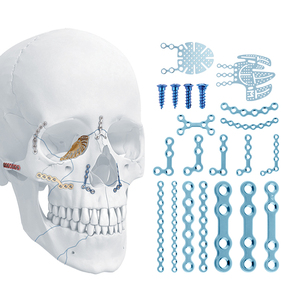
Titanium Maxillofacial Plate And Screw Maxillofacial System Plate For Orthopedic Surgery Maxillofacial Implants Mini Plate Screw
Contact Us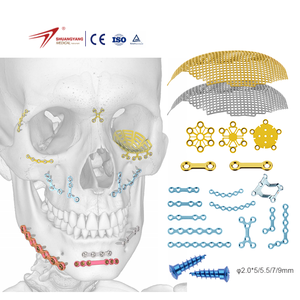
Shuangyang Medical Neurosurgery Maxillofacial System Cranial Implant Titanium Mesh Cranioplasty Skull Fixation Plating System
Contact Us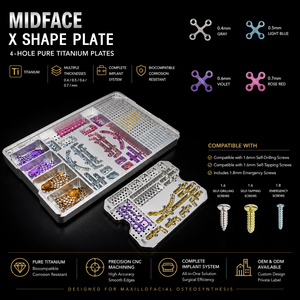
OEM & ODM Available Medical Titanium X Plate Maxillofacial Implant For Facial Reconstruction Orthopedic Implant Application
Contact Us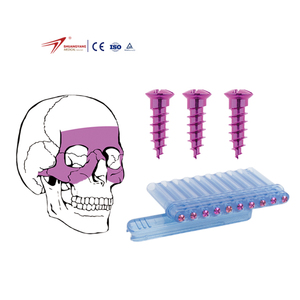
Orthopedic Implant Maxillofacial Surgery Plate Screw Maxillofacial 1.5 Self -Drilling Screws For Maxillofacial Screws Trauma
Contact Us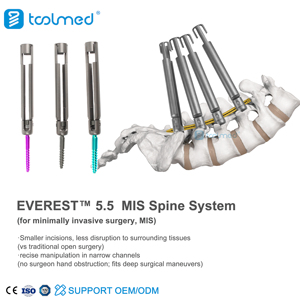
Ortopédico Implante 5.5 MIS Titanium Polyaxial Pedicle Screw System Orthopedic Spine Instrument Set Implants
Contact Us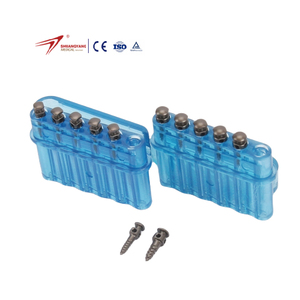
Shuangyang Orthodontic Screw Implant Higher Quality Product In Implants & Interventional Materials
Contact Us
Factory Direct Titanium Dental Implants With SLA Surface Technology Delivering Excellent Strength And Professional Performance
Contact Us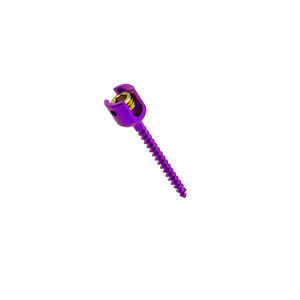
Factory Direct Orthopedic Implant Monoaxial Pedicle Screw For Spinal Fixation Fusion Surgery Titanium 5.5/6.0 ISO CE Certified
Contact UsWhy Leading Global Medical Distributors Partner with Us
Sourcing orthopedic implants and surgical instruments requires a supplier capable of balancing rigorous regulatory compliance (EU MDR & US FDA), advanced metallurgical engineering, and flexible commercial logistics. Our manufacturing ecosystem is designed specifically to solve the inventory, technical, and margin pressures faced by regional B2B distributors, hospital procurement directors, and private-label brand owners.
Full CE & ISO 13485 Certification
Operated under strict cleanroom conditions (Class 100,000) with complete material batch traceability from raw grade-5 titanium (Ti-6Al-4V ELI) to finished sterile or non-sterile units. Ready for seamless local registration.
One-Stop OEM & ODM Customization
From custom laser marking and bespoke color anodization to modified implant geometry and custom-molded surgical tray layout, our 70+ engineering team converts technical drawings into certified physical devices rapidly.
Low MOQ & Mixed-SKU Agility
Mitigate working capital risks by consolidating spinal pedicle screws, trauma locking plates, CMF mini-plates, and matching surgical instrument kits within small-batch, low-MOQ baseline orders.
Future Procurement Trends in Global Orthopedic Implants (2025–2030)
The global orthopedic implant market is undergoing a seismic shift driven by demographic aging, regulatory overhaul, and changing healthcare economics. B2B importers, hospital tender bidders, and independent medical distributors must adapt their sourcing frameworks to stay competitive in an increasingly demanding market environment.
1. Escalating Regulatory Rigor & Supply Chain Traceability
With the transition from EU MDD to EU MDR (2017/745) and the heightening of US FDA 510(k) post-market surveillance metrics, global distributors can no longer rely on unverified secondary manufacturers. Procurement heads are consolidating suppliers toward integrated manufacturers who possess full in-house physical, chemical, and mechanical testing laboratories. Material traceability—spanning raw titanium rod melting certificates, bio-burden testing, fatigue testing (ISO 14801 / ASTM F1717), and accelerated aging studies—has moved from a post-sale courtesy to an essential baseline requirement for market entry.
2. The Shift Toward High-Mix, Low-Volume (HMLV) Inventory Models
Traditional procurement models required distributors to hold massive safety stocks of slow-moving implant sizes (such as specialized long-span reconstructive plates or specific polyaxial screw diameters). Modern financial strategies prioritize agile procurement: working with contract manufacturers capable of delivering low MOQ, mixed-SKU shipments. This enables medical device distributors to optimize inventory turns, release locked-up working capital, and pivot rapidly when clinical surgical preferences change in local healthcare systems.
3. Acceleration of Private-Label Brand Creation in Emerging Markets
Across Latin America, Southeast Asia, Eastern Europe, and the Middle East, regional distributors are actively transitioning from pure agency models (distributing Tier-1 multinational brands at low margins) to establishing their own proprietary medical device brands. By partnering directly with OEM/ODM manufacturers like Ortix Medical, distributors capture significantly higher gross margins while providing local hospital networks with CE-certified implants that deliver equivalent clinical efficacy at a fraction of the cost.
4. Complete Surgical System Bundling (Implant + Instrument + Power Tool Integration)
Surgeons expect holistic operational workflows. Procurement managers are increasingly disinclined to buy unsterilized implants without complementary, ergonomically validated surgical instrumentation. The market trend points toward bundled system delivery: ordering specialized spinal or trauma implant sets complete with modular silicone-handled drivers, depth gauges, drill bits, and sterilizing container trays directly from a unified manufacturer.
Technological & Biomechanical Development Trends in Orthopedics
To capture premium hospital tenders and achieve clinical distinction, orthopedic hardware must incorporate the latest advances in material science, surface modification, and minimally invasive surgical (MIS) design.
Additive 3D Titanium Printing
Transitioning from solid titanium implants to trabecular porous structures that match the elastic modulus of human cancellous bone, dramatically lowering stress-shielding risks in spinal fusion cages and joint reconstruction.
Advanced SLA Surface Treatment
Sandblasted, Large-grit, Acid-etched (SLA) micro-morphology for dental and orthopedic implants, accelerating osteoblast attachment and shortening osseointegration times to 3–4 weeks post-op.
Low-Profile & MIS Kinematics
Development of ultra-low profile CMF plating systems and MIS pedicle screws featuring self-drilling, self-tapping thread profiles for reduced tissue trauma and quicker patient recovery.
PEEK vs. Titanium Biomaterials in Cranio-Maxillofacial & Spine Implants
Polyetheretherketone (PEEK) has gained significant market share in interbody spinal fusion and custom cranioplasty due to its radiolucent nature—allowing surgeons to clearly assess bone graft healing under artifact-free X-ray and CT imaging. However, medical-grade Titanium Alloy (Ti-6Al-4V ELI) remains the undisputed gold standard for load-bearing osteosynthesis, pedicle screw fixation, and trauma locking plates due to its unmatched tensile strength, fatigue life, and proven biocompatibility.
Surface Oxidation & Biomechanical Pull-Out Optimization
The biomechanical stability of an internal fixation screw depends heavily on thread pitch geometry and surface passivization. Type II Anodic Oxidation creates a hardened micro-layer that prevents ion release, while dual-core thread designs in self-drilling maxillofacial screws (1.5mm/2.0mm) maximize purchase strength in thin cortical facial bones without risking micro-fractures during insertion.
Frequently Asked Questions for Orthopedic Procurement & Sourcing
Clear, direct answers to common questions asked by medical device importers, regulatory specialists, and contract procurement officers.
Ortix Medical operates under an ISO 13485:2016 certified Quality Management System specifically tailored for medical device design and manufacturing. Our products are CE marked and registered with the U.S. FDA. We provide qualified distributors with complete Technical Files (STED), Material Safety Data Sheets (MSDS), Biocompatibility Reports (ISO 10993), and Sterilization Validation files to support local ministry of health registrations.
We understand the cash-flow dynamics of growing medical distribution businesses. We offer flexible low-MOQ terms and allow mixed-SKU ordering. Distributors can combine spinal pedicle screws, titanium mesh plates, maxillofacial screws, and surgical instrument kits into a single shipment to optimize shipping costs and inventory diversity.
Our complete OEM/ODM service includes high-precision fiber laser marking of distributor logos, part numbers, and unique device identification (UDI) barcodes directly onto implants and instrument handles. We also design custom packaging solutions, sterile blister pouches, IFU literature, and anodized color-coded surgical trays according to your brand guidelines.
Every product line undergoes rigorous mechanical testing in our certified testing laboratory according to international standards: ASTM F1717 for spinal pedicle screw constructs, ASTM F543 for metallic medical bone screws, ISO 14801 for dental implants, and ISO 14602 for non-active surgical implants. Test reports detailing axial pull-out force, torsional yield strength, and dynamic fatigue resistance are available for audit upon request.
Standard catalog items maintained in our buffer inventory ship within 7 to 14 working days. For standard OEM private-label production orders, typical lead time ranges from 20 to 35 days depending on batch volume. Custom ODM engineering projects (requiring new CNC tooling and functional prototype creation) follow an agreed timeline, usually taking 45 to 60 days from drawing approval to initial sample submission.
Yes, qualified distributors, hospital procurement agents, and orthopedic surgeons can request sample kits for hands-on evaluation of surface finish, thread engagement, dimension tolerances, and surgical instrument handling prior to committing to bulk commercial orders.
Partner with a Trusted CE Certified Orthopedic Implant Manufacturer
Expand your product catalog, secure local hospital tenders, and maximize gross margins with our ISO 13485 certified spine, trauma, CMF, and dental surgical solutions.