Trauma
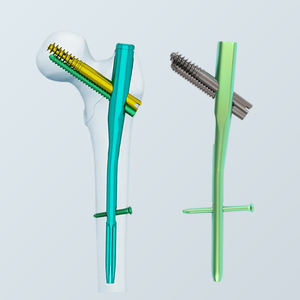
Standardized trauma plates, intramedullary nails, spinal constructs, and surgical tools manufactured under rigorous European compliance standards.
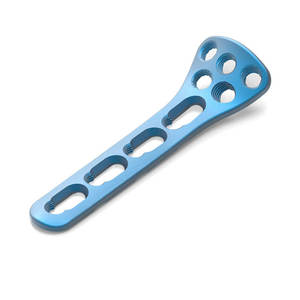
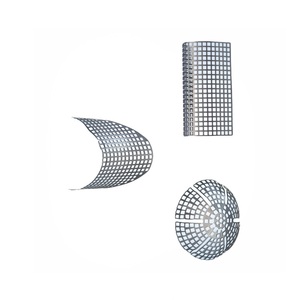
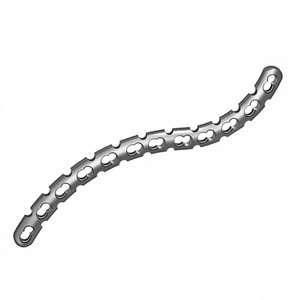
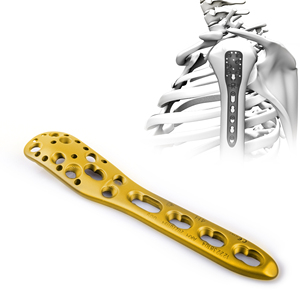
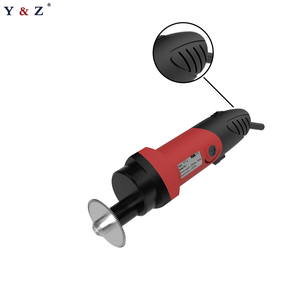
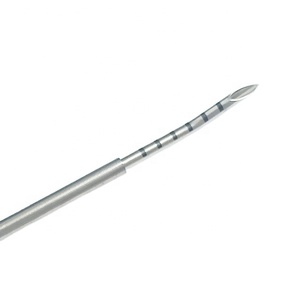
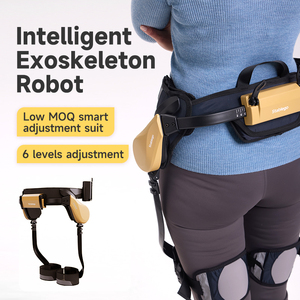
In the modern medical device supply chain, obtaining European CE Certification under Regulation (EU) 2017/745 (EU MDR) combined with a Certificate of Free Sale (CFS / FSC) is the gold standard for international regulatory acceptance. For global procurement officers, hospital tenders, and regional importers across Latin America, the Middle East, Africa, and Southeast Asia, partnering with a certified OEM factory that holds fully validated compliance documentation is essential to ensure swift customs clearance and local registration.
Information Gain Key Insight: A Certificate of Free Sale (CFS) issued by an official European Competent Authority (such as FAMHP in Belgium, ANSM in France, or BfArM in Germany) serves as legal confirmation that the medical device complies with the EU MDR, bears a valid CE Mark, and can be legally distributed across the European Single Market without restriction. This documentation significantly streamlines local Ministry of Health (MoH) approvals in non-EU territories.
While many distributors treat the CE Mark and Certificate of Free Sale interchangeably, they represent two distinct pillars of international regulatory compliance. A CE Certificate, issued by a accredited Notified Body (such as TÜV SÜD, BSI, or DEKRA), attests that the manufacturer’s Technical Documentation and Quality Management System (QMS) comply with essential safety and performance requirements under ISO 13485:2016 and EU MDR Annex IX/XI.
Conversely, the Certificate of Free Sale (CFS)—also referred to as a Free Sale Certificate (FSC)—is an administrative document issued by national health authorities in the European Economic Area (EEA). It confirms that the manufacturer or their authorized European Representative (EC REP) has formally registered the device under EUDAMED and that the product is commercially available for clinical use in Europe. Non-EU regulatory bodies (such as Brazil's ANVISA, Mexico's COFEPRIS, Saudi Arabia's SFDA, and India's CDSCO) mandate a legalized or Apostilled CFS to verify that imported devices are not manufactured solely for export markets with lower standards.
| Compliance Vector | CE Mark (EU MDR 2017/745) | Certificate of Free Sale (CFS / FSC) | ISO 13485:2016 Certification |
|---|---|---|---|
| Issuing Authority | Designated EU Notified Body | European National Competent Authority | Accredited Registrar / Certification Body |
| Primary Objective | Verifies product safety, clinical data & performance | Confirms legal commercialization in the EU market | Audits quality management system standards |
| Import Requirement | Mandatory for EU market access | Required for non-EU country registration filings | Baseline prerequisite for all medical manufacturing |
| Dossier Depth | Full CER, Risk Management (ISO 14971), Biocompatibility | Validated CE Certificate + EC REP Agreement | System SOPs, Design Controls, Lot Traceability |
Combining high-precision CNC engineering, robust quality systems, and low-MOQ flexibility for seamless international distribution.
Comprehensive catalog covering spine pedicle screws, trauma locking plates, intramedullary nails, sports medicine anchors, external fixators, and high-torque surgical power tools from a single vetted manufacturer.
In-house R&D team offering private-label laser marking, specialized anodization color-coding, customized surgical instrument trays, and rapid implant geometry prototyping tailored to regional clinical preferences.
Optimized production planning allows distributors to combine small batch quantities of locking plates, bone screws, and specialized instrument sets in a single consolidated shipment to protect cash flow.
As regulatory scrutiny intensifies globally, the procurement dynamic for medical devices and orthopedic hardware is undergoing a structural shift. Hospital networks and regional distributors are moving away from fragmented sourcing models toward integrated manufacturing partnerships that offer documented information gain, bio-material purity, and rapid technical responsiveness.
With the expiration of legacy MDD certificates, global buyers are auditing suppliers to ensure uninterrupted access to MDR 2017/745 compliant technical files and ongoing clinical data.
Rapid expansion of 3D-printed porous titanium matrix constructs and carbon-reinforced PEEK implants that accelerate osseointegration and reduce modulus mismatch stress-shielding.
Implementation of laser-etched Unique Device Identification (UDI) barcodes on every implant and container, ensuring complete lot-level traceability from raw bar stock to surgery.
Shift toward pre-sterilized, double-pouch blister packaging (ISO 11607 compliant) to eliminate hospital autoclaving bottlenecks and guarantee sterile shelf life up to 5 years.
Orthopedic implants require exceptional fatigue strength, corrosion resistance, and biocompatibility. Leading factories utilize medical-grade Titanium Alloy (Ti-6Al-4V ELI conforming to ASTM F136 / ISO 5832-3) and Ultra-Low Carbon Stainless Steel (316LVM conforming to ASTM F138 / ISO 5832-1). Every raw material lot undergoes chemical spectral analysis, tensile testing, and metallographic examination prior to precision multi-axis Swiss CNC machining.
To guarantee long-term implant performance, critical components undergo static and dynamic fatigue testing according to international benchmarks, such as ASTM F1717 for spinal constructs, ASTM F1264 for intramedullary nails, and ISO 14801 for dental/small bone screws. This rigorous testing regimen ensures that hardware withstands repetitive anatomical loads without catastrophic yield failure.
Direct answers for regulatory affairs officers, tender managers, and medical device purchasing directors.
Streamline your medical device supply chain with ISO 13485 and CE certified orthopedic implants. Request technical dossiers, full catalog price lists, or evaluation samples directly from our export engineering team.
Inquire Now