Precision Medical Hardware & Implants Portfolio
Engineered to exact clinical specifications using implant-grade Titanium (Ti-6Al-4V ELI), PEEK Optima, and 316L Stainless Steel. Supported by low MOQ and complete regulatory technical files.
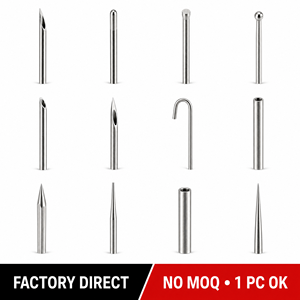
Micro Bone Screw Titanium Medical Grade Swiss CNC Machined
Send an Inquiry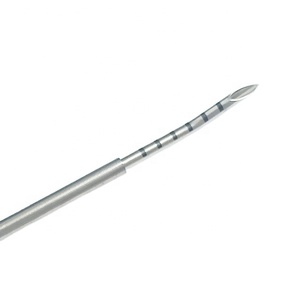
Sinowares Meniscus Repair Fast Fix Inside Out Needles
Send an Inquiry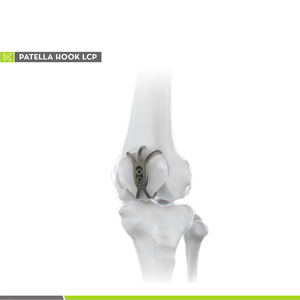
Patella Claw Plate Lower Limb Osteosynthesis Trauma Implant
Send an Inquiry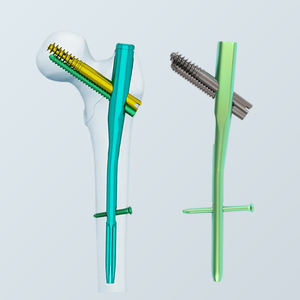
Interlocking Intramedullary Nail Titanium Intertan System
Send an Inquiry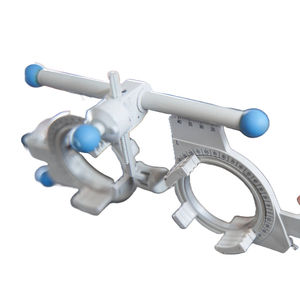
Contract Manufactured Clinical Device Hardware Componentry
Send an Inquiry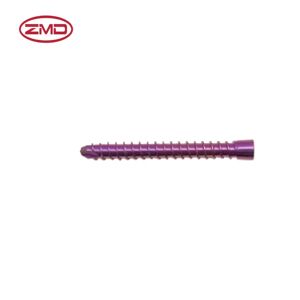
Veterinary HC4.0mm Titanium Locking Screw (T15 Cruciform)
Send an Inquiry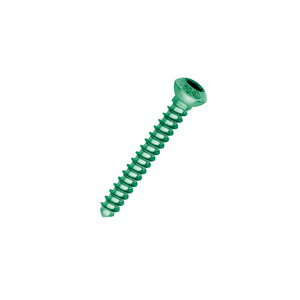
4.5mm Titanium Alloy Cortical Bone Screws Class III Implant
Send an Inquiry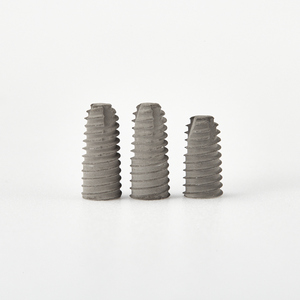
Pure Titanium S.L.A Surface Dental Implant Fixtures
Send an InquiryWhy Global OEMs & Healthcare Distributors Partner With Us
Sourcing medical implants demands rigorous regulatory compliance, metallurgical purity, micro-inch tolerances, and dependable lead times. Our contract manufacturing platform eliminates supply chain friction.
Full Regulatory Compliance (EU MDR & FDA)
Operating under an ISO 13485:2016 certified Quality Management System, our facilities are FDA registered. We deliver complete regulatory dossiers (Technical Files, GSPR matrices, Bio-compatibility ISO 10993 reports) to accelerate your local market product registrations.
- ISO 13485:2016 & US FDA Establishment Registered
- CE Marking under EU MDR 2017/745 (Class IIb & Class III)
- Lot-to-lot traceability with full Raw Material EN 10204 3.1 MTC
Ultra-Precision Swiss CNC Machining
Equipped with over 450 state-of-the-art machines, including multi-axis Citizen & Tsugami Swiss-type lathes and 5-axis DMG MORI high-speed milling centers. We maintain tight mechanical tolerances up to ±0.003 mm for complex orthopedic geometry.
- 5-Axis micro-milling & thread-whirling capability
- Sub-micron CMM & optical profile verification
- In-house surface modification (SLA, Anodization Type II)
Agile Sourcing & Low MOQ Flexibility
We empower regional medical distributors and emerging brands by offering combined mixed-SKU procurement. You can order trauma plates, pedicle screws, spinal cages, and matching surgical instrument sets in flexible quantities without excessive capital tie-up.
- Mixed-SKU small batch manufacturing options
- Turnkey OEM private labeling & custom laser marking
- Pre-validated sterile barrier packaging (ISO Class 7 Cleanroom)
Technical Whitepaper: Future Trends in Orthopedic Implant Contract Manufacturing
The global orthopedic implant landscape is undergoing a structural transformation. Driven by aging demographics, rising athletic injury rates, and the adoption of minimally invasive surgical (MIS) techniques, the demand for high-reliability orthopedic hardware has never been greater. For medical device brands and hospital procurement networks, selecting a contract manufacturing partner requires evaluating long-term technological capabilities and material engineering competencies.
1. Metallurgy Synergy: Combining Additive Manufacturing & Swiss Subtractive Machining
Modern orthopedic trauma and spinal surgery are increasingly relying on hybrid manufacturing topologies. While 3D metal printing (Selective Laser Melting / Direct Metal Laser Sintering) enables the creation of highly porous, trabecular titanium structures that mimic human cancellous bone, traditional subtractive Swiss CNC turning remains indispensable for load-bearing interfaces. Precision thread geometry, hex socket drives, and locking plate taper interfaces demand micro-inch tolerances ($Ra < 0.4 \mu m$) that additive processes alone cannot achieve.
Engineering Gain: Hybrid contract manufacturing combines 3D-printed porous osseointegration zones with Swiss-milled thread locks, resulting in implants that reduce postoperative stress shielding while ensuring zero-backlash screw engagement.
2. Advanced Surface Functionalization: SLA & Electrochemical Titanium Anodization
Surface micro-topography directly governs the rate of osteoblast adhesion and peri-implant bone formation. Contract manufacturers must now possess automated, validated cleanroom surface treatment lines:
- SLA (Sandblasted, Large-Grip, Acid-Etched) Technology: Initially perfected in dental implantology, SLA surface treatment creates a dual-scale roughness spectrum ($Ra = 1.5 - 2.0 \mu m$). Sandblasting creates macroscopic corrugations, while subsequent thermal acid etching yields microscopic pits, drastically speeding up bone-to-implant contact (BIC).
- Type II Titanium Anodization (AMS 2488): Essential for trauma locking plates and pedicle screw assemblies. Type II anodization transforms the native titanium oxide layer into a dense, wear-resistant compound, reducing fretting corrosion and preventing cold-welding (galling) between titanium screws and locking plate holes.
3. Biomechanical Polymeric Innovations: PEEK Optima & Carbon-PEEK Systems
While metallic alloys (Ti-6Al-4V ELI and 316L Stainless Steel) remain dominant in diaphyseal fracture fixations, Polyetheretherketone (PEEK) has redefined spinal fusion and cranial reconstruction. With an elastic modulus ($E \approx 3.6 \text{ GPa}$) close to natural human cortical bone ($E \approx 18 \text{ GPa}$), PEEK cages mitigate subsidence risks compared to solid titanium implants. Contract manufacturing of implant-grade PEEK requires specialized high-temperature cleanroom machining, diamond-coated tooling, and strict bio-burden control to prevent polymer chain degradation.
Regulatory Compliance Insight: All PEEK and Titanium raw materials utilized in our cleanroom machining lines undergo mass spectrometry and differential scanning calorimetry (DSC) verification to guarantee 100% compliance with ASTM F2026 and ASTM F136 standards.
Strategic Procurement Trends in the Global Orthopedic Hardware Market
Healthcare procurement directors, medical device distributors, and OEM buyers face unprecedented regulatory scrutiny and supply chain volatility. To maintain market share, purchasing organizations are adapting their strategic vendor evaluation criteria:
Shift from Cost-Per-Unit to Total Cost of Compliance (TCC)
Historically, low unit pricing dominated offshore contract procurement. However, under the strict oversight of the European Union Medical Device Regulation (EU MDR 2017/745) and US FDA audits, uncertified suppliers create catastrophic financial exposure. A single delayed registration due to missing clinical evaluation data or incomplete raw material traceability can derail market launch timelines. Leading buyers now prioritize contract manufacturers offering complete Technical Documentation Files (TDF) and pre-validated sterilization packaging protocols.
Supply Chain Resiliency via Consolidated Single-Source OEM Suppliers
Fragmented sourcing—where plates are manufactured by one vendor, screws by another, and instrument trays by a third—frequently leads to intraoperative mismatch and quality disputes. Global distributors are consolidating their vendor bases by partnering with full-service contract manufacturers capable of delivering integrated implant-and-instrument systems. Standardizing on a single manufacturing ecosystem ensures matched tolerances, uniform surface finishes, and streamlined regulatory audits.
Legacy Procurement Model
- ✕ Fragmented vendors for implants & instruments
- ✕ High MOQs per individual size SKU
- ✕ Incomplete regulatory technical files
- ✕ High risk of audit rejections under MDR
Modern Strategic OEM Partnership
- Turnkey supplier for Spine, Trauma, CMF & Sports Med
- Agile mixed-SKU batch production with low MOQs
- Full ISO 13485, CE MDR & FDA audit-ready dossiers
- Complete lot traceability & cleanroom sterile packing
Frequently Asked Questions by Orthopedic Procurement Managers
Everything you need to know about our contract manufacturing standards, regulatory support, quality control, and minimum order requirements.
What quality management certifications and regulatory approvals do you hold?
+
Our manufacturing facilities operate strictly under an ISO 13485:2016 certified Quality Management System. We are an FDA-registered medical device manufacturer, and our core product portfolios—including spinal pedicle screws, trauma locking plates, intramedullary nails, and dental implants—carry CE marking compliant with the European Union Medical Device Regulation (EU MDR 2017/745). Complete quality manuals and certificates are available upon request for qualification audits.
What is your Minimum Order Quantity (MOQ) for OEM / ODM contract manufacturing?
+
We understand that market entry and clinical trial phases require inventory flexibility. We support low MOQ and mixed-SKU ordering, allowing distributors to combine various plate lengths, screw diameters, and instrument sets within a single production batch. While standard catalog items have minimal threshold requirements, custom private-label OEM projects are structured with customized batch sizes to balance manufacturing setup efficiency with inventory management.
Can you provide complete raw material test certificates for custom batches?
+
Yes. Every batch of raw material—whether Ti-6Al-4V ELI (ASTM F136), Medical Grade 316L Stainless Steel (ASTM F138), or PEEK Optima (ASTM F2026)—is sourced exclusively from certified metallurgical mills. Every shipment includes EN 10204 3.1 Material Test Certificates (MTC) detailing chemical composition, tensile strength, elongation, and microstructural grain analysis to ensure absolute bio-compatibility and fatigue performance.
Do you offer private labeling, custom laser etching, and custom packaging services?
+
Yes, we provide complete turnkey white-label and OEM/ODM solutions. Our in-house fiber laser marking systems can etch high-resolution custom logos, part numbers, lot codes, and DataMatrix GS1 UDI (Unique Device Identification) barcodes directly onto implants and surgical tools. Additionally, we offer custom artwork design for outer packaging, IFU printing, and sterile blister packaging within our ISO Class 7 cleanrooms.
How do you handle mechanical fatigue testing and quality assurance?
+
Our dedicated quality testing laboratory is equipped with multi-axis CMMs, optical comparators, surface profilometers, and mechanical testing rigs. We perform static compression, dynamic fatigue (per ASTM F543 for bone screws, ASTM F1717 for spinal constructs, and ISO 14801 for dental implants), and pull-out force evaluations. First Article Inspections (FAI) and in-process statistical process control (SPC) reports are archived for full batch traceability.
What is the typical lead time for standard items versus custom OEM projects?
+
Standard catalog items maintained in our buffer inventory can ship within 7 to 14 business days. For customized OEM/ODM projects requiring new DFM (Design for Manufacturability) analysis, custom CNC programming, and specialized tooling, initial prototype samples are typically delivered within 4 to 6 weeks following engineering sign-off. Full production runs follow an agreed milestone schedule.
Partner with a Certified Orthopedic Contract Manufacturer
Whether you need to scale up existing trauma plate production, private-label a spinal screw line, or develop a custom sports medicine instrument system, our engineering team is ready to assist you.