Veterinary
Engineered from ISO 5832-3 Titanium Alloys and 316L VM Surgical Steel under strict cleanroom conditions.
An authoritative technical guide for hospital procurement executives, medical device importers, and OEM brand owners on compliance, clinical risk mitigation, and traceability.
The transition from the European Medical Devices Directive (MDD 93/42/EEC) to the stringent European Union Medical Device Regulation (EU MDR 2017/745) represents a structural shift in global orthopedic supply chain management. For orthopedic surgeons, healthcare institutions, and international distributors, sourcing implantable medical devices requires verifiable evidence of rigorous biocompatibility, long-term clinical safety, and absolute lot-level post-market traceability.
| Compliance Pillar | Legacy MDD 93/42/EEC Framework | Current EU MDR 2017/745 Regulatory Standard |
|---|---|---|
| Classification Rules | Rule 8 general surgically invasive implants; lower documentation burden. | Reclassified under strict Rule 8 & Rule 21; explicit requirements for spinal, joint, and trauma devices. |
| Traceability & Identification | Basic batch/lot numbering on external secondary packaging. | Mandatory UDI (Unique Device Identification) with UDI-DI and UDI-PI direct marking on implants & EUDAMED registration. |
| Clinical Evidence | Equivalence literature reviews permitted for similar benchmark devices. | Rigorous CER based on direct clinical investigations or clinical equivalence data under tight Notified Body scrutiny. |
| Quality System Audit | Annual ISO 13485 audits with predictable sampling reviews. | Unannounced Notified Body facility audits, raw material chemical testing, and strict cleanroom validation. |
Ortix Medical manufactures exclusively using certified medical-grade raw materials conforming to international ASTM and ISO standards:
Advanced physical and chemical surface engineering technologies applied in-house to accelerate osseointegration and optimize mechanical interface wear:
Need custom dimensions, OEM laser branding, or complete technical dossiers for local product registration? Connect with our biomedical export specialists today.
Send an InquiryExplore the structural mechanics, clinical indications, and manufacturing specifications across our core surgical categories.
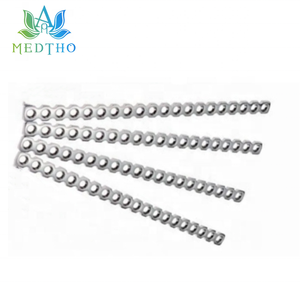
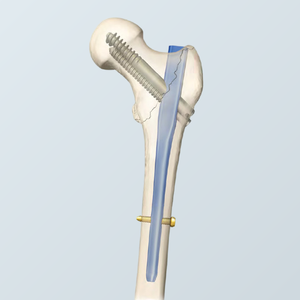
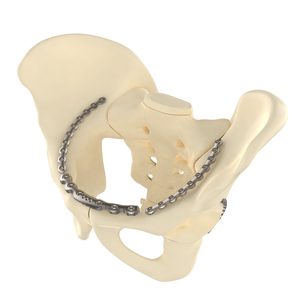
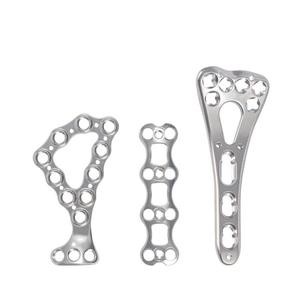
Anatomically contoured locking compression plates (LCP) and intramedullary interlocking nails engineered for complex diaphyseal and metaphyseal fracture stabilization.
Comprehensive posterior and anterior instrumentation for degenerative spinal disease, scoliosis deformity correction, and acute spinal trauma.
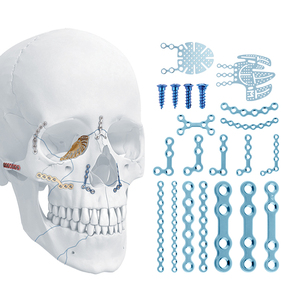
Micro (1.0mm) and Mini (2.0mm) rigid fixation plates, PEEK cranial reconstruction meshes, and specialized orthognathic surgical instrumentation.
Soft tissue repair solutions including high-strength PEEK suture anchors, bioabsorbable interference screws, and precision arthroscopic shaver blades.
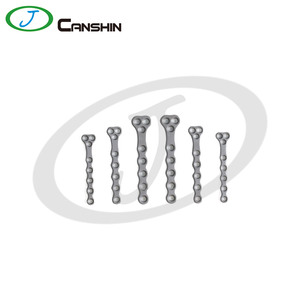
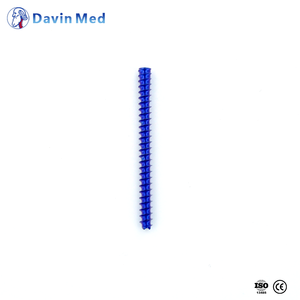
High-durability T-plates, straight reconstruction plates, and micro cannulated screw systems formatted specifically for small animal and equine trauma surgery.
Primary and revision total hip and knee replacement implants designed for anatomical alignment, minimal wear debris, and long-term joint survival.
The global orthopedic implant market is undergoing a significant transformation driven by shifting demographic pressures, stringent international regulatory mandates, and advancements in digital manufacturing. Hospital purchasing managers, ministry of health tender boards, and OEM brand buyers must align with five critical industry shifts over the coming decade:
Conventional subtractive CNC machining is increasingly complemented by Electron Beam Melting (EBM) and Direct Metal Laser Sintering (DMLS) 3D printing. Porous titanium implants mimic human trabecular bone architecture, eliminating delamination risks associated with plasma-sprayed coatings and dramatically accelerating osseointegration times in lumbar and cervical spinal fusion.
Regulatory divergence between regions (US FDA 510(k), EU MDR, UKCA, NMPA, and Brazilian ANVISA) presents operational hurdles for importers. Leading global suppliers now provide unified Technical Dossiers compliant with International Medical Device Regulators Forum (IMDRF) standards, significantly expediting local registration approvals.
Hospital tender winners and regional distributors are abandoning high-volume single-SKU inventory stocking to reduce working capital risk. Sourcing partners offering flexible, mixed-SKU ordering (combining specialized plates, cannulated screws, and instrument trays in modular low-MOQ shipments) enable faster market entry and optimized cash flow.
Hospital-acquired infection (HAI) prevention protocols are driving demand for pre-sterilized, single-use instrument kits alongside traditional reusable trays. Disposable surgical drivers, drill bits, and depth gauges eliminate hospital reprocessing bottlenecks and guarantee zero cross-contamination risk.
Inside Ortix Medical’s 60,000 m² smart manufacturing ecosystem and cleanroom assembly infrastructure.
Equipped with over 450 advanced machines including DMG Mori 5-axis machining centers and Citizen multi-axis Swiss-type automatic CNC lathes capable of maintaining tight mechanical tolerances within ±0.003mm.
Primary packaging and sterile barrier sealing (Tyvek pouches) are executed inside 100,000-class (ISO Class 7) controlled environments with real-time bioburden, airborne particulate, and laminar airflow monitoring.
Full-cycle mechanical verification under ASTM F543 (bone screw axial pull-out and torsional yield), ASTM F1717 (spinal construct fatigue testing), and ISO 14801 (dental/craniofacial dynamic load testing).
Hear from hospital procurement directors, orthopedic surgeons, and contract manufacturing clients worldwide.
“After switching to Ortix Medical titanium lumbar cages, our revision rates dropped by 18% in two years. The modular design fits complex anatomy well – last month we handled a severe L4-L5 spondylolisthesis case with zero intraoperative adjustments. Our CT follow-ups also showed an average fusion time of 3.2 months.”

“As a clinic serving remote mining communities, we need implants that survive rough transport and complex fractures. Ortix Medical's 316L stainless steel distal femur locking plates handle our humid conditions very well. Last quarter we used 47 plates in motorbike accident cases with zero hardware failure.”

“Partnering with Ortix Medical on driver tool OEM lifted our plant's profitability by 23% in 18 months. Their modular design simplifies assembly – our QC rejection rate fell from 5% to 0.8%. Raw material traceability shortened our sourcing time by 40%, and their engineers supported us through our audit preparation.”

Answers to essential questions raised by medical device distributors, quality assurance managers, and tender authorities.
Ortix Medical operates under an ISO 13485:2016 certified Quality Management System and is fully registered with the United States FDA. Our core product lines carry valid European Union CE certificates under Medical Device Regulation (EU MDR 2017/745) for Class IIa, Class IIb, and Class III implantable devices. Complete Technical Documentation Files (TDF), material test reports conforming to EN 10204 3.1, cleanroom validation protocols, and biocompatibility studies (ISO 10993) are readily made available to qualified distributors to support seamless local registration.
We provide highly flexible purchasing structures designed to accommodate both large-scale national tender supply and growing regional distributors. For standard catalog implants and instrument sets, we support low MOQ and mixed-SKU consolidated ordering (allowing you to combine trauma locking plates, pedicle screws, intramedullary nails, and cages in a single shipment). For specialized OEM/ODM projects involving custom dimensions, private-label laser marking, or unique packaging design, specific MOQs are determined based on raw material batch requirements and CNC setup parameters.
Our comprehensive OEM/ODM program includes full private labeling services. We provide high-precision fiber laser marking for direct part marking (DPM) of your company logo, catalog reference numbers, lot numbers, and GS1-compliant Unique Device Identification (UDI) barcodes directly onto implants and instruments. Additionally, our package engineering team assists with customized sterile barrier double-pouch sealing, protective blister tray design, custom outer box branding, and multi-language Instructions for Use (IFU) layout in strict compliance with target market labeling regulations.
Yes. We encourage healthcare professionals, biomedical engineers, and commercial distributors to evaluate our physical device finishing, dimensional accuracy, surface anodization quality, and surgical instrument ergonomic handling prior to placing volume production orders. Qualified buyers can request sample evaluation kits through our specialized Free Sample program, complete with inspection certificates and material lot documentation.
Spanning a 60,000 m² manufacturing plant equipped with over 450 high-precision CNC machines and operating at a daily capacity of approximately 20,000 units, Ortix Medical maintains extensive buffer stock for fast-moving catalog items. Standard inventory items typically ship within 7 to 14 business days. Custom OEM orders, specialized titanium alloy surface anodization runs, or large-scale private label productions follow an agreed delivery timeline, typically ranging from 30 to 45 days. We coordinate international freight via air express, ocean cargo, or temperature-controlled medical logistics with complete customs export clearance documentation.
Accelerate your medical business growth with premium biomedical engineering, complete MDR documentation, low MOQ flexibility, and dedicated OEM support.
Send an Inquiry