CE & ISO Certified Orthopedic Portfolio
Explore our high-precision titanium and stainless steel implants manufactured under strict ISO 13485 quality standards. Designed for high surgical stability and biological compatibility.
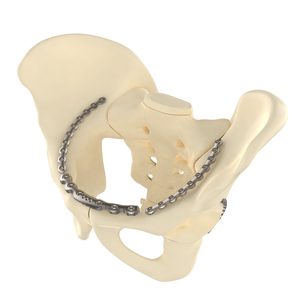
CANWELL CE/ISO Certified Stainless Steel Orthopedic Trauma 3.5mm Pelvic Locking Plate Curved Bone Fixation Implant Anatomical
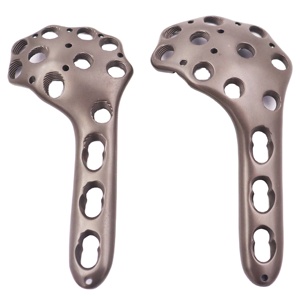
Orthopedic Implant Distal Femur Medial Condyle Large Fragment Locking Plate with Pure Titanium CE Certified Class III (L/R)
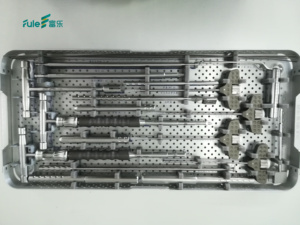
High Quality Orthopedic Surgical Implants & Interventional Materials MIS Minimally Invasive Instrument
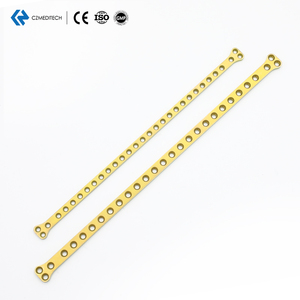
Factory Supply Veterinary Bone Straight Reconstruction Plates Orthopedic Surgical Trauma Implants
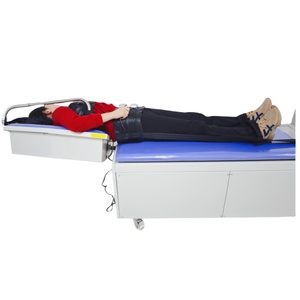
CE ISO 9001 13485 Medical Multi Angle Orthopedic Extension Traction Relaxing Bed for Lumbar Cervical Spine Operation

Medium (A0) Veterinary Titanium TPL0 Plate: A Professional Tool For Medium - Sized Animal Orthopedic Implantation
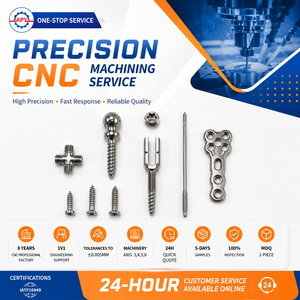
Precision CNC Machined Orthopedic Implants Titanium Bone Screws Spinal Fixation Parts OEM Custom Medical Components Manufacturer
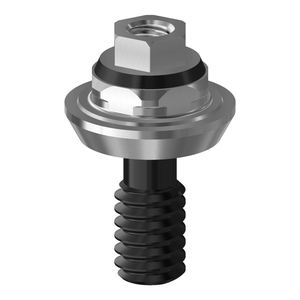
Dental Implant Compatible Parts Internal Connection Titanium Healing Abutment Scan Post Crown Restoration Multi-Platform
China's Premier Orthopedic Manufacturing Infrastructure
Combining state-of-the-art multi-axis CNC machining, micro-anodizing surface processing, and cleanroom sterile packaging to serve international medical distributors and healthcare institutions.
ISO 13485 & FDA Compliance
Our manufacturing operations adhere strictly to ISO 13485:2016 quality management systems and maintain active U.S. FDA establishment registration. Every production batch undergoes full dimensional inspections using Coordinate Measuring Machines (CMM) and optical comparators.
Advanced CNC Machining
Utilizing Japanese DMG MORI 5-axis CNC machining centers and Citizen Swiss-type automatic lathes, we achieve ultra-precise tolerances down to ±0.005mm for complex geometries including polyaxial pedicle screw heads and complex joint components.
Biomechanical Testing Lab
Our certified testing facility conducts rigorous static axial compression, dynamic torsional fatigue, and pull-out resistance testing in accordance with ASTM F136 (Ti-6Al-4V ELI) and ASTM F543 standards, ensuring mechanical reliability during long-term implantation.
Biomedical Grade Material Comparison
Selecting the optimal implant alloy or polymer is critical for osseointegration, fatigue life, radiolucency, and minimizing stress shielding in orthopedic procedures.
| Material Specification | Elastic Modulus (GPa) | Yield Strength (MPa) | Biocompatibility & Corrosion | Radiolucency & Imaging | Primary Clinical Application |
|---|---|---|---|---|---|
| Titanium Ti-6Al-4V ELI (ASTM F136) | 110 - 114 GPa | ≥ 795 MPa | Superior titanium oxide passive film; zero cytotoxicity. | Artifacts present under MRI/CT; distinct radiopaque boundaries. | Spinal Pedicle Screws, Trauma Locking Plates, CMF Screws, TPLO Implants. |
| Medical Grade Stainless Steel 316LVM (ASTM F138) | 190 - 200 GPa | ≥ 690 MPa | Excellent clinical history; higher modulus prevents contour springback. | Significant radiopaque shadowing under fluoroscopy. | Pelvic Reconstruction Plates, Intramedullary Nails, Veterinary Trauma Systems. |
| PEEK Polymer (Polyetheretherketone) | 3.5 - 4.0 GPa (Close to natural bone) | 170 - 210 MPa (Carbon-reinforced) | Biologically inert; zero ion release; eliminates stress shielding. | 100% Radiolucent; radiomarker pins used for positioning check. | Interbody Fusion Cages (ACDF / PLIF / TLIF), Cranial Repair Plates. |
| Commercially Pure Titanium Grade 4 (ASTM F67) | 105 GPa | ≥ 483 MPa | Highest soft-tissue acceptance; optimal cold deformability. | Moderate imaging artifacts under post-operative CT. | Dental Healing Abutments, Cranial Reconstruction Mesh, Maxillofacial Plates. |
Next-Generation Technological Trends in Orthopedic Manufacturing
The global orthopedic implant market is undergoing a paradigm shift driven by additive manufacturing, minimally invasive techniques, and surface functionalization.
1. Additive Manufacturing & Porous Trabecular Structures
Direct Metal Laser Sintering (DMLS) and Electron Beam Melting (EBM) have revolutionized spinal interbody cages and joint reconstructive implants. By creating 3D porous titanium lattice structures that mimic human cancellous bone, osseointegration speed is accelerated by over 40%. The interconnected porosity (60-70% void space with 300-500μm pore sizes) promotes vascularization and bone tissue ingrowth directly into the implant core, drastically lowering pseudarthrosis rates.
2. Polyaxial Locking Systems & Anatomical Pre-Contouring
Trauma fixation is moving away from rigid monoaxial locking toward variable-angle polyaxial locking plate designs. Utilizing advanced cobalt-chrome thread technology within titanium plate holes, surgeons can achieve screw trajectory angles within a 30-degree cone. Combined with 3D anatomical scanning data, pre-contoured plates for distal femur, proximal tibia, and complex pelvic fractures minimize intraoperative bending, preserve periosteal blood supply, and reduce surgical duration.
3. Smart Functional Bio-Coatings
Surface modifications are crucial for reducing post-operative complications like Surgical Site Infections (SSI) and implant loosening. Modern manufacturing incorporates Electrochemical Type II Anodization (for increased fatigue endurance and reduced galling), Hydroxyapatite (HA) plasma spraying for immediate osteoinduction, and silver nanocomposite antibacterial coatings. These advanced surface treatments significantly mitigate biofilm formation without compromising structural integrity.
4. Veterinary Orthopedic Surge & Specialized Implants
The global veterinary orthopedic market is experiencing exponential growth, particularly in specialized canine procedures like Tibial Plateau Leveling Osteotomy (TPLO) and Tibial Tuberosity Advancement (TTA). Medical device suppliers who offer scaled production of animal-specific titanium plates (from micro 1.5mm to heavy-duty 3.5mm systems) backed by precise surgical instrumentation are establishing strong market dominance in North American and European markets.
Future Global Sourcing & Procurement Trends for Importers
B2B medical buyers and hospital networks must navigate changing regulatory landscapes, dynamic supply chains, and total cost of ownership models.
Supply Chain Resilience & Consolidation
Distributors are moving away from fragmented sourcing across multiple single-line vendors. Sourcing spinal systems, trauma plates, veterinary implants, and matching surgical power tools from a unified, fully certified Chinese factory reduces logistical complexity, harmonizes customs documentation, and yields substantial volume freight discounts.
Strict CE MDR & FDA Technical Dossiers
Regulatory bodies worldwide demand rigorous technical documentation. Sourcing partners must supply complete Technical Files, clinical evaluation reports (CER), ISO 10993 biocompatibility test reports, and sterilization validation data (ISO 11137 / ISO 11135) to facilitate rapid product registration with local health authorities.
Low MOQ & Agile OEM Private Labeling
To minimize holding costs and mitigate inventory obsolescence, distributors prefer factories offering flexible Minimum Order Quantities (MOQ) alongside turnkey OEM customization—including custom laser branding, color-coded anodization, customized graphic trays, and multi-language IFU creation.
Why Partner With China's Leading Orthopedic Manufacturer
We bridge the gap between European design precision, Chinese manufacturing efficiency, and global regulatory compliance.
✓ Complete Surgical System Delivery
We do not just supply loose implants. Every plate, screw, or cage system is accompanied by ergonomic, high-durability surgical instrument sets (taps, drill bits, bent cutters, torque-limiting drivers) to ensure seamless OR performance.
✓ Traceable Raw Material Sourcing
100% of our titanium bars, stainless steel sheets, and PEEK stocks are sourced directly from certified global leaders (such as Carpenter Technology and Zapp Precision) with complete material test certificates (MTC) linked to every batch lot number.
✓ Dedicated R&D & Rapid Prototyping
Our staff of 70+ biomedical engineers works directly with practicing orthopedic surgeons to convert anatomical concepts into CAD/CAM models, producing functional evaluation prototypes within 14 working days.
✓ Cleanroom ISO Class 7 Packaging
Implants can be delivered in non-sterile bulk configurations or fully sterile double-blister Tyvek packaging processed under ISO Class 7 cleanroom conditions, ready for direct hospital distribution.
Frequently Asked Sourcing & Technical Questions
Expert answers addressing regulatory compliance, production capabilities, quality assurance, and global distribution partnership terms.
What quality certifications and regulatory registrations does your manufacturing facility hold?
Our manufacturing complex operates under an audited ISO 13485:2016 Quality Management System for medical devices. We hold U.S. FDA Establishment Registration and Device Listings for core trauma and spinal implant categories, along with CE certificates under Class IIb and Class III guidelines. Complete technical documentation packages (including ISO 10993 biocompatibility testing, fatigue test reports, and material origin certificates) are available to support local registration with your country's Ministry of Health.
What is the Minimum Order Quantity (MOQ) for OEM/ODM private label projects?
We provide industry-leading ordering flexibility tailored to distributor market testing. Standard catalog products feature low MOQs, allowing mixed-SKU batch shipments (combining bone plates, pedicle screws, intramedullary nails, and instrument sets). For custom OEM/ODM private label projects involving custom laser engraving, customized anodization colors, and unique Tyvek box branding, baseline MOQs typically start at 50 to 100 units per item family depending on machining complexity.
How do you guarantee lot-to-lot dimensional consistency and mechanical strength?
Quality assurance is embedded at every production stage. Raw materials undergo spectrum analysis and tensile testing before machining. During manufacturing, in-process automated optical inspection (AOI) monitors dimensions on 5-axis CNC lines. Finished components undergo 100% CMM visual and thread check inspection. Finally, random sampling from each lot undergoes static torsion, axial pull-out, and dynamic fatigue testing to guarantee mechanical performance exceeds ISO and ASTM standard minimums.
Can qualified medical distributors request evaluation samples before contract signing?
Yes. We operate a dedicated Sample Evaluation Program for registered medical device distributors, hospital purchasing officers, and veterinary surgeons. Evaluation samples allow surgical teams to inspect surface polish, edge deburring, screw thread engagement, and instrument kit ergonomic handling. You can apply for evaluation samples by clicking the live chat CTA button on this page and submitting your organization details.
What are the standard lead times for manufacturing and international export?
With a 60,000 m² plant, over 450 precision machine tools, and a daily production capacity of ~20,000 units, standard catalog items ship within 7 to 15 business days. Custom OEM orders requiring new tooling development, prototype validation, or special sterile packaging typically follow a 30 to 45 day production timeline. Air express shipping options (DHL/FedEx/UPS) deliver within 3-5 days worldwide, while ocean freight is available for bulk volume shipments.
Do you offer specialized custom implants for veterinary or maxillofacial applications?
Yes. In addition to human orthopedic trauma and spine fixation systems, we maintain dedicated production lines for veterinary trauma plates (including TPLO, TPA, micro straight plates, and reconstructive screws) as well as Craniomaxillofacial (CMF) 1.5mm/2.0mm titanium plating systems and custom-machined PEEK cranial implants.
Request a Custom Quote & Technical Catalog Today
Partner with China's leading certified orthopedic implant manufacturer. Gain competitive factory-direct pricing, guaranteed lot consistency, and full regulatory registration support.