China NMPA Class II & Class III Certified Factory

China Top Class II Medical Device Orthopedic Factory & Suppliers

Technical Sourcing & OEM/ODM Whitepaper for International Medical Device Distributors, Hospital Procurement Networks, and Importers

Precision Implants & Instruments

Featured Orthopedic Implant Systems

Explore our core portfolio of NMPA Class II surgical hardware, manufactured with ISO 13485 quality controls, low MOQ flexibility, and complete lot traceability.

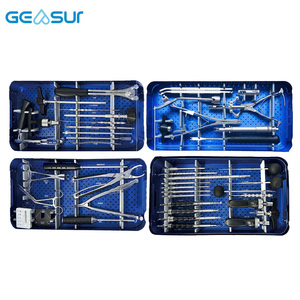
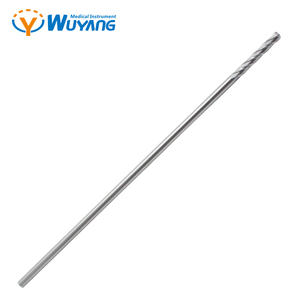
Stainless Steel Hollow Drill Bit Cannulated Instrument Set

Wuyang Medical Stainless Steel Hollow Drill Bit Cannulated Instrument Set

High-precision 316L stainless steel cannulated drills designed for accurate guide-wire alignment in orthopedic trauma surgery.

Trauma Hardware Get Catalog
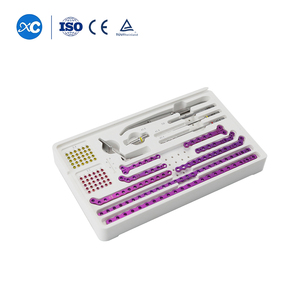
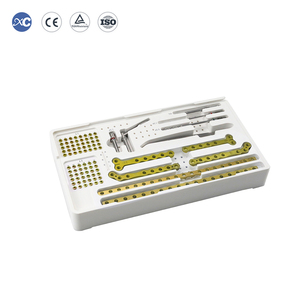
3.2mm Alps Veterinary Orthopedic Instrument Set

3.2mm ALPS Veterinary Orthopedic Surgical Instrument & Implant Set

Advanced Locking Plate System (ALPS) engineered specifically for canine and feline trauma reconstruction and joint stabilization.

Veterinary Surgical Get Catalog
Spinal Pedicle Screw Instruments Set Spine 5.5 System

Orthopedic Implant Spinal Pedicle Screw Instruments Set (Spine 5.5 System)

Comprehensive polyaxial and monoaxial pedicle screw platform featuring dual-thread titanium alloy rods for thoracic and lumbar fixation.

Spine Fixation Get Catalog
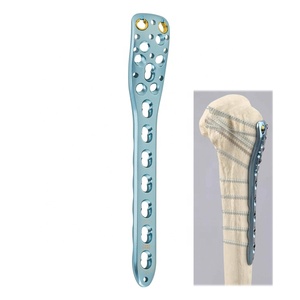
Variable Angle Neck Of Humerus Locking Bone Plate

Variable Angle Neck Of Humerus Titanium Locking Bone Plate

Anatomically pre-contoured proximal humerus locking plate made from ASTM F136 titanium alloy, supporting ±15° multi-directional locking screws.

Trauma Locking Plate Get Catalog
Titanium 4.0mm ALPS Locking Screw and Bone Plates

2025 OEM Titanium 4.0mm ALPS Locking Screw & Bone Plates for Veterinary Surgery

Next-generation 4.0mm biological locking system designed to preserve periosteal blood supply in large breed canine orthopedic repair.

Veterinary Implant Get Catalog
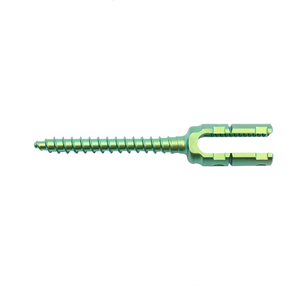
Spine 6.0MM Titanium Reduction Monoaxial Pedicle Screw

Spine 6.0mm Titanium Reduction Monoaxial Pedicle Screw Platform

Heavy-duty 6.0mm monoaxial reduction screws engineered for severe spondylolisthesis reduction and spinal deformity correction with lifetime structural reliability.

Spine Surgery Get Catalog
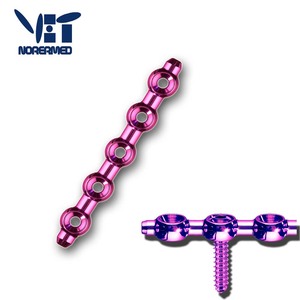
Veterinary Stainless Steel Locking SOP Plate Implant

NORER MED Veterinary Stainless Steel Locking SOP Plate Implant System

String of Pearls (SOP) multi-directional locking plate system allowing 3D contours without compromising screw hole integrity during complex feline fracture reconstruction.

Veterinary SOP Get Catalog
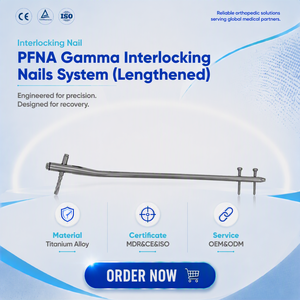
Medical Intramedullary PFNA Interlocking Nails

Medical Intramedullary PFNA Interlocking Nails Lengthened Titanium Implants

Proximal Femoral Nail Antirotation (PFNA) long nail design featuring helical blade bone compaction for superior purchase in osteoporotic trochanteric fractures.

Intramedullary Nail Get Catalog

Evaluating Class II Medical Device Sourcing in China: A Technical Overview

The global demand for high-performance orthopedic implants and surgical instruments has transformed the supply chain landscape. International buyers, procurement executives, and medical device distributors are increasingly turning to top-tier Chinese manufacturers to secure certified hardware that balances mechanical reliability with cost efficiency. However, navigating China's regulatory classification—specifically distinguishing between Class II (moderate risk surgical instruments, power tools, external fixators) and Class III (high risk permanent implants such as spinal pedicle screw systems, hip prostheses, and intramedullary nails) requires strict technical evaluation.

China's National Medical Products Administration (NMPA) enforces quality management systems aligned with ISO 13485:2016 and US FDA 21 CFR Part 820. Sourcing directly from verified Class II and Class III facilities ensures that every batch of titanium alloy (ASTM F136 / Ti-6Al-4V ELI), unalloyed titanium (ASTM F67), and surgical-grade stainless steel (ASTM F138 / 316L) meets stringent biocompatibility (ISO 10993) and static/dynamic fatigue resistance standards (ASTM F1717 / ASTM F543).

Metallurgical Traceability

Every raw material bar undergoes ultrasonic flaw detection and chemical composition analysis, providing heat-number traceability back to mill test certificates.

Sub-Micron Machining

Swiss-type 5-axis CNC turning centers maintain pitch tolerance down to ±0.005mm on locking screw threads and spinal tulip interfaces.

Cleanroom Packaging

Final cleaning occurs in ISO Class 7 cleanrooms, utilizing multi-stage ultrasonic deionized water rinsing followed by double-pouch sterile barrier sealing.

Orthopedic Material Engineering & Biomechanical Comparison Matrix

Selecting the optimal material and design configuration is critical for surgical success, osseointegration, and hardware longevity. Below is an engineering overview of the primary implant materials deployed across our spine, trauma, and veterinary lines:

Material Standard Composition Yield Strength (MPa) Elastic Modulus (GPa) Primary Surgical Application
ASTM F136 (Ti-6Al-4V ELI) Titanium-6Aluminum-4Vanadium Extra Low Interstitial ≥ 860 MPa 110 GPa Pedicle Screws, Locking Compression Plates, PFNA Nails
ASTM F67 (Grade 4 Ti) Commercially Pure Unalloyed Titanium ≥ 483 MPa 105 GPa Maxillofacial Plates, Cranial Repair Mesh, Soft Tissue Anchors
ASTM F138 (316L Stainless Steel) Iron-Chromium-Nickel-Molybdenum Alloy ≥ 690 MPa 190 GPa Cannulated Drills, K-Wires, Veterinary SOP Plates, Driver Tools
PEEK-OPTIMA (ASTM F2026) Polyetheretherketone Thermoplastic 100 - 130 MPa 3.6 GPa (Radiolucent) Spinal Interbody Fusion Cages (TLIF/PLIF/ACDF), Cranial Implants
60,000 m²
Modern Production Facility
450+
CNC Machining Units
20,000
Daily Units Output
70+
Senior R&D Engineers

Future Sourcing & Procurement Trends for Global Orthopedic Distributors

The global orthopedic market is undergoing a structural transformation driven by hospital cost pressures, regulatory shifts, and technological advancements. Medical device importers who adapt to these four emerging supply trends will establish significant competitive advantages:

Trend 01

Shift to Direct-to-Factory OEM/ODM Private Labeling

Regional distributors are transitioning away from high-markup Western multinational brands. By partnering directly with Chinese manufacturers, distributors build their own proprietary branded implant lines via customized laser marking, private label packaging, and tailored IFUs.

Trend 02

Low MOQ & Mixed-SKU Inventory Strategies

Carrying high safety stock across hundreds of locking plate lengths and screw diameters strains working capital. Leading suppliers now offer flexible low Minimum Order Quantities (MOQs) with mixed-SKU packing, enabling buyers to maintain lean, agile inventory cycles.

Trend 03

Demand for Turnkey Surgical Instrument Compatibility

Hospitals no longer accept standalone implants. Every plate, nail, and screw system must be delivered with a matched, color-coded, modular surgical instrument tray that fits existing hospital sterilization autoclaves seamlessly.

Trend 04

Rapid Growth of Veterinary Orthopedics

Advanced veterinary orthopedic procedures (such as canine TPLO, ALPS, and SOP plating) are experiencing double-digit annual growth worldwide. Veterinary clinics demand human-grade titanium implants customized for small animal biomechanics.

Next-Generation Technological Trends in Orthopedic Manufacturing

Manufacturing innovations are redefining implant performance, tissue integration, and surgical outcomes. Top Class II & Class III factories in China are investing heavily in three core engineering disciplines:

Additive 3D Titanium Printing

Selective Laser Melting (SLM) enables the creation of biomimetic porous titanium cages with interconnected pore sizes (600–800 µm), replicating cancellous bone structure for rapid osseointegration.

Advanced Surface Coatings

Plasma-sprayed Hydroxyapatite (HA) coatings and Type II Anodization improve bone-to-implant contact while reducing friction during pedicle screw insertion and intramedullary nail placement.

Multi-Directional Locking

Variable-angle locking mechanisms allow surgeons to trajectory-steer bone screws up to ±15° from the plate axis, optimizing purchase in osteoporotic or multi-fragmentary fractures.

Enterprise Strengths & Manufacturing Quality Assurance

As a leading Chinese medical device manufacturer, Ortix Medical Devices Co., Ltd. operates a modern 60,000 m² plant outfitted with over 450 automated CNC multi-axis turning centers, high-precision Swiss lathes, and specialized surface treating equipment. Producing approximately 20,000 certified units daily, we deliver robust supply chain stability for high-volume hospital tenders and global distributor orders.

ISO 13485 & FDA Registered

Our quality management system operates under strict ISO 13485 certification and FDA establishment registration. Every production batch is accompanied by comprehensive Technical Files (STED format), material heat test certificates, and sterilization validation reports to accelerate your local product registration.

Dedicated R&D Engineering Team

Supported by 70+ biomedical engineers and an in-house mechanical testing laboratory, we partner with surgical consultants to rapidly turn customer concepts into finished ODM implants—from initial 3D CAD modeling and finite element analysis (FEA) to prototype testing.

Frequently Asked Questions for Orthopedic Procurement Managers

Get instant answers to key technical, regulatory, and commercial questions regarding orthopedic implant orders:

What quality certifications and regulatory documents do you provide?

We manufacture under an ISO 13485 certified quality management system and maintain FDA registration. For every shipment, qualified distributors receive lot-specific raw material certificates, dimensional inspection reports, mechanical test summaries (pull-out, static bending, dynamic fatigue), and sterilization validation dossiers to support local registration with national health authorities.

What is the typical Minimum Order Quantity (MOQ) for OEM/ODM implants?

We support low MOQ flexibility to assist distributors in introducing new product lines. Standard catalog items can be ordered in mixed-SKU batches (combining plates, screws, nails, and cages in a single shipment). For customized OEM private labeling (laser logo etching and custom box artwork), MOQs are structured by product family.

Do you supply matching surgical instrument sets with implant systems?

Yes. Every implant family—including spine pedicle screw systems, trauma locking plates, intramedullary nails, and veterinary ALPS/SOP kits—is paired with a fully dedicated, autoclavable surgical instrument kit. Instruments are constructed from surgical-grade stainless steel and lightweight anodized aluminum.

Can I request evaluation samples prior to placing bulk orders?

Qualified medical distributors, importers, and hospital procurement departments can request evaluation samples. Sample kits allow your surgical advisory team to inspect surface finish, thread tolerances, driver fit, and instrument ergonomics firsthand before committing to a commercial contract.

What are the production lead times for standard vs. OEM orders?

With a 60,000 m² factory floor running 450+ CNC machines and producing ~20,000 units daily, standard catalog items ship within 7 to 14 business days. Custom OEM orders requiring specialized tooling, custom anodization, or private label packaging generally ship within 30 to 45 days depending on batch volume.

What materials are used in your orthopedic bone plates and screws?

We utilize implant-grade Titanium Alloy ASTM F136 (Ti-6Al-4V ELI), Commercially Pure Titanium Grade 4 ASTM F67, High-Grade Stainless Steel 316L ASTM F138, and PEEK-OPTIMA ASTM F2026. All raw materials are sourced with complete heat-number mill certifications.

Partner with China's Premier Orthopedic Implant Manufacturer

Expand your distribution portfolio with ISO 13485 certified spine, trauma, and veterinary hardware. Request our complete 2025 product catalog, technical specifications, and factory-direct wholesale pricing today.

Get Catalog