Dental & Maxillofacial
Standardized, clinical-grade orthopedic traumatology, craniomaxillofacial (CMF), and guided bone regeneration (GBR) implant platforms engineered with tight tolerances and full raw-material heat traceability.
The global market for musculoskeletal fixation and joint reconstruction has entered an era defined by stringent clinical scrutiny, localized national registration mandates, and acute cost pressures. Historically, international procurement managers viewed Chinese orthopedic device contract manufacturers predominantly through the lens of cost arbitrage. However, over the past decade, driven by rigorous domestic regulatory reforms (NMPA Class III harmonization) and massive capital infrastructure investments, tier-one manufacturers in China have evolved into world-class centers of biomedical engineering excellence.
Today, sourcing from top Chinese manufacturers means accessing facilities equipped with Citizen and Star Swiss-type multi-axis lathes, DMG MORI 5-axis machining centers, and Class 100,000 (ISO Class 7/8) cleanroom assembly zones. More critically, manufacturers like Ortix Medical have prioritized international regulatory compliance, maintaining comprehensive ISO 13485:2016 Quality Management Systems and active U.S. FDA Establishment Registrations. For hospital groups, B2B importers, and private label brand owners across the Americas, Europe, Southeast Asia, and the Middle East, this ensures full validation data—ranging from fatigue runout curves (ASTM F382 / ASTM F543) to bio-burden sterilization validation (ISO 11137 / ISO 11607)—is readily accessible for national regulatory submissions.
Complete CE MDR technical files, 510(k) reference documentation, chemical residue test reports, and raw material heat analysis.
Certified mechanical labs performing dynamic axial torsion, bending strength, screw pull-out force, and wear particle characterization.
Integrated supply chains guaranteeing raw Ti-6Al-4V ELI (ASTM F136) and medical-grade PEEK inventory buffers for fast delivery cycles.
Ortix Medical Devices Co., Ltd. represents the cutting edge of export-driven orthopedic device manufacturing in China. With a modern manufacturing footprint encompassing 60,000 square meters and an operational fleet of over 450 computer numerical control (CNC) machine tools, the company bridges the gap between intricate biomechanical research and high-volume, defect-free clinical mass production.
Unlike regional workshops that specialize solely in single-part machining, Ortix Medical provides holistic procedural solutions. Every implant series—be it anterior cervical plating systems, minimally invasive expandable interbody cages, or distal radius variable-angle locking plates—is accompanied by an ergonomically designed, medical-grade stainless steel instrument container. This eliminates the operational friction distributors typically encounter when attempting to marry third-party surgical tools with imported implant hardware.
Consolidate spine, trauma, joint arthroplasty, sports medicine anchors, CMF reconstruction, and power tools under one export contract.
Prevent capital lockup by combining low quantities of specialty sizes and high-turnover plates within single consolidated sea/air shipments.
Dedicated engineering teams handle laser etching, color anodization, sterile blister packing, multi-language IFU layout, and custom geometries.
Every single batch of implants carries full spectrographic material analysis certificates (MTR) tied directly to the master production order.
Strategic medical buyers do not simply procure implants for current demand; they align their vendor networks with emerging clinical preferences and supply chain shifts. Sourcing directors must evaluate Chinese manufacturing partners against four defining technological and structural trends:
The orthopedic market is transitioning rapidly from traditionally machined solid titanium interbody cages toward 3D-printed porous structures. Direct metal laser sintering (DMLS) using medical Ti-6Al-4V alloy allows engineers to replicate trabecular bone porosity (pore size 400–600 μm, porosity 65–75%), drastically lowering the modulus of elasticity to mitigate stress shielding while accelerating osteointegration. Tier-one Chinese exporters are deploying EOS and Concept Laser printing banks, delivering 3D cages at pricing structures that empower distributors to win public and private tender bids.
While Grade 4 pure titanium and Ti-6Al-4V ELI remain the workhorses of osteosynthesis plates and bone tacks, sports medicine and craniomaxillofacial surgeries increasingly demand radiolucent PEEK (Polyetheretherketone) or bio-composite polymer formulations. PEEK avoids postoperative artifact scattering during MRI or CT scans—critical for cranial reconstruction and spinal tumor resections. In sports medicine, bio-absorbable composite interference screws (PLDLA/β-TCP) eliminate the necessity for secondary implant removal procedures.
Across North America and Western Europe, low-complexity trauma cases are migrating away from traditional hospital inpatient settings toward outpatient ambulatory surgical centers. ASCs operate on lean staffing models and cannot afford laborious manual tray sterilization, chemical decontamination, and autoclave cycles. As a result, procurement is shifting toward pre-sterilized, gamma-irradiated, single-use packaged plates and screws with ready-to-use disposable drill bits and drivers. Chinese manufacturers that offer certified ISO 11607 sterile blister packaging cleanrooms are winning these lucrative export accounts.
| Implant Classification | Predominant Materials | International Standards | Key Performance Indicators | Recommended Clinical Indications |
|---|---|---|---|---|
| Spinal Fixation (Pedicle Screws / Rods) | Ti-6Al-4V ELI / PEEK | ASTM F136, ASTM F1717, ISO 5832-3 | Static & Dynamic Bending, Pull-out yield > 1200 N | Degenerative disc disease, spondylolisthesis, scoliosis |
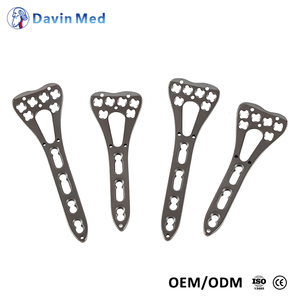
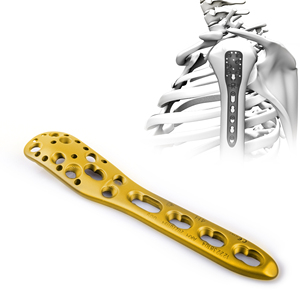
| Trauma Variable-Angle Locking Plates | Grade 3 Titanium / 316L Stainless Steel | ASTM F382, ASTM F138, ISO 5832-1 | Fatigue runout at 10^6 cycles, combi-hole thread integrity | Diaphyseal & intra-articular fractures (radius, humerus, tibia) |
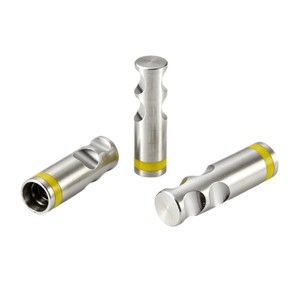
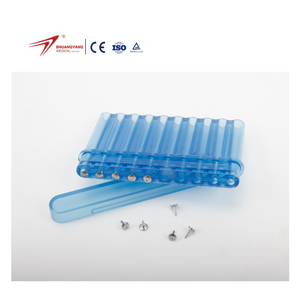
| GBR Membrane Tacks & Dental Analogs | Grade 5 Titanium / Medical 316L | ASTM F67, ISO 14801, CE Class IIb / III | Sharp penetrative tip taper, zero micro-wobble fitment | Maxillofacial alveolar bone augmentation, dental lab modeling |
| 3D Printed Trabecular Cages | Ti-6Al-4V Additive Powder | ASTM F2924, ASTM F2077, FDA Guidance | Interconnected porosity 70%, friction coefficient > 0.6 | ACDF, TLIF, PLIF, and complex multi-level spinal fusion |
Healthcare supply chains in a post-pandemic world cannot rely on single regional clusters. Forward-thinking procurement executives maintain a diversified manufacturing matrix: while Tier-1 brand names service domestic high-margin specialty indications, robust FDA-registered Chinese manufacturing partners are integrated into the distributor's catalog to cover competitive governmental tenders, health insurance capitation programs, and price-sensitive export markets.
When selecting a Chinese manufacturing partner for Class IIb and Class III orthopedic hardware, B2B procurement managers should never rely solely on digital catalog imagery or price quotes. An audit-ready due diligence framework involves vetting five critical validation gates:
Verify that raw bar stock is sourced exclusively from certified mills with traceable heat numbers verifying ASTM F136 or ISO 5832 purity standards.
Ensure titanium anodization (Type II / III) and stainless steel citric/nitric acid passivation (ASTM F86) adhere strictly to cytotoxicity baselines.
Examine automated optical and Zeiss coordinate measuring machine (CMM) reports validating thread pitch, hexalobe recess, and plate radius contouring.
Furthermore, ensure that the contract manufacturer can supply pre-clinical biomechanical testing records conducted according to universally recognized protocols. A manufacturer unable to furnish ASTM F382 bending stiffness data or screw pullout test results will likely cause lengthy delays during local ministry of health registrations.
Detailed insights addressing regulatory compliance, production lead times, minimum order sizes, and private label OEM packaging.
Ortix Medical operates strictly within an ISO 13485:2016 audited Quality Management System for the design, development, and manufacturing of medical and surgical implants. The company holds an active U.S. FDA Establishment Registration. To support qualified importers, distributors, and surgical hospital supply managers, Ortix provides comprehensive technical documentation packages, including certified material test reports (MTR), biocompatibility summaries (ISO 10993), mechanical fatigue runout curves, and sterilizer validation dossiers necessary for local Ministry of Health product registrations.
Recognizing that orthopedic inventories encompass extensive size runs (e.g., locking plates in 3-hole to 14-hole variations, screws across dozens of shaft lengths), Ortix Medical supports a flexible, low-MOQ procurement framework. Distributors are not forced to order excessive quantities of slow-moving anatomical sizes. Instead, clients can configure consolidated mixed-SKU shipments combining spine, trauma, and extremity plates, matching screws, and complete sterilization instrument cases in a single order.
Ortix Medical maintains an in-house engineering and R&D department staffed by over 70 biomechanical specialists. OEM/ODM services cover high-precision laser marking (distributor logo, product code, lot number, GS1 DataMatrix UDI barcodes), anodized color differentiation by surgical gauge, tailor-made outer box and Tyvek blister packaging, and full translation assistance for Instructions for Use (IFU). Furthermore, the R&D team collaborates with orthopedic key opinion leaders (KOLs) to adjust anatomical plate contour curvatures or design novel minimally invasive instrument handles.
Yes. Accredited medical device distributors, hospital procurement committees, and surgical device brand owners can request sterile or non-sterile evaluation samples through our structured evaluation program. Sample sets allow chief orthopedic surgeons and quality assurance teams to verify hand-feel, screw-to-plate hole locking friction, driver engagement tolerancing, surface passivation finish, and overall instrument container ergonomics before finalizing commercial contracts.
The 60,000 square meter Ortix facility operates over 450 precision CNC units, yielding an average production capacity of approximately 20,000 osteosynthesis units per day. For standardized catalog items kept in raw-stock or finished buffers, dispatch can occur within 10 to 15 business days. Tailored OEM projects, non-standard locking geometries, or private-label retail packaging typically execute within a reliable 30 to 45-day manufacturing and inspection window.
Implants are fabricated exclusively using verified biocompatible materials meeting rigid ASTM and ISO standards: Ti-6Al-4V ELI (ASTM F136 / ISO 5832-3), Commercially Pure Titanium Grade 2, 3, and 4 (ASTM F67 / ISO 5832-2), Medical Grade 316L Stainless Steel (ASTM F138 / ISO 5832-1), and implant-grade Polyetheretherketone (PEEK-OPTIMA / ASTM F2026). Every ingot is accompanied by raw material mill test certificates confirming exact chemical compositions, mechanical yield strengths, and zero toxic elemental impurities.
Whether you require standard CE/FDA-compliant trauma plates, spine fixation sets, custom CMF implants, or high-volume private label OEM/ODM manufacturing, our engineering export team is standing by to assist with registration dossiers, size charts, and competitive price matrices.