Certificated Orthopedic Implant Catalog & Flagship Systems
Precision-engineered medical devices compliant with international regulatory registration standards
Executive Whitepaper: The Strategic Importance of Free Sale Certificates (FSC) in Global Medical Device Procurement
In the highly regulated global orthopedic implant sector, securing a Certificate of Free Sale (CFS / FSC) is a prerequisite for seamless market authorization, hospital tender qualification, and customs clearance. Issued by government health authorities—such as China’s National Medical Products Administration (NMPA)—and authenticated via the China Council for the Promotion of International Trade (CCPIT) alongside relevant foreign embassies, a Free Sale Certificate provides legal proof that the orthopedic devices are legally produced, registered, and actively commercialized within the country of origin.
For international medical device distributors, hospital procurement boards, and OEM brand partners in Latin America, Southeast Asia, the Middle East, Eastern Europe, and Africa, partnering with a certificated Chinese orthopedic manufacturer drastically mitigates regulatory friction. It ensures that titanium spinal pedicle screws, trauma locking plates, micro cortical bone screws, and craniomaxillofacial (CMF) fixation systems meet rigorous Quality Management System (QMS) criteria under ISO 13485:2016 and FDA Medical Device Good Manufacturing Practice (GMP).
Regulatory Information Gain Note: A valid Free Sale Certificate issued by NMPA validates that the manufacturing facility operates under continuous regulatory oversight, maintaining full traceability from raw medical-grade titanium bars (ASTM F136 / ISO 5832-3) to final gamma-sterilized blister pack packaging.
Biomechanical Metallurgy & Precision Swiss CNC Manufacturing Standards
Modern orthopedic internal fixation demands exceptional yield strength, high fatigue endurance limits, low modulus of elasticity to prevent stress shielding, and supreme osseointegration capabilities. Leading Chinese manufacturers leverage state-of-the-art Swiss CNC multi-axis automatic lathes (e.g., Tornos, Citizen) and 5-axis machining centers (DMG Mori) to achieve micro-dimensional tolerances within ±0.005mm.
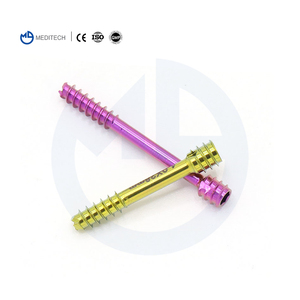
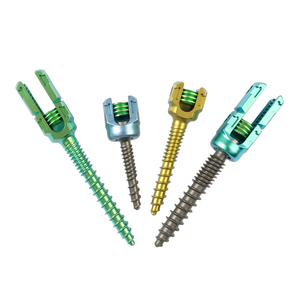
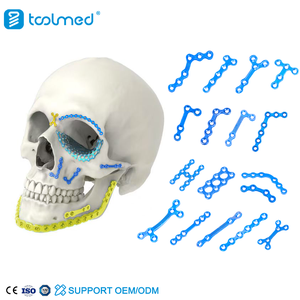
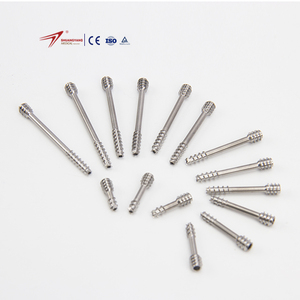
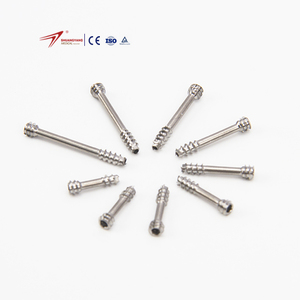
Whether producing 2.0mm micro craniomaxillofacial locking plates, cannulated headless Herbert compression screws, or 5.5mm/6.0mm spinal pedicle screw systems, stringent metallurgical standards are mandatory. The primary implantable alloys utilized include:
| Material Designation | Standard Compliance | Tensile Strength (MPa) | Biomechanical Application | Key Advantage |
|---|---|---|---|---|
| Ti-6Al-4V ELI (Grade 23) | ASTM F136 / ISO 5832-3 | ≥ 860 MPa | Pedicle Screws, Trauma Plates, Spinal Cages, CMF Systems | Superior fracture toughness, biocompatibility, reduced MRI artifacts |
| PEEK OPTIMA | ASTM F2026 | 90 - 100 MPa | Spinal Interbody Fusion Cages, Cranial Repair Plates | Radiolucent, elastic modulus matching natural human cancellous bone |
| 316L Implant Stainless Steel | ASTM F138 / ISO 5832-1 | ≥ 860 MPa (Cold Worked) | Cortical Screws, Trauma Plates, K-Wires, External Fixators | Cost-effective, high torsional strength, excellent ductility |
| Unalloyed Titanium (Grades 2-4) | ASTM F67 / ISO 5832-2 | 345 - 680 MPa | Maxillofacial Plates, Guided Bone Regeneration (GBR) Mesh | High malleability for intraoperative contouring, anatomical adaptation |
To maximize clinical performance, advanced surface modification techniques are integrated into the production process:
- Type II Anodization (Grey/Dark Anodization): Significantly increases fatigue resistance and reduces titanium fretting wear under cyclic biomechanical loading.
- Color Type III Anodization: Provides instant color-coding for surgical identification of screw diameters and plate thickness during complex trauma procedures.
- Micro-Blasting & Acid Etching: Enhances surface roughness to stimulate osteoblast proliferation and accelerate bony ingrowth.
Global Procurement & Development Trends in Orthopedic Manufacturing (2025–2030)
The global market for trauma, spine, and joint reconstruction is undergoing a structural transition. Sourcing directors and hospital procurement entities are recalibrating their supply networks based on four critical macro-trends:
1. Consolidation of Regulatory Documentation (FSC & CE MDR)
Distributors no longer evaluate suppliers solely on unit price. Complete technical dossiers (STED), ISO 13485 certification, and legal FSC documents legalized via CCPIT and local embassies are mandatory to meet tightening national registration requirements worldwide.
2. Expansion of Minimally Invasive Surgery (MISS) Instrumentation
Surgical trends strongly favor percutaneous pedicle screw placement, expandable lumbar cages, and headless compression Herbert screws. Factories capable of manufacturing both the implant and matched ergonomic instruments hold a key market edge.
3. Modular OEM/ODM & Flexible Low-MOQ Supply Models
Healthcare importers require custom laser etching, private-label sterile blister packaging, and mixed-SKU ordering. Modern Chinese factories provide low minimum order quantities (MOQs) to help distributors maintain lean inventory controls.
Enterprise Strengths: End-to-End Quality Assurance & OEM Capabilities
As a leading Chinese orthopedic manufacturing facility, our infrastructure is specifically designed to handle high-volume B2B contract production alongside bespoke ODM projects. Key organizational capabilities include:
- Comprehensive R&D Infrastructure: Supported by over 70 dedicated R&D and biomedical engineers specializing in finite element analysis (FEA), mechanical simulation, and CAD/CAM implant design.
- Extensive Production Scale: Spanning 60,000 square meters of cleanroom and heavy-precision machining zones housing 450+ high-precision CNC units, yielding a daily capacity of approximately 20,000 units.
- In-House Testing Laboratory: Equipped with dynamic fatigue testing stations (conforming to ASTM F1717 for spinal constructs and ASTM F543 for bone screws), coordinate measuring machines (CMM), optical comparators, and surface profilometers.
- Complete Traceability & Cleanroom Operations: Raw materials undergo positive material identification (PMI) upon arrival. Finished implants undergo automated ultrasonic cleaning and packaging inside Class 100,000 (ISO Class 8) cleanrooms.
Frequently Asked Questions (FAQ) for Global Buyers
Regulatory, quality, and commercial insights for international orthopedic distributors
What is a Free Sale Certificate (FSC) and why is it essential for importing orthopedic implants from China?
A Free Sale Certificate (FSC) is an official regulatory document issued by China's National Medical Products Administration (NMPA) confirming that the manufacturer's orthopedic devices are legally registered and cleared for free distribution in the domestic market. Foreign health authorities (e.g., ANVISA in Brazil, INVIMA in Colombia, SFDA in Saudi Arabia, MOH in Vietnam) require an authenticated FSC—legalized by the CCPIT and the destination country's embassy—to issue local product registration licenses and permit customs clearance.
Which quality certifications do your orthopedic manufacturing facilities maintain?
Our production plant operates strictly under an ISO 13485:2016 certified Quality Management System. Furthermore, our establishment is registered with the U.S. FDA, and our primary product families carry CE compliance certificates, comprehensive material mill certificates (MTRs), and full ISO 14801/ASTM F1717 mechanical test reports to support local registration dossiers.
Can global buyers request custom OEM/ODM private labeling and specialized packaging?
Yes. We provide full OEM and ODM services. This includes high-precision fiber laser etching of distributor logos, custom SKU numbering, specialized color anodization, custom surgical instrument container layout, and tailor-made sterile blister packaging with custom Instructions for Use (IFU) design.
What is the typical Minimum Order Quantity (MOQ) and production lead time?
We support flexible, low-MOQ mixed-SKU orders, allowing distributors to combine trauma locking plates, cannulated screws, spinal pedicle screws, and CMF implants within a single shipment. Standard catalog items typically ship within 14 to 21 business days, while customized OEM orders are executed based on a structured project timeline.
Are evaluation samples available for clinical and technical verification?
Qualified medical device distributors, hospital procurement agents, and orthopedic specialists can request evaluation samples. Sample kits permit surgical teams to independently verify surface finish, thread pitch accuracy, dimensional tolerances, and instrument engagement prior to signing commercial supply agreements.
How are surgical instruments validated for compatibility with your implant systems?
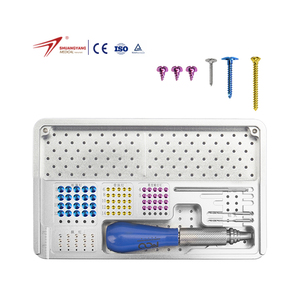
Every implant system (e.g., 5.5mm Spinal Pedicle Screw System or 2.0mm CMF Locking System) is co-engineered alongside dedicated surgical instrument sets. Quick-coupling drivers, taps, benders, and drill bits undergo strict geometric clearance and hardness testing to prevent intraoperative stripping or mechanical mismatch.