The global demand for high-performance skeletal reconstruction systems is undergoing a paradigm shift toward high-precision titanium alloys, bio-absorbable polymers, and patient-matched additive manufacturing. As hospital procurement teams, orthopedic distributors, and original equipment manufacturers (OEMs) evaluate global supply partners, China has emerged as the principal powerhouse for high-tier medical device manufacturing. This technical whitepaper analyzes China’s leading orthopedic implant manufacturing ecosystem, evaluating production standards, quality assurance framework (ISO 13485 & FDA compliance), biomechanical engineering trends, and strategic procurement frameworks for global buyers.
Featured Precision Orthopedic Implants & Trauma Fixation Systems
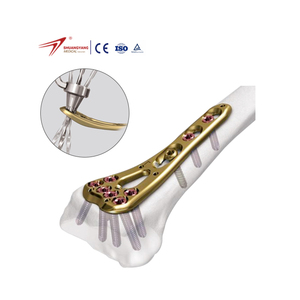
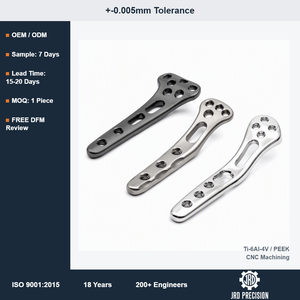
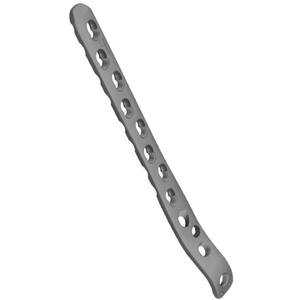
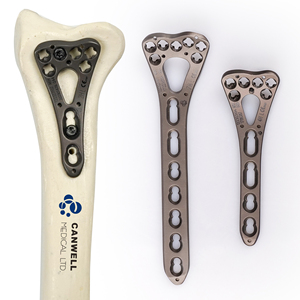
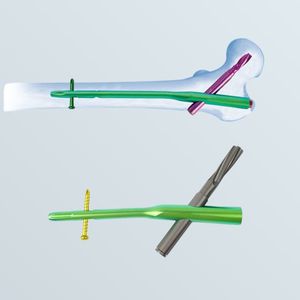
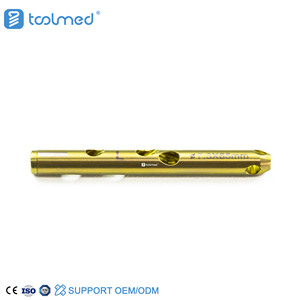
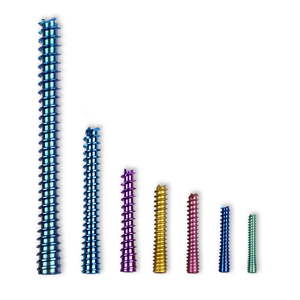
Explore our certified catalog of trauma, spine, and reconstructive orthopedic systems. Manufactured under rigid ISO 13485 quality protocols utilizing medical-grade Titanium (Ti6Al4V ELI) and implantable PEEK materials, every implant undergoes rigorous CMM dimensional validation to ensure zero intraoperative mismatch.
Enterprise Manufacturing Infrastructure & Engineering Capabilities
As a leading Chinese orthopedic device manufacturer, Ortix Medical Devices Co., Ltd. operates at the intersection of metallurgical mastery and sub-micron machining precision. Serving global hospital systems, distributors, and orthopedic brand owners, our facility is engineered specifically to eliminate quality variance and streamline complex OEM/ODM product rollouts.
Sub-Micron Machining Precision
Equipped with DMG MORI 5-axis CNC machining centers and Citizen Swiss-type high-speed sliding head lathes, we achieve component tolerances up to ±0.005mm. This level of precision is vital for variable-angle locking threads, pedicle screw tulip joints, and cannulated compression dynamics.
Certified Quality Assurance Systems
Operating under a fully validated ISO 13485 quality management framework and registered with the U.S. FDA, our facilities include Class 100,000 cleanrooms for ultrasonic cleaning, primary packaging, and automated vision system inspections, maintaining 100% lot traceability.
Complete OEM/ODM & Custom Engineering
Our R&D team supports turnkey contract manufacturing: from CAD/CAM prototyping, custom laser marking, and custom instrument container development to surgical technique manual layout and local regulatory clearance document prep.
Metallurgical & Engineering Specification Matrix
Selecting the correct raw materials and manufacturing processes is critical for fatigue strength, corrosion resistance, and clinical osseointegration. The table below outlines our technical specifications for medical-grade implant production:
| Implant Category | Primary Material Specification | Manufacturing Process | Surface Treatment / Coating | Biomechanical Standard Compliance |
|---|---|---|---|---|
| Trauma Plates & Locking Screws | Ti6Al4V ELI (ASTM F136) / 316LVM (ASTM F138) | 5-Axis CNC Precision Milling & Thread Whirling | Type II Anodization / Micro-arc Oxidation | ASTM F382 (Bone Plates) / ASTM F543 (Screws) |
| Intramedullary Nails (PFNA / Tibial) | Titanium Alloy Grade 5 / Ti6Al4V ELI | Deep-Hole Gun Drilling & Swiss CNC Lathe Turn-Mill | Color Anodizing & Passivation | ASTM F1264 (Intramedullary Fixation Devices) |
| 3D Printed Structural Implants | Medical Titanium Powder (Ti6Al4V Grade 23) | Selective Laser Melting (SLM) Additive Manufacturing | Porous Trabecular Micro-textured Finish | ISO 10993 (Biocompatibility) / ASTM F3001 |
| Spine Fusion Cages & Pedicle Screws | PEEK OPTIMA (ASTM F2026) / Ti6Al4V ELI | 5-Axis High-Speed Milling & Titanium Coating | Plasma-Sprayed Titanium / HA Coating | ASTM F2077 (Interbody Fusion) / ASTM F1717 |
Technological Evolution & Development Trends in Orthopedic Manufacturing
The global orthopedic implant sector is experiencing a rapid technological evolution driven by minimally invasive surgery (MIS), patient-specific implants (PSI), and smart bio-functional surfaces. Leading Chinese manufacturers have transitioned from low-cost component replication to pioneering advanced bio-engineering solutions.
1. Additive Manufacturing & Trabecular Titanium
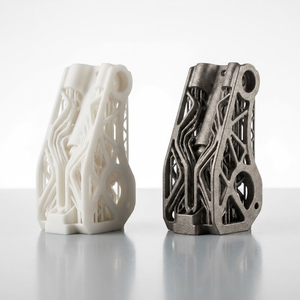
Selective Laser Melting (SLM) and Electron Beam Melting (EBM) 3D printing technologies allow factories to create biomimetic porous structures. By mimicking human cancellous bone geometry (pore size 300–600 μm and porosity 60–80%), 3D printed cages and acetabular cups encourage rapid osteoblast ingrowth, drastically reducing late-stage implant loosening.
2. Variable-Angle Locking Plate Systems (VA-LCP)
Standard fixed-angle locking plates are increasingly being superseded by Variable-Angle Locking Compression Plates (VA-LCP). Utilizing optimized titanium-to-titanium thread geometry, surgeons can trajectory-steer screws up to ±15° off-axis. This flexibility allows precise targeting of small peri-articular fragments in distal radius, calcaneus, and distal tibia fractures.
3. Surface Engineering & Bio-Active Coatings
Surface engineering is transitioning from passive biocompatibility to active osteogenesis. Modern processing involves Micro-Arc Oxidation (MAO), Hydroxyapatite (HA) plasma spraying, and antimicrobial nano-silver coating. These chemical modifications accelerate bone bonding while mitigating surgical site infection (SSI) risks in complex trauma cases.
Future Procurement Trends & Supply Chain Dynamics for International Buyers
Procurement executives at hospital networks and international medical distributors face tightening regulatory scrutiny (such as EU MDR compliance), fluctuating shipping costs, and tender pricing pressures. Navigating China’s supplier network requires understanding key shifts in international procurement strategies:
- Flexible Mixed-SKU & Low MOQ Ordering: Distributors no longer want to carry excessive buffer inventory. Top Chinese manufacturers now offer modular ordering, permitting mixed-SKU containers containing low volumes of specialized anatomical plates, screws, and matching surgical instrument sets.
- Turnkey OEM Private Labeling: Rather than buying off-the-shelf catalog items, international brands commission custom laser marking, sterile blister packaging, localized IFU (Instructions for Use) printing, and customized stainless steel sterilizing trays.
- Demand for Complete Surgical Tool Platforms: Implants cannot be placed without precision surgical instruments. Modern procurement strategies bundle implants directly with matching ergonomic driver sets, reamers, drill bits, and depth gauges engineered from medical stainless steel (17-4PH / 420J2).
- Regulatory Documentation Packages: Global buyers require comprehensive registration dossiers. Top suppliers provide full raw material mill test certificates (MTC), ISO 10993 cytotoxicity test reports, dynamic fatigue testing results, and sterilization validation documentation upfront.
Strategic Buyer’s Technical Guide: Evaluating Chinese Implant Factories
Selecting a direct factory partner in China demands rigorous technical due diligence beyond surface-level quotes. To ensure clinical safety and long-term business continuity, procurement managers should evaluate potential manufacturing partners against four core technical benchmarks:
1. Raw Material Metallurgy & Traceability
Verify that the factory sources certified implant-grade bars and sheets (such as Titanium Ti6Al4V ELI conforming to ASTM F136 or ISO 5832-3). Every batch must have spectroscopy analysis reports verifying interstitial element limits (Iron, Oxygen, Carbon, Nitrogen, and Hydrogen) to prevent premature implant fatigue failure.
2. In-Process Metrology Infrastructure
Ask for proof of automated optical and Coordinate Measuring Machine (CMM) inspection stations adjacent to production lines. Critical dimensions—such as pitch depth on self-tapping cannulated screws and locking cone taper angles—must undergo statistical process control (SPC) with a Cpk > 1.33.
3. Surface Roughness & Passivation Protocol
Implant surfaces must be free of particulate debris, machining oils, and micro-burrs. Stainless steel components require citric or nitric acid passivation (ASTM A967) to establish a protective chromium oxide layer, while titanium components should achieve a mirror surface finish (Ra < 0.2 μm) on sliding articular contact surfaces.
Purchasing & Technical FAQ for Global Orthopedic Buyers
Find answers to common questions asked by hospital procurement leads, biomedical engineers, and medical device distributors when sourcing orthopedic implants from China.
What quality management certifications and regulatory approvals do top Chinese implant manufacturers hold? +
What is the minimum order quantity (MOQ) for custom OEM/ODM orthopedic implants? +
How do manufacturers ensure biomechanical safety and fatigue resistance for bone plates and pedicle screws? +
Can Chinese manufacturers supply matching surgical instrument sets along with implant shipments? +
What raw materials are utilized in orthopedic implant fabrication, and how is biocompatibility verified? +
What is the typical production lead time for bulk orders and evaluation samples? +
How are implants packaged and sterilized prior to international export delivery? +
What steps should an international distributor take to initiate an OEM custom manufacturing agreement? +
Partner with China's Premier Orthopedic Implant Manufacturer
Looking for a reliable, ISO 13485 certified supply partner for spine, trauma, or joint reconstructive systems? Contact our engineering and international trade team today to request product catalogs, mechanical test reports, or evaluation samples.