Primary Orthopaedic Implants & Surgical Toolkits
Direct-from-factory medical devices manufactured under strict ISO 13485 & FDA certified systems.
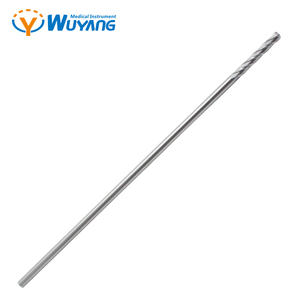
Stainless Steel Hollow Drill Bit Cannulated Drill Bit Orthopedic Trauma Implant Set
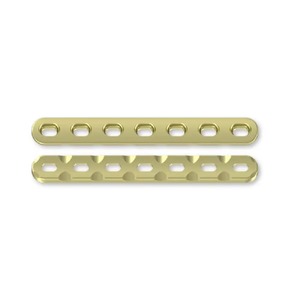
Titanium Orthopedic Implant – Manufacturer Direct Limited Compression Surgical Implant
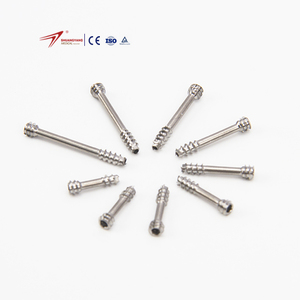
Orthopedic Implant Titanium Herbert Screw Headless Compression Cannulated Screw
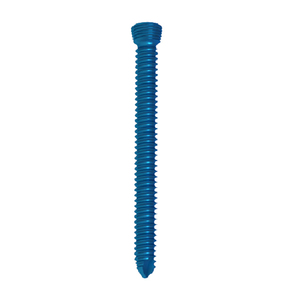
High Quality Intramedullary Nail Implant Set for Humerus Multidimensional Locking System
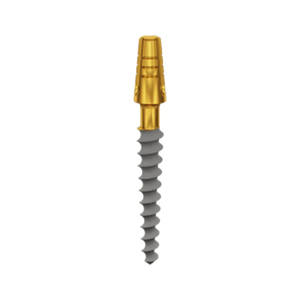
Sterile Packaged Titanium Alloy Dental Implant for Tissue Level Surgical Application
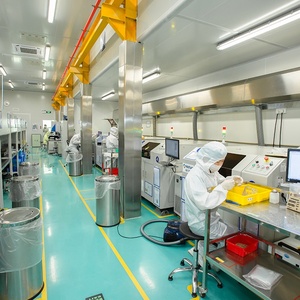
ISO 13485 Certified Device Manufacturing Services for Veterinary & Human Diagnostics
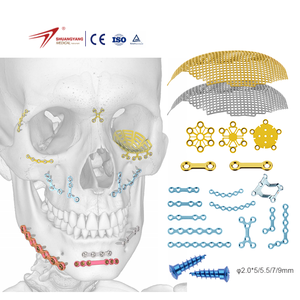
Neurosurgery Maxillofacial System Cranial Implant Titanium Mesh Skull Fixation System
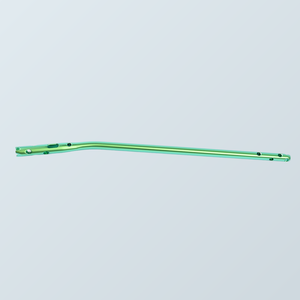
Tibia Interlocking Intramedullary Nail Titanium Orthopedic Implant for Trauma Fractures
60,000 m²
Production Base Area
450+
High-Precision CNC Machines
20,000
Daily Units Output
70+
R&D Biomedical Engineers
Enterprise Strengths & Manufacturing Excellence
Why Tier-1 international distributors rely on Chinese orthopaedic device engineering.
ISO 13485 & FDA Compliance
Our manufacturing infrastructure complies strictly with ISO 13485 Quality Management Systems and US FDA registration standards, ensuring full regulatory readiness for worldwide distribution.
End-to-End OEM / ODM Program
From custom laser marking, private label packaging, and modified thread geometries to complete bespoke instrumentation kits, our 70+ in-house engineers transform concepts into production-ready devices.
Flexible MOQ & SKU Aggregation
Eliminate inventory over-exposure. We allow distributors to consolidate small-batch, multi-category shipments spanning trauma plates, intramedullary nails, pedicle screws, and cranial meshes in a single order.
Global Orthopaedic Sourcing Whitepaper: Analysis & Strategic Insights
The global orthopaedic implant sector is undergoing a profound paradigm shift driven by demographic aging, expanding healthcare infrastructure in emerging economies, and the urgent need for cost containment without sacrificing biomechanical efficiency. As hospital procurement teams demand higher quality at competitive price points, Chinese orthopaedic implant manufacturers have evolved from low-cost contract producers into high-precision innovation partners.
Key Takeaway for Importers: Sourcing orthopaedic devices from established Chinese manufacturers now offers equivalent fatigue resistance, biocompatibility, and tactile precision compared to legacy Western brands, while providing 30% to 50% supply chain cost optimization.
1. Metallurgy Advancement: Ti-6Al-4V ELI & PEEK Biocompatibility
Modern implant integrity relies on metallurgical purity. Top-tier Chinese manufacturers exclusively utilize surgical Grade 5 Titanium (Ti-6Al-4V ELI - Extra Low Interstitial) compliant with ASTM F136 and ISO 5832-3. This material provides superior tensile strength (>860 MPa), optimal fatigue resistance under dynamic physiological loading, and excellent osseointegration properties. Simultaneously, for spinal fusion cages and cranial cranioplasty, medical-grade PEEK (Polyetheretherketone) according to ASTM F2026 is deployed to closely match the modulus of elasticity of natural cortical bone (3.6 GPa), thereby eliminating stress shielding phenomena.
2. Precision CNC Machining & Surface Treatment Engineering
The operational performance of cannulated screws, headless compression screws, and interlocking intramedullary nails depends on strict manufacturing tolerances. Utilizing multi-axis Swiss-type CNC automatic lathes (such as Citizen and Star) alongside 5-axis machining centers, implant dimensions are held within microscopic tolerances (±0.005 mm). Advanced surface treatment protocols—including Type II Anodization for enhanced friction coefficients, Type III Color Anodization for visual size coding during surgery, and Micro-Arc Oxidation (MAO)—drastically reduce ion release while enhancing bone contact surface area.
3. Comprehensive Instrument Set Integration
A persistent challenge faced by medical device distributors is the disconnect between surgical hardware and driver tools. Top Chinese exporters overcome this by engineering integrated implant-instrument ecosystems. Whether supplying a Proximal Femoral Intramedullary Nail system or a Thoracolumbar Pedicle Screw construct, the titanium implants are delivered alongside fully matched 316L stainless steel surgical instruments (reamers, tissue protectors, torque-limiting drivers, and depth gauges) housed in autoclavable aluminum sterilization trays.
Future Trends in Global Orthopaedic Implant Procurement
1. Shift Towards Additive Manufacturing (3D Printed Porous Structures)
Traditional solid titanium implants are rapidly giving way to 3D-printed trabecular titanium constructs. By employing Selective Laser Melting (SLM) or Electron Beam Melting (EBM), manufacturers can generate interconnected porous matrices mimicking human cancellous bone structure (porosity level 60-80%, pore size 300-600 μm). This structure encourages rapid vascularization and direct bone ingrowth, eliminating the need for extensive bone graft materials in spinal fusion and joint revision procedures.
2. Regulatory Harmonization & Full Lot Traceability
With the implementation of the European Union Medical Device Regulation (EU MDR 2017/745) and the global expansion of Unique Device Identification (UDI) mandates, global exporters must deliver transparent data trails. Advanced Chinese facilities now integrate direct laser UDI marking, dynamic barcode tracking, and complete material certification (from raw titanium bar stock to final gamma or ETO sterile packaging validation), simplifying local registration processes for international distributors.
3. Growth of Minimally Invasive Surgery (MIS) Toolkits
Surgeons increasingly favor MIS techniques to reduce intraoperative blood loss, tissue trauma, and patient recovery times. Consequently, procurement strategies are shifting towards percutaneous pedicle screw systems, MIS proximal humeral nails, and cannulated compression screws designed for keyhole surgical access. Manufacturers providing slim-profile, ergonomic guide tools specifically tailored for MIS approaches are gaining significant market share globally.
Patient-Specific Implants (PSI)
Integration of patient CT scan data into CAD/CAM platforms allows for custom-printed cranial titanium meshes and complex maxillofacial reconstruction plates within rapid 5-day lead times.
Antibacterial & Bioactive Coatings
Emerging surface modifications incorporating silver nanoparticles or hydroxyapatite (HA) plasma spraying significantly decrease postoperative surgical site infection (SSI) risks.
Frequently Asked Questions (FAQ) for Global Buyers
Expert answers addressing quality control, regulatory documentation, and ordering logistics.
What quality management certifications and test reports do you provide for product registration?
Our manufacturing facility operates under a fully certified ISO 13485 quality management system and maintains active US FDA establishment registration. For every batch, qualified buyers receive complete raw material chemical composition and mechanical test certificates (according to ASTM F136 / F138 standards), mechanical static/fatigue test reports (such as ASTM F1717 for pedicle screws or ASTM F543 for bone screws), biostability reports, and cleanroom environmental monitor validation logs to expedite local regulatory clearance.
What is the typical Minimum Order Quantity (MOQ) for custom OEM orders?
We maintain a distributor-friendly MOQ policy. For standard catalog items (locking plates, cannulated screws, IM nails), we support flexible batch orders allowing mixed SKUs. For OEM custom labeling or specific color anodization requests, the baseline MOQ starts as low as 50-100 units per specification, enabling distributors to test market response without committing excessive capital.
How do you ensure raw material purity and mechanical structural integrity?
Raw materials are strictly procured from certified aerospace-grade titanium and surgical stainless steel suppliers. Every incoming lot undergoes rigorous spectrum analysis, ultrasonic flaw detection, and tensile testing. Finished implants undergo 100% optical coordinate measuring machine (CMM) dimensional verification, microscopic burr inspection, and random destructive torque and pull-out resistance testing in our certified internal testing lab.
Can you manufacture specialized surgical instruments matching custom implant designs?
Yes. Our engineering department specializes in reverse engineering and full-cycle ODM design. We develop complete specialized surgical toolkits—including custom benders, reamers, depth gauges, quick-coupling handles, and holding forceps—manufactured from hardened 17-4PH or 316L stainless steel to guarantee durable intraoperative performance over repeated autoclave sterilization cycles.
What are your typical manufacturing lead times and global delivery logistics?
Standard catalog products are stocked in semi-finished states, allowing dispatch within 7-14 working days. Custom OEM orders or large tender fulfillment cycles generally require 30 to 45 days, depending on technical complexity and packaging specifications. We coordinate export customs clearance and deliver via reliable international air freight (DHL, FedEx, UPS) or sea cargo with comprehensive export documentation.
Partner with China's Premier Orthopaedic Device Exporter
Request comprehensive product catalogs, technical drawing specifications, material certificates, or apply for evaluation samples directly from our engineering team.