Executive Sourcing Brief
Strategic Evaluation of Orthopedic Instrument Manufacturing in China
The global market for orthopedic implants and surgical instruments is undergoing a rapid paradigm shift. Procurement directors, hospital purchasing boards, and regional distributors are increasingly prioritizing supply chain resilience, stringent metallurgical purity, micro-machining tolerances, and full regulatory traceability. As a leading hub for advanced medical device manufacturing, China’s tier-1 factories have evolved far beyond conventional contract machining into high-tech hubs equipped with 5-axis Swiss-type CNC lathes, additive manufacturing (3D printing) technologies, and ISO Class 7 cleanroom packaging facilities.
Sourcing surgical devices requires a deep technical understanding of biomaterial physics—such as Grade 5 Ti6Al4V ELI (Extra Low Interstitial) titanium alloys, implant-grade PEEK-Optima, and 316LVM vacuum-melted stainless steels. Furthermore, seamless integration between internal fixation hardware (e.g., bone plates, intramedullary nails, pedicle screws) and their corresponding ergonomic surgical instrument kits is paramount to eliminating intraoperative mechanical friction and reducing clinical complication rates.
Core Industry Directive: Reliable manufacturing is rooted in lot-to-lot consistency, certified biocompatibility (ISO 10993), and zero-defect quality management systems certified under ISO 13485 and FDA 21 CFR Part 820.
Product Recommendation Catalog
High-Precision Orthopedic Implants & Surgical Systems
Explore top-performing implant systems and customizable instrument kits manufactured in ISO 13485 cleanroom facilities for global hospital tenders and distributor supply chains.
Joint Arthroplasty
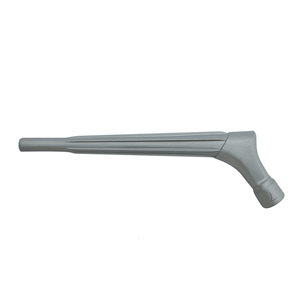
Good Quality HKXN Brand Ti6Al4V Forged Customized Orthopedic Implants Hip Joint Prosthesis Certified ISO 13485 China
Engineered from vacuum-forged Ti6Al4V ELI alloy with plasma-sprayed porous titanium coating to stimulate optimal peri-implant osseointegration and long-term joint stability.
Trauma Fixation
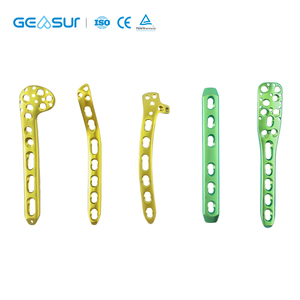
Factory Titanium Distal Lateral Humeral Locking Plate Trauma Fracture Orthopedic Bone Implant
Anatomically pre-contoured low-profile design featuring combi-holes for angularly stable locking and dynamic compression cortical screw fixation in complex humerus fractures.
Custom CNC / OEM
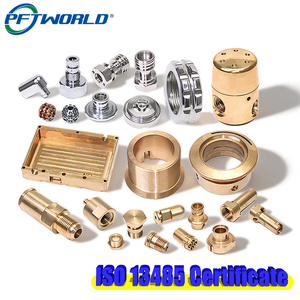
ISO 13485 Certified OEM Custom CNC Machined Parts PEEK Titanium Implant Grade Stainless Steel For Surgical & Orthopedic
Ultra-precision 5-axis CNC machining of complex spinal cages, bone anchors, and custom surgical tools executed within micron-level dimensional tolerances (±0.005mm).
Intramedullary Nail
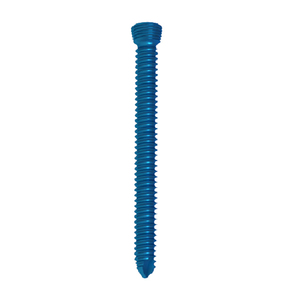
High Quality Orthopedic Implant Set Intramedullary Nail Implant for Humerus Multidimensional Locking Metal Medical Supplies
Cannulated intramedullary humeral locking system featuring multidirectional proximal and distal interlocking screws to maximize rotational stability and fracture union.
Veterinary Trauma
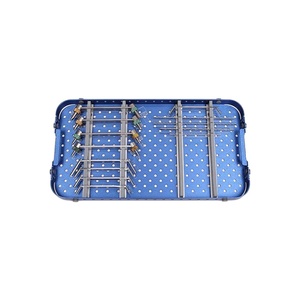
Orthopedic Implants Manufacturer in China 1.5/2.0/2.4/2.7/3.5mm Veterinary Orthopedic Instrument Kit
Modular veterinary surgical kit accommodating micro-to-large animal bone plating, complete with self-tapping titanium screws, benders, and color-coded sterilizing trays.
Veterinary Implants
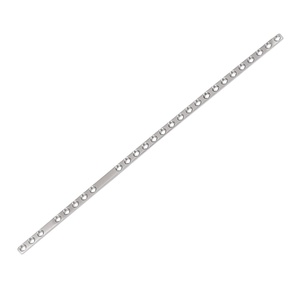
Orthopedic Implants Stainless Steel 1.5mm Straight Plate (Thickening) Black CE/ISO9001/ISO13485 Certified 1 Year Warranty Animal
Heavy-duty 316L stainless steel mini straight plate enhanced with black anti-reflective surface treatment for superior corrosion resistance in small animal bone reconstruction.
Mini Fragment
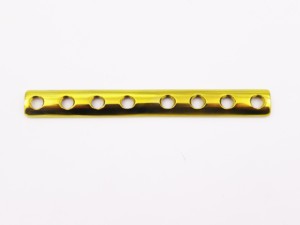
Customized One-Third Tubular Small Head Titanium Locking Plate Orthopedic Implants CE Certified for Trauma Surgery
Ultra-slim one-third tubular head titanium locking plate optimized for fibular fractures and distal upper limb trauma, delivering superior fatigue strength and soft-tissue preservation.
Surgical Tooling
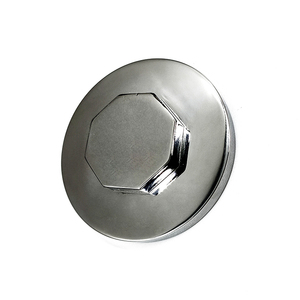
Medical Device CNC Machining | Orthopedic Implants & Surgical Instruments
Full-service contract machining solutions for orthopedic power tool accessories, tissue retractors, drill guides, and custom surgical instruments tailored to distributor specifications.
Factory Operations & Capabilities
Ortix Medical: World-Class Manufacturing Infrastructure
Behind every clinical success lies rigorous industrial discipline. Ortix Medical operates an expansive, fully vertically integrated manufacturing center built to supply global healthcare systems.
60,000m²
State-of-Art Facility
450+
Advanced CNC Machines
20,000/day
Production Output
ISO 13485 & US FDA Registered
Our quality management system is fully certified under ISO 13485:2016 and establishment registered with the US FDA. We provide complete technical documentation packages (STED format) and material certificates for seamless local product registration in any target country.
End-to-End OEM / ODM Engineering
From 3D CAD modeling and biomechanical Finite Element Analysis (FEA) to laser-marking private labels and custom tray design, our 70+ engineer R&D unit collaborates with distributors to create modified or brand-new medical device lines tailored to local market demand.
Low MOQ & Flexible SKU Combining
We solve the inventory bottleneck for international medical distributors. Consolidate small-batch orders of spine pedicle screws, trauma locking plates, sports medicine anchors, and veterinary sets in a single shipment without tying up capital in slow-moving inventory sizes.
Strategic Outlook
Future Procurement Trends in the Global Orthopedic Market (2025–2030)
As healthcare systems face increasing budget constraints alongside growing patient populations, procurement dynamics for orthopedic surgical instruments and implants are rapidly shifting. Strategic buyers must look beyond initial unit purchasing costs and analyze the total cost of ownership (TCO) and risk mitigation across four key procurement trends:
1. Shift Toward Modular, Multi-SKU Low MOQ Procurement
Historically, orthopedic manufacturers enforced large Minimum Order Quantities (MOQs) per individual screw size or plate length. Today, forward-thinking distributors demand flexible supply arrangements where trauma locking plates, intramedullary nails, and spinal cages can be combined in low-volume, mixed-SKU batches. This approach optimizes cash flow, reduces warehousing overhead, and enables distributors to rapidly stock full surgical trays without carrying excess dead-stock inventory.
2. Single-Use Sterile Procedure Kits vs. Traditional Reusable Trays
Hospital operating rooms worldwide are placing higher emphasis on reducing surgical site infections (SSIs) and eliminating expensive, time-consuming autoclave sterilization cycles. Consequently, global procurement is shifting toward pre-packaged, gamma-sterilized single-use procedure kits containing calibrated drills, taps, and bone plates. Manufacturers capable of delivering ISO 11607 compliant sterile barrier packaging directly from cleanroom environments hold a significant competitive advantage.
3. Technical Documentation & Regulatory Dual-Compliance
Regulatory scrutiny under frameworks such as EU MDR 2017/745 and US FDA 510(k) has elevated the standard for technical documentation. Global buyers are no longer satisfied with simple quality certificates; they require raw material heat lot certifications (EN 10204 3.1), mechanical static/dynamic fatigue test reports (ASTM F543 for bone screws, ASTM F2193 for spinal constructs), and ISO 10993 biocompatibility data to guarantee smooth clearance with local health authorities.
| Procurement Metric |
Traditional Sourcing Model |
Ortix Medical Next-Gen Model |
| MOQ Requirements |
High MOQ per individual SKU (500+ pcs/size) |
Low MOQ with mixed-SKU batch consolidation |
| Sterilization Standard |
Non-sterile bulk supply requiring hospital autoclaving |
ISO Class 7 cleanroom packaging & sterile-ready options |
| Traceability |
Batch-level paper records |
Full digital lot traceability from raw ingot to finished device |
| Customization (OEM) |
Slow turnaround, high tooling fees |
Agile in-house prototyping with rapid 3D CAD/CAM setup |
Technology & R&D Insights
Development Trends in Orthopedic Material Science & Surgical Tools
Biomedical engineering is advancing at an unprecedented pace. The convergence of additive manufacturing, radiolucent polymers, and surface micro-engineering is reshaping surgical outcomes and hardware survival rates.
1. 3D Additive Manufacturing & Trabecular Titanium Structures
Direct Metal Laser Sintering (DMLS) and Electron Beam Melting (EBM) have revolutionized spinal interbody fusion cages and custom cranial repair plates. By 3D-printing porous titanium structures that mimic natural human trabecular bone architecture (pore sizes between 300–600 microns), implants achieve significantly lower elastic modulus, preventing stress shielding while encouraging rapid bone ingrowth and vascularization.
2. Advanced Polymer Innovations: PEEK-Optima & Carbon-PEEK
Polyetheretherketone (PEEK) has established itself as the gold standard for spinal fusion cages and suture anchors due to its bone-like modulus of elasticity. The next evolution involves Carbon-Fiber-Reinforced PEEK (CFR-PEEK) for trauma plates and intramedullary nails. CFR-PEEK offers radio-translucency, allowing surgeons to monitor fracture healing via X-ray without metal artifact interference, alongside high fatigue endurance under cyclical mechanical loading.
3. Precision Instrument Ergonomics & Navigation Integration
Surgical instruments are evolving alongside computer-assisted surgery (CAS) and robotic arm platforms. Modern driver handles, drill guides, and bone reamers must feature tight dimensional concentricity, non-reflective PVD coatings, and specialized optical marker interfaces compatible with surgical navigation cameras, ensuring intraoperative accuracy in complex spinal deformity and joint replacement procedures.
Buyer Knowledge Base
Frequently Asked Questions (FAQ) for Medical Device Procurement
Get clear, authoritative technical answers to the most common questions raised by hospital procurement managers, regulatory officers, and international importers.
What quality certifications does Ortix Medical hold for global export?
Ortix Medical operates under an ISO 13485:2016 certified Quality Management System specifically tailored for medical device design and manufacturing. Our establishment is registered with the US FDA, and our primary product lines hold CE certifications under European regulatory standards. Complete material mill certificates (EN 10204 3.1), ISO 10993 biocompatibility test reports, and sterilization validation dossiers can be provided to qualified buyers for local market registration.
What is the Minimum Order Quantity (MOQ) for custom OEM implant orders?
We offer flexible low-MOQ policies designed to help distributors launch new lines without excess capital risk. For standard catalog implants and trauma plates, mixed-SKU orders can be initiated in small batch sizes. For custom OEM/ODM projects requiring specialized CNC tooling, private-label laser marking, or custom packaging molds, exact MOQs are determined based on material raw stock specifications and engineering setup requirements.
What raw materials are utilized in your titanium, spinal, and trauma implants?
We source exclusively certified implant-grade raw materials from verified tier-1 suppliers. Titanium implants utilize Grade 5 Ti6Al4V ELI (ASTM F136 / ISO 5832-3) and Commercially Pure Titanium (Grade 2 / Grade 4). Stainless steel devices employ 316LVM vacuum-melted surgical steel (ASTM F138). Polymer implants feature original PEEK-Optima (Invibio) to ensure maximum chemical stability and biocompatibility.
Do you supply matched surgical instrument sets alongside implants?
Yes. Every implant system in our portfolio—including spinal pedicle screw systems, intramedullary nails, trauma locking plates, and sports medicine suture anchors—is supported by a dedicated, ergonomic surgical instrument set. Instrument trays are supplied in autoclavable, hard-anodized aluminum storage boxes engineered for high-cycle hospital sterilization.
How does Ortix Medical guarantee lot-to-lot dimensional precision and quality control?
Our 60,000 m² manufacturing plant houses over 450 advanced machines, including DMG MORI 5-axis milling centers and Citizen Swiss CNC lathes. Quality assurance follows a 3-stage protocol: Incoming Material Chemical Analysis, In-Process CMM Optical Coordinates Inspection, and 100% Final Dimensional & Surface Defect Verification. All finished items carry laser-etched lot numbers for end-to-end traceability.
Can I request evaluation samples prior to executing a bulk tender contract?
Yes. Qualified distributors, hospital purchasing departments, and tender managers can apply for evaluation samples through our Free Sample Program. Sample kits allow surgical teams and biomedical engineers to verify surface finish, thread pitch geometry, driver engagement, and instrument compatibility prior to contract finalization.
What cleanroom packaging standards are used for pre-sterilized medical supplies?
Pre-sterilized items undergo primary cleanroom washing, assembly, and sealing inside our certified ISO Class 7 (Class 10,000) cleanroom. Packaging uses medical-grade Tyvek double-pouch sterile barrier systems certified under ISO 11607 standards, validated for 5-year sterile shelf-life stability.
Partner with China's Premier Orthopedic Manufacturer
Whether you need standardized catalog replenishment, low MOQ mixed-SKU orders, or full OEM/ODM private label contract manufacturing, Ortix Medical provides the engineering precision and regulatory reliability your market demands.