Featured ISO 13485 Orthopedic & Dental Implants Systems
Below are featured standardized implant systems manufactured under strict cleanroom conditions, certified to meet international tensile, torsional, and osseointegration thresholds. Each product line features complete surgical instrumentation compatibility and low-MOQ contract customization options.
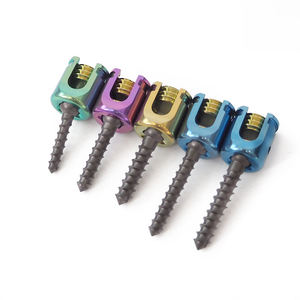
Veterinary Polyaxial Spine Pedicle Screw Titanium System
High-angulation polyaxial head design utilizing Grade 5 ELI titanium alloy for veterinary spinal stability and posterior reconstruction.
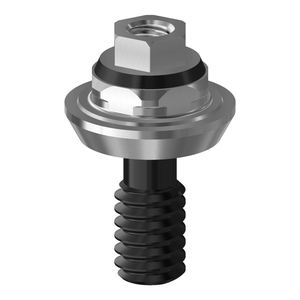
Multi-Platform Titanium Healing Abutment & Scan Post
Precision-milled internal connection abutments compatible with major dental implant platforms, engineered for optimal gingival contouring.
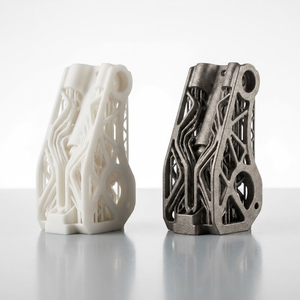
Biocompatible Titanium SLM 3D Printed Custom Bone Implants
Selective Laser Melting (SLM) manufactured porous titanium structures matching natural trabecular bone geometry for enhanced bone ingrowth.
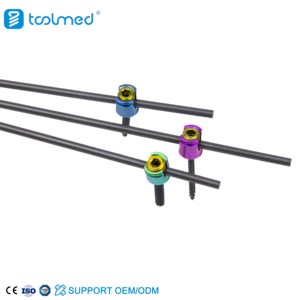
Veterinary Titanium Spinal Rod (Canine/Feline/Equine)
ISO 13485 certified cold-worked titanium alloy rods delivering exceptional bending strength and yield stress resistance for animal surgeries.
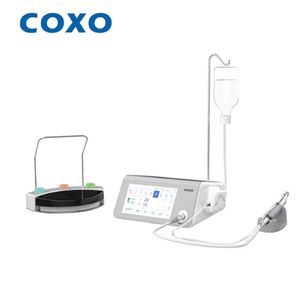
COXO C-Sailor Pro+ Dual Mode Dental Implant Motor Unit
Advanced brushless motor system integrating implantology and general surgical modes with real-time torque monitoring and peristaltic pump control.
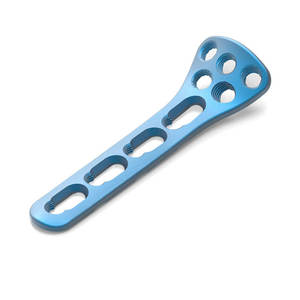
Medical Grade 316LVM Stainless Steel Fracture Bone Plates
Vacuum Arc Remelted (VAR) stainless steel plates engineered for high dynamic fatigue loads in long-bone osteotomy and trauma restoration.
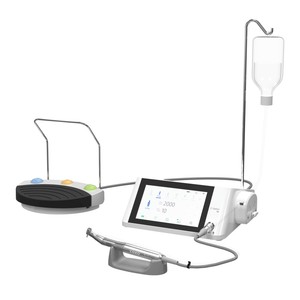
COXO C-Sailor S1 Ergonomic Surgical Dental Implant Machine
High-precision dental surgical drive unit with intuitive touch-screen interface, customizable speed protocols, and quiet high-torque handpiece.
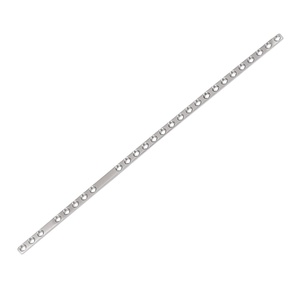
1.5mm Thickened Stainless Steel Straight Fixation Plate
CE/ISO9001/ISO13485 certified mini-fragment straight plates designed for precise alignment in veterinary or small bone fracture reconstruction.
1. Metallurgical Excellence & Raw Material Engineering Standards
The core determinant of implant longevity, biocompatibility, and safety lies in raw material composition and microscopic structural integrity. Premium Chinese medical manufacturers strictly adhere to international material standard specifications for surgical implants. Substandard material selection leads to stress corrosion cracking, excessive ion release, or catastrophic fatigue failure under cyclic physiological loading.
Biomedical Titanium Alloys (Ti-6Al-4V ELI / ASTM F136)
Titanium Grade 5 ELI (Extra Low Interstitial) is the benchmark alloy for permanent internal fixation devices, spinal pedicle screws, and joint prostheses. By capping interstitial elements such as iron, oxygen, and carbon at stringent thresholds, Ti-6Al-4V ELI exhibits superior damage tolerance and fracture toughness compared to standard industrial titanium.
- Modulus of Elasticity: ~110 GPa (closer to human cortical bone than stainless steel, reducing stress shielding risks).
- Tensile Yield Strength: ≥ 795 MPa, ensuring high resistance to permanent deformation under heavy load bearing.
- Biocompatibility: Spontaneous formation of a passive TiO₂ oxide layer prevents heavy metal leaching into systemic circulation.
PEEK-OPTIMA & Polyetheretherketone Polymers (ASTM F2026)
For interbody spinal fusion cages and cranial reconstruction plates, implantable-grade PEEK offers distinct biomechanical advantages. With an elastic modulus (~3.6 GPa) closely matching cancellous bone, PEEK cages minimize subsidence into adjacent vertebral endplates while remaining fully radiolucent under X-ray and CT imaging, enabling clear postoperative fusion assessment.
Medical-Grade Vacuum Arc Remelted Stainless Steel (316LVM / ASTM F138)
Used extensively in temporary fracture fixation (locking plates, intramedullary nails, Kirschner wires), 316LVM undergoes double vacuum melting processes to eliminate non-metallic inclusions. This yields high resistance to pitting and crevice corrosion within human body fluids.
| Material Grade | Standard Reference | Yield Strength (MPa) | Elastic Modulus (GPa) | Primary Surgical Application |
|---|---|---|---|---|
| Ti-6Al-4V ELI | ASTM F136 / ISO 5832-3 | ≥ 795 | 110 | Spinal Screws, Trauma Plates, 3D Mesh Cages |
| Unalloyed Titanium (Gr 2-4) | ASTM F67 / ISO 5832-2 | 275 - 483 | 105 | Dental Abutments, Cranial Mesh, Maxillofacial Plates |
| 316LVM Stainless Steel | ASTM F138 / ISO 5832-1 | ≥ 690 (Cold Worked) | 193 | Intramedullary Nails, Micro Plates, Veterinary Screws |
| PEEK-OPTIMA | ASTM F2026 | ≥ 90 | 3.6 | ACDF / PLIF Fusion Cages, Cranial Reconstruction |
| CoCrMo Alloy | ASTM F75 / ISO 5832-4 | ≥ 450 | 210 | Femoral Heads, Knee Articular Components |
2. Surface Metallurgy, Passivation & Osseointegration Engineering
Raw machining marks can act as stress concentration nodes, accelerating fatigue failure and bacterial adhesion. ISO 13485 compliant factories in China employ multi-stage surface treatments to optimize biological interaction and structural endurance:
Anodization (Type II & Type III)
Type II anodization increases surface hardness and reduces friction in modular spine/trauma interfaces. Type III color anodization provides color coding (gold, blue, green, violet) for quick surgical identification of screw diameters.
SLA Dental Surface Micro-Roughness
Sandblasted, Large-grit, Acid-etched (SLA) processes create dual micro and nano-porosity on titanium dental roots, accelerating osteoblast attachment and shortening healing times to 6-8 weeks.
Hydroxyapatite (HA) Plasma Spraying
A bioceramic layer (Ca₁₀(PO₄)₆(OH)₂) plasma-coated onto joint stems creates a bio-active interface that promotes mechanical interlock and rapid biological fixation without bone cement.
3. Manufacturing Cleanroom Infrastructure & ISO 13485 Audit Protocols
Procuring medical implants directly from Chinese OEM/ODM factories requires evaluating their physical production infrastructure and Quality Management Systems (QMS). A compliant production line must guarantee complete traceability from the original metal ingot heat number to final sterile barrier packaging.
Multi-Axis Swiss CNC Machining Precision
Orthopedic bone screws and complex spinal polyaxial heads require micro-tolerances down to ±0.005 mm. Modern Chinese facilities utilize high-speed Citizen and Tsugami Swiss-type 7-axis CNC lathes operating with high-pressure oil cooling to prevent micro-burrs and structural micro-cracks during thread cutting.
Mechanical Fatigue & Static Testing Validation
Before commercial dispatch, prototype and production batches undergo destructive and non-destructive testing inside certified internal testing laboratories in accordance with international protocols:
- ASTM F1717: Static compression, tension, and dynamic fatigue testing for spinal implant constructs in a polyurethane block model (simulating 5,000,000 load cycles).
- ASTM F382: Four-point bending test for metallic bone plates to calculate bending stiffness and flexural proof load.
- ASTM F543: Axial pull-out strength, insertion torque, and self-tapping performance measurement for medical bone screws.
- ISO 7206: Endurance fatigue testing of stem components for hip joint prostheses without applied torsion.
B2B Buyer Checklist: Essential Audit Points for China Implants Suppliers
- ISO 13485:2016 Scope: Confirm that design, manufacturing, and cleanroom packaging are explicitly listed on the certificate scope issued by an accredited Notified Body (e.g., TÜV SÜD, SGS, BSI).
- Cleanroom Validation: Request ISO Class 8 (Class 100,000) microbial particle monitor logs, air exchange validation, and bioburden testing protocols.
- Material Certification: Mandate mill test reports (MTR) showing chemical composition breakdown and ultrasonic flaw detection results per batch.
- Sterilization Validation: Review ISO 11137 (Gamma Irradiation) or ISO 11135 (Ethylene Oxide) validation dossiers including SAL (Sterility Assurance Level) 10⁻⁶ verification.
4. Future Procurement Trends & Sourcing Dynamics (2025–2030)
The international market for orthopedic implants is undergoing structural shifts driven by clinical demand for minimally invasive procedures, digital surgical planning, and bio-interactive materials. Importers, regional distributors, and hospital procurement departments must align their inventory acquisition strategies with these emerging technological vectors:
A. Additive Manufacturing (3D Printing) for Porous Trabecular Implants
Traditional subtractive CNC machining is increasingly supplemented by Selective Laser Melting (SLM) and Electron Beam Melting (EBM) additive technologies. 3D-printed titanium implants allow the fabrication of biomimetic trabecular bone structures with controlled porosity (60%–80%) and interconnected pore sizes (300–600 μm). This structure dramatically accelerates biological cell migration and osteointegration while reducing stiffness mismatch, making additive lumbar fusion cages and custom cranial plates core growth segments for global distributors.
B. Bioresorbable Metallic Alloys (Magnesium & Zinc Matrix)
Secondary surgeries for hardware removal place a heavy financial burden on healthcare systems and pose clinical risks to patients. The next generation of orthopedic trauma devices features bioresorbable magnesium-zinc-calcium alloys. These implants maintain structural integrity during the critical 12-to-24-week bone healing phase before safely degrading into biocompatible ions absorbed by surrounding tissues, eliminating hardware removal procedures entirely.
C. Modular Kit Packaging & Low MOQ Sourcing Flexibility
Distributors are moving away from capital-intensive large-volume warehousing in favor of flexible, low-MOQ (Minimum Order Quantity) contract supply agreements. Leading Chinese factories now offer mixed-SKU consignment palletizing, allowing procurement teams to combine pedicle screws, locking plates, intramedullary nails, and reusable stainless steel surgical instrument kits within a single logistics container.
D. AI-Assisted Patient-Specific Implants (PSI) & Rapid Tooling
Using high-resolution CT/MRI DICOM datasets, manufacturers can render 3D patient anatomy and machine custom patient-matched resection guides or bone plates within 72 hours. This rapid-response workflow enables distributors to support complex oncological or maxillofacial surgeries with custom-engineered hardware.
5. Corporate Manufacturing Competencies: Ortix Medical Devices Co., Ltd.
Ortix Medical Devices Co., Ltd. stands as a high-precision contract manufacturer specializing in comprehensive orthopedic solutions. Serving global healthcare distributors, hospital tender suppliers, and OEM brand owners, our modern production ecosystem resolves the core challenges of quality consistency, lead-time predictability, and regulatory compliance.
Modern Smart Facility
Spanning over 60,000 square meters, our plant houses automated 5-axis CNC machining centers, high-precision Swiss lathes, and dedicated ISO Class 8 cleanrooms for sterile device packaging.
In-House R&D & Engineering
Our R&D division comprises over 70 experienced biomedical engineers specializing in FEA (Finite Element Analysis), mechanical stress testing, CAD/CAM implant modeling, and custom instrument design.
Flexible Turnkey OEM/ODM
From customized laser etching (UDI barcoding, brand logos) to specialized anodization, tray layouts, and localized packaging IFUs, we deliver fully customized private-label programs.
Regulatory Support Package
We supply qualified partners with full technical documentation, raw material mill certs, biocompatibility reports, and ISO 13485 quality audit dossiers to streamline local registration.
6. Strategic Procurement FAQ for Overseas Buyers
Below are detailed answers to key operational, technical, and regulatory questions frequently raised during factory audits and vendor onboarding.
What quality certifications and regulatory registrations does Ortix Medical maintain?
What is your policy on Minimum Order Quantity (MOQ) for custom OEM and wholesale orders?
Can Ortix Medical manufacture customized surgical instruments matched to specific implant sets?
How is lot-level raw material traceability managed during production?
What is the typical production and lead-time schedule for wholesale orders?
What sample testing protocols are available for prospective distributors?
Accelerate Your Orthopedic Sourcing Strategy Today
Partner with an established ISO 13485 certified manufacturer. Request technical catalogs, product CAD drawings, sample evaluation kits, or a direct factory quotation from our global export division.
Get a Quote