Executive Sourcing Overview: The Evolution of Chinese Orthopaedic Manufacturing
Providing international healthcare buyers, hospital procurement boards, and medical device distributors with technical transparency, metallurgical compliance data, and supply chain scalability insights.
The global orthopaedic implant market is undergoing a structural paradigm shift. Driven by rapid technological convergence in 5-axis CNC micro-machining, additive manufacturing (3D printing), and stringent regulatory harmonization under ISO 13485:2016 and US FDA 21 CFR Part 820 systems, premier OEMs in China have transitioned from high-volume component replicators to tier-1 biomechanical solution providers. Modern orthopaedic trauma locking plates, pedicle screw systems, intramedullary nails, and cranio-maxillofacial (CMF) implants engineered in China now routinely meet and exceed international mechanical fatigue thresholds specified by ASTM F543, ASTM F382, and ASTM F1717.
For global medical device distributors, navigating the wholesale ecosystem requires evaluating crucial technical parameters: metallurgical purity (Ti-6Al-4V ELI vs. implant-grade 316LVM), surface passivation anodization depth, thread galling resistance, micro-yield tolerance, and complete lot traceability from raw billet to sterile packaging.
Featured Orthopaedic Implants & Instrumentation Catalog
Explore our high-precision orthopaedic hardware portfolio engineered for trauma, spinal, and veterinary surgical applications.
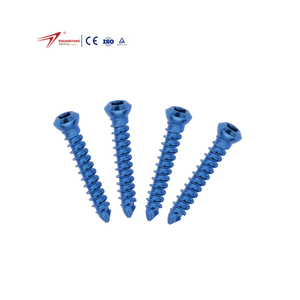
Shuangyang Medical Orthopedic Trauma Implants 2.0mm Titanium Orthopedic Cortex Screw - Quadrangle Design Prices Of Bone Screws
Engineered with high-grade Ti-6Al-4V alloy featuring a quadrangle recess drive for maximized torque transfer and reduced strip-out risk in micro-trauma reconstructions.
Get Catalog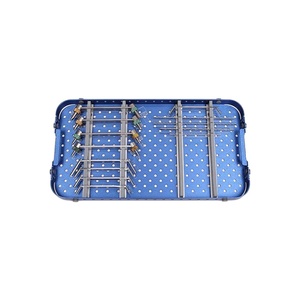
Orthopedic Implants Manufacturer in China 1.5/2.0/2.4/2.7/3.5mm Veterinary Orthopedic Instrument Kit
Comprehensive multi-spec surgical kit containing precision benders, drill guides, tap handles, and trial plates designed for veterinary fracture management.
Get Catalog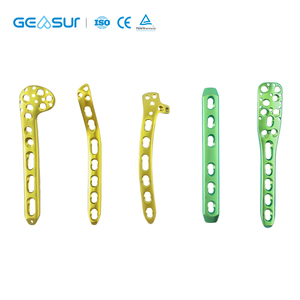
Factory Titanium Distal Lateral Humeral Locking Plate Trauma Fracture Orthopedic Bone Implant
Anatomically contoured low-profile plate system for distal humerus fractures, utilizing combi-holes for compression and dynamic angle-stable locking capability.
Get Catalog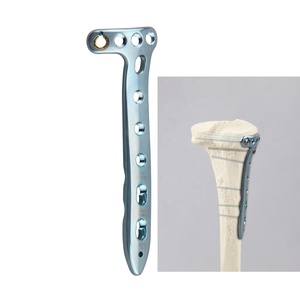
Factory Price Clinical Use Variable Angle Titanium Bone Plates Trauma Fracture Implants Titanium Locking Plate (Multi-Axial)
State-of-the-art polyaxial locking technology permitting up to 15 degrees of trajectory cone variation for targeted fracture fragment fixation.
Get Catalog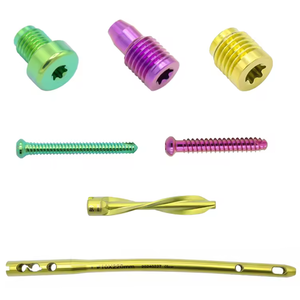
Orthopedic Trauma Screw System Full Set Titanium Surgical Implant Supplier with OEM Service
Fully integrated trauma screw container module incorporating self-tapping cortex, cancellous, and locking screws formatted for immediate operating theatre deployment.
Get Catalog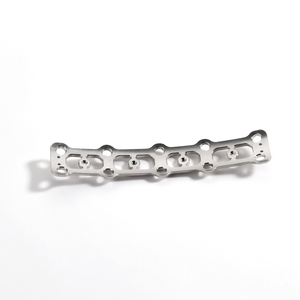
Tantium Alloy Bone CNC Machining Stud High Quality Orthopaedics Department Use 3D CNC Part Manufacture Implant Plate
Custom-machined complex biomechanical connection studs crafted via high-speed 5-axis CNC milling, delivering tight sub-micron tolerances for modular implants.
Get Catalog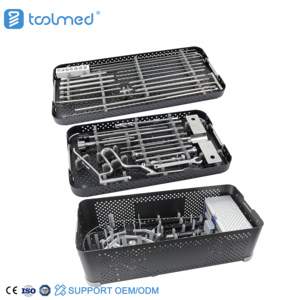
High Quality Titanium Femoral Intramedullary Nail Medical Orthopedic Implant Instrument Set TOOLMED
Anatomic curved intramedullary nailing system with proximal compression and distal targeting instrument assemblies for stable diaphyseal femoral fracture stabilization.
Get Catalog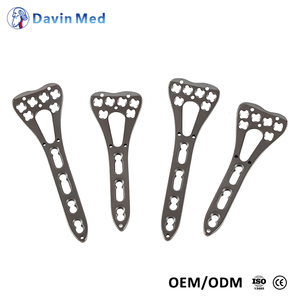
Titanium Two Column Volar Distal Radius Locking Plate 2.7mm Variable Angle Orthopedic Trauma Implant For Wrist Fracture
Dual-column anatomically pre-shaped volar plate designed to restore radial tilt and length while maintaining low sub-tendinous profile to mitigate flexor tendon friction.
Get CatalogMetallurgical Engineering & Material Selection Standards
Biomechanical efficacy relies on superior material science. Modern orthopaedic implants mandate rigorous metallurgical standards to guarantee fatigue resistance and biocompatibility.
| Material Specification | Standard Certification | Tensile Strength (MPa) | Yield Strength (MPa) | Primary Clinical Application |
|---|---|---|---|---|
| Ti-6Al-4V ELI (Grade 23) | ASTM F136 / ISO 5832-3 | ≥ 860 MPa | ≥ 795 MPa | Trauma Plates, Locking Screws, Spinal Rods, Pedicle Screws |
| Stainless Steel 316LVM | ASTM F138 / ISO 5832-1 | ≥ 890 MPa | ≥ 690 MPa | Veterinary Implants, Temporary Fixation Pins, K-Wires |
| PEEK-OPTIMA (Polyetheretherketone) | ASTM F2026 | 90 – 100 MPa | 110 – 130 MPa | Spinal Interbody Fusion Cages, Cranial Repair Implants |
| Porous Trabecular Titanium | ASTM F3001 (Additive Manufacturing) | Modulus matched to bone (3-5 GPa) | Tailored Porosity (60-80%) | 3D Printed Spinal Cages, Revision Joint Reconstruction |
Type II Anodization Treatment
Electrochemical surface transformation converts titanium oxide layers, increasing fretting fatigue resistance by up to 30% and eliminating screw-plate cold welding (galling).
Bio-Fatigue Dynamic Testing
All load-bearing constructs undergo multi-million cycle axial and torsional fatigue testing on Instron hydro-pulsing machines per ASTM F1717 and ASTM F382 standards.
Micro-Yield Tolerance Control
Swiss-type automatic CNC lathes enforce tight dimensional limits within ±0.005mm, guaranteeing seamless intraoperative instrument interface and screw driver fitment.
Future Global Procurement Trends in Orthopaedics (2025–2030)
Strategic analysis of macroeconomic forces, technical shifts, and supply chain strategies impacting orthopaedic device purchasing.
1. Shift to Polyaxial Variable-Angle Locking Systems
Mono-axial locking plates are rapidly giving way to variable-angle (polyaxial) multi-locking constructs. Surgeons demand intraoperative trajectory flexibility of ±15° to target small peri-articular fragments and osteoporotic bone beds without sacrificing construct stability. Overseas procurement departments are prioritizing polyaxial systems in tenders to streamline hospital inventory.
2. Impact of China's Centralized Volume-Based Procurement (VBP)
China's domestic VBP policy has modernized production efficiencies across major domestic manufacturers. Leading factories have scaled automation to absurdly high throughputs—reaching lower unit costs while simultaneously raising quality control metrics. Consequently, global distributors gain access to premium-grade titanium implants at highly aggressive wholesale pricing, dramatically boosting distributor profit margins.
3. Demand for Integrated Instrument-Implant Systems
Wholesale buyers no longer accept loose implant orders. Modern supply chain procurement requires turnkey kits—combining anatomically pre-contoured plates, self-tapping screws, and color-coded ergonomic surgical instruments inside validated, autoclavable sterilizing trays. Complete system kits reduce hospital prep times and minimize intraoperative complications.
4. Rapid Expansion of Additive Trabecular Structures
EBM (Electron Beam Melting) and SLM (Selective Laser Melting) technologies are transitioning from niche medical applications to standard catalog items. 3D-printed porous titanium cages and cranial reconstruction plates offer modulus values close to human cancellous bone, significantly reducing stress shielding and accelerating osseointegration.
Orthopaedic Manufacturing Technology Roadmap
How advanced material science and digital manufacturing workflows are shaping the next decade of surgical implants.
Precision Manufacturing & Digital Traceability
The manufacturing architecture for orthopaedic hardware has shifted from standard CNC machining to fully automated robotic cell production. Precision Swiss-type sliding headstock lathes process implant-grade titanium rods into bone screws with sub-micron thread profile precision. Every finished lot undergoes automated optical inspection (AOI) to eliminate micro-burrs and surface anomalies.
Furthermore, global medical regulations mandate strict device tracking under UDI (Unique Device Identification) protocols. Modern factories etch high-density GS1 DataMatrix codes directly onto implants using picosecond laser systems, preserving structural integrity while allowing real-time hospital traceability from manufacturing batch to patient implantation.
Core Technological Benchmarks
- Sub-Micron CNC Tolerances: Precision machining within ±0.005mm limit.
- Class 10,000 Cleanroom Packaging: Automated ultrasonic washing and ISO Class 7/8 packaging environments.
- Surface Modification: MAO (Micro-Arc Oxidation) & HA (Hydroxyapatite) bio-active coatings.
- Laser UDI Etching: Non-destructive ultra-short pulse laser identification for total traceability.
- Custom OEM/ODM Rapid Prototyping: CAD/CAM to initial titanium sample delivery in under 14 days.
Enterprise Advantages: Why Partner With Ortix Medical
Combining mass manufacturing infrastructure with agile OEM customized engineering for international B2B distributors.
Massive 60,000 m² Production Base
Our expansive industrial complex features over 450 state-of-the-art CNC machine centers, Swiss-type automatic lathes, and precision wire EDM units. Operating at a daily capacity of ~20,000 units, we ensure fast lead times and stable supply continuity even during peak demand cycles.
ISO 13485 & FDA Registered Quality System
Quality is engineered into every operational stage. We manufacture under a fully audited ISO 13485 quality management system backed by US FDA Establishment Registration. Full material certificates (MTR) and raw material heat analysis reports accompany every shipment.
In-House R&D Team of 70+ Specialists
Our research wing comprises 70+ biomechanical design engineers, metallurgists, and clinical consultants. Utilizing Finite Element Analysis (FEA) and dynamic fatigue testing, we work closely with global OEM partners to refine custom implant profiles and private label surgical kits.
Flexible Low MOQ & Mixed-SKU Orders
We empower regional medical distributors to optimize cash flow by supporting low minimum order quantities (MOQ). Importers can combine locking plates, cortex screws, spinal cages, intramedullary nails, and matching surgical instrument sets within a single consolidated container shipment.
Frequently Asked Questions (FAQ) for Global Buyers
Direct technical answers to common questions raised by procurement managers, regulatory directors, and medical device importers.
What quality certifications and documentation does Ortix Medical provide to support local product registration?
Ortix Medical operates under an ISO 13485 certified quality management system and maintains US FDA Establishment Registration. To support regional distributor registration with national health authorities (such as ANVISA, SFDA, MoH, or CE technical dossier preparation), we provide complete regulatory packages including EN 10204 3.1 material test certificates, mechanical fatigue test reports (ASTM F543/F382/F1717), biocompatibility validation data, cleaning/sterilization protocols, and Instructions for Use (IFU).
What is the Minimum Order Quantity (MOQ) for wholesale orthopaedic implants and OEM orders?
To support distributors opening new markets or bidding on regional hospital tenders, we offer flexible low MOQ requirements. Standard catalog items (plates, screws, spinal cages) can be ordered in small batch sizes and combined into mixed-SKU shipments. For custom OEM/ODM private labeling (laser marking, custom packaging, modified implant geometry), MOQs are evaluated based on product line complexity and machining setup requirements.
Do you provide full OEM/ODM private labeling and custom surgical kit development?
Yes. Our in-house R&D team of over 70 biomechanical engineers offers end-to-end OEM/ODM services. This includes private label laser marking, customized graphic sterilizing tray layout, instruction manual design, blister pack sealing, and custom implant modifications. We work directly from your 3D CAD files or physical samples to produce validated prototype samples within 14 business days.
Can qualified distributors and hospital networks evaluate physical samples before placing bulk production orders?
Absolutely. We encourage qualified medical device distributors, procurement officers, and orthopaedic surgeons to evaluate sample products through our Free Sample evaluation program. Sample kits allow your clinical teams to inspect surface finish, micro-thread tolerances, anodization uniformity, and instrument ergonomics prior to commercial contract signing.
What is your daily production capacity and standard export delivery timeline?
Our 60,000 m² manufacturing plant houses over 450 automated CNC machines and Swiss lathes, giving us a daily production capacity of approximately 20,000 finished implant units. Standard catalog items typically ship within 15 to 20 days upon order confirmation. OEM orders requiring custom laser etching, cleanroom pouching, or specialized anodization follow an agreed project milestone schedule (typically 30–45 days).
How do your titanium implants prevent thread galling during intraoperative locking screw insertion?
Thread galling (cold welding) between titanium plates and screws is prevented through precise metallurgical surface treatment. We apply a proprietary Type II electrochemical anodization process to locking plates while maintaining strict differential surface hardness between plate threads and screw threads. Combined with tight Swiss-lathe thread pitch tolerances, this ensures smooth tactile feedback and reliable angle-stable locking without binding.
Partner with a Premier Chinese Orthopaedic Implants Manufacturer
Streamline your orthopaedic supply chain with ISO 13485 & FDA registered titanium implants, complete surgical instrument sets, low MOQ flexibility, and factory-direct pricing.