Navigating the Global Orthopedic Supply Chain: Quality, Traceability, & Compliance
The global demand for high-grade reconstructive, spinal, and trauma implants has undergone a structural transformation. Medical device distributors, hospital procurement boards, and OEM brand owners no longer evaluate suppliers solely on unit pricing. Modern orthopedic procurement prioritizes Quality Management System (QMS) rigor, raw material traceability, biomechanical durability, and international regulatory readiness.
As a premier manufacturing hub, China's medical device ecosystem has matured into a sophisticated network of ISO 13485-certified facilities equipped with multi-axis CNC Swiss machining, automated cleanroom packaging, and in-house mechanical testing laboratories. This technical whitepaper explores the critical engineering parameters, quality assurance frameworks, and future procurement paradigms essential for importing medical-grade implants from certified Chinese suppliers.
State-of-the-Art Quality Management System (QMS) Architecture
A resilient Quality Management System serves as the backbone of patient safety and surgical efficacy. Leading Chinese exporters operate under strict alignment with ISO 13485:2016 standards and U.S. FDA 21 CFR Part 820 Quality System Regulations (QSR). Every production lot undergoes rigorous validation from raw billet verification to final sterile barrier inspection.
ISO 13485 & FDA Compliance
Full implementation of Device Master Records (DMR) and Device History Records (DHR). Comprehensive audit trails guarantee complete traceability from raw titanium bar stock to sterile surgical kits.
Precision Metallurgy & Tolerances
Utilizing implant-grade Titanium Alloy (ASTM F136 Ti-6Al-4V ELI), Stainless Steel (ASTM F138 316L), and PEEK (Optima). Micron-level machining tolerances ($\pm 0.005\text{ mm}$) ensured via Coordinate Measuring Machines (CMM).
Biomechanical Testing Lab
In-house fatigue, static axial, torsional, and pull-out force testing compliant with ASTM F1717 (Spinal Constructs), ASTM F382 (Trauma Plates), and ISO 7206 (Joint Prostheses).
High-Precision Orthopedic Implants & Surgical Systems
Explore our primary portfolio of export-ready spinal, trauma, dental, veterinary, and customized componentry built under validated QMS protocols.
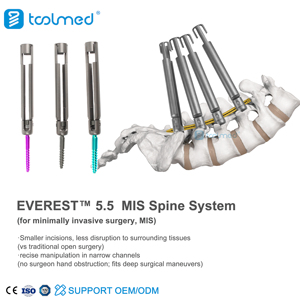
Ortopédico Implante 5.5 MIS Titanium Polyaxial Pedicle Screw System
Minimally invasive spinal stabilization system featuring friction-fit tulip head, 52-degree omnidirectional angle articulation, and cannulated thread design for precise percutaneous placement.
Request Specifications & Quote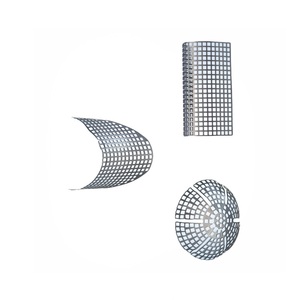
Competitive Price Titanium Alloy Material MESH Orthopedic Implants
Constructed for vertebral body replacement (VBR) and heavy bone defect repair. Offers optimal load distribution, hollow core for autologous bone grafting, and high compressive fatigue resistance.
Request Specifications & Quote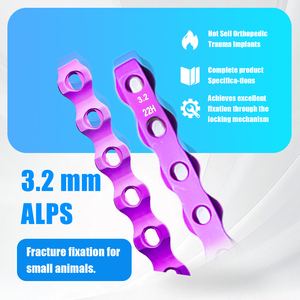
XC MEDICO Export Grade 3.2mm ALPS Titanium Veterinary Trauma Implant
Advanced Low Profile System (ALPS) designed for complex animal orthopedic reconstruction. Minimizes vascular compression while delivering multi-planar biological fixation for veterinary clinics.
Request Specifications & Quote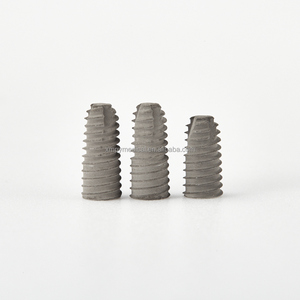
Factory Direct Titanium Dental Implants With SLA Surface Technology
Sandblasted, Large-grit, Acid-etched (SLA) surface topography optimizes macro- and micro-roughness, delivering rapid secondary stability and superior bone-to-implant contact (BIC) ratios.
Request Specifications & Quote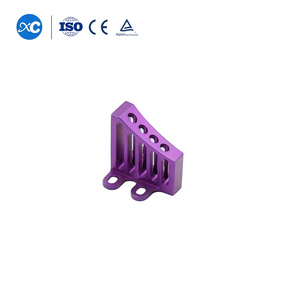
Premium Orthopedic Veterinary Titanium TTA Surgical Trauma Implant
Tibial Tuberosity Advancement (TTA) system tailored for canine cranial cruciate ligament surgery. Engineered from biocompatible Ti-6Al-4V for structural stiffness and rapid healing.
Request Specifications & Quote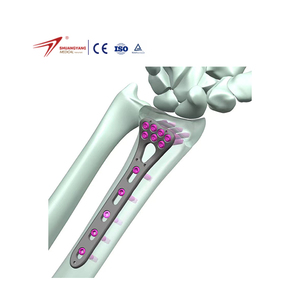
Multi-axial Distal Radius Locking Plates And Screws Set
Anatomically contoured low-profile volar plate featuring variable-angle locking technology ($\pm 15^\circ$) for precise buttressing of complex intra-articular distal radius fractures.
Request Specifications & Quote
Contract Manufacturing For Clinical Device Hardware Componentry
Turnkey OEM contract fabrication for joint, trauma, and surgical instrument hardware. Includes 5-axis CNC machining, electropolishing, laser etching, and ISO Class 8 cleanroom bagging.
Request Specifications & Quote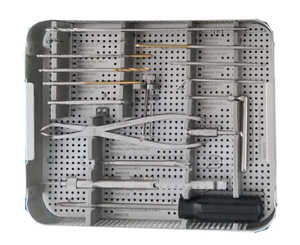
Small Fragment Orthopedic Instrument Surgical Set
Comprehensive surgical set containing color-coded drills, taps, countersinks, bending pliers, and quick-coupling screwdrivers housed in an anodized aluminum sterilizing container.
Request Specifications & QuoteFuture Global Procurement Trends in Orthopedic Hardware
The global orthopedic devices market is projected to reach over USD 65 Billion by 2030. As hospital purchasing networks and independent distributors navigate post-pandemic supply chain complexities, several macro-level procurement trends are re-shaping supplier selection criteria:
1. Dynamic Supply Chain Diversification & Hybrid Sourcing
Global medical device distributors are moving away from single-region dependency. Enterprise buyers are leveraging qualified Chinese original equipment manufacturers (OEMs) to construct hybrid inventory models—pairing premium-tier branded implants with high-volume, cost-effective wholesale hardware of identical material purity.
2. Demand for Low MOQ & Mixed-SKU Consignment Stock
Inventory carrying costs have increased exponentially. Modern suppliers must offer flexible Minimum Order Quantities (MOQs) and mixed-SKU container shipments. Distributors now require modular ordering flexibility—combining pedicle screws, locking plates, intramedullary nails, and matching instrument trays within single procurement batches.
3. Strict Regulatory Harmonization (EU MDR & Unique Device Identification)
With the transition from EU MDD to EU MDR 2017/745 and global adoption of UDI (Unique Device Identification) systems, procurement officers prioritize suppliers capable of providing complete Technical Files, Clinical Evaluation Reports (CER), and laser-etched GS1 DataMatrix barcodes on every individual implant component.
4. Rapid OEM/ODM Co-Development Lifecycles
Hospital chains and regional brands increasingly request custom modifications—such as low-profile plate geometry or specific thread pitches. Suppliers equipped with modern CAD/CAM engineering teams and rapid titanium 3D-printing prototyping can reduce time-to-market for custom implants from 18 months down to 12 weeks.
Product Development Trends & Material Science Breakthroughs
Orthopedic implant manufacturing is undergoing a technological renaissance driven by additive manufacturing, advanced surface modification, and bio-inert polymers. Leading Chinese exporters are at the forefront of integrating these technical advances into commercial production lines.
| Technology Domain | Legacy Approach | Next-Gen Development Standard | Clinical & Commercial Benefit |
|---|---|---|---|
| Spine Fusion Cages | Solid Machined PEEK / Smooth Titanium | 3D Printed Porous Titanium (SLM/EBM) with Trabecular Structure | Interlocking cellular porosity (60-70% pore ratio) promotes direct bone ingrowth (osteointegration) and reduces stress shielding. |
| Trauma Fixation | Standard Monaxial Locking Screws | Multi-Axial / Variable Angle Locking ($\pm 15^\circ$) with Cobalt-Chrome Inserts | Allows surgeons to trajectory-steer screws around periarticular fragments and existing hardware while maintaining rigid angle stability. |
| Surface Modification | Basic Anodizing / Mechanical Polishing | SLA (Sandblasted Large-grit Acid-etched) & Hydroxyapatite (HA) Plasma Spray | Dramatically increases nano-scale surface roughness, accelerating cellular attachment and shortening patient recovery times. |
| Surgical Instrumentation | Standard Stainless Steel Trays | Ergonomic Silicone Handles + Hard Anodized Aluminum / Radel® Containers | Enhances tactile control for surgeons during prolonged procedures and survives 1,000+ repeated high-temperature autoclave cycles. |
The Rise of Minimally Invasive Surgery (MIS) Hardware
Surgical trends indicate a decisive shift toward Minimally Invasive Procedures. MIS spinal pedicle screw systems—equipped with extended break-away tabs, percutaneous rod insertion guides, and cannulated shafts—reduce surgical trauma, decrease blood loss, and shorten hospital stays. Manufacturers must engineer these implants with extreme axial alignment to ensure seamless engagement with guide wires and minimally invasive towers.
Enterprise Advantages: End-to-End Manufacturing Supremacy
Ortix Medical Devices Co., Ltd. stands as a certified benchmark for orthopedic export manufacturing in China. By bridging high-precision European machining standards with cost-optimized Chinese production scales, we supply distributors, clinical networks, and OEM partners across 60+ countries.
-
✓
Comprehensive Portfolio Consolidation:
Source Spine, Trauma, Joint, Sports Medicine, CMF, External Fixation, Power Tools, and Sutures under a single QMS framework, drastically reducing vendor management overhead.
-
✓
Turnkey OEM/ODM Private Labeling:
Custom laser marking, localized packaging design, tailored Instruction for Use (IFU) layout, and custom instrument color-anodization tailored to your regional market identity.
-
✓
Low MOQ & Mixed-SKU Dispatch:
We empower emerging market distributors by allowing small-batch mixed SKU orders, eliminating heavy up-front capital requirements for inventory building.
-
✓
Regulatory Assistance Package:
We furnish qualified buyers with full registration dossiers, including ISO 13485 certificates, FDA registration data, raw material Mill Test Certificates (MTC), and biocompatibility reports (ISO 10993).
-
✓
In-House Tooling & Mold Production:
Our dedicated tool room accelerates prototype development for custom surgical instruments and specialized trauma plates without third-party delay.
-
✓
Global Logistics Readiness:
Validated sterile packaging options (ISO 11607 double Tyvek pouches) combined with expedited air freight partners guarantee rapid, damage-free delivery worldwide.
Frequently Asked Questions by Global Medical Procurement Officers
Clear, definitive technical answers addressing regulatory verification, quality control, minimum order quantities, and custom packaging support.
What specific Quality Management System (QMS) certifications does your facility hold?
Our manufacturing complex operates under a fully audited ISO 13485:2016 Quality Management System, certified by internationally recognized notified bodies. Furthermore, our production facility is establishment-registered with the U.S. FDA. We regularly pass comprehensive third-party audits covering cleanroom environmental monitoring (ISO Class 8 / Class 100,000), CNC calibration, and sterile packaging validation under ISO 11607 standards.
How do you verify raw material metallurgy and raw billet authenticity?
Every batch of raw titanium (Ti-6Al-4V ELI conforming to ASTM F136), stainless steel (316L conforming to ASTM F138), or PEEK (Optima) undergoes incoming material inspection. We perform spectral chemical analysis, tensile testing, and microstructural grain examination. Material Test Reports (MTC / Certificate of Analysis) with complete melt heat-number traceability are provided with every shipment lot.
What is your Minimum Order Quantity (MOQ) policy for initial trial orders?
We accommodate low MOQs and mixed-SKU catalog combinations to assist new distributors in conducting regional clinical trials and market evaluations. While standard high-volume items are available in small batches, customized OEM private-label projects have low entry thresholds negotiated based on laser-marking complexity and packaging artwork customization.
Do you provide technical documentation to assist with local health authority registration?
Yes. We provide qualified global distributors with a comprehensive registration dossier. This includes ISO 13485 certificates, FDA registration proof, Free Sale Certificates (FSC), Technical Files (STED format), ISO 10993 biocompatibility test summaries, mechanical fatigue test reports, and validated sterilization validation protocol data (Gamma / ETO).
Can you manufacture custom orthopedic implants based on our proprietary CAD designs (ODM)?
Absolutly. Our engineering division comprises over 70 R&D specialists skilled in SolidWorks, UG, and CAM simulation. We accept STEP/IGES CAD files, perform Finite Element Analysis (FEA) to verify stress distribution, manufacture prototypes using 5-axis Swiss CNCs or 3D titanium printers, and assist through mechanical validation to final mass production.
What sterilization and packaging solutions are available for export shipments?
We supply implants in two configurations: 1) Non-sterile bulk packaging protective against transit shock, intended for hospital autoclave sterilization; 2) Pre-sterilized, ready-to-use packaging utilizing Medical Grade Tyvek double blister blister trays validated for 5-year shelf-life stability under ISO 11607 protocols.
What are the typical production lead times for standard vs. OEM custom orders?
Standard catalog implants and matching instrument sets are routinely maintained in safety buffer stock and can ship within 7 to 14 business days. Custom OEM/ODM orders or specialized color-anodized instrument kits generally require 30 to 45 days, depending on tooling complexity and regulatory labeling sign-offs.
Partner with a Certified Chinese Orthopedic OEM Exporter
Accelerate your market expansion with high-precision spinal implants, trauma locking systems, and custom surgical instruments built under international ISO 13485 QMS guidelines. Contact our engineering and export compliance team today for catalogs, sample evaluations, and factory audit scheduling.
Contact Us