Medical Device CNC Machining | Orthopedic Implants & Surgical Instruments
5-axis Swiss turn-mill precision components engineered to micrometric tolerances for spine, trauma, and custom surgical assemblies.
Get CatalogEngineered to precise clinical standards with Ti-6Al-4V ELI titanium alloy and PEEK polymers. Every system includes dedicated surgical instrumentation for seamless intraoperative execution.
5-axis Swiss turn-mill precision components engineered to micrometric tolerances for spine, trauma, and custom surgical assemblies.
Get Catalog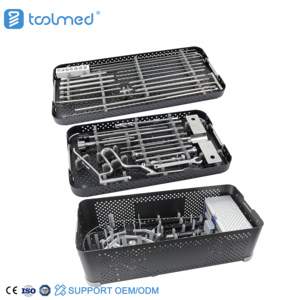
Anatomically contoured proximal femoral locking nail featuring dynamic and static interlocking modes for rapid fracture stability.
Get Catalog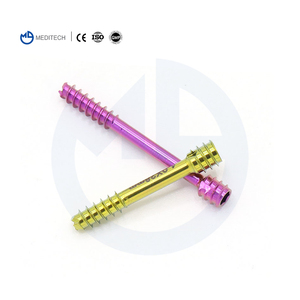
Precision-threaded self-tapping cortical screws designed for bicortical fixation in long bone diaphyseal fracture reconstruction.
Get Catalog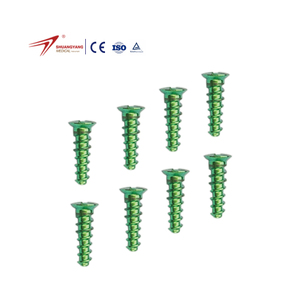
Ultra-low profile micro locking screw system for precision cranial rigid fixation, maxillofacial reconstructive surgery, and trauma repair.
Get Catalog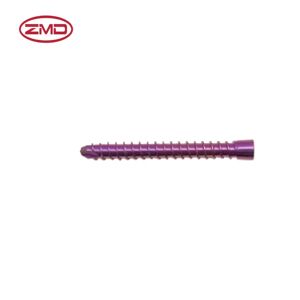
High-strength veterinary orthopedic titanium screw featuring T15 star recess for optimum torque transmission during small animal surgery.
Get Catalog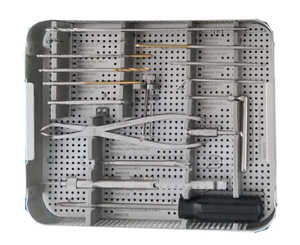
Comprehensive sterilization tray equipped with drill guides, depth gauges, torque-limiting drivers, and reduction forceps.
Get Catalog
Advanced biological and cemented arthroplasty implants designed for severe canine hip dysplasia, patellar luxation, and trochlear reconstruction.
Get Catalog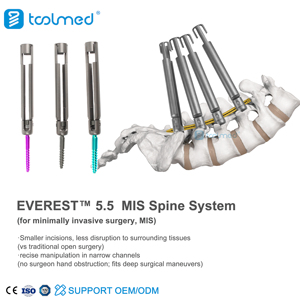
Minimally invasive spine stabilization system featuring 50-degree polyaxial screw head angulation, friction-fit tulips, and extended tabs.
Get CatalogEliminating supply chain friction through state-of-the-art CNC precision engineering, rigorous material testing, low MOQ flexibility, and complete compliance dossiers.
Consolidate your procurement across spine pedicle systems, trauma plates, intramedullary nails, PEEK fusion cages, sports medicine anchors, and CMF plating from a single certified factory.
From initial CAD engineering and FEA stress modeling to custom laser etching, customized tray layout, and branded IFU artwork, our team turns concept drawings into finished devices.
Build your local market catalog without liquidating working capital. Combine mixed-SKU trauma sets, screws, and instruments in small batch orders designed for fast inventory turns.
Manufactured strictly under ISO 13485 certified Quality Management Systems. Comprehensive Technical Documentation (STED) ready for local product registration in LATAM, SEA, and EU regions.
Formulated using implant-grade Titanium Alloy (Ti-6Al-4V ELI / ASTM F136) and PEEK Optima. Tested for static axial compression, dynamic fatigue, and screw pull-out strength.
Operating over 450 precision CNC units within a 60,000 m² modern manufacturing ecosystem. Standard catalog lines ship within compressed timeframes to maintain your tender schedules.
The global market for orthopedic implants is undergoing a fundamental structural transition. Healthcare providers, surgical centers, and regional medical device distributors face mounting cost pressures alongside rising standards for surgical accuracy and long-term biological fixation. As China's biomedical manufacturing ecosystem has evolved, leading Chinese orthopedic implant factories have transitioned from basic contract machining to high-tier precision engineering hubs capable of producing world-class trauma, spinal, joint, and craniomaxillofacial (CMF) systems.
This industry report examines the core technological parameters, material metallurgy, quality management protocols, and procurement strategies essential for overseas importers, medical device brands, and hospital procurement boards evaluating China wholesale orthopedic implants for sale.
The long-term clinical performance of an orthopedic implant depends heavily on the bio-compatibility, fatigue strength, and modulus of elasticity of its raw materials. Chinese medical device manufacturers operate under strict compliance with global standards, utilizing materials identical to top-tier Western OEMs.
Ti-6Al-4V Extra Low Interstitial (ELI) titanium is the gold standard for load-bearing orthopedic trauma plates, cannulated screws, and spinal pedicle screw constructs. By reducing interstitial elements such as oxygen, nitrogen, and iron, Grade 23 offers superior fracture toughness and flexural fatigue resistance compared to standard Grade 5 titanium. This material profile minimizes the risk of implant fatigue failure under cyclic mechanical load in non-union or delayed-union fracture cases.
In spinal cage manufacturing, radiolucent PEEK polymers match the elastic modulus of human cortical bone (~3.6 GPa vs 18 GPa for cortical bone), preventing the phenomenon of "stress shielding" and reducing post-operative cage subsidence into the vertebral endplates. Furthermore, radiolucency allows clear X-ray and CT evaluation of bony bridging across the interbody space.
Utilized primarily in high-rigidity trauma applications, temporary external fixation frames, and cost-effective fragment screw systems, implant-grade 316L stainless steel undergoes electro-polishing and passivation to resist pitting and crevice corrosion within human tissue environments.
| Material Standard | Biomechanical Advantage | Modulus of Elasticity | Primary Clinical Application |
|---|---|---|---|
| Ti-6Al-4V ELI (ASTM F136) | High fatigue strength, superior biocompatibility | ~110 GPa | Trauma Plates, Pedicle Screws, IM Nails |
| PEEK Optima (ASTM F2026) | Bone-like modulus, zero stress shielding, radiolucent | ~3.6 GPa | Cervical & Lumbar Interbody Fusion Cages |
| 316L Stainless Steel (ASTM F138) | High shear strength, economical rigidity | ~190 GPa | K-Wires, Cerclage Cables, Basic Trauma Screws |
| Co-Cr-Mo Alloy (ASTM F75) | Extreme wear resistance, low friction coefficient | ~210 GPa | Total Joint Replacement Femoral Components |
Technical Insight on Surface Passivation: Top-tier Chinese factories employ Type II Anodization and Plasma-Sprayed Hydroxyapatite (HA) coatings on titanium implants. Type II anodization hardens the surface layer to eliminate galling in thread-locking interfaces, while porous HA coatings encourage accelerated osteointegration, forming a direct physical bond with host bone tissue within 6-8 weeks post-implantation.
The global orthopedic market is rapidly evolving beyond standardized off-the-shelf components toward advanced surgical technology systems that reduce operative duration and improve patient outcomes. Procurement teams must align with factories actively investing in these forward-looking manufacturing modalities:
Traditional open spine procedures require significant muscle detachment. Modern wholesale spinal portfolios prioritize MIS polyaxial pedicle screws equipped with extended tab collars, friction-fit tulip heads, and percutaneous rod insertion passes. This permits percutaneous stabilization, significantly lowering intraoperative blood loss and accelerating patient recovery cycles.
Additive manufacturing using Selective Laser Melting (SLM) technology enables factories to create complex trabecular titanium structures with interconnected porosity (60-80% void space, pore size 400-600 μm). This mimics natural cancellous bone, facilitating vascular ingress and bone ingrowth directly into the implant core without secondary surface coatings.
A major trend in hospital procurement is demanding ergonomically matched, color-coded surgical instrumentation. A locking plate or intramedullary nail is only as reliable as the driver, drill guide, and reduction sleeve used to insert it. Chinese OEM manufacturers now supply complete modular aluminum or PEEK sterilization trays with color-coded drill bits and torque-limiting screwdrivers (e.g., 1.5Nm for small fragment locking screws) to prevent thread stripping.
Supply chain disruptions, healthcare expenditure constraints, and regulatory reforms (such as the European Union's Medical Device Regulation MDR 2017/745) are changing how medical device importers select their manufacturing partners in China.
Operating a 60,000 m² modern manufacturing complex supported by over 450 high-precision CNC Swiss-type lathes, 5-axis vertical machining centers, and automated wire EDM machinery, Ortix Medical maintains a daily output of roughly 20,000 implant units and surgical instruments.
Our quality management architecture is structured around complete lot-to-lot traceability:
Direct answers to essential technical, regulatory, and commercial queries raised by medical device buyers, hospital distributors, and OEM purchasing managers.
Ortix Medical operates under an ISO 13485 certified Quality Management System and is registered with the U.S. FDA. For international distributors preparing local product registrations, we supply complete Technical Dossiers (STED format), including ISO 10993 biocompatibility testing reports, mechanical fatigue performance testing (ASTM F1717 / ASTM F543), material mill certificates with raw material heat numbers, and sterilizer validation protocols.
We offer flexible low-MOQ structures tailored for regional distributors. Standard catalog products can be ordered in mixed-SKU batches, allowing you to combine trauma locking plates, cortical screws, intramedullary nails, and spinal cages in one shipment. For custom OEM projects requiring private laser marking or dedicated packaging design, baseline MOQs depend on component complexity but are engineered to support low-risk market entry.
Yes. We encourage qualified medical device distributors and hospital tender boards to apply for evaluation samples through our Free Sample initiative. Sample kits allow your clinical panel and orthopedic surgeons to inspect machining tolerances, anodization finish, surface smoothness, and instrument set compatibility prior to placing bulk orders.
We source certified medical-grade materials adhering strictly to international standards: Titanium Alloy Ti-6Al-4V ELI (ASTM F136 / ISO 5832-3), PEEK Optima polymer (ASTM F2026), and implant-grade 316L Stainless Steel (ASTM F138 / ISO 5832-1). Every lot is fully traceable to its original raw material heat lot certs.
With 450+ high-speed CNC machines operating in a 60,000 m² plant producing ~20,000 units per day, standard inventory items typically ship within 7 to 15 business days. Custom OEM orders requiring specialized tooling, customized packaging, or specific anodization color-coding are delivered according to an agreed lead time schedule, typically 30 to 45 days.
Our implants are designed according to international standard connection geometries (e.g., standard AO star/cruciform drive couplings, standard thread pitches). However, to ensure intraoperative reliability and prevent driver slipping, we strongly recommend procuring matching Ortix Medical surgical instrument sets engineered alongside the implant line.
Expand your product line, secure regulatory support, and access competitive factory-direct pricing for high-precision spine, trauma, and joint systems.
Get Catalog