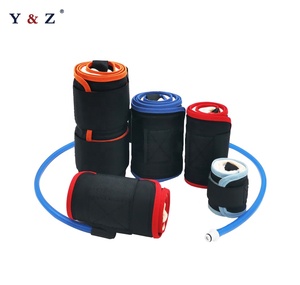
Catalog Overview
Featured Orthopedic Implants & Equipment
Direct manufacturer catalog featuring ISO 13485 & CE certified surgical implants, power systems, and specialized instruments.
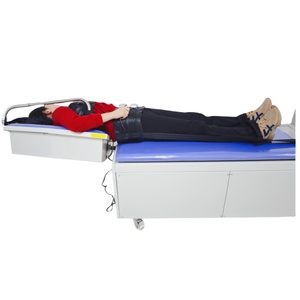
CE ISO 9001 13485 Medical Multi Angle Orthopedic Extension Traction Relaxing Bed for Lumbar Cervical Spine Operation
Get a Quote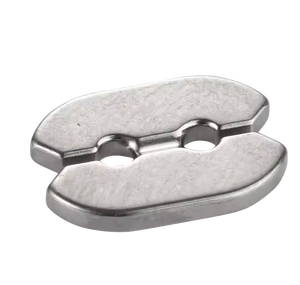
Orthopedic Sports Medicine Titanium Button With Loop Interlocking Nail And Implant Made Of Durable Titanium Alloy
Get a Quote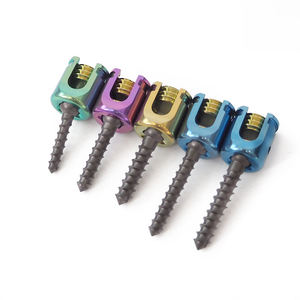
Veterinary Orthopedic Implants Polyaxial Spine Pedicle Screw Titanium Implant With Warranty And Online Technical Support
Get a Quote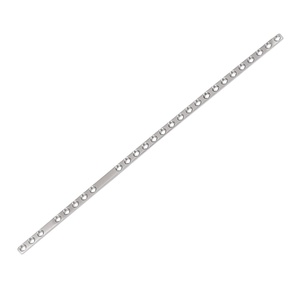
Orthopedic Implants Stainless Steel 1.5mm Straight Plate (Thickening) Black CE/ISO9001/ISO13485 Certified 1 Year Warranty Animal
Get a Quote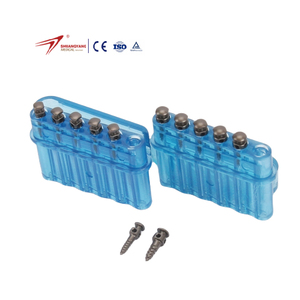
Shuangyang Orthodontic Screw Implant Higher Quality Product In Implants & Interventional Materials
Get a Quote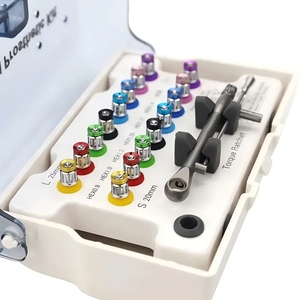
High Quality OrthoCare Medical Dental Surgical Implant Tool Box with CE Certificates
Get a Quote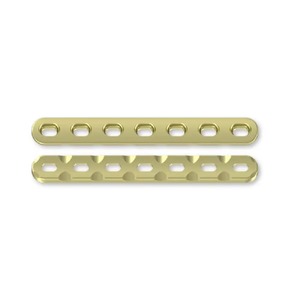
Titanium Orthopedic Implant – Manufacturer Direct, Limited Compression Surgical Implant & Interventional Material CE Certified
Get a Quote60,000 m²
Modern Production Facility
450+
5-Axis CNC & Precision Equipment
20,000
Units Daily Manufacturing Capacity
70+
In-House R&D Engineers
Strategic Value Proposition
Why Direct B2B Sourcing from Ortix Medical Drives Advantage
Mitigating supply chain volatility through fully integrated, traceable manufacturing and customized contract engineering.
ISO 13485 & FDA Registered
Operates under rigorous Quality Management Systems (QMS). Complete device history records (DHR), material origin tracking, and international validation documentation provided.
Flexible OEM / ODM Integration
Full custom engineering from CAD design, FEA biomechanical testing, private laser marking, custom anodization, to sterile pouch barrier packaging design.
Low MOQ & Mixed-SKU Orders
Optimized logistics allowing distributors to combine spinal systems, trauma plates, and cannulated screws in unified shipments, lowering inventory carry cost.
Advanced Medical Metallurgy
Exclusively processing implant-grade Ti-6Al-4V ELI (ASTM F136), 316L Stainless Steel (ASTM F138), and PEEK-OPTIMA® polymers with validated biomechanical safety margins.
Custom OEM Orthopedic Implant Manufacturing: An Industry White Paper on Online B2B Direct Procurement
The global orthopedic implant market is undergoing a structural paradigm shift. Traditionally governed by multi-tiered distribution networks and localized contract brokers, modern healthcare providers, hospital networks, and surgical brand owners are rapidly shifting toward direct-from-manufacturer online procurement. Driven by the need for cost optimization without compromising clinical outcomes, B2B digital procurement platforms allow qualified distributors to connect directly with certified original equipment manufacturers (OEMs).
Information Gain Insight: Sourcing orthopedic implants directly from certified manufacturers reduces procurement overhead by up to 35% while granting engineering-level transparency over raw material traceability, fatigue testing, and design modification timelines.
Biomaterial Science and Precision CNC Engineering Standards
Orthopedic implants operate in high-stress, chemically complex biological environments. Structural failure or ion leaching can lead to severe clinical complications, revision surgeries, or implant loosening. Consequently, OEM manufacturing requires unmatched precision, adherence to international standards, and advanced material science.
1. Titanium Alloys (Ti-6Al-4V ELI / ASTM F136)
Titanium remains the gold standard for load-bearing orthopedic implants, including spinal pedicle screws, trauma locking plates, and joint prosthesis stems. Extra Low Interstitial (ELI) grade titanium (Grade 23) offers superior fracture toughness and biocompatibility compared to standard Grade 5 titanium. The reduced content of oxygen, nitrogen, and iron minimizes embrittlement, providing high dynamic fatigue strength required for spinal stabilization and intramedullary fixation.
2. Ultra-High Molecular Weight Polyethylene (UHMWPE) & PEEK
In total joint arthroplasty and interbody fusion, non-metallic polymers play a crucial role. Polyetheretherketone (PEEK), specifically medical-grade PEEK-OPTIMA®, features a modulus of elasticity closely matching natural human cortical bone (3.6 GPa vs. 18 GPa). This close match substantially reduces the phenomenon of "stress shielding," where overly stiff metal implants absorb normal physiological loads and induce localized bone resorption.
3. Implant-Grade Stainless Steel (316L / ASTM F138)
Used predominantly in trauma plates, fracture reduction pins, and temporary external fixators, 316L vacuum-melted stainless steel provides exceptional tensile yield strength and economical viability for high-volume trauma applications, particularly in emergency surgical interventions and veterinary orthopedic procedures.
Data Matrix: Biomechanical Properties of OEM Orthopedic Biomaterials
| Biomaterial Type | Standard Specification | Yield Strength (MPa) | Elastic Modulus (GPa) | Primary Clinical Application |
|---|---|---|---|---|
| Ti-6Al-4V ELI Titanium | ASTM F136 / ISO 5832-3 | ≥ 795 MPa | 110 GPa | Spine Pedicle Screws, Trauma Plates, Hip Stems |
| 316L Stainless Steel | ASTM F138 / ISO 5832-1 | ≥ 690 MPa | 193 GPa | Trauma Fixation Plates, Intramedullary Nails |
| Medical Grade PEEK | ASTM F2026 | 110 – 130 MPa | 3.6 GPa | Cervical & Lumbar Interbody Fusion Cages |
| UHMWPE Polyethylene | ASTM F648 / ISO 5834-2 | ≥ 21 MPa | 0.8 – 1.2 GPa | Acetabular Liners, Knee Tibial Inserts |
Future Procurement Trends in Global Orthopedic Manufacturing
As healthcare systems adapt to value-based care models, B2B procurement strategies for orthopedic devices are evolving across four key vector trends:
Trend 1: Additive Manufacturing (3D Printed Porous Implants)
Direct Metal Laser Sintering (DMLS) and Electron Beam Melting (EBM) have revolutionized spinal interbody cage production. By 3D-printing titanium implants with interconnected porous structures mimicking trabecular bone (pore sizes ranging from 300 to 600 microns), manufacturers promote rapid osteointegration and vascularization, significantly decreasing revision rates. OEM partners now offer custom 3D file printing directly integrated into online ordering portals.
Trend 2: Digital Twin Sourcing & On-Demand OEM Customization
Modern hospital networks increasingly require Patient-Specific Implants (PSI) for complex oncological or reconstructive craniomaxillofacial (CMF) operations. Direct-to-factory CAD/CAM workflows allow surgeons to submit DICOM CT scan datasets online, enabling OEM engineers to generate custom PEEK or titanium implants within tight timelines.
Trend 3: Supply Chain De-Risking & Low MOQ Hybrid Inventory
Carrying millions of dollars in slow-moving surgical inventory is no longer financially viable for regional medical distributors. The rise of flexible OEM manufacturers offering low Minimum Order Quantities (MOQs) and consolidated mixed-SKU shipments allows importers to maintain lean inventory while retaining fast replenishment velocity.
Trend 4: Stringent Harmonization of Global Regulatory Compliance
With the transition from EU MDD to EU MDR (2017/745) and elevated US FDA 510(k) cleared equivalence standards, distributors require comprehensive technical documentation from their OEM sources. Leading OEM suppliers provide full clinical evaluation reports (CER), biocompatibility data (ISO 10993 series), and validated sterilization packaging protocols (ISO 11607).
Strategic Guidelines for Importing Orthopedic Devices Online
When evaluating an online orthopedic OEM manufacturer, procurement officers must institute a multi-tier auditing procedure:
- Audit the Quality Management System (QMS): Verify ISO 13485 certification scope specifically covering implantable surgical devices, not merely general medical equipment.
- Verify Raw Material Traceability: Ensure every batch of titanium or PEEK is accompanied by original mill test reports (MTR) stating chemical composition and mechanical properties.
- Inspect Cleanroom & Packaging Standards: Confirm that final washing and primary packaging occur in Class 7 (Class 10,000) or Class 8 (Class 100,000) cleanrooms adhering to ISO 14644 standards.
- Evaluate Instrument Compatibility: An implant is only as good as its delivery system. Confirm that the OEM provides dedicated, ergonomically matched surgical instrument trays (screwdrivers, reamers, bending pliers, pass-through guides).
Procurement Guidance
Frequently Asked Questions (FAQ)
Essential technical, regulatory, and procurement answers for international buyers and medical brand owners.
What quality certifications does Ortix Medical hold for global export?
Ortix Medical operates under an ISO 13485 certified quality management system and maintains establishment registration with the US FDA. We provide complete technical documentation packages—including ISO 10993 biocompatibility reports, mechanical dynamic fatigue test reports (ISO 14801 / ASTM F543), material certificates, and Certificates of Analysis (CoA)—to support local product registration in target export markets.
What is the Minimum Order Quantity (MOQ) for custom OEM orthopedic implants?
We offer flexible low-MOQ policies to support new distributors and emerging markets. Standard catalog items (such as standard pedicle screws or locking plates) can be ordered in small trial batches. For custom OEM private label projects or customized implant geometry, MOQs depend on material setup and machine calibration requirements. Combined mixed-SKU orders are supported to optimize freight costs.
Can Ortix Medical manufacture customized private label implants and custom packaging?
Yes. Our in-house R&D team of over 70 engineers supports full OEM and ODM services. This includes high-precision laser marking of your brand logo, lot numbers, and GS1-compliant DataMatrix barcodes directly onto the implants. We also design customized sterile barrier packaging (Tyvek pouches/blisters), customized outer boxes, and Instructions for Use (IFU) tailored to your regulatory specifications.
How do you ensure lot-to-lot quality consistency across high-volume production?
Our 60,000 m² facility features over 450 advanced machines, including high-precision Swiss 5-axis CNC machining centers and Citizen automatic lathes. Quality control follows strict IQC (Incoming Quality Control), IPQC (In-Process Quality Control), and FQC (Final Quality Control) workflows. Every production lot undergoes dimensional verification via 3D Coordinate Measuring Machines (CMM) and optical micro-comparators.
What is the typical production lead time for online B2B OEM orders?
Standard catalog items in regular stocking sizes ship within 7 to 14 business days. Custom OEM orders requiring new toolings, custom surface treatment (such as color anodization), or specialized packaging usually require 30 to 45 days, depending on order complexity and volume. Expedited sample evaluation runs are available for qualified procurement teams.
Ready to Scale Your Orthopedic Portfolio with OEM Direct Sourcing?
Connect with our expert engineering and regulatory team today. Request product technical files, size charts, or apply for evaluation sample sets.