Featured NMPA Registered Implants & Systems
Direct factory supply of precision spine, trauma, external fixation, and surgical accessories with complete lot traceability.
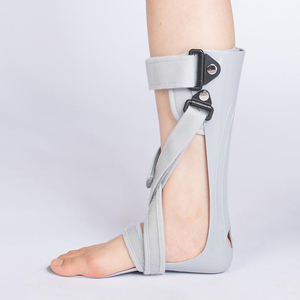
Factory Direct Sales Prosthetic Medical Orthopedic Foot Support Drop Splint Traction Brace Orthosis Shell Afo Equipment Device
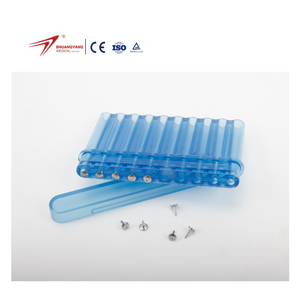
Shuangyang Orthopedic Implant Titanium Alloy Screw Gbr Membrane Bone Tack System Dental Hospital Use CEISO Certified 1 Year
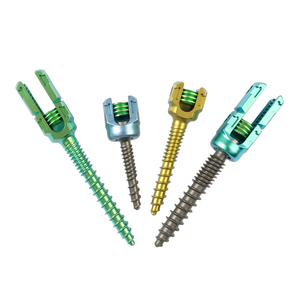
Wholesale Geasure Medical 5.5 Spine Titanium Alloy Pedicle Screws System Surgery High Strength Spinal Screw Implant Lifetime
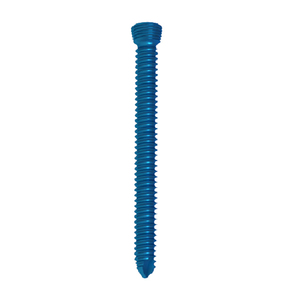
High Quality Orthopedic Implant Set Intramedullary Nail Implant for Humerus Multidimensional Locking Metal Medical Supplies
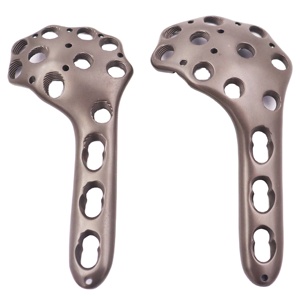
Orthopedic Implant Distal Femur Medial Condyle Large Fragment Locking Plate with Pure Titanium CE Certified Class III (L/R)

ISO 13485 Certified Medical Device Manufacturing Services for Veterinary Diagnostics PCB Plastic Parts Assembly Class 7/8
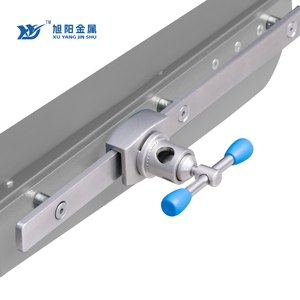
Medical Orthopedic Square-Hole External Fixator Precise Fixation Class I ISO13485 Certified 1 Year Warranty
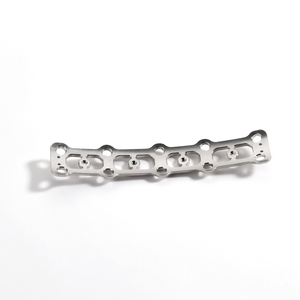
Tantium Alloy Bone CNC Machining Stud High Quality Orthopaedics Department Use 3D CNC Part Manufacture Implant Plate
Industrial Excellence in Orthopedic Manufacturing
Why Tier-1 medical device brand owners and regional procurement distributors partner with Ortix Medical for custom OEM/ODM contract manufacturing.
Medical-Grade Metallurgy
We source certified Ti-6Al-4V ELI (ASTM F136 / ISO 5832-3), Unalloyed Titanium (ASTM F67), PEEK OPTIMA LT1 (ASTM F2026), and 316L Stainless Steel (ASTM F138). Every raw material batch undergoes spectral analysis, tensile testing, and microstructural verification.
Certified Material CertificatesHigh-Precision Machining Fleet
Equipped with 450+ advanced high-speed CNC multi-axis milling machines, Citizen Swiss automatic lathes, and AgieCharmilles wire EDM systems. Achieving tight dimensional tolerances within ±0.005mm for delicate spinal pedicle threads and locking compression plate geometry.
±0.005mm Tolerance ControlRigorous Regulatory Compliance
Manufacturing adheres strictly to ISO 13485:2016 quality management systems and FDA Establishment requirements. Our NMPA Class III product registration dossiers streamline local regulatory submissions for international hospital procurement teams.
NMPA Class III & FDA RegisteredClass 7 / Class 8 Cleanrooms
Cleanroom packaging lines operating under ISO 14644-1 parameters ensure ultra-low particle contamination. We offer primary double-blister sterile packaging, hydrophobic sealing, and validated ethylene oxide (EtO) or Gamma sterilization options.
ISO 14644-1 CleanroomsOne-Stop OEM / ODM Customization
End-to-end engineering support ranging from 3D CAD modeling, rapid titanium prototype milling, private label laser etching, custom anodization surface treatments (Type II & Type III), to bespoke surgical instrument tray configuration.
Bespoke Laser Etching & PackagingLow-MOQ & Flexible Logistics
Optimized supply chain logistics designed for regional stocking distributors. Combine mixed SKUs—spinal screws, trauma plates, intramedullary nails, and external fixators—in single shipments to maximize inventory turn rates.
Mixed SKU Stocking ProgramsStrategic Sourcing Analysis: Future Procurement Trends in the Global Orthopedic Market
The global orthopedic implant sector is experiencing a structural realignment driven by aging demographics, expanding access to healthcare in emerging economies, and changing regulatory mandates such as the European Union's CE MDR and China's NMPA Class III requirements. Procurement directors, hospital purchasing boards, and medical device importers are adapting their supply chain frameworks to mitigate risk, control unit economics, and secure high-grade clinical outcomes.
1. Vendor Consolidation & Multi-Category Single-Sourcing
Historically, orthopedic distributors sourced spinal systems, trauma plates, and sports medicine accessories from fragmented niche suppliers. Modern procurement models favor consolidated manufacturing partners capable of delivering an expansive portfolio across multiple anatomical disciplines. Working with an integrated contract manufacturer reduces auditing overhead, streamlines regulatory dossier maintenance, and yields volume rebate efficiencies across diverse product lines.
2. Shift Toward Pre-Validated OEM & White-Label Ecosystems
Establishing proprietary implant production lines demands massive capital expenditures in multi-axis CNC machinery, cleanroom infrastructure, and regulatory compliance teams. Regional distributors are increasingly leveraging OEM contract manufacturing to launch white-label orthopedic lines. By taking advantage of existing NMPA Class III technical files and ISO 13485 quality systems, brand owners shorten time-to-market by up to 70% while maintaining absolute control over market positioning.
| Procurement Factor | Traditional Sourcing Model | Modern Integrated OEM Supply Model |
|---|---|---|
| Supplier Footprint | 4-8 specialized regional factories | Single-source consolidated manufacturer (Spine + Trauma + CMF) |
| Inventory Flexibility | High MOQ per individual SKU line | Low MOQ mixed-batch container shipments |
| Regulatory Lead Time | 18-24 months per individual device dossier | Accelerated submission via existing NMPA/FDA technical data |
| Quality Assurance | Inconsistent lot-to-lot batch variance | Unified CMM 3D testing and 100% optical inspection |
3. Heightened Demand for Full Instrument Set Compatibility
Implants cannot be deployed without perfectly calibrated surgical instruments. Modern tenders require complete, reusable, or disposable instrument trays engineered alongside the implant geometries. Suppliers who deliver fully matched instrument kits—featuring quick-coupling silicon handles, depth gauges, drill bits, and tap drivers—provide superior value to hospital surgical teams and secure long-term distributor loyalty.
Technological Evolution & Biomechanical Trends in Orthopedic Engineering
As surgical techniques advance toward minimally invasive procedures (MIS) and enhanced osseointegration, orthopedic implant manufacturing must evolve to incorporate state-of-the-art metallurgical, chemical, and additive manufacturing processes.
Additive Manufacturing & 3D Porous Titanium Structures
Direct Metal Laser Sintering (DMLS) and Electron Beam Melting (EBM) have revolutionized spinal cage and joint arthroplasty fabrication. By creating porous titanium lattice matrices that mimic the elastic modulus and architecture of human trabecular bone (porosity ranging from 60% to 80% with pore sizes between 300-600μm), 3D-printed implants eliminate stress shielding, facilitate cellular migration, and significantly accelerate vascularized osseointegration.
Advanced Surface Engineering & Anodization Protocols
Surface micro-topography plays a critical role in bone-to-implant contact (BIC). Modern manufacturing utilizes electrochemical Type II titanium anodization to enhance fatigue resistance and reduce fretting corrosion in modular implant interfaces. Type III color anodization provides crucial color-coded dimensional recognition for surgical staff, ensuring rapid size selection during trauma reconstruction.
Biocompatible Polymer Innovations: PEEK OPTIMA & Carbon-PEEK
Polyetheretherketone (PEEK) remains the gold standard for spinal interbody fusion cages and CMF cranioplasty implants due to its radiolucency and mechanical modulus similarity to cortical bone. Recent developments focus on carbon-fiber-reinforced PEEK (CF-PEEK) for load-bearing fracture plates, allowing artifact-free post-operative radiological evaluation via CT and MRI scanners.
Minimally Invasive Surgery (MIS) & Percutaneous Instrument Alignment
Surgical procedures are rapidly shifting toward smaller incisions and reduced tissue disruption. Modern thoracolumbar spinal systems incorporate cannulated pedicle screws, extended-tab reductions, and percutaneous rod inserters. Ortix Medical's R&D engineering team designs implants specifically matched to MIS surgical workflows, optimizing pull-out strength while minimizing intraoperative fluoroscopy exposure.
Frequently Asked Sourcing & Technical Questions
Detailed technical answers for hospital procurement boards, quality assurance managers, and global medical device importers.
What regulatory certifications and technical documentation packages are provided for product registration?
Ortix Medical manufactures under a certified ISO 13485:2016 quality management system and holds official establishment registration with the US FDA. Our core product lines carry Class III NMPA registrations. Qualified international distributors receive comprehensive regulatory support packages, including Material Test Certificates (MTRs according to EN 10204 3.1), biocompatibility evaluation reports (ISO 10993 series), mechanical fatigue test summaries (ASTM F1717 for spine, ASTM F382 for bone plates), sterilization validation reports (ISO 11137 / ISO 11135), Instructions for Use (IFU), and draft certificate of free sale (CFS) documents to support rapid local registration.
What raw material grades are utilized in your orthopedic implant manufacturing?
We strictly utilize premium medical-grade raw materials sourced from certified global suppliers. Our titanium products are crafted from Ti-6Al-4V ELI (Extra Low Interstitial) conforming to ASTM F136 / ISO 5832-3, providing superior fatigue strength and biocompatibility. Unalloyed titanium (Grades 2 and 4, ASTM F67) is used for specialized maxillofacial and soft-tissue anchors. Spinal interbody cages are machined from implant-grade PEEK OPTIMA LT1 (ASTM F2026). Stainless steel implants utilize high-nitrogen 316L (ASTM F138). Every raw material lot undergoes incoming spectrographic verification and retains complete batch traceability.
How does Ortix Medical handle Custom OEM/ODM requests and private labeling?
Our complete OEM/ODM workflow is managed by an in-house R&D team of 70+ mechanical and biomedical engineers. Services include custom implant modifications based on surgeon preferences, bespoke instrument tray development, fiber laser marking (high-resolution UDI barcodes, lot numbers, and client logos), customized anodization colors, and private-label packaging design (non-sterile bulk or double-blister sterile packaging with customized artwork and IFUs). We establish strict Non-Disclosure Agreements (NDAs) to protect intellectual property for custom brand owners.
What is your sample evaluation policy for new distribution partners?
We recognize that surgeons and hospital procurement committees require hands-on evaluation of surface finishing, screw-plate locking engagement, and instrument balance prior to placing commercial orders. Qualified distributors can request sample evaluation kits through our sales engineering team. Samples can be delivered in non-functional display finishes or functional sterile/non-sterile mechanical formats accompanied by dimensional inspection sheets.
What are the minimum order quantities (MOQ) and expected production lead times?
To support growing distributors and regional tenders, we maintain low MOQ thresholds. Standard catalog items across spine and trauma lines can be combined in flexible mixed-SKU shipments. Catalog stock items typically dispatch within 7-14 business days. Custom OEM production runs or private-label packaging projects generally follow a 30-45 day manufacturing timeline depending on raw material procurement, CNC machining cycles, surface anodization, and cleanroom packaging validation.
How do you ensure mechanical reliability and dimensional accuracy across high-volume production batches?
Quality control is embedded into every stage of production. Machined components undergo 100% optical dimension checks and coordinate measuring machine (Zeiss CMM) verification against 3D CAD master models. Mechanical integrity is continuously validated in our accredited testing lab using multi-axial dynamic fatigue testing rigs (simulating 5,000,000 physiological loading cycles), screw pull-out strength testers (ASTM F543), and torque-to-failure monitors. No lot is released without final quality assurance sign-off.
Partner with a World-Class Orthopedic OEM/ODM Manufacturer
Expand your product portfolio with NMPA Class III registered spinal systems, trauma plates, intramedullary nails, and precision surgical instruments. Contact our engineering and export team today to receive complete technical catalogs, material compliance data, and custom private-label pricing.