Precision-Engineered Orthopedic Systems & OEM Components
Explore our primary portfolio of custom-machined trauma, spinal, sports medicine, and reconstructive hardware engineered under stringent ISO 13485 quality protocols.
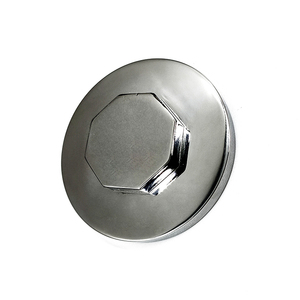
Medical Device CNC Machining | Orthopedic Implants & Surgical Instruments
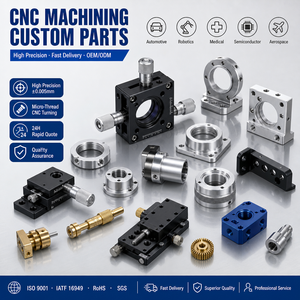
Custom CNC Machining Titanium Alloy Parts High Strength Corrosion Resistant for Medical Implant Equipment
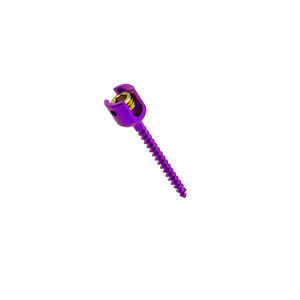
Factory Direct Orthopedic Implant Monoaxial Pedicle Screw For Spinal Fixation Fusion Surgery Titanium 5.5/6.0 ISO CE Certified
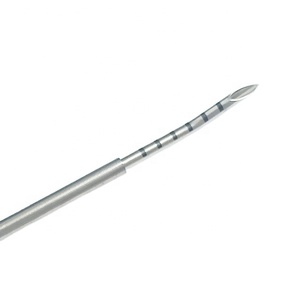
Sinowares Orthopedic Meniscus Repair System CNC Machined Fast Fix Inside Out Needles for Meniscal Repair
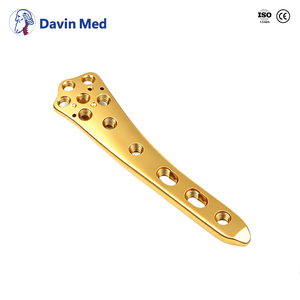
Davin Med Distal Humerus Lateral Locking Plate Titanium Orthopedic Bone Plate Trauma Implant CE ISO13485 OEM ODM Manufacturer
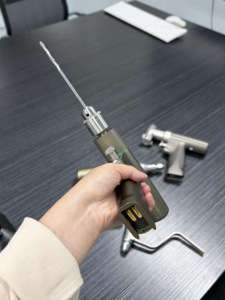
High Performance Orthopedic Bone Drill System for TKR THR Trauma and Joint Replacement Surgery
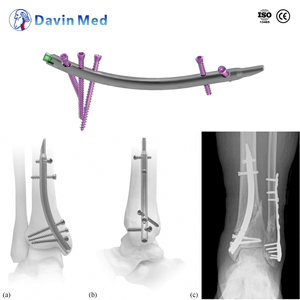
Sistema De Clavo Intramedular De Tibia Bloqueado Precio De Mayorista OEM/ODM CE ISO
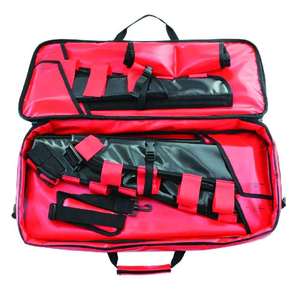
EVERISE CE Manual Multi Functional Splint Orthopedic Cushion Emergency Kit First Aid Medical Rescue Fracture Fixation Set
Strategic OEM Sourcing in Orthopedic Manufacturing: Technical Architecture & Execution
The global orthopedic surgical device sector is undergoing a profound structural shift driven by demanding surgical techniques, complex regulatory frameworks, and increasing pricing pressures in government tenders. For global medical brand owners, regional distributors, and clinical group importers, identifying a qualified custom OEM orthopedic implant manufacturer is no longer merely a procurement exercise—it is a core risk management strategy.
Contract manufacturing of implantable medical devices requires complete vertical integration. Implantable hardware—whether spinal pedicle screw systems, intramedullary nails, distal humerus locking plates, or custom PEEK arthroplasty structures—demands micro-scale accuracy, biocompatible metallurgy, and rigorous mechanical validation. Operating from our certified 60,000 m² manufacturing infrastructure equipped with over 450 precision multi-axis CNC machines and Swiss turning lathes, we bridge the gap between initial DFM (Design for Manufacturability) engineering and high-volume output.
Biocompatible Materials & Metallurgical Standards
Implants function within demanding biological environments requiring exceptional fatigue strength, corrosion resistance, and bio-inertness. Our contract manufacturing processes strictly conform to ASTM and ISO raw material standards:
- Titanium & Titanium Alloys (ASTM F136 / ISO 5832-3): Ti-6Al-4V ELI (Extra Low Interstitial) remains the cornerstone of load-bearing fracture fixation plates, trauma screws, and spinal constructs due to its superior strength-to-weight ratio and low elastic modulus relative to cortical bone.
- Polyether Ether Ketone (PEEK - ASTM F2026): Widely applied in interbody fusion cages and cranial repair systems. PEEK provides radiolucency under intraoperative fluoroscopy and matches the elastic modulus of cancellous bone to minimize stress shielding.
- Medical Grade Stainless Steel (ASTM F138 / ISO 5832-1): High-nitrogen 316L stainless steel selected for heavy-duty trauma constructs, K-wires, dynamic hip screws, and reusable surgical power tools requiring maximum torsional rigidity.
- Cobalt-Chromium-Molybdenum Alloys (Co-Cr-Mo - ASTM F75): Utilized in total joint replacements (THR/TKR) for articulating surfaces where tribological wear resistance is paramount.
Enterprise Advantages: Integrated OEM/ODM Supply Chain
Full-Spectrum OEM / ODM Engineering
From CAD/CAM implant surface modeling to rapid prototyping, micro-laser engraving, customized tray layouts, and IFU creation, we deliver market-ready product lines tailored to local regulatory requirements.
ISO 13485 & FDA Quality System
Our plant operates under certified ISO 13485:2016 standards and is registered with the U.S. FDA. Every production lot includes full material heat-number traceability, CMM dimensional reports, and mechanical test data.
Low MOQ & Flexible SKU Mixing
We eliminate high capital barriers for importers by enabling flexible minimum order quantities. Combine locking plates, pedicle screws, intramedullary nails, and matched surgical instruments in single shipments.
Industry Development Trends in Orthopedic Manufacturing & Surgical Hardware
The global orthopedic sector is experiencing rapid technological evolution. As a leading factory supplier, keeping pace with surgical innovation requires continuous investment in cutting-edge manufacturing techniques and product design:
1. Additive Manufacturing & 3D Porous Titanium Structures
Traditional subtractive machining creates smooth metal surfaces that rely on mechanical friction or macro-threads for primary stability. The industry is rapidly adopting Electron Beam Melting (EBM) and Direct Metal Laser Sintering (DMLS) to produce biomimetic, porous titanium lattice structures (trabecular titanium). These porous structures mimic natural human cancellous bone geometry (porosity between 60% to 80% with pore sizes of 300–600 μm), significantly accelerating early osseointegration and vascular ingrowth in spinal fusion cages and acetabular cups.
2. Advanced Surface Engineering & Functional Coatings
Modifying the nano- and micro-topography of titanium implants enhances biological response and wards off bacterial adhesion:
- Type II Titanium Anodization: Improves surface fatigue strength and reduces friction in thread-locking interfaces of locking compression plates (LCP).
- Hydroxyapatite (HA) Plasma Spray Coating: Applied to hip stems and pedicle screws to accelerate chemical bonding with native bone tissue.
- PEEK Surface Modification: Plasma surface treatment converts hydrophobic PEEK into a hydrophilic surface, supporting osteoblast adhesion.
3. Minimally Invasive Surgery (MIS) Hardware & Integrated Power Tool Systems
Clinical preference continues to shift toward percutaneous and minimally invasive approaches to reduce blood loss and recovery times. Consequently, OEM demand is expanding from standard open-surgery plates toward long-cannulated screws, expandable spinal cages, percutaneous pedicle screw extension towers, and high-precision cannulated orthopedic power drill systems designed for precise intraoperative guidance.
Machining Tolerances & Process Capabilities
| Manufacturing Process | Primary Materials | Achievable Tolerance | Quality Assurance Protocols |
|---|---|---|---|
| 5-Axis CNC Milling | Ti-6Al-4V ELI, PEEK, CoCrMo | ± 0.005 mm | 3D Zeiss CMM Inspection |
| Swiss Lathe Turning | Titanium Grade 5, 316L SS | ± 0.003 mm | Optical Comparator / Thread Pitch Gauge |
| Thread Rolling | Titanium Bone Screws | Class 3A / ISO 68-1 | Torsional Fatigue & Pull-out Testing |
| Anodization & Passivation | Titanium Alloys, Stainless Steel | ASTM F86 Compliant | X-Ray Fluorescence (XRF) Coating Check |
| Cleanroom Packaging | Medical Devices / Instruments | ISO Class 8 (Class 100,000) | Bioburden & Seal Integrity Validation |
Future Procurement Trends for Global Medical Device Buyers & Distributors
Navigating the post-pandemic healthcare supply chain requires strategic agility. International orthopedic buyers face rising freight costs, regulatory hurdles (such as the transition from EU MDD to MDR 2017/745), and extended audit timelines. To remain competitive, procurement executives are adopting four strategic procurement trends:
A. Shift Towards Integrated "Implant + Tool Set" Ecosystem Sourcing
Distributors no longer evaluate implants in isolation. A recurring pain point in hospital procurement is thread mismatch or instrument wear during surgery. Modern OEM suppliers must provide fully integrated surgical solutions: offering the implants alongside custom-designed, color-coded, and ergonomic instrument trays (benders, reamers, taps, screwdrivers, and depth gauges). We design surgical tools to match implant geometry precisely, reducing intraoperative failure rates.
B. Decentralization & Hybrid Supply Chain Resilience
To protect against regional supply chain disruptions, international buyers are diversifying vendor portfolios. Selecting an established contract manufacturer with large-scale production capability (20,000+ units daily) provides a safety buffer. High daily throughput allows factory partners to absorb unexpected tender surges without extending standard 30-day lead times.
C. Early DFM (Design for Manufacturability) Involvement
Bringing new orthopedic designs to market can incur significant capital costs during initial prototyping. Leading medical device brand owners engage OEM engineering teams during the conceptual phase. By optimizing radiuses, thread profiles, and tool path clearances early in CAD development, manufacturing costs can be reduced by 15% to 30% while improving mechanical fatigue life.
D. Complete Technical & Regulatory Documentation Dossiers
Importers require extensive technical files to secure product registration with local health authorities (such as US FDA, EU CE, Brazil ANVISA, or Saudi SFDA). A qualified factory supplier must provide comprehensive documentation support—including raw material Mill Test Certificates (MTC), biocompatibility reports (ISO 10993 series), mechanical static/dynamic test reports (ASTM F543 for bone screws, ASTM F1717 for spinal constructs), and sterilization validation dossiers.
Frequently Asked Procurement & Technical Questions (FAQ)
Detailed technical and commercial answers to common questions asked by global medical device distributors, OEM buyers, and regulatory officers.
What quality certifications and regulatory compliance documents do you hold?
Our manufacturing facilities operate under a certified ISO 13485:2016 Quality Management System and maintain active establishment registration with the U.S. FDA. For every shipment, we provide full lot traceability, including raw material Mill Test Certificates (MTCs), CMM dimensional inspection reports, surface treatment verification, and mechanical testing compliance according to ASTM/ISO standards.
What is your typical Minimum Order Quantity (MOQ) for custom OEM implant projects?
We support flexible sourcing models tailored to regional market development. For standard catalog items (such as standard pedicle screws, locking plates, and intramedullary nails), we offer low MOQs with mixed-SKU ordering options. For full custom OEM/ODM projects requiring specialized tooling and DFM development, MOQs are determined based on raw material batch sizes and machining setup times. Contact our engineering team for a customized quote.
Can you manufacture complete surgical instrument kits matching custom implant systems?
Yes. We provide complete end-to-end orthopedic solutions. Our production lines manufacture both implantable hardware and dedicated surgical instrument kits—including benders, drivers, drills, taps, trial implants, and modular sterilization containers. We ensure perfect fit and tolerance matching between surgical tools and implantable components.
How do you protect proprietary customer designs and intellectual property (IP)?
Intellectual property protection is fundamental to our contract manufacturing operations. Prior to receiving CAD drawings or project specifications, we execute formal non-disclosure agreements (NDAs). Customer-owned design files, tooling geometries, and custom product configurations are stored on secure, air-gapped servers with restricted role-based access control.
What surface treatment and finishing capabilities are performed in-house?
We maintain dedicated in-house finishing lines for Type II and Type III color anodization of titanium, bead blasting, ultrasonic cleaning, electro-polishing, laser marking (UDI compliant GTIN matrix codes), micro-deburring, and cleanroom washing/packaging operating to ISO Class 8 standards.
What is the standard production lead time for sample evaluations and bulk orders?
Evaluation samples for catalog items typically ship within 7 to 10 working days. Custom OEM prototype samples requiring dedicated tooling generally take 3 to 4 weeks. Bulk commercial production orders are completed within 30 to 45 days, supported by our 20,000+ daily unit manufacturing capacity.
Partner with a Leading Custom OEM Orthopedic Implant Manufacturer
Accelerate your medical device market entry, optimize unit costs, and secure reliable supply continuity. Our engineering team is ready to evaluate your CAD models, DFM requirements, and tender specifications.