Precision Orthopedic Implant Showcase
Explore our export-grade medical implants, surgical instrumentation kits, and OEM/ODM customizable orthopedic systems engineered for hospital and clinical applications globally.
1. Enterprise Manufacturing Infrastructure & Technical Excellence
In the highly regulated global market for medical devices, selecting a custom OEM orthopedic implant supplier requires a comprehensive evaluation of manufacturing capabilities, material integrity, and quality control systems. Operating from a modern 60,000 square meter manufacturing infrastructure, our enterprise is designed specifically to cater to international medical device brands, regional healthcare distributors, and hospital procurement groups.
Equipped with over 450 state-of-the-art multi-axis CNC machines (including high-precision Swiss-type lathe centers and multi-axis machining centers), our factories maintain a daily production output exceeding 20,000 precision units. This high-density production capability ensures stable supply chain dynamics, mitigating global procurement risks and supporting predictable lead times for high-volume contract orders.
Core Technical Compliance: All implant manufacturing conforms rigidly to ISO 13485:2016 quality management standards and U.S. FDA 21 CFR 820 regulations. Complete raw material lot traceability—from certified medical-grade Ti-6Al-4V ELI (ASTM F136) titanium bars to implant-grade PEEK and 316L surgical stainless steel—is fully documented for every export order.
In-House R&D and Quality Assurance Protocols
Our dedicated engineering team of over 70 biomedical professionals provides full-cycle OEM/ODM development services. Utilizing advanced Finite Element Analysis (FEA) and computer-assisted biomechanical modeling, we optimize structural geometry to enhance implant fatigue strength, load distribution, and micro-motion minimization at the bone-implant interface. Quality assurance includes 100% optical coordinate measurement (CMM), surface roughness validation (Ra < 0.4 µm), cleanroom class 100,000 (ISO 8) automated washing and packaging, and rigorous static and dynamic mechanical testing matching ASTM F543, F1717, and F2077 specifications.
Key Operational Advantages for Global Buyers
Why Tier-1 medical distributors and OEM brands partner with our manufacturing ecosystem.
ISO 13485 & FDA Standard
Full regulatory dossier support (STED format), certified quality assurance, and complete lot traceability for smooth customs clearance and local registration worldwide.
Low MOQ & Mixed-SKU Orders
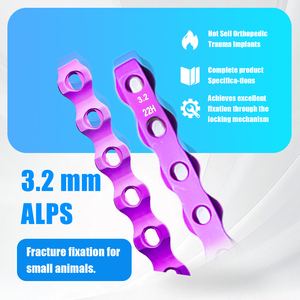
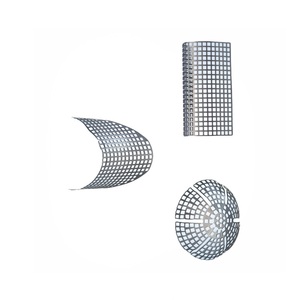
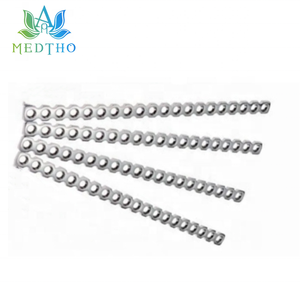
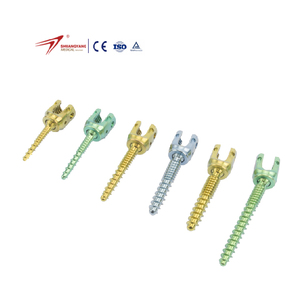
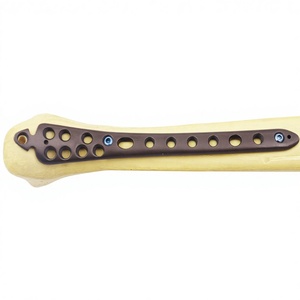
Strategic flexibility for distributors to consolidate diverse spinal cages, trauma locking plates, screws, and veterinary kits into low-volume mixed shipments.
Turnkey Instrument Kits
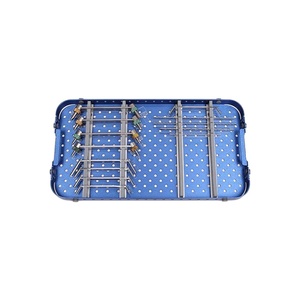
Complete ergonomic surgical driver kits, color-coded trial sizing instruments, and custom sterilization tray configurations paired with every implant family.
2. Strategic Future Trends in Global Orthopedic Implant Procurement
The global market for orthopedic implants and trauma internal fixation hardware is undergoing a structural shift driven by demographic aging, expanding veterinary surgical capabilities, and shifting supply chain dynamics. Contract buyers, hospital supply chains, and private-label brand owners must navigate several emerging procurement trends to maintain competitive advantages over the next decade.
A. Multi-Category Vendor Consolidation
Historically, orthopedic distributors sourced spinal systems, trauma plates, dental implants, and veterinary kits from distinct specialized vendors. Contemporary procurement strategies prioritize vertical supplier consolidation. By engaging a single OEM manufacturer capable of processing titanium, PEEK, stainless steel, and medical-grade polymers under unified ISO 13485 quality protocols, distributors drastically lower vendor audit costs, streamline logistics management, and negotiate comprehensive volume-tiered pricing structures.
B. Demand for Turnkey Modular Instrument Solutions
Hospital procurement committees and surgical centers increasingly refuse to buy stand-alone implants. The market mandate has transitioned to complete, integrated surgical systems. Suppliers must deliver paired, ergonomically validated surgical instrumentation sets—including silicone-handled screwdrivers, drill guides, depth gauges, and anodized modular sterilization boxes—to ensure seamless intraoperative workflow and reduce surgical prep times.
C. Regulatory Ready Dossiers & Accelerated Time-to-Market
With global medical regulatory bodies tightening technical documentation rules (such as EU MDR compliance and revised FDA 510(k) frameworks), OEM buyers require factories to supply complete pre-validated technical files. Factory partners who offer ready-to-file material certification reports, biocompatibility test data (ISO 10993), and mechanical verification test summaries empower distributors to secure local market authorization months ahead of competitors.
3. Technological Innovation Trends in Orthopedic Engineering
Substantial technological evolution is rewriting the parameters of bone reconstruction, spinal arthrodesis, and fracture management. Advanced manufacturing technologies directly dictate product efficacy and surgical outcomes.
1. Trabecular Porous Structures via Additive Manufacturing (3D Printing)
Selective Laser Melting (SLM) and Electron Beam Melting (EBM) have enabled the industrial fabrication of 3D-printed titanium fusion cages featuring interconnected porous trabecular architectures. Mimicking native human cancellous bone elasticity (elastic modulus around 3–5 GPa), these structures minimize stress shielding while promoting accelerated bone in-growth (osteointegration) without requiring extensive bone grafting.
2. Bio-Surface Engineering & Advanced Surface Modification
Surface treatments have advanced beyond traditional micro-machining. Modern pure titanium and titanium alloy implants utilize Sandblasted, Large-grit, Acid-etched (S.L.A.) techniques or Micro-arc Oxidation (MAO) to create micro- and nano-scale surface roughness profiles. This greatly accelerates hydroxyapatite nucleation and cell adhesion, significantly shortening osseointegration times in both human dental applications and veterinary trauma stabilization.
3. High-Performance Polymer Technologies (PEEK & Carbon-PEEK)
Polyether ether ketone (PEEK) continues to gain market share in spinal interbody fusion and cranial repair due to its radiolucency and biomechanical compatibility. Unlike metallic constructs, PEEK produces zero artifact imaging on post-operative CT and MRI scans, enabling clear radiographic monitoring of bony bridge formation.
4. High-Precision Micro-Machining and Automated Swiss Turning
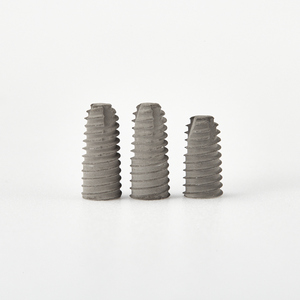
As trauma plates become more low-profile and screws transition to polyaxial locking mechanics, manufacturing tolerances have narrowed to micro-meter precision (+/- 0.005 mm). Automated multi-spindle Swiss CNC machining ensures that thread pitch geometry, self-tapping flutes, and locking mechanism interfaces remain identical across millions of mass-produced components.
Frequently Asked Questions by Global Buyers
Technical, regulatory, and commercial insights for medical device importers and OEM partners.
Q1. What raw materials are used for your orthopedic implants?
We strictly utilize certified medical-grade raw materials: Titanium alloy Ti-6Al-4V ELI (ASTM F136 / ISO 5832-3), Commercially Pure Titanium (ASTM F67), Surgical Stainless Steel 316L (ASTM F138), and PEEK (Optima). Material test certificates (MTC) are attached to every production batch.
Q2. What is your standard OEM/ODM custom development workflow?
Our OEM workflow follows 5 structured steps: 1) CAD drawing & requirement review; 2) Biomechanical FEA analysis & DFM optimization; 3) Rapid prototype sample production; 4) Mechanical bench testing; 5) Mass CNC production and custom laser marking/packaging.
Q3. Can we place mixed-SKU low minimum order quantity (MOQ) orders?
Yes. We support global distributors by offering low MOQ requirements and flexible batch loading. Buyers can combine various plate sizes, pedicle screws, cages, and surgical tool kits within a single order to optimize inventory holding costs.
Q4. How do you guarantee lot-to-lot dimensional consistency?
Quality control utilizes automated CMM optical measuring, laser profile scanning, and continuous zero-defect in-process statistical process control (SPC). Every individual manufacturing step is logged in our ERP system with full operator traceability.
Q5. What regulatory documentation do you provide for product registration?
We provide full documentation kits including ISO 13485 certificates, FDA registration details, ISO 10993 biocompatibility reports, mechanical fatigue test results, process sterilization validation data, and IFU user manuals in multiple languages.
Q6. What is the typical production lead time for export orders?
Standard catalog items are available in stock for immediate export. Customized OEM/ODM production runs typically take 30 to 45 days, depending on mechanical complexity, surface treatment specs, and custom packaging requirements.