Flagship Orthopedic Implants & Surgical Instrument Systems
Manufactured under strict ISO 13485:2016 quality management standards utilizing implant-grade Titanium (Ti-6Al-4V ELI), PEEK-OPTIMA, and 316LVM Surgical Stainless Steel.
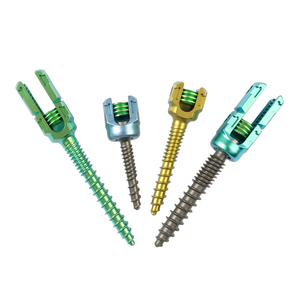
Wholesale Geasure Medical 5.5 Spine Titanium Alloy Pedicle Screws System Surgery High Strength Spinal Screw Implant Lifetime
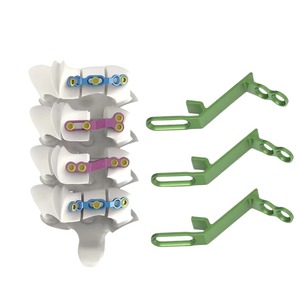
Medical High Quality CE/ISO Certified Orthopedic Implants Pure Titanium Double-Bend Long-Hole Locking
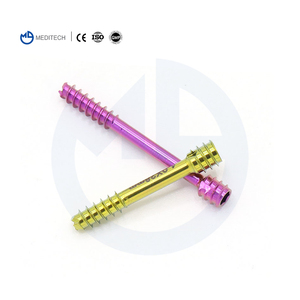
4.5mm Cortical Screw - CE & ISO13485 Certified Orthopedic Trauma Implant for Bone Fracture Fixation
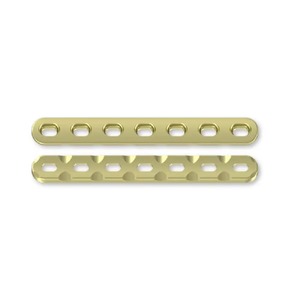
Titanium Orthopedic Implant – Manufacturer Direct, Limited Compression Surgical Implant & Interventional Material CE Certified
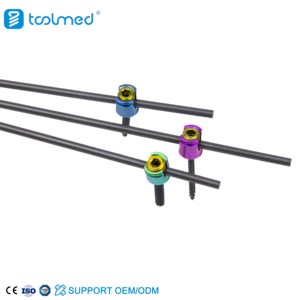
Veterinary Titanium Spinal Rod - ISO 13485 Certified Orthopedic Implant for Dog/Cat/Horse Spine Surgery
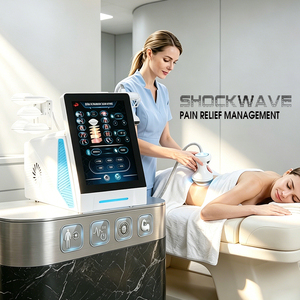
Medical Grade Focused ESWT Shockwave Machine 20Hz Frequency Chronic Pain Relief Device Manufacturer
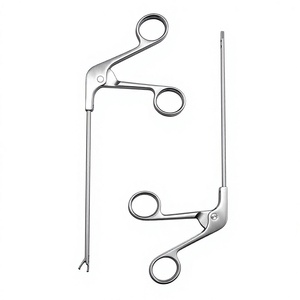
OEM 203mm Arthroscopy Grasping Forceps Serrated Jaw Stainless Steel Surgical Instrument Orthopedic Medical Device
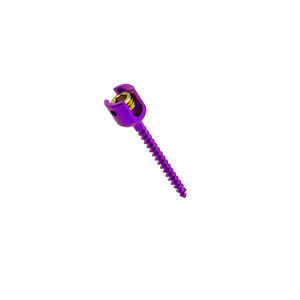
Factory Direct Orthopedic Implant Monoaxial Pedicle Screw For Spinal Fixation Fusion Surgery Titanium 5.5/6.0 ISO CE Certified
World-Class OEM/ODM Manufacturing Infrastructure
Equipped with advanced precision machining technologies, automated cleanroom packaging, and rigorous metallurgical control to support international medical device original brand manufacturers (OBMs) and regional distributors.
Full-Spectrum Orthopedic Portfolio
We provide comprehensive manufacturing services across 11 distinct orthopedic clinical segments: Spinal Fixation & Fusion Cages, Trauma Locking Plates & Intramedullary Nails, Joint Arthroplasty, Sports Medicine Sutures & Anchors, Cranio-Maxillofacial (CMF) Implants, External Fixation Frames, Orthopedic Power Tools, and Ergonomic Instrument Kits.
ISO 13485 & FDA Quality Ecosystem
Operating under an ISO 13485 certified quality management system with US FDA Establishment Registration, every production batch undergoes full lot-traceability—from raw titanium bar stock certification to final coordinate measuring machine (CMM) dimensional verification and ISO Class 8 cleanroom sealing.
Low MOQ & Flexible Mixed-SKU Orders
We solve inventory tie-up for growing distributors by supporting low Minimum Order Quantities (MOQ) and customized mixed-SKU container shipments. Combine various anatomical locking plates, cortical/cancellous bone screws, spinal rods, and custom driver sets into unified production runs.
Precision Instrument & Tray Engineering
Implants perform only as well as the instruments that insert them. Our dedicated tooling facility manufactures custom ergonomic silicone handles, quick-coupling drill bits, depth gauges, benders, and aluminum sterilization trays color-coded and laser-etched to your brand's specifications.
Future Procurement Trends in Global Orthopedic Manufacturing
Key structural shifts shaping how medical device distributors, OEM brand owners, and hospital purchasing groups source implants and instrumentation over the next decade.
1. Consolidation of Vendor Matrices & One-Stop Sourcing
Global procurement teams are aggressively pruning vendor lists to mitigate operational friction. Sourcing implants from one factory and surgical instruments from another creates compatibility risks and duplicate audit costs. The future belongs to single-source OEM hubs capable of delivering complete procedural kits—implants, instruments, power tools, and disposable accessories—validated as unified systems under a single quality audit.
2. Shift Toward Regulatory Dossier Transparency (STED & MDR)
Importers no longer evaluate manufacturers purely on price-per-unit. Due to stringent regulatory oversight from agencies such as the US FDA, European Medicines Agency (MDR 2017/745), and NMPA, procurement leads mandate complete Technical Files (STED format), ISO 10993 biocompatibility reports, static and dynamic fatigue test data (ASTM F1717 / ASTM F543), and validated shelf-life studies prior to signing supply contracts.
3. Agile Inventory Management & On-Demand Batch Replenishment
Carrying excessive stock of niche implant sizes (such as specialized long pedicle screws or extreme-angle CMF plates) places severe strain on distributor cash flow. Modern contract manufacturers are implementing agile manufacturing workflows—utilizing flexible Swiss CNC programming to offer lower minimum order quantities (MOQs) and 30-day replenishment cycles for long-tail SKUs.
4. White-Label Customization & Brand Personalization
Regional distributors are increasingly building proprietary brand equity rather than reselling tier-1 multi-national brands at razor-thin margins. Contract factories must offer robust ODM/OEM customization—including fiber laser marking of part numbers and lot codes, custom anodization colors for size identification, localized instructions for use (IFU), and custom sterile pouching.
Technological Development Trends in Orthopedic Implants & Instrumentation
How additive manufacturing, biomimetic material engineering, and digital surgical workflows are revolutionizing contract implant production.
A. 3D-Printed Trabecular Titanium & Porous Structures
Traditional smooth titanium implants rely heavily on macro-roughness or plasma-sprayed hydroxyapatite (HA) coatings for osseointegration. The industry is rapidly transitioning toward Direct Metal Laser Sintering (DMLS) and Electron Beam Melting (EBM) additive manufacturing. By 3D-printing biomimetic porous titanium structures with controlled pore sizes (300–700 microns) and 60–80% porosity, new-generation interbody cages and acetabular cups encourage direct bone in-growth (osteoconduction) while matching the elastic modulus of cancellous bone to eliminate stress shielding.
B. High-Performance Polymers: Carbon-PEEK & Bioabsorbables
While titanium alloys remain the workhorse of trauma and spine fixation, radiolucent polymers are taking market share in specialized applications. PEEK-OPTIMA offers radiolucency under X-ray and CT imaging, allowing surgeons to monitor fusion sites clearly. Furthermore, Carbon-Fiber-Reinforced PEEK (CF-PEEK) provides fatigue strength exceeding titanium alloy while retaining radiolucency—ideal for oncological spinal reconstruction. In sports medicine, bioabsorbable materials like PLDHA and composite bioglass anchors are eliminating the need for secondary hardware removal surgeries.
C. Patient-Specific Instruments (PSI) & Digital Integration
Modern orthopedic surgeries are moving away from traditional hand-held manual alignment tools toward Patient-Specific Instruments (PSI). Using patient CT or MRI DICOM datasets, contract manufacturers reconstruct 3D anatomical models and micro-machining or 3D-print custom nylon surgical cutting guides and drill templates. These single-use guides fit precisely over the patient's unique bone landmarks, reducing intraoperative alignment time, improving implant positioning accuracy, and minimizing surgical tray sterilization loads for hospitals.
D. Advanced Surface Modifications & Anti-Infective Technologies
Implant-associated surgical site infections represent a critical challenge in orthopedic surgery. Next-generation implant manufacturing incorporates advanced surface chemical treatments, such as Type II Anodization (DOT/HA coating compatibility), nanostructured oxide layers, and silver-ion/bioactive-glass antibacterial surface coatings. These surface engineering techniques dramatically reduce bacterial adhesion (such as *Staphylococcus aureus*) while accelerating cellular attachment and long-term biological fixation.
Metallurgical Standards & Biomechanical Testing Specifications
Technical benchmarks for material selection and physical validation across primary orthopedic product categories.
| Product Segment | Primary Raw Materials | Metallurgical Standard | Biomechanical Test Standards | Key Manufacturing Tolerances |
|---|---|---|---|---|
| Spinal Fixation Systems | Titanium Alloy Ti-6Al-4V ELI / PEEK-OPTIMA | ASTM F136 / ISO 5832-3 / ASTM F2026 | ASTM F1717 (Spinal Constructs), ASTM F2077 (Fusion Cages) | ±0.005 mm (Screw Thread Pitch), Sub-micron surface finish |
| Trauma Locking Plates | Pure Titanium (Grade 2/4) / Stainless Steel 316LVM | ASTM F67 / ASTM F138 (ISO 5832-1) | ASTM F382 (Metallic Bone Plates), ASTM F543 (Bone Screws) | Bending angle accuracy ±0.5°, Type II Anodized Surface |
| Joint Replacement (Hip/Knee) | CoCrMo Alloy / UHMWPE / Titanium Porous Coating | ASTM F75 / ASTM F648 / ASTM F1580 | ISO 14242 (Wear of Total Hip Prostheses), ISO 14243 (Knee Wear) | Mirror Polish Ra < 0.02 µm on femoral heads, tight tolerance taper fitting |
| Sports Medicine Anchors | PEEK-OPTIMA / Biocomposite PLDHA / Ti-6Al-4V | ASTM F2026 / ASTM F2502 | ASTM F543 (Torsional Yield & Pull-Out Strength) | Precision micro-molding, high-tensile suture eyelet polish |
| CMF Reconstructive Plating | Commercially Pure Titanium (CP Ti Grade 1-4) | ASTM F67 / ISO 5832-2 | ASTM F382 (Flexural Rigidity & Fatigue Life) | Ultra-low profile (0.6mm - 1.5mm plate thickness), malleable structure |
Frequently Asked Questions by OEM Buyers & Importers
Expert answers regarding quality verification, contract terms, technical documentation, and production workflows.
What material mill certificates and quality documentation accompany OEM shipments?
Every shipment from our facility is accompanied by complete batch documentation, including Raw Material Mill Certificates (verifying chemical composition and mechanical properties according to ASTM/ISO standards), Certificate of Conformance (CoC), Dimensional Inspection Reports generated via automated CMM, Anodization/Heat Treatment process logs, and ISO 11137 Sterilization Validation reports (if sterile packaging is requested).
How does your factory support local product registration with regulatory agencies (FDA, CE, NMPA)?
We provide our qualified distribution and OEM partners with complete Technical Dossiers compiled in Summary Technical Documentation (STED) format. This includes ISO 10993 biocompatibility testing data, mechanical fatigue and static strength test reports (ASTM F1717, ASTM F543, ASTM F382), manufacturing process flowcharts, risk management files (ISO 14971), and Clinical Evaluation Reports (CER) needed to clear product registration in target countries.
Can Ortix Medical customize surgical instrument sets for our proprietary implant geometries?
Yes. Our in-house R&D team consists of over 70 biomedical and mechanical engineers specializing in reverse engineering, custom cad-cam modeling, and rapid prototyping. We routinely design, manufacture, and brand custom instrument trays, driver shafts, taps, and benders tailored precisely to fit your custom implant thread profiles and locking mechanisms.
What are the typical lead times for prototype engineering versus volume OEM production?
For new custom OEM designs, prototype development and initial sample validation typically take 15 to 30 business days depending on geometric complexity. Once samples and technical drawings are approved, standard mass production lead times range from 30 to 45 days. For standard catalog items, stock replenishment orders can be dispatched within 10 to 15 business days.
How is cleanroom packaging handled for white-label or private-label implants?
Implants are cleaned using multi-stage ultrasonic washing systems with deionized water and processed inside our ISO Class 8 (Class 100,000) cleanroom environment. We offer double-blister Tyvek pouch sealing, custom box branding, laser-printed barcoding (UDI compliant), and localized Instruction for Use (IFU) inserts, ensuring your medical devices arrive sterile-ready or non-sterile cleanroom packed ready for gamma or ETO sterilization.
What is your Minimum Order Quantity (MOQ) policy for custom private-label orders?
We recognize that market entry requires inventory agility. Our factory supports low MOQs for initial stock orders and allows mixed-SKU batching across different plate lengths, screw sizes, and cage heights. During your initial inquiry, our export specialists will work with you to establish a flexible MOQ structure tailored to your tender timeline or market trial phase.
Partner with a Certified Orthopedic OEM Manufacturing Leader
Accelerate your product launch, reduce manufacturing unit costs, and secure reliable implant supply backed by rigorous ISO 13485 quality control and global regulatory support.