Factory-Direct Catalog
Featured Class III Orthopedic Implants & Precision Components
Standardized and customizable surgical implants produced directly under full material traceability, validated cleanroom packaging, and rigorous mechanical compliance.

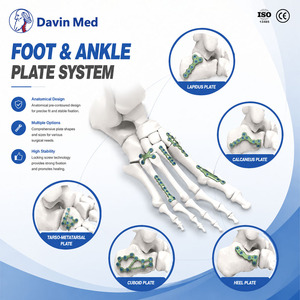
ISO 13485 Certified Medical Device Manufacturing Services for Veterinary Diagnostics PCB Plastic Parts Assembly Class 7/8
Get a Quote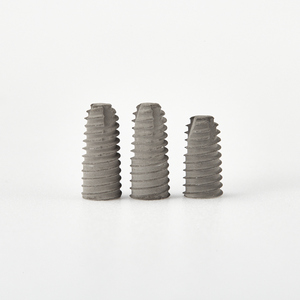
Factory Direct Pure Titanium S.L.A Surface Dental Implants High Quality Metal Consumables On Sale
Get a Quote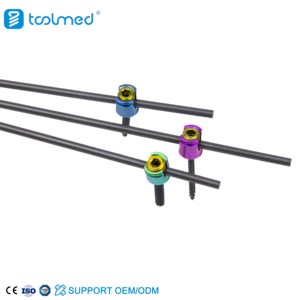
Veterinary Titanium Spinal Rod - ISO 13485 Certified Orthopedic Implant for Dog/Cat/Horse Spine Surgery
Get a Quote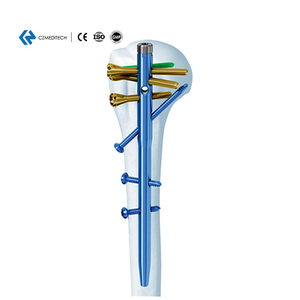
Reliable CZMEDITECH Multi-lock Humeral Intramedullary Nail CE Certified Class III Orthopedic Surgical Implants
Get a Quote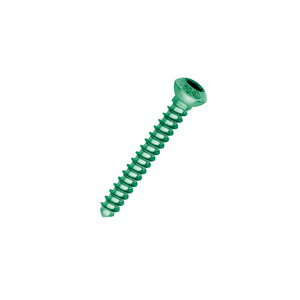
Dafinki 4.5mm Titanium Alloy Cortical Bone Screws-Locking Screws For Orthopedic Surgery Class III Implant
Get a Quote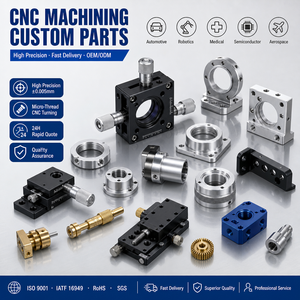
Custom CNC Machining Titanium Alloy Parts High Strength Corrosion Resistant for Medical Implant Equipment
Get a Quote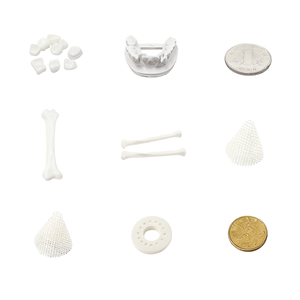
Medical Implant 3D Printing Service Custom Orthopedic Devices Bioprinting Compatibility Precision Craftsmanship
Get a Quote60,000 m²
Modern Manufacturing Footprint
450+
5-Axis Swiss CNC Units
70+
In-House R&D Engineers
20,000
Daily Unit Capacity
Enterprise Technical Infrastructure & Medical Grade OEM/ODM Capabilities
In the highly regulated global orthopedic landscape, sourcing surgical devices direct from an established OEM/ODM manufacturer requires transparent validation of metallurgical integrity, tight mechanical tolerances, and unyielding regulatory documentation. As a direct factory enterprise featuring over 60,000 square meters of production space, our plant integrates end-to-end device development—from raw titanium bar stock milling to validated cleanroom packaging.
Key Engineering Focus: Achieving consistent mechanical fatigue limits under ASTM F1717 (spinal constructs) and ASTM F543 (metallic bone screws) while maintaining micro-inch surface finishes and low coefficient of wear.
1. Metallurgical Rigor & Medical-Grade Raw Materials
Every Class III orthopedic implant manufactured at our facilities utilizes certified bio-compatible metals and polymers sourced exclusively from audited titanium melt suppliers. Our core raw material portfolio includes:
- Ti-6Al-4V ELI (Extra Low Interstitial) Titanium Alloy (ASTM F136 / ISO 5832-3): Formulated for superior fracture toughness, high yield strength (>795 MPa), and exceptional resistance to cyclic dynamic stress in load-bearing trauma plates, pedicle screws, and intramedullary nails.
- Unalloyed Pure Titanium Grade 4 (ASTM F67): Employed in S.L.A dental implants and specialized CMF bone plates where maximum ductility and osseointegration affinity are paramount.
- PEEK-OPTIMA® & Carbon-Reinforced PEEK (ASTM F2026): Radiolucent polyetheretherketone used for cervical and lumbar spinal interbody fusion cages, offering an elastic modulus (3.6 GPa) closely matching human cortical bone to minimize stress shielding.
- 316L Stainless Steel (ASTM F138 / ISO 5832-1): Ultra-clean vacuum-melted steel optimized for high-strength veterinary trauma plates and cost-effective internal fixation screws.
2. Precision Machining & Advanced Surface Modification
Our machining floors feature over 450 state-of-the-art precision tools, including multi-axis Swiss-type automatic lathes (Citizen/Tsugami), 5-axis high-speed CNC milling centers, and high-precision Wire Electrical Discharge Machining (EDM). This enables us to maintain dimensional tolerances within ±0.005 mm for complex geometries such as multi-lock humeral nail cross-holes and variable-angle locking screw threads.
Surface treatments are engineered to dictate clinical response. Our specialized S.L.A (Sand-blasted, Large-grit, Acid-etched) surface processing for dental and joint implants generates a multi-scale micro-topography (pore depth 1.5 - 3.0 µm). This micro-roughness drastically increases the bone-implant contact (BIC) ratio and accelerates early osteoblast differentiation. For spinal and trauma devices, Type II color anodizing and hard titanium oxide passivation prevent wear debris release and enhance corrosion resistance in vivo.
3. Cleanroom Assembly & Quality Management Architecture
Final washing, sub-assembly, laser micro-marking, and primary Tyvek pouch packaging are conducted within certified Class 7 (Class 10,000) and Class 8 (Class 100,000) cleanrooms compliant with ISO 14644-1. Operating under a fully integrated ISO 13485:2016 quality management system, every lot undergoes rigorous 3D Coordinate Measuring Machine (CMM) dimensional checks, optical profile scanning, and material batch spectrographic verification before release.
Engineering Specifications
Orthopedic Biomaterial Engineering Matrix
A comprehensive comparison of physical, mechanical, and biological properties across our primary orthopedic manufacturing materials.
| Biomaterial Grade | Tensile Strength (MPa) | Yield Strength (MPa) | Modulus of Elasticity (GPa) | Surface Finish / Topography | Primary Surgical Application |
|---|---|---|---|---|---|
| Ti-6Al-4V ELI (Grade 23) | ≥ 860 | ≥ 795 | 110 - 114 | Type II Anodized / SLA / Passivated | Trauma Plates, IM Nails, Pedicle Screws |
| Commercially Pure Ti (Grade 4) | ≥ 550 | ≥ 480 | 104 - 105 | S.L.A (Sandblasted & Acid Etched) | Dental Implants, CMF Micro Plates |
| PEEK OPTIMA® (Natural) | 95 - 100 | 90 - 95 | 3.6 - 4.0 | Precision Machined / Machined Mesh | Spinal Fusion Cages, VBR Devices |
| 3D Printed Ti6Al4V Mesh | 250 - 450 (Porous) | 200 - 350 | 1.5 - 4.5 (Porous Matrix) | Porous Trabecular Structure (60-80%) | Custom PSI, Acetabular Cups, Cages |
| 316L Stainless Steel | ≥ 860 | ≥ 690 | 190 - 200 | Electropolished Mirror Finish | Veterinary Implants, External Fixators |
Industry Foresight
Technology & Manufacturing Trends in Orthopedic Implants
Key technological shifts reshaping surgical device manufacturing, biomechanical modeling, and OEM production strategy over the next decade.
1. Additive Manufacturing & Trabecular Bone Mimicry
Direct Metal Laser Sintering (DMLS) and Electron Beam Melting (EBM) 3D printing technologies are revolutionizing implant design. Rather than applying secondary coatings, modern implants integrate 3D printed porous lattice structures directly into the solid core. These porous titanium matrices feature inter-connected pore diameters of 300 to 600 micrometers, perfectly replicating human cancellous bone vascularization and encouraging rapid osteo-conduction while tuning the elastic modulus down to 2-4 GPa.
2. Patient-Specific Implants (PSI) & Digital Surgery
The market is rapidly shifting from off-the-shelf sizing toward custom Patient-Specific Implants (PSI) derived from high-resolution CT/MRI DICOM datasets. Through parametric 3D CAD modeling and automated Finite Element Analysis (FEA) stress validation, custom cranial, maxillofacial, and revision joint prostheses can be produced within 72 hours, optimizing anatomical alignment and reducing intra-operative surgical time.
3. Advanced Bio-Active Surface Engineering
Next-generation medical devices are incorporating nano-structured antibacterial surfaces to counteract Surgical Site Infections (SSI) and biofilms. Modern OEM processing involves hydro-thermal micro-nano surface texturing, titanium dioxide nano-tube arrays for targeted drug delivery, and atomic layer deposition (ALD) of hydroxyapatite (HA) to stimulate immediate biochemical osseointegration.
4. Hybrid Polymer & PEEK Composite Structures
While titanium alloy remains the gold standard for high load bearing trauma devices, composite PEEK structures enhanced with continuous carbon fibers (CF/PEEK) are capturing significant market share in spinal fixation and oncological reconstruction due to their non-magnetic nature (zero MRI artifacts) and superior fatigue endurance under dynamic cyclic loading.
Future Global Procurement Trends in Orthopedic Sourcing
Procurement directors and hospital distributors face evolving regulatory hurdles, fragmented regional supply chains, and mounting pressure to reduce Total Cost of Ownership (TCO) without sacrificing device quality. Sourcing strategies are moving rapidly toward direct factory OEM consolidation.
Direct-from-Manufacturer OEM Integration
Distributors are bypassing trading intermediaries to work directly with qualified source factories. Direct contract manufacturing allows distributors to co-engineer custom laser etchings, proprietary tray layouts, and localized branding while lowering unit procurement costs by 25% to 40%.
Regulatory Technical Dossier Readiness
Under EU MDR and stringent global health authority frameworks (such as US FDA 510k, Brazil ANVISA, and NMPA), procurement managers require turnkey Technical Dossiers containing ISO 10993 cytotoxicity, mechanical fatigue testing reports, and animal study validation to fast-track regional product registration.
Agile Low MOQ & Mixed-SKU Orders
To mitigate holding cost risks in emerging markets, distributors prioritize suppliers that offer low Minimum Order Quantities (MOQ) and flexible mixed-SKU shipments—allowing trauma plates, cannulated screws, intramedullary nails, and matched surgical instruments to ship in consolidated batches.
Turnkey Instrument & Power Tool Matching
Modern surgical tenders demand complete surgical eco-systems. Leading manufacturers deliver fully integrated solutions where implants are shipped alongside precision driver tools, drill bits, taps, bending pliers, and ergonomic sterilization trays engineered specifically for that construct family.
Buyer Support & Knowledge Base
Frequently Asked Technical & Procurement Questions
Detailed insights regarding quality management, OEM customization, regulatory support, and order logistics for medical device importers.
Q What regulatory certifications and quality management systems support your factory manufacturing?
Our manufacturing facilities operate under a fully accredited ISO 13485:2016 quality management system and maintain establishment registration with the U.S. Food and Drug Administration (FDA). Our key Class III product lines comply with the essential safety and performance requirements of CE certification (under EU MDD/MDR). Full technical documentation packages, raw material mill certificates (ASTM F136 / ASTM F138), bio-compatibility test reports (ISO 10993 series), and sterilization validation files are provided to qualified distributors to support local medical device registration.
Q What is the standard Minimum Order Quantity (MOQ) for custom OEM/ODM implant orders?
We maintain a highly adaptable inventory and production framework designed to support both global tenders and growing regional distributors. For standard catalog items (such as standard trauma plates, locking screws, and intramedullary nails), we accommodate low MOQ and mixed-SKU batch orders. For full custom OEM/ODM projects requiring specialized laser etchings, custom color anodizing, or custom geometry fabrication, MOQ is evaluated based on machine setup time and raw material bar stock requirements. Evaluation sample batches can be requested prior to contract signing.
Q What engineering workflow is followed during custom OEM/ODM product development?
Our OEM/ODM engineering protocol follows a structured 5-stage quality design lock: (1) Initial Requirements & CAD Modeling: 2D/3D modeling based on your samples, drawings, or anatomical specifications; (2) FEA Simulation: Virtual stress analysis to verify load distribution and fatigue thresholds; (3) Prototyping: Precision CNC sample machining within 7 to 10 working days; (4) Inspection & Validation: CMM dimensional checks, surface roughness measurement, and functional surgical tool fit tests; (5) Mass Production & Packaging: Passivation, cleanroom sealing, laser marking (UDI compliance), and batch certificate issuance.
Q How do you ensure lot-to-lot consistency and prevent micro-cracks in titanium load-bearing implants?
Lot-to-lot consistency is guaranteed through strict raw material incoming controls and in-line process monitoring. We source raw titanium exclusively from certified melt suppliers accompanied by full chemical analysis and mechanical tension test certifications. Machining is conducted on high-precision Swiss-type 5-axis CNC centers with automated tool-wear compensation. Post-machining, implants undergo non-destructive dye-penetrant testing and ultrasonic cleaning to ensure surface micro-cracks are eliminated. Final passivated surfaces are inspected under optical comparators and 3D CMM machines.
Q Are surgical instrument sets included with implant systems, and can they be customized?
Yes. Every implant family—including spinal pedicle screw systems, calcaneal locking plates, humeral intramedullary nails, and sports medicine anchor sets—is accompanied by a dedicated, color-coded surgical instrument set. Instrument kits include screwdrivers, drills, taps, reamers, depth gauges, and bending pliers housed in autoclavable aluminum or PEEK sterilization boxes. We offer full OEM customization on surgical tools, including customized laser etching of your brand logo, custom tray layouts, and silicone insert color adjustments.
Q What are the lead times for standard export orders vs. OEM custom manufacturing?
Standard catalog implants maintained in our ready-to-ship warehouse inventory ship within 3 to 7 business days following payment confirmation. Standard catalog orders requiring custom laser labeling or sterile pouch packaging typically require 14 to 20 days. Full OEM/ODM manufacturing projects (from CAD design freeze to finished product release) are generally completed within 30 to 45 calendar days depending on production batch volume and coating requirements.
Q Do you provide manufacturing services for veterinary orthopedic implants and diagnostic diagnostics?
Yes. In addition to human surgical implants, we operate a dedicated manufacturing line specializing in veterinary orthopedic devices—including titanium spinal rods, TPLO plates, micro-locking plates, and intramedullary pins tailored for canine, feline, and equine procedures. Furthermore, our Class 7/8 cleanrooms support contract manufacturing services for veterinary diagnostic equipment, plastic enclosures, PCB housing assembly, and precision micro-molded components under ISO 13485 oversight.
Partner Direct with a Leading Medical Device OEM Manufacturer
Accelerate your market expansion with factory-direct pricing, certified ISO 13485 quality, low MOQ flexibility, and complete technical dossier support for your local tender and distributor requirements.