Featured Orthopedic Implant Systems & Components
Explore our high-precision implant catalog engineered for high-frequency reorders, mixed-SKU flexibility, and seamless clinical integration.
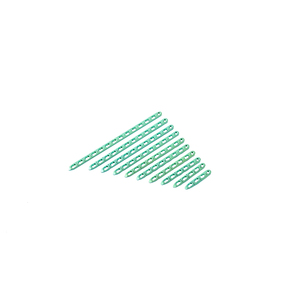
ORTHOCORE 1.5mm Locking Compression Plates Titanium Veterinary Orthopedic Implant Safe & Reliable
Inquire Now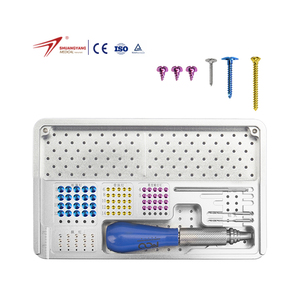
New Product GBR System Guided Bone Regeneration Titanium Screw Implant Kit Surgical Dental Tool Instrument Dental Implant
Inquire Now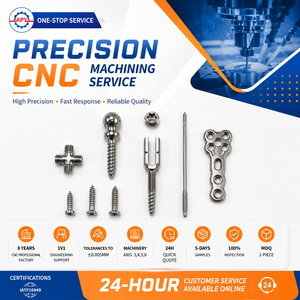
Precision CNC Machined Orthopedic Implants Titanium Bone Screws Spinal Fixation Parts OEM Custom Components
Inquire Now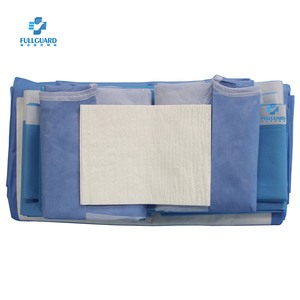
Direct From ISO 13485 Qualified Manufacturer, Customizable, Disposable Sterile Laparotomy Pack Procedure Set
Inquire Now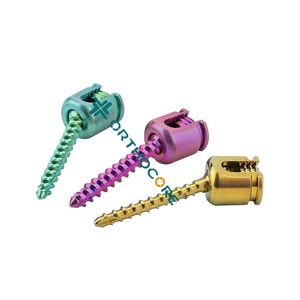
Orthopedic Implants for Large Animals Veterinary Spinal Screw Fixation System
Inquire Now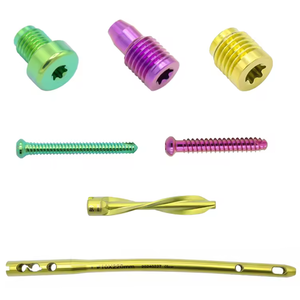
Orthopedic Trauma Screw System Full Set Titanium Surgical Implant Supplier with OEM Service
Inquire Now
High Precision CNC Stainless Steel Aluminum Rapid Prototypes for Medical Systems
Inquire Now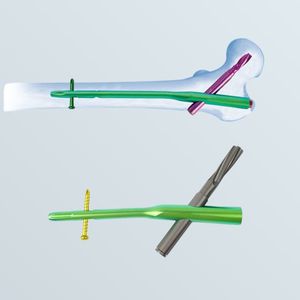
Premium PFNA Intramedullary Nail Wholesale Orthopedic Implant for Femur Fracture Fixation
Inquire NowNavigating Global OEM/ODM Orthopedic Implant Manufacturing
A definitive technical analysis for procurement directors, OEM brand owners, and medical device importers on raw material selection, CNC micro-machining, QA compliance, and supply chain scalability.
The global orthopedic implants market is undergoing a structural transformation driven by an aging global demographic, accelerating adoption of minimally invasive surgical (MIS) techniques, and growing demand for private-label customization across emerging hospital networks. Sourcing high-grade orthopedic hardware—spanning spinal internal fixation constructs, trauma locking compression plates (LCP), intramedullary nails (IMN), sports medicine suture anchors, and craniomaxillofacial (CMF) plating—demands a manufacturing partner capable of translating complex biomechanical designs into sub-micron finished implants without compromising metallurgical integrity.
1. Critical Engineering Standards in Orthopedic Implant Contract Manufacturing
Biomedical component manufacturing requires absolute adherence to raw material traceability, controlled cold working, and tight dimensional tolerance stack-ups. In orthopedic trauma and spinal surgery, micro-fractures or surface flaws can cause premature hardware fatigue failure. As a dedicated OEM/ODM manufacturer, our facility operates under a closed-loop quality management system (QMS) aligned strictly with ISO 13485:2016 standards.
Key metallurgical and manufacturing considerations include:
- Raw Material Purity & ASTM Compliance: We utilize exclusively implant-grade materials sourced from certified mill suppliers. This includes Ti-6Al-4V ELI (Extra Low Interstitial) Titanium Alloy (ASTM F136 / ISO 5832-3) for supreme biomechanical strength and fatigue resistance, 316LVM Stainless Steel (ASTM F138) for high torsional load applications, and PEEK-OPTIMA (ASTM F2026) for radiolucent spinal interbody cages.
- Sub-Micron Swiss Turning & 5-Axis Machining: Bone screw thread geometry, dual-lead pitch configurations, self-tapping flutes, and internal star-drive (Torx) recesses demand high-precision Swiss-type CNC lathes (Citizen, Star) and 5-axis machining centers (DMG Mori). Tolerances are consistently maintained within ±0.005 mm (±5 microns).
- Surface Engineering & Passivation: Chemical passivation per ASTM F86 eliminates free iron contaminants, while Type II/III anodization establishes distinct color-coding for surgical identification while drastically improving surface hardness and corrosion resistance.
Metallurgical Traceability
Every batch of raw titanium rods or PEEK polymers is delivered with complete mill test reports (MTR), chemical analysis, and ultrasonic flaw detection certificates. Full lot traceability is guaranteed from ingot to sterile packaging.
Micro-Finish & Deburring
Utilizing high-frequency ultrasonic cleaning, automated magnetic polishing, and micro-blasting to eliminate burrs. Micro-smooth surface topography prevents local tissue irritation and optimizes stress distribution.
Cleanroom Packaging
Primary double-blister packaging and Tyvec heat sealing performed within certified ISO Class 7 cleanrooms, ensuring sterile barrier integrity for gamma irradiation or ETO sterilization processes.
Future Sourcing & Manufacturing Trends (2025–2030)
Understanding technological shifts enables medical device procurement teams to build future-proof supply chains and capture market share.
1. Shift Towards Additive Manufacturing & Porous Titanium Structures
Traditional subtractive machining is rapidly integrating with 3D additive manufacturing (Direct Metal Laser Sintering - DMLS / Electron Beam Melting - EBM). The future of spinal interbody fusion cages and joint reconstruction lies in biomimetic porous titanium designs. Trabecular micro-structures with engineered porosity (50%–70% pore volume, 300–600 μm pore size) closely mimic human cancellous bone, dramatically accelerating osseointegration and reducing stress shielding. OEM factories must offer hybrid manufacturing—combining 3D printed porous bodies with high-precision CNC threaded interfaces.
2. Rise of Radiotranslucent & Bioresorbable Materials
While Ti6Al4V ELI remains the gold standard for load-bearing trauma locking plates and pedicle screws, sports medicine and craniomaxillofacial applications are pivoting toward PEEK (Polyetheretherketone), Carbon Fiber Reinforced PEEK (CFR-PEEK), and bioabsorbable polymers (PLDLA, PLLA). Radiolucency allows surgeons to clear imaging artifacts on post-operative X-rays and CT scans, providing unimpeded visualization of bone fusion progress.
3. Decentralization of Supply Chains & Low MOQ Agility
Global medical device distributors are shifting away from rigid single-vendor supply chains. Sourcing managers now prioritize agile OEM suppliers capable of handling lower Minimum Order Quantities (MOQ) across highly diversified SKU portfolios. Combined shipments of plates, cannulated screws, intramedullary nails, and matched surgical instrumentation allow distributors to maintain optimized inventory levels while reacting swiftly to hospital tender demands.
Material Specification & Application Matrix
A quick comparative reference for regulatory and engineering teams selecting raw materials for OEM/ODM development:
| Biomaterial Standard | Tensile Strength (MPa) | Modulus of Elasticity (GPa) | Biocompatibility & Corrosion | Primary Clinical Application |
|---|---|---|---|---|
| Ti-6Al-4V ELI (ASTM F136) | ≥ 860 MPa | 110 GPa | Outstanding; fast bio-passivation layer formation. | Pedicle Screws, Trauma Locking Plates, IM Nails. |
| 316LVM Stainless Steel (ASTM F138) | ≥ 860 MPa (Cold Worked) | 190 GPa | High corrosion resistance; superior ductility/torsion. | Veterinary Implants, K-Wires, Cerclage Wires. |
| PEEK-OPTIMA (ASTM F2026) | 90 - 100 MPa | 3.5 - 4.0 GPa (Close to cortical bone) | Inert; radiolucent; zero MRI artifacts. | Cervical/Lumbar Interbody Fusion Cages. |
| Grade 2 / Grade 4 CP Titanium (ASTM F67) | 240 - 550 MPa | 100 - 105 GPa | Excellent malleability; high biocompatibility. | CMF Mesh, Cranial Plates, Reconstruction Plates. |
Why Partner with Our Medical Contract Manufacturing Division
Integrating raw material processing, precision tooling, and regulatory engineering under a single 60,000 m² state-of-the-art facility.
Full OEM/ODM Capabilities
From initial 3D CAD modeling and prototype rapid sampling to mass production, custom laser etching (UDI compliant), packaging artwork design, and surgical instrument layout.
Complete System Delivery
We do not supply orphan implants. Every spine, trauma, or joint system is delivered alongside dedicated, ergonomically designed surgical instrument sets and sterilizing trays.
Regulatory Technical Files
We support qualified global partners with complete technical documentation packages, including material safety sheets, mechanical testing reports (axial pull-out, static bending, fatigue), and process validations.
Fast Turnaround & Low MOQ
Our expansive machine inventory of over 450 CNC units enables flexible production scaling. Combined-SKU ordering structures protect distributor cash flow while guaranteeing inventory replenishment within 15–30 days.
Accelerate Your Medical Device Sourcing Pipeline
Connect directly with our engineering and international export team. We provide rapid sample evaluation, OEM quote breakdown, and technical registration support within 24 hours.
Inquire NowFrequently Asked Questions by Global Medical Procurement Officers
Clear, direct answers regarding quality control, regulatory files, manufacturing lead times, and OEM customization options.
What quality management systems and international certifications cover your manufacturing facilities? +
Our manufacturing complex operates under a fully certified ISO 13485:2016 Quality Management System specifically validated for medical device design and production. Our facility is registered with the United States FDA and compliant with the European Union MDR 2017/745 quality standards. Complete auditing dossiers, cleanroom environmental monitoring logs, and material safety compliance certificates are available for verified procurement and regulatory audit teams.
How does your engineering team ensure sub-micron lot-to-lot consistency for complex bone screws and locking plates? +
We deploy high-precision 5-axis Swiss CNC lathes and automated machining centers equipped with real-time laser tool wear monitoring. Quality control follows a rigid 3-stage inspection protocol: First-Article Inspection (FAI), In-Process Quality Control (IPQC) sampled every 30 minutes via automated Optical Measurement Machines (OMM), and 100% Final Inspection via Coordinate Measuring Machines (CMM) for key critical dimensions. Every single production batch is issued a Certificate of Analysis (CoA).
What OEM/ODM customization options are available for private-label brand owners? +
We provide full end-to-end OEM/ODM customization services. This includes high-precision fiber laser marking for customer logos, part catalog numbers, and Unique Device Identification (UDI) matrix codes; custom anodization color schemes (Type II/III); bespoke plate geometry design to match regional patient anatomical variations; custom sterilizing tray customization; and private label primary blister packaging with customized Instructions for Use (IFU).
Can your facility supply evaluation samples prior to executing a bulk procurement contract? +
Yes. We encourage technical, clinical, and regulatory evaluation prior to commercial commitments. Qualified distributors and hospital purchasing groups can request evaluation samples across our spine, trauma, and sports medicine ranges through our sample evaluation program. Samples allow your orthopedic surgeons to test machining finish, thread engagement, dynamic fit, and instrument handling firsthand.
What are the minimum order quantities (MOQs) for mixed-SKU orthopedic shipments? +
Recognizing the necessity of inventory agility in emerging healthcare markets, we offer flexible, low-MOQ structures. Distributors can combine multiple implant sizes, screw lengths, plate variations, and surgical instrument sets within a single consolidated shipment. Standard catalog items feature lower MOQs, while custom ODM tooling projects follow a mutually agreed production schedule.
What mechanical fatigue testing and biomechanical documentation do you provide for product registration? +
Our internal testing laboratory executes rigorous mechanical performance validation according to international standards. For spinal constructs, we supply ASTM F1717 (static and fatigue testing of pedicle screw assemblies); for trauma bone screws, we provide ASTM F543 (driving torque, axial pull-out, and torsional strength reports); for intramedullary nails, we conduct ASTM F1264 testing. All data packages are structured for seamless integration into local technical dossiers.
Ready to Scale Your Orthopedic Product Portfolio?
Contact our global medical device contract manufacturing engineering team today for instant catalog access, material certificates, sample evaluations, and factory-direct OEM pricing.