CE Certified Class III Orthopedic Implants Showcase
High-precision spinal, trauma, and extremity fixation products manufactured under strict ISO 13485 quality systems.
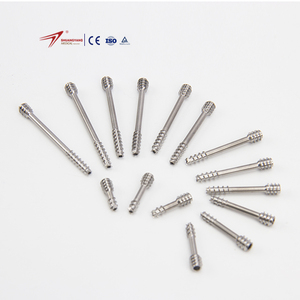
Trauma Surgery Compression Headless Bone Screws Titanium Herbert Screw
Contact Us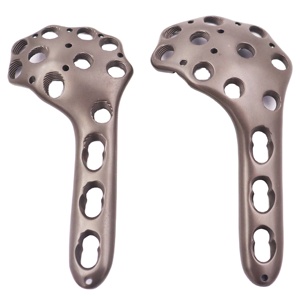
Orthopedic Implant Distal Femur Medial Condyle Titanium Locking Plate (L/R)
Contact Us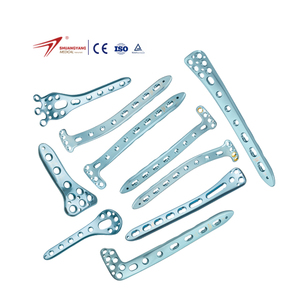
High Quality Orthopedic Trauma Implants Tibial Locking Plate For Tibia Bone
Contact Us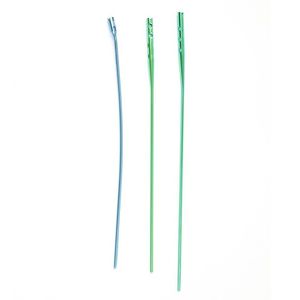
Premium Ulna Interlocking Intramedullary Nail Orthopedic Fixation Implant
Contact Us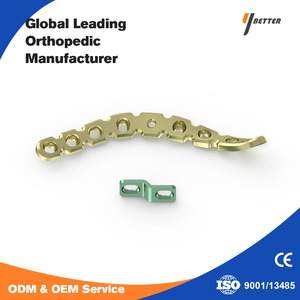
Thickness 3.2mm Titanium Anterior Column Pelvis Arc Reconstruction Plate
Contact Us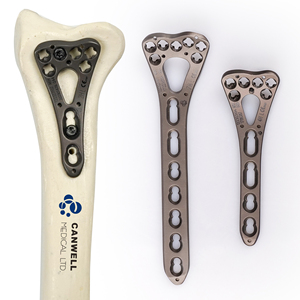
2.4 2.7mm VA Titanium Distal Palmar Radius Locking Plate Volar Wrist
Contact Us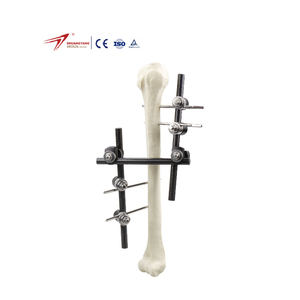
Stainless Steel and Aluminum Trauma AO Synthes Type External Fixator
Contact Us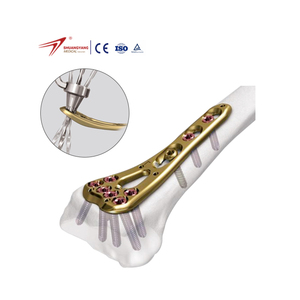
Titanium Implant Bone Fracture VA LCP Locking Plate For Distal Radius
Contact Us1. Global Executive Summary & Regulatory Paradigm under EU MDR (2017/745)
The international market for orthopedic implants and trauma surgical instruments is undergoing a dramatic structural evolution. Driven by an aging demographic, the rising incidence of high-energy traumatic injuries, and expanding access to advanced surgical care in emerging economies, global demand for orthopedic medical devices is projected to exceed USD 65 Billion by 2030. However, navigating the export landscape requires a sophisticated understanding of regulatory stringency, particularly regarding CE mark certification under the European Union Medical Device Regulation (EU MDR 2017/745).
Under the legacy Medical Device Directive (MDD 93/42/EEC), obtaining a CE certificate for Class IIb and Class III implants relied heavily on clinical equivalence data. The implementation of EU MDR has significantly elevated compliance hurdles, classifying joint replacements, spinal implants, and long-term osteosynthesis hardware under rigorous Class III clinical evaluation protocols. Notified Bodies now require exhaustive Post-Market Clinical Follow-up (PMCF), strict lot-to-lot traceability through Unique Device Identification (UDI) systems, and validated biocompatibility testing under ISO 10993 standards.
Information Gain Insight: Procurement directors and hospital procurement boards must verify that exporters hold valid EU MDR certificates issued by accredited Notified Bodies (such as TÜV SÜD, BSI, or DNV), backed by comprehensive Technical Documentation Files (TDF) containing dynamic fatigue testing data per ASTM F2193 and ISO 14801.
For international buyers—including healthcare distributors, government tenders, and private hospital networks—partnering with CE certified manufacturers is no longer merely a legal checkmark. It represents a fundamental guarantee of mechanical reliability, surface cleanliness (minimizing endotoxin levels below 20 EU/device), and material purity (grade 5 Eli Titanium ASTM F136 or PEEK-OPTIMA). This whitepaper provides a data-driven benchmark of the top 10 global CE-certified orthopedic implant manufacturers and exporters, establishing clear criteria for vendor evaluation and procurement optimization.
2. Top 10 CE Certified Orthopedic Implants Manufacturers & Exporters
The global vendor ecosystem consists of established tier-one multinational conglomerates alongside agile, high-capacity original equipment manufacturers (OEM/ODM) capable of supplying market-ready products with lower minimum order quantities (MOQ) and rapid custom production cycles.
Ortix Medical Devices Co., Ltd.
Specializing in comprehensive spine, trauma, joint, sports medicine, and CMF solutions. Operating a 60,000 m² state-of-the-art manufacturing facility equipped with over 450 precision CNC centers. Full ISO 13485 QMS and FDA registration with complete CE certification across Class IIb and III product lines.
DePuy Synthes (Johnson & Johnson)
A worldwide pioneer in trauma fixation plates, intramedullary nails, and joint reconstruction. Recognized for extensive clinical research and standard-setting AO Foundation collaboration, maintaining global regulatory certifications.
Stryker Corporation
Renowned for 3D-printed porous titanium implants (Tritanium technology) across hip, knee, and spine applications. Holds extensive CE and FDA approvals with an expansive global distribution network.
Zimmer Biomet
Dominates the global arthroplasty segment with advanced joint replacement implants, personalized surgical guides, and biomaterials. Fully certified under EU MDR for international distribution.
Smith & Nephew
UK-headquartered medical device leader producing high-performance trauma locking plates, intramedullary systems, and specialized arthroscopic sports medicine anchors certified for EU markets.
Medtronic Spinal & Biologics
Pioneers in minimally invasive spine surgery (MISS), thoracolumbar pedicle screw systems, and interbody fusion cages backed by robust clinical data and CE Mark validation.
Orthofix Medical Inc.
Specializes in external fixation systems, bone growth stimulation technologies, and complex spine reconstruction hardware with active export channels across Europe and Latin America.
Wright Medical / MicroPort Orthopedics
Focused on upper and lower extremity solutions, wrist plates, and ankle arthroplasty systems engineered under strict European quality standards.
Mathys AG Bettlach
Swiss manufacturer focused on synthetic bone graft substitutes, joint replacement implants, and ceramic hip articulation components meeting high European compliance standards.
Shuangyang Medical
Established manufacturer of maxillofacial, trauma plates, and titanium bone screw systems, serving international hospital distributors with CE and ISO certifications.
3. Enterprise Capabilities: Technical Benchmark of Ortix Medical
When selecting an overseas manufacturing partner, global buyers must audit production infrastructure, metallurgy testing capabilities, and OEM/ODM private-label capabilities. Ortix Medical Devices Co., Ltd. serves as a prime case study of an agile medical technology manufacturer bridging high-tier manufacturing with flexible procurement terms.
Advanced Metallurgy & Precision Milling
Utilizing medical-grade Titanium Alloy (Ti-6Al-4V ELI conforming to ASTM F136) and pure titanium (ASTM F67). Machined on 5-axis DMG MORI and Citizen Swiss CNC lathes ensuring tolerances within ±0.005mm.
Certified Cleanroom Packaging
Class 100,000 (ISO Class 8) cleanroom environment for ultrasonic washing, passivating, primary double-sterile pouch sealing, and Gamma/Ethylene Oxide (EO) sterilization validation.
Low-MOQ & Mixed SKU Consolidation
Eliminating traditional rigid minimum order quantities. Overseas importers can consolidate low-volume specialized plates, screws, intramedullary nails, and matching driver tool kits in a single shipment.
Complete Surgical Instrument Integration
A frequent pain point in orthopedic procurement is the discrepancy between implant tolerances and driver tool ergonomics. Ortix Medical supplies matched surgical instrument sets for every plate and screw system. Crafted from custom-hardened stainless steel (17-4PH, 420J2) and anodized aluminum holding cases, these instrument sets are built for hundreds of autoclave sterilization cycles, lowering intraoperative revision risks.
4. Strategic Future Procurement Trends in Orthopedic Implants
As healthcare procurement shifts from unit-price bargaining to total-cost-of-ownership (TCO) evaluation, several structural trends are reshaping how hospital networks and distributors source orthopedic hardware.
A. Decentralization of Manufacturing & OEM Diversification
Supply chain disruptions experienced over recent years have exposed the vulnerability of over-relying on single-source Western multinationals. B2B procurement managers are actively diversifying their vendor portfolios by establishing direct OEM/ODM partnerships with certified Asian manufacturing hubs. This dual-sourcing model reduces component costs by 30% to 50% while maintaining equivalent metallurgical and functional standards.
B. Shift Toward Modular & Variable-Angle Locking Technology
Fixed-angle locking compression plates (LCP) are rapidly being superseded by Variable-Angle (VA) locking systems. In distal radius, distal femur, and calcaneal fractures, surgeons require multi-directional screw placement (typically within a 30-degree cone) to target specific bone fragments without compromising construct rigidity. Exporters with robust VA technology catalogs are gaining significant market share in tender bids.
C. Digital Dossiers & Regulatory Transparency
Future-proof suppliers are expected to provide instant access to digital technical dossiers. This includes full material heat-number certificates, 3D STEP files for custom surgical planning, raw material mill sheets, and fatigue test reports (such as axial compression and 5-million-cycle dynamic bending strength). Distributors equipped with these documented proofs can register products with local ministries of health in half the traditional lead time.
5. Product Development & Biomechanical Innovation Trends
The convergence of material science, biomechanical engineering, and additive manufacturing is driving continuous innovation in bone fixation and spine surgery.
1. 3D-Printed Porous Titanium & Biomimetic Cages
Traditional solid PEEK or smooth titanium implants are increasingly being replaced by 3D-printed selective laser melting (SLM) porous structures. Featuring interconnected pore sizes between 400 to 700 microns and porosities exceeding 65%, these biomimetic scaffolds simulate natural trabecular bone modulus (reducing stress shielding) while accelerating direct osteointegration without needing external bone graft materials.
2. Bioabsorbable & Antibacterial Implant Surfaces
Post-operative infection remains one of the most critical complications in orthopedic surgery. Next-generation implant surfaces are incorporating nanostructured silver ions, iodine anodization, or bioabsorbable polymer coatings (such as PLGA loaded with antibiotics) that release antimicrobial agents over a 14-day window. Concurrently, magnesium alloy bioabsorbable screws for ACL repair and small bone fixation are advancing to eliminate secondary hardware removal surgeries.
3. Minimally Invasive (MIS) Percutaneous Fixation
Minimally invasive spinal pedicle screw systems and percutaneous intramedullary nailing are transforming trauma recovery times. Implants designed with low-profile heads, self-tapping lead threads, and streamlined percutaneous pass-through instruments allow surgeons to execute stable constructs through smaller skin incisions, minimizing soft tissue disruption and reducing intraoperative blood loss.
6. Frequently Asked Questions (FAQ) for Orthopedic Buyers
Addressing the technical, regulatory, and commercial inquiries routinely submitted by hospital purchasing directors and international medical device distributors.
What quality certifications are mandatory when importing orthopedic implants into the EU and Latin America?
For European Union importation, implants must hold valid CE Certification under EU MDR 2017/745 (issued by a recognized Notified Body) alongside ISO 13485:2016 Quality Management System certification. In Latin American markets (such as Brazil's ANVISA or Mexico's COFEPRIS), manufacturers must supply Free Sale Certificates (FSC), ISO 13485 certificates, raw material origin certificates, and full biocompatibility test reports per ISO 10993.
What is the typical Minimum Order Quantity (MOQ) for custom OEM laser-marked implants?
While traditional manufacturers demand MOQs of 500+ pieces per SKU, Ortix Medical supports low-MOQ programs. For customized laser marking (including distributor logo, custom catalog number, and UDI barcode), MOQs can start as low as 20 to 50 pieces per SKU, provided total order batch thresholds are met.
How do pure titanium (CP Ti) and titanium alloy (Ti-6Al-4V ELI) differ in trauma plate applications?
Commercially Pure Titanium (CP Grade 3/4) offers higher ductility, making it ideal for reconstructive plates (such as pelvic arc plates or maxillofacial mesh) that require intraoperative contouring and bending. Titanium Alloy (Ti-6Al-4V ELI / Grade 5 / ASTM F136) offers significantly higher tensile yield strength (≥860 MPa) and fatigue limit, making it the material of choice for load-bearing applications like distal femur locking plates, pedicle screws, and intramedullary nails.
Can surgical instrument kits be customized to match existing hospital tray standards?
Yes. Full ODM engineering services allow modification of driver handle couplings (AO quick-coupling, Hudson, or hex), depth gauge scales, drill bit flutes, and anodized aluminum sterilization box layouts to align with local surgeon preferences and hospital autoclave tray dimensions.
What documentation is provided to support local product registration?
Distributors receive a complete Regulatory Support Dossier containing ISO 13485 certificate copies, CE certificates, Certificate of Analysis (CoA), raw material mill test certificates (ISO 5832-3 / ASTM F136), mechanical static/fatigue testing reports, sterilizer validation reports, and dynamic CAD dimension diagrams.
7. Partnering with a Certified Global Manufacturer
As the medical device sector faces heightened regulatory scrutiny and evolving clinical demands, establishing a transparent, high-capacity manufacturing partnership is critical to market success. Ortix Medical Devices Co., Ltd. combines rigorous Swiss-grade precision machining, ISO 13485 and FDA cleanroom standards, comprehensive CE certification, and flexible B2B procurement terms. Whether expanding an established distributor catalog or launching a private-label trauma implant line, our engineering team provides end-to-end support from prototype sampling to international regulatory filing.
Request a Customized OEM/ODM Quote & Product Catalog
Connect directly with our global regulatory and medical export specialists. Evaluate sample kits, review technical compliance dossiers, and receive direct factory pricing within 24 hours.