Featured Surgical Implants & Instrument Systems
High-precision medical devices manufactured under ISO 13485 quality systems with complete technical documentation for global distribution.
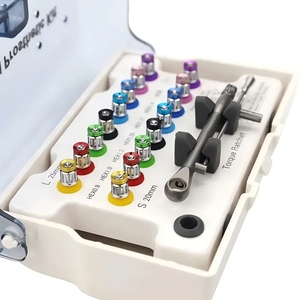
High Quality OrthoCare Medical Dental Surgical Implant Tool Box with CE Certificates
Contact Us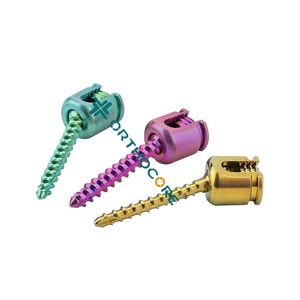
Orthopedic Implants for Large Animals Veterinary Spinal Screw
Contact Us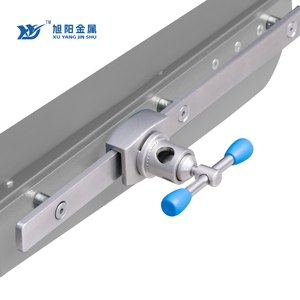
Medical Orthopedic Square-Hole External Fixator Precise Fixation Class I ISO13485 Certified 1 Year Warranty
Contact Us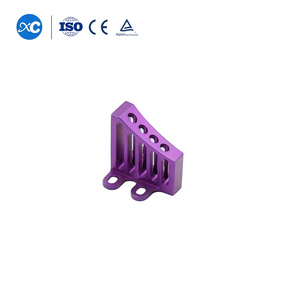
Premium Orthopedic Veterinary Trauma Implant Surgical Instrument - Titanium TTA Implant for Animal Orthopedic Trauma Surgery
Contact Us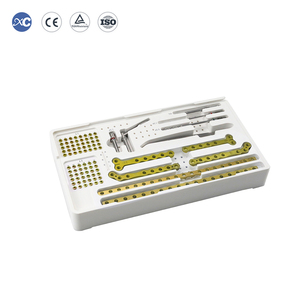
2025 OEM Veterinary Orthopedic Implants | Titanium 4.0mm ALPS Locking Screw & Bone Plates for Dog Surgery
Contact Us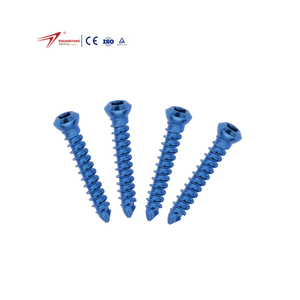
Shuangyang Medical Orthopedic Trauma Implants 2.0mm Titanium Orthopedic Cortex Screw - Quadrangle Design Prices Of Bone Screws
Contact Us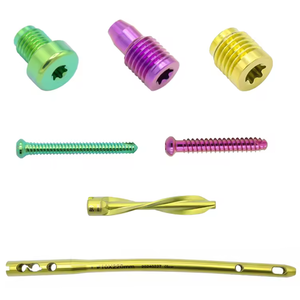
Orthopedic Trauma Screw System Full Set Titanium Surgical Implant Supplier with OEM Service
Contact Us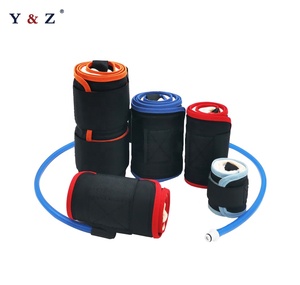
High Quality Orthopedic Pneumatic Tourniquet Cuff Electricity Powered ABS Reusable CE Certified OEM/ODM China Manufacturer
Contact UsNavigating the Global CE-Marked Orthopedic Implant Sourcing Ecosystem
The global orthopedic implant market is experiencing a profound paradigm shift driven by aging demographics, rising clinical expectations for early post-operative mobilization, and stringent international regulatory frameworks. Sourcing Class IIa, Class IIb, and Class III medical devices requires an exhaustive understanding of regulatory compliance, biocompatibility metrics, dynamic fatigue strength, and lot-to-lot manufacturing consistency.
Under the European Union’s MDR (EU) 2017/745 regulation, which superseded the older Medical Device Directive (MDD 93/42/EEC), the barrier for obtaining and maintaining CE mark certification has heightened significantly. Overseas distributors, hospital procurement boards, and private-label brand owners can no longer rely on superficial manufacturer declarations. Compliance under EU MDR demands robust Clinical Evaluation Reports (CER), rigorous Post-Market Surveillance (PMS), complete Unique Device Identification (UDI) system integration within EUDAMED, and unannounced annual audits of cleanroom facilities (ISO 14644-1 Class 7/8).
Core Procurement Insight: Partnering with a vetted supplier holding valid CE certification under EU MDR 2017/745 and ISO 13485:2016 ensures seamless customs clearance, mitigates product recall liabilities, and drastically accelerates national registration timelines across LATAM, Southeast Asia, the Middle East, and Europe.
Top 10 Evaluation Benchmarks for CE-Marked Implant Suppliers
When evaluating top-tier exporters of spinal, trauma, joint, and veterinary implant systems, global procurement teams must benchmark manufacturers across ten critical operational dimensions:
1. EU MDR & ISO 13485 Validation
Verification of Notified Body (NB) accreditation, scope of certification, and raw material certificates (MTC) proving compliance with ASTM F136 (Ti-6Al-4V ELI) or ISO 5832 specifications.
2. Metallurgical Biocompatibility
Utilization of implant-grade titanium, implantable PEEK-OPTIMA, and 316L VM stainless steel to prevent ion leaching, toxic cell responses, or early mechanical degradation.
3. CNC Machining Precision
High-precision Swiss-type multi-axis CNC turning and milling capable of maintaining dimensional tolerances within ±0.005mm for delicate thread structures and locking mechanisms.
4. Dynamic Biomechanical Testing
Comprehensive axial compression, static torsion, and cyclic fatigue testing according to ASTM F1717 (Spinal Constructs) and ASTM F382 (Metallic Bone Plates).
5. Full System Modular Complement
Ability to supply fully matched, ergonomic surgical instrument sets alongside implants, ensuring seamless intraoperative handling and reduced surgical complexity.
6. Advanced Surface Modifications
In-house capabilities for Type II Anodization, Micro-Arc Oxidation (MAO), Plasma-Sprayed Hydroxyapatite (HA) coating, and porous acid-etched surfaces for osseointegration.
7. OEM & ODM Customization Scope
Turnkey engineering support for custom laser etching, private-label sterile blister packaging, localized IFU translation, and proprietary implant geometries.
8. Low MOQ & Mixed SKU Agility
Flexible order structuring allowing regional distributors to bundle small quantities of trauma plates, intramedullary nails, and spinal cages into unified export consignments.
9. Complete Traceability & UDI
Rigorous batch and lot identification systems mapping every single finished implant back to its specific raw material billet melt number and CNC machining run.
10. Global Freight & Logistics Reliability
Established international cold-chain/sterile barrier packaging export protocols, ensuring fast customs clearance across all major international medical trade routes.
Material Metallurgy and Biomechanical Design Standards
The long-term clinical performance of orthopedic implants depends heavily on material selection and surface engineering. Modern reconstructive and fixation implants employ specific medical-grade alloys and polymers to meet structural and biological demands:
Titanium Alloy (Ti-6Al-4V ELI - ASTM F136)
Extra Low Interstitial (ELI) Titanium Alloy represents the gold standard for load-bearing trauma plates, pedicle screws, and joint prostheses. Titanium’s modulus of elasticity (~110 GPa) is vastly closer to natural cortical bone (~18 GPa) compared to stainless steel (~200 GPa), dramatically decreasing the risk of stress shielding—a phenomenon where rigid metal implants absorb physiological loads, causing adjacent bone density loss.
Polyetheretherketone (PEEK-OPTIMA)
Utilized extensively in interbody fusion cages and cranial reconstruction, PEEK offers radiolucency (allowing clear post-operative radiographic evaluation of bony bridging) and an elastic modulus (~3.6 GPa) closely matching cancellous bone. Modern PEEK constructs are frequently enhanced with plasma-sprayed titanium or 3D-printed porous titanium endplates to combine biomechanical flexibility with superior early-stage osseointegration.
316L VM Stainless Steel (ASTM F138)
Vacuum Melted (VM) 316L stainless steel remains a cost-effective, high-yield-strength option for temporary internal fixation devices, external fixator frames, and specialized veterinary surgical plates where exceptional ductility and high shear strength are required for fracture reduction.
| Material Type | Elastic Modulus (GPa) | Tensile Strength (MPa) | Radiolucency | Primary Surgical Indication |
|---|---|---|---|---|
| Ti-6Al-4V ELI | 110 GPa | ≥ 860 MPa | Radiopaque | Locking Plates, Pedicle Screws, IM Nails |
| PEEK-OPTIMA | 3.6 - 18 GPa | 170 MPa | Radiolucent | Spinal Cages, Cranial Reconstruction |
| 316L VM Steel | 200 GPa | ≥ 690 MPa | Radiopaque | External Fixators, K-Wires, Vet Trauma |
Future Procurement Trends in Orthopedic Manufacturing (2025–2030)
As hospital purchasing networks and independent distributors refine their supply chains, four structural trends are reshaping global device procurement:
Additive Manufacturing & 3D Porous Titanium Structures
Direct Metal Laser Sintering (DMLS) and Selective Laser Melting (SLM) are replacing traditional CNC subtractive manufacturing for complex spinal cages and acetabular cups. 3D-printed porous titanium features interconnected trabecular structures (pore size 300–600 μm, porosity 60–80%) that mimic natural cancellous bone, significantly promoting cellular attachment and rapid vascularized bone ingrowth.
Transition to Pre-Sterilized Single-Use Implant Kits
Hospitals globally are seeking to eliminate the high labor, water, and energy costs associated with central sterile supply department (CSSD) reprocessing. Exporters capable of supplying double-blister EO (Ethylene Oxide) or Gamma-sterilized implants packaged with single-use, color-coded disposable instruments are gaining market share rapidly in high-throughput ambulatory surgical centers (ASCs).
Expansion of Specialized Veterinary Orthopedics
Advanced veterinary surgery now mirror human clinical standards. Premium animal hospitals routinely perform Tibial Tuberosity Advancement (TTA), Advanced Locking Plate System (ALPS) procedures, and canine spinal stabilization. Suppliers offering dual human and veterinary production capabilities provide distributors with broader market reach and higher margin diversity.
Vendor Consolidation & One-Stop OEM Ecosystems
Procurement directors are shifting away from fragmented multi-vendor supply chains in favor of integrated manufacturers capable of delivering comprehensive catalogs across spine, trauma, joint, sports medicine, CMF, power tools, and external fixation. Single-sourcing minimizes vendor management overhead, harmonizes shipping logistics, and maximizes volume rebates.
Why Global Procurement Partners Choose Ortix Medical
Ortix Medical Devices Co., Ltd. operates as a leading manufacturer and direct exporter of standardized and customized orthopedic implant systems. Designed to serve regional distributors, hospital group buyers, and OEM brand holders worldwide, Ortix Medical bridges the gap between high-precision engineering and competitive global pricing.
Integrated Manufacturing Scale
Our 60,000 m² state-of-the-art manufacturing facility houses over 450 advanced CNC machining centers, Swiss automatic lathes, and wire-EDM machines, producing approximately 20,000 certified units per day to ensure stable lead times.
Rigorous QA/QC Testing Lab
Our in-house certified mechanical testing laboratory performs continuous static, dynamic, torque, and surface roughness evaluations. Every production batch is backed by full raw material mill certificates and lot-level inspection logs.
Turnkey OEM / ODM Program
Supported by an R&D team of 70+ experienced biomedical engineers, we provide complete private-label manufacturing—including custom laser marking, specialized anodization color coding, customized box design, and technical dossier creation.
Frequently Asked Questions by International Buyers
Key technical, regulatory, and supply chain queries addressed by our regulatory compliance and export team:
What quality certifications and regulatory documents does Ortix Medical hold?
Ortix Medical operates strictly under an ISO 13485:2016 certified Quality Management System and holds U.S. FDA establishment registration. Product lines carry CE mark certifications under European medical device regulations. For qualified distributors, we supply complete Technical Dossiers, Material Test Certificates (MTCs), Biocompatibility Reports (ISO 10993), Sterilization Validation Reports, and Clinical Evaluation Summaries to support rapid local health authority registration.
What is the Minimum Order Quantity (MOQ) policy for mixed-SKU shipments?
We maintain highly flexible order policies to accommodate both established brand owners and emerging market distributors. We support low MOQ initial evaluation orders and mixed-SKU inventory building, allowing buyers to consolidate spine pedicle screws, trauma locking plates, intramedullary nails, and surgical instrument kits within a single export shipment.
Can Ortix Medical manufacture custom implant geometries and private-label products?
Yes. Our dedicated OEM/ODM engineering department provides end-to-end support, including 3D CAD modeling, rapid prototyping, finite element analysis (FEA), custom tooling fabrication, surface anodization, laser marking of logos/catalog numbers, and sterile barrier blister packaging customized to your market’s branding guidelines.
How does Ortix Medical ensure raw material quality and lot traceability?
All raw materials—including titanium alloy rods, PEEK polymers, and stainless steel bars—are sourced exclusively from certified global suppliers with complete heat-lot traceability. Each material batch undergoes spectroscopic chemistry analysis and tensile testing upon receipt. Every finished implant is etched with a unique batch number, linking it directly back to its specific production lot and raw material melt certificate.
What are the standard delivery lead times for catalog items versus OEM projects?
Standard catalog items maintained in our central warehouse typical ship within 7 to 14 business days following order confirmation. Custom OEM/ODM manufacturing projects, which require specialized tooling, prototype sample sign-off, and customized packaging, follow a structured milestone timeline ranging from 30 to 45 calendar days.
Are matched surgical instrument sets included with implant systems?
Yes. Every implant family—including anterior cervical plates, thoracolumbar pedicle screw constructs, trauma locking plates, intramedullary nails, and veterinary TTA systems—is supported by fully dedicated, ergonomic surgical instrument trays designed for seamless intraoperative execution and repeated autoclave sterilization.
Partner with a Certified Global Orthopedic Exporter
Elevate your medical product portfolio with CE-marked, ISO 13485 certified orthopedic implant systems. Contact our international export engineering team today to request product catalogs, sample evaluation packages, or custom OEM manufacturing quotations.