Featured Medical-Grade Orthopedic Implants & Systems
Precision-engineered trauma, spine, dental, and veterinary implants manufactured under strict ISO 13485 and FDA registered quality management standards.
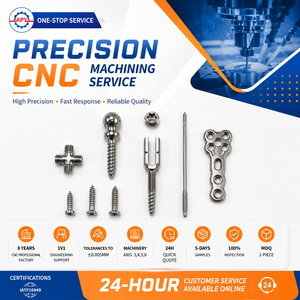
Precision CNC Machined Orthopedic Titanium Bone Screws & Spinal Fixation Parts
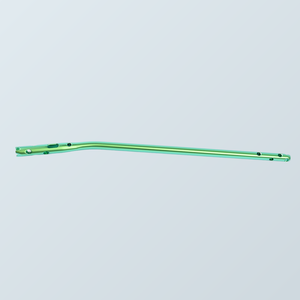
Titanium Tibia Interlocking Intramedullary Nail System for Trauma Fracture Fixation
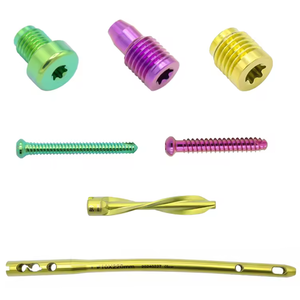
Full Set Titanium Orthopedic Trauma Screw & Plate Surgical System
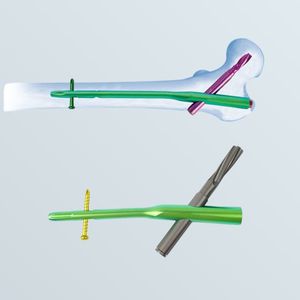
Premium PFNA Proximal Femoral Intramedullary Nail for Intertrochanteric Fractures
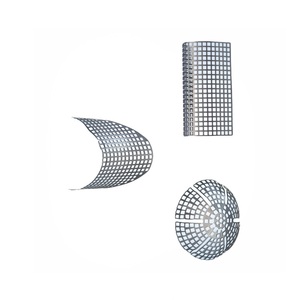
Hospital-Grade Titanium Alloy Mesh Systems for Vertebral & Structural Reconstruction
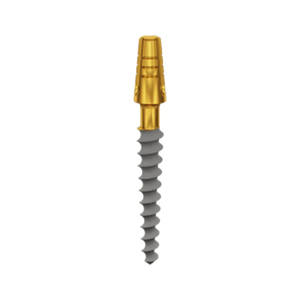
Sterile-Packaged Tissue Level Titanium Alloy Dental Implant System
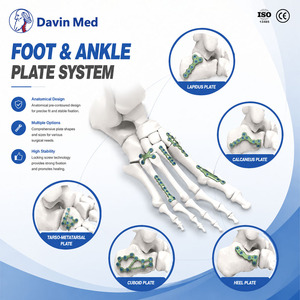
3.5mm Calcaneal Circumferential Locking Compression Plate for Complex Heel Fixation
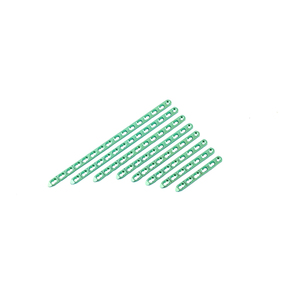
ORTHOCORE 2.0mm Titanium Veterinary Locking Compression Plate (LCP) System
Navigating the Global Sourcing Landscape for Orthopedic Medical Implants
An authoritative analysis on supplier selection criteria, regulatory auditing standards, and OEM contract manufacturing strategies for medical device distributors and hospital chains.
The global market for orthopedic implants—spanning spinal reconstruction systems, trauma internal fixation hardware, total joint replacement prostheses, and craniomaxillofacial (CMF) devices—is undergoing a profound transformation. Driven by stringent international regulatory overhauls (such as the European Union Medical Device Regulation 2017/745 [EU MDR] and the US FDA's intensified Quality System Regulation [QSR] 21 CFR Part 820), global procurement directors, hospital buying consortiums, and medical device distributors are re-evaluating their sourcing strategies.
Historically, global procurement focused heavily on unit price acquisition. However, in the modern post-pandemic supply chain landscape, Total Cost of Ownership (TCO), regulatory audit trail completeness, material traceability (ASTM F136 Ti-6Al-4V ELI & ISO 5832-3 compliance), and lot-to-lot dimensional reproducibility have become the defining metrics for vendor selection. Procurement directors can no longer afford supply chain disruptions, non-conformance recalls, or documentation deficiencies that block product registration with local health authorities.
This comprehensive whitepaper evaluates the top sourcing agent models, contract manufacturers, and OEM/ODM engineering suppliers operating within the global orthopedic sector. It serves as an executive roadmap for identifying high-capability manufacturing partners who bridge the gap between high-precision bio-engineering and cost-effective commercial scale.
Essential Audit Benchmarks for Sourcing Orthopedic Manufacturers
Evaluating contract manufacturers requires rigorous auditing across engineering capability, metallurgical validation, and quality management systems.
Certified Quality Systems (QMS)
Top-tier suppliers must maintain ISO 13485:2016 certifications alongside active U.S. FDA Establishment Registrations. Quality systems must include full Risk Management (ISO 14971), Process Validation (IQ/OQ/PQ) for all CNC machining, cleaning, and sterile packaging lines, and strict CAPA protocols.
Metallurgical & Material Integrity
Medical implants demand uncompromised raw materials. Reliable vendors utilize certified medical titanium alloys (Ti-6Al-4V ELI / Grade 23), Implant-Grade PEEK (Polyetheretherketone), and 316L Stainless Steel sourced with raw material mill test certificates (MTC) traceably linked to every finished lot.
Advanced CNC Machining Engine
Manufacturing sub-millimeter thread pitches and anatomical contours requires Swiss-type multi-axis CNC automatic lathes (e.g., Citizen, Tsugami) and 5-axis high-speed milling centers capable of maintaining tolerances within ±0.005mm consistently across large-volume production runs.
Future Procurement Trends in Orthopedic Device Manufacturing (2025–2030)
The landscape of medical device procurement is shifting rapidly from fragmented vendor purchasing toward consolidated strategic OEM/ODM contracting. Sourcing agents and contract manufacturing partners are now evaluated on their ability to deliver end-to-end supply chain integration. The following macro trends define the strategic roadmap for orthopedic implant sourcing over the coming decade:
1. Rise of Flexible Hybrid Sourcing (Low MOQ & Mixed SKU Agility)
Historically, contract manufacturers imposed massive minimum order quantities (MOQs) per single item code, forcing distributors to hold excessive capital in slow-moving inventory sizes (such as extreme length locking plates or specialized pedicle screw diameters). Modern procurement leaders are aggressively shifting toward suppliers that support low MOQ and mixed-SKU ordering models. This flexibility allows distributors to purchase fully configured surgical tray sets—combining plates, screws, intramedullary nails, and matching instrumentation in one consolidated shipment—drastically improving working capital liquidity.
2. Vertical Integration: Implants + Surgical Instrument Kits
An implant is only as reliable as the instrument system used to deploy it. Hospitals and surgeons demand seamless tactile feedback during insertion, precise drill guide alignment, and zero driver-screw head stripping. Leading manufacturers no longer export loose implants in isolation; they provide fully validated, color-coded, autoclavable instrument tray sets customized specifically for each implant geometry. Sourcing agents who offer unified implant-instrument contract manufacturing drastically reduce intraoperative complications and line-item sourcing friction.
3. Regulatory Technical File Support for International Registration
Gaining market authorization in emerging markets across Latin America, Southeast Asia, the Middle East, and Eastern Europe requires extensive technical documentation. High-value OEM partners supply qualified distributors with complete Technical Documentation Files (TDF), including ISO 10993 biocompatibility testing, mechanical fatigue test reports per ASTM F1717 / ASTM F543 standards, shelf-life validation data, and packaging integrity validations. This regulatory support cuts local product registration timelines from years down to months.
| Evaluation Vector | Direct Contract Manufacturer (e.g., Ortix Medical) | Traditional Trading Agent | Tier-1 Western Multinational |
|---|---|---|---|
| Cost Structure | Direct Factory Pricing (High Margin Potential) | Broker Commission Markup (+20-35%) | Premium Monopoly Pricing (Highest TCO) |
| Quality System Control | In-House ISO 13485 & FDA Audited Lines | Third-Party Sub-Contractor Reliance | In-House Strict Control |
| Customization & OEM/ODM | Dedicated R&D Engineering (Laser/IFU/Design) | Limited / Depends on Middleman Communication | Rigid Standard Catalog Only |
| MOQ & Inventory Flexibility | Low MOQ, Mixed-SKU Custom Trays | Variable / Supplier Dependent | Extremely High Volume Commitments |
| Material Traceability | Full Heat-Lot Mill Certificates (Ti-6Al-4V ELI) | Inconsistent Documentation Trails | Full Documentation Trails |
Technological Innovations in Implant Metallurgy & Surface Finishing
Understanding material science breakthroughs that enhance osseointegration, reduce stress shielding, and improve biomechanical longevity.
Surface Modification: Type II & III Anodization
Electrochemical surface treatments play a vital role in implant longevity. Type II Anodization (grey/dark micro-surface enrichment) significantly increases titanium surface fatigue resistance and reduces fretting corrosion in modular interfaces like pedicle screw heads and trauma locking plates. Type III Anodization (vibrant color-coding) allows surgeons to rapidly identify screw diameters intraoperatively, minimizing surgical duration and reducing technical error risks.
PEEK vs. 3D Printed Porous Titanium Cages
In spinal interbody fusion, material selection dictates mechanical behavior. Radiolucent PEEK implants closely match the elastic modulus of cortical bone, reducing stress shielding. Concurrently, additive manufacturing (3D printed porous titanium cages with trabecular lattice geometries) promotes direct cellular bone ingrowth (osseointegration) without the need for extensive bone grafting. Modern OEM contract manufacturers must possess dual capabilities in both PEEK precision machining and 3D titanium additive processing.
Why Ortix Medical Devices Co., Ltd. Leads Global Contract Manufacturing
Combining massive industrial scale, certified cleanroom environments, and dedicated engineering consultation for global distributors.
60,000 m² Production Base
Operating over 450 advanced CNC machining centers, automated inspection stations, and wire EDM machinery, capable of producing over 20,000 implant units daily to satisfy large-scale government tenders and distributor orders.
ISO 13485 & FDA Registered
Fully documented Quality Management System (QMS) compliant with international regulations. Includes cleanroom packaging (ISO Class 7/8), Ethylene Oxide (EO) sterilization, and complete lot traceability from raw billet to sterile box.
Turnkey OEM / ODM Program
Dedicated in-house R&D team of 70+ bio-engineers offering custom laser marking, localized box branding, bespoke surgical tool modifications, and comprehensive technical file construction for rapid market entry.
Frequently Asked Sourcing & Technical Questions
Clear answers to the critical technical, quality, and commercial inquiries raised by international medical device buyers.
Q: What quality certifications and regulatory audit documents does Ortix Medical supply?
Ortix Medical operates under an ISO 13485:2016 certified quality system and maintains active U.S. FDA establishment registration. For product registration in local markets, we supply qualified distributors with complete documentation packs, including Raw Material Mill Certificates (ASTM F136 / ASTM F138), Biocompatibility Reports (ISO 10993), Mechanical Fatigue Testing Summaries (ASTM F1717 / ASTM F543), Sterilization Validation Reports, and Instructions for Use (IFU) artwork.
Q: What is the Minimum Order Quantity (MOQ) and how are mixed-SKU shipments handled?
We support distributor growth by accommodating low MOQs and flexible mixed-SKU orders. Rather than forcing high minimums per individual screw size or plate length, distributors can combine trauma plates, cannulated screws, intramedullary nails, spine cages, and matching instrument sets within a single consolidated purchase order to streamline shipping and inventory management.
Q: Can Ortix Medical support full OEM private label branding and customized instrument box design?
Yes. Our in-house engineering team provides complete OEM/ODM solutions. This includes high-precision fiber laser marking for your brand logo and part numbers directly onto the implants, custom color anodization for size identification, bespoke aluminum surgical tray laser etching, and custom outer packaging design compliant with international UDI and labeling guidelines.
Q: How are evaluation samples requested for hospital surgeon trials?
Qualified medical device distributors and hospital procurement teams can apply for evaluation sample kits through our Free Sample Program. Sample kits allow surgical teams to evaluate tactile driver engagement, surface finishing quality, thread pitch smooth-fitting, and instrument container layout prior to placing commercial bulk orders.
Q: What are the standard lead times for catalog inventory vs. custom OEM projects?
Standard catalog items (such as core trauma screw sets and standard spine pedicle screw systems) are typically dispatched within 7 to 15 working days thanks to our 60,000 m² facility's continuous output. Custom OEM projects—requiring novel prototype machining, custom tooling creation, or specialized sterile pouch packaging—follow a strict milestone schedule generally completed in 30 to 45 days.
Partner with a Trusted Global Orthopedic Implant Manufacturer
Connect directly with our senior bio-engineering sales team to discuss factory pricing, request sample evaluation kits, or receive a complete OEM supply chain quotation for your region.