Featured White Label Orthopedic Systems & Componentry
Standardized catalog and OEM customizable hardware optimized for orthopedic tenders, surgical distributors, and clinical device brands worldwide.
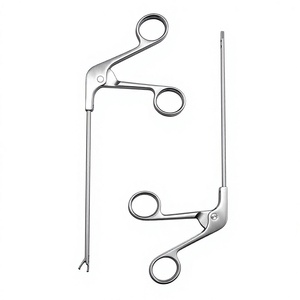
OEM 203mm Arthroscopy Grasping Forceps Serrated Jaw Stainless Steel Surgical Instrument
German medical-grade 316L stainless steel arthroscopic forceps featuring anti-glare passivation and ergonomic tactile response.
Send an Inquiry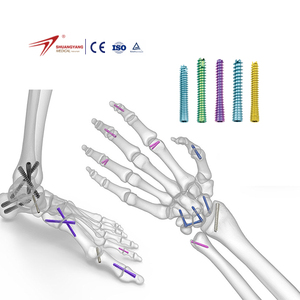
Shuangyang Price Titanium Orthopedic Screws Herbert Cannulated Compression Screw
Headless cannulated compression screws engineered from Grade 5 Ti-6Al-4V ELI for micro-fracture stabilization and scaphoid fixation.
Send an Inquiry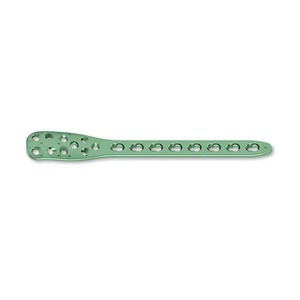
Wholesale Orthopedic Implants Export Quality Surgical Implant & Instrument Portfolio
ISO 13485 certified full-spectrum trauma, spine, and joint implant hardware built for tender compliance and contract manufacturing.
Send an Inquiry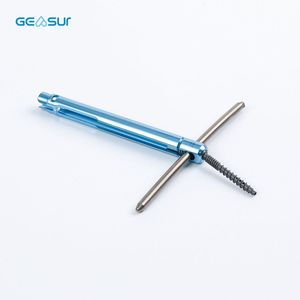
5.5 Titanium Minimally Invasive Pedicle Screw Set For Posterior Spinal Fixation
Low-profile MIS thoracolumbar spinal instrumentation system featuring polyaxial friction-head screws and self-tapping threads.
Send an Inquiry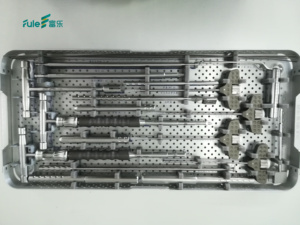
High Quality Orthopedic Surgical Implants & Interventional Materials MIS Instrument
Interventional surgical toolkits designed for precise percutaneous placement with reduced tissue trauma and fast intraoperative workflow.
Send an Inquiry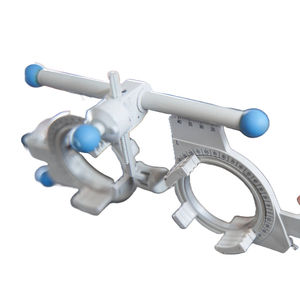
Contract Manufacturing For Clinical Device Hardware Medical Grade Componentry
Micron-level CNC Swiss lathe turning and multi-axis milling CDMO services for custom surgical instruments and titanium implants.
Send an Inquiry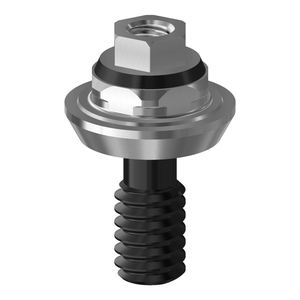
Dental Implant Compatible Parts Internal Connection Titanium Healing Abutment
Multi-platform compatible restorative titanium abutments machined with sub-5 micron hex connection accuracy for optimal osseointegration.
Send an Inquiry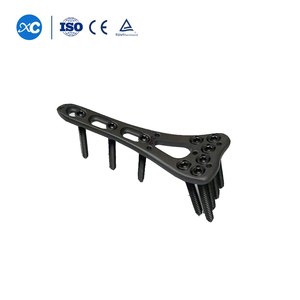
CE Approved Proximal Humerus Locking Bone Plate Titanium Orthopedic Implant
Anatomically pre-contoured titanium locking plate system providing stable angular compression for complex humerus fractures.
Send an InquiryGlobal Dynamics of White Label Orthopedic Manufacturing
An in-depth analysis of supply chain architecture, quality assurance protocols, and OEM procurement strategies for modern medical device distributors.
The Paradigm Shift to OEM/CDMO Orthopedic Sourcing
The global orthopedic devices market—encompassing spinal reconstruction, trauma internal fixation, arthroscopy, and joint replacement—is undergoing a structural transition toward contract manufacturing (CDMO) and white label partnerships. Tier-1 healthcare distributors and hospital procurement networks are increasingly moving away from sole reliance on legacy Western OEMs. Instead, they are establishing direct manufacturing channels with specialized contract factories that possess robust ISO 13485:2016 quality management systems and US FDA establishment registrations.
White label manufacturing enables brand owners and regional exporters to gain immediate market access, optimize bill-of-materials (BOM) costs by 35% to 55%, and maintain full control over pricing strategy without sacrificing biomechanical reliability or surface integrity. However, navigating the international contract manufacturing landscape requires strict evaluation of metallurgical purity, CNC machining precision, passivation compliance, cleanroom assembly standards, and comprehensive regulatory technical files (DHF/DMR).
Regulatory Rigor
Full alignment with US FDA 21 CFR Part 820, EU MDR (2017/745) Class IIa/IIb/III certifications, ensuring rapid local product registration and tender eligibility.
Biomechanical Excellence
Rigorous dynamic fatigue testing (ISO 14801, ASTM F543) ensuring implants withstand multi-million cycle load demands without structural micro-fractures.
Micron-Level Precision
Utilization of 9-axis CNC Swiss lathe technology delivering sub-2-micron machining tolerances for intricate locking mechanisms and thread pitches.
10-Point Qualification Criteria for Orthopedic Exporters
How top-tier medical device buyers assess supplier maturity, metallurgical grade integrity, and contract production scale.
| Assessment Criteria | Standard Requirement | White Label Industry Benchmark | Ortix Medical Capabilities |
|---|---|---|---|
| Raw Material Grade | ASTM F136 Ti-6Al-4V ELI / ASTM F138 316LVM | Certified Mill Test Reports (MTR) per batch | 100% Traceable US/European standard raw stock |
| Machining Accuracy | ISO 2768-mK / Micron tolerances | ± 0.005 mm on thread geometries | ± 0.002 mm via 9-axis Swiss CNC Lathes |
| Surface Passivation | ASTM F86 Nitric / Citric Passivation | Type II Anodization & Electropolishing | Automated ultrasonic washing & Type II Anodization |
| Cleanroom Packaging | ISO 14644-1 Class 7 / Class 8 Cleanroom | Double sterile blister pouch option | ISO Class 7 Cleanroom packaging with Tyvek sealing |
| Traceability System | UDI (Unique Device Identification) Direct Mark | Laser etched GS1-128 Matrix | Fiber laser marking for UDI lot-to-lot traceability |
| Minimum Order (MOQ) | Flexible batching for regional distributors | 50 - 100 sets per SKU family | Low MOQ mixed-SKU ordering architecture |
Deep-Dive Technical Analysis of Surgical Instrument Families
Understanding the biomechanical requirements, metallurgical specifications, and surgical applications of leading white-label product systems.
1. Arthroscopic & MIS Instrumentation
Arthroscopic procedures demand high torsional stability and tactile responsiveness within confined intra-articular spaces. Instruments such as the OEM 203mm Arthroscopy Grasping Forceps utilize custom-hardened 17-4PH or 316L surgical stainless steel for jaw articulation.
- Anti-glare bead-blasted surface treatment
- Flushable irrigation lumens for easy sterilization
- Serrated jaw geometry designed for tissue retention
2. Spinal Fixation Rod-Screw Constructs
Pedicle screw systems represent the core of thoracolumbar spinal stabilization. The 5.5mm Titanium MIS Pedicle Screw Set integrates friction-head polyaxial screw architecture allowing up to 50 degrees of angulation during percutaneous insertion.
- Ti-6Al-4V ELI alloy with anodic oxide coating
- Dual-lead thread design accelerating insertion speed
- Compatible with minimally invasive extension towers
3. Trauma Internal Fixation Plates & Screws
Anatomically contoured locking compression plates (LCP)—such as the Proximal Humerus Locking Bone Plate—utilize combi-holes allowing both angular stable locking and axial compression within a single construct.
- Low-profile design to minimize soft-tissue impingement
- K-wire fixation holes for temporary intraoperative reduction
- Tapered plate ends enabling sub-muscular insertion
4. Cannulated & Micro-Compression Screws
Herbert screw designs deliver interfragmentary compression without head prominence. The Herbert Titanium Cannulated Compression Screw features differential thread pitches between the distal and proximal ends.
- Cannulated core for precise guide-wire insertion
- Self-tapping, self-drilling flute design
- Ideal for scaphoid fractures and intra-articular osteotomies
5. Dental & Cranio-Maxillofacial (CMF)
CMF and dental components require extreme micro-machining tolerances. Multi-platform Titanium Healing Abutments utilize high-purity Grade 5 titanium to support mucosal emergence profiles.
- Sub-5 micron internal connection hexagon seating
- Biocompatible color-anodized height indicators
- Precision-milled mirror finish on soft-tissue contact zones
6. Custom Contract Hardware & CDMO
Contract device hardware manufacturing encompasses complex mechanical assemblies, power tool accessories, external fixator pins, and specialized surgical trial instruments tailored to partner specifications.
- Rapid DFM (Design for Manufacturability) turnarounds
- Custom laser etching for private labeling
- Comprehensive validation protocol support (IQ/OQ/PQ)
Future Procurement Trends & Technological Evolution
Emerging innovations reshaping white-label contract manufacturing, surgical robotics integration, and sustainable medical logistics.
3D Additive Manufacturing & PEEK
Transition toward Electron Beam Melting (EBM) titanium trabecular structures and radiolucent PEEK cages with micro-porous bony ingrowth surfaces.
Navigation & Robotics Readiness
Instrumentation pre-calibrated with optical tracking arrays and sensor arrays for seamless integration with surgical robotic platforms.
Single-Use & Hybrid Kits
Growing demand for pre-sterilized, single-use surgical instrument kits that eliminate hospital autoclave costs and cross-contamination risks.
Ortix Medical Enterprise Strengths & Production Infrastructure
Inside our modern 60,000 m² smart manufacturing base dedicated to contract manufacturing and OEM distribution.
End-to-End Contract Manufacturing Capabilities
Ortix Medical Devices Co., Ltd. serves as a trusted global manufacturer and CDMO partner for spine, trauma, joint, sports medicine, and CMF implants. By combining a vast machinery park of over 450 advanced CNC turning centers, Swiss-type multi-axis lathes, and 5-axis machining centers, we support fast production scaling while protecting strict quality parameters. Every implant batch undergoes 3D Coordinate Measuring Machine (CMM) validation, optical profile analysis, and dynamic stress testing within our certified testing lab prior to release.
Frequently Asked Questions (FAQ)
Essential guidance for procurement directors, tender managers, and OEM device brands.
What quality certifications does Ortix Medical hold for white label exports?
Ortix Medical manufactures under an ISO 13485 certified quality management system and is establishment-registered with the US FDA. We provide complete regulatory support documentation—including Material Test Reports (MTR), biocompatibility reports (ISO 10993), sterilization validation, and CE MDR technical file data—to support seamless local product registration for international distributors.
What is the minimum order quantity (MOQ) for custom OEM and white label implants?
We offer flexible low-MOQ structures that accommodate both growing regional distributors and high-volume tender orders. Importers can combine mixed SKUs—such as pedicle screws, locking plates, intramedullary nails, and matching instrument sets—within a single consolidated shipment to optimize inventory turnover.
Does Ortix Medical support complete custom OEM/ODM tool and implant development?
Yes. Our team of over 70 R&D engineers supports full-lifecycle OEM/ODM projects. This includes CAD/CAM design modeling, Design for Manufacturability (DFM) optimization, rapid prototype machining, custom laser marking (logo and UDI barcode), custom packaging layout, and localized IFU artwork development.
How are samples evaluated before moving to commercial volume contracts?
Qualified medical distributors and hospital procurement teams can request evaluation samples through our Free Sample initiative. This allows surgical advisory boards to inspect surface passivation finishes, dimension tolerances, thread engagement, and ergonomic handling before placing bulk manufacturing orders.
What is the typical production and export delivery timeline?
With an active capacity of approximately 20,000 units per day across 450+ production machines, standard catalog implants and instruments ship within accelerated windows. Custom OEM projects follow a structured milestone schedule covering sample approval, initial pilot batch runs, cleanroom packaging, and final export dispatch.