Precision Orthopedic Implants & Surgical Systems Showcase
Explore our FDA-registered, ISO 13485-certified internal fixation systems engineered for superior biomechanical stability and anatomical conformity.
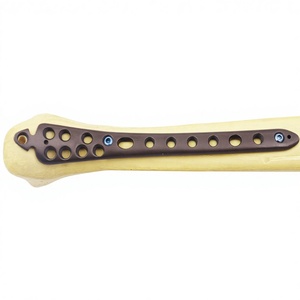
Orthopedic Titanium Trauma Implant Distal Tibial Medial Locking Plate
Anatomically contoured Ti-6Al-4V ELI plate featuring combi-holes for dual internal fixation options in complex distal tibia fracture reduction.
Get Catalog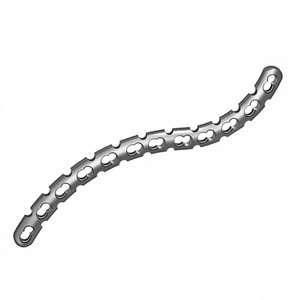
Titanium Distal Clavicle Locking Plates OEM/ODM System
Ultra-low profile anatomical implant with divergent screw placement and suture eyelets for optimized soft-tissue reattachment and acromial clearance.
Get Catalog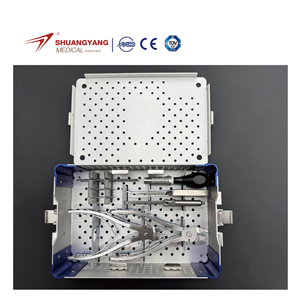
Orthognathic Implant System & Maxillofacial Surgery Instruments
High-precision 1.5mm/2.0mm titanium micro-plate set designed for orthognathic alignment, Le Fort osteotomies, and craniomaxillofacial reconstruction.
Get Catalog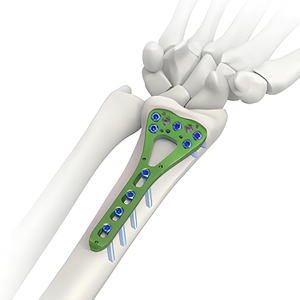
Multi-Axial Poly-Axial Distal Radius Pure Titanium Locking Plate
Variable-angle locking mechanism allowing ±15° screw trajectory adaptation for optimal subchondral support in comminuted distal radius fractures.
Get Catalog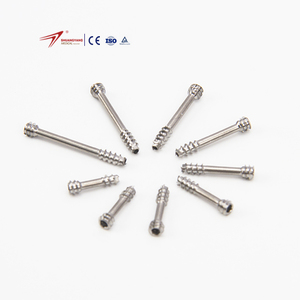
Titanium Herbert Headless Compression Cannulated Screw
Variable-pitch differential thread geometry designed to provide interfragmentary compression for scaphoid fractures and osteochondral osteotomies.
Get Catalog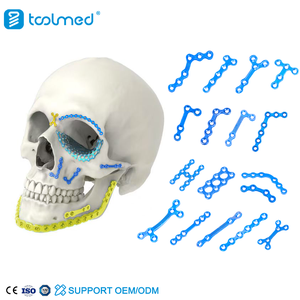
CMF 2.0mm Rectangle Craniomaxillofacial Titanium Locking Plate
Rigid rectangle frame construct engineered for structural re-establishment of midface trauma and load-bearing orthognathic bone stabilization.
Get Catalog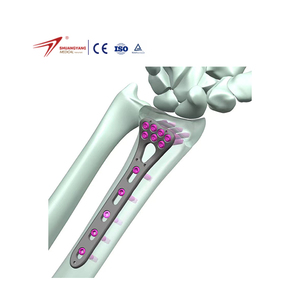
Multi-Axial Distal Radius Locking Plate & Screw Surgical Kit
Comprehensive trauma fixation kit combining pre-contoured volar plates, self-tapping locking screws, and color-coded surgical drill guides.
Get Catalog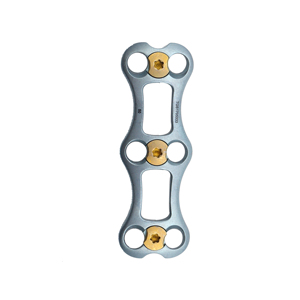
Medical Titanium Anterior Cervical Spine Locking Plate System
Ultra-slim profile anterior cervical fixation plate with integrated tactile screw-locking mechanism and expansive graft visualization windows.
Get CatalogIndustry White Paper: Manufacturing Excellence in Medical-Grade Orthopedic Implants
As healthcare systems globally navigate rising surgical volumes and tighter procurement budgets, sourcing orthopedic implants from a validated, FDA-registered manufacturing partner in China has evolved from a simple cost-reduction tactic into a core strategic supply chain pillar. Modern orthopedic trauma, spinal fusion, joint replacement, and craniomaxillofacial (CMF) devices demand uncompromising biomechanical precision, raw material purity, and rigorous regulatory compliance.
1. Advanced Metallurgy & Bio-Compatible Material Science
Our manufacturing complex utilizes exclusively certified implant-grade raw materials sourced from audited global suppliers. Every titanium bar, PEEK rod, and stainless steel heat batch undergoes chemical composition spectroscopy, ultrasonic flaw detection, and microstructural analysis prior to precision machining:
- Ti-6Al-4V ELI (Extra Low Interstitial) Titanium Alloy (ASTM F136 / ISO 5832-3): Superior fracture toughness, high strength-to-weight ratio, and excellent biocompatibility for trauma locking plates, intramedullary nails, and pedicle screws.
- Commercially Pure Titanium (CP Grade 2 & 4 per ASTM F67): Optimized for maxillofacial plating and cranial mesh where localized ductility and intraoperative plate bending are clinically required.
- PEEK-OPTIMA™ Natural & HA-Enhanced Polymers (Invibio): Radiolucent biomaterial exhibiting an elastic modulus closely matching natural human cortical bone (3.6 GPa), ideal for cervical and thoracolumbar interbody fusion cages.
- Medical-Grade 316L Stainless Steel (ASTM F138 / ISO 5832-1): Selected for high torsional resistance trauma screws and budget-sensitive global tender requirements.
2. Precision Machining, Cleanroom Environment & Surface Engineering
Outfitted with over 450 state-of-the-art CNC machine units—including Japanese Star Swiss-type automatic lathes and German DMG MORI 5-axis machining centers—our factory achieves surface roughness parameters down to Ra 0.2 µm. Specialized surface treatments include Type II anodization (micro-arc oxidation) for enhanced corrosion barrier protection, electropolishing to minimize soft tissue adhesion, and porous plasma spraying to accelerate osseointegration.
Final cleaning and sterile barrier assembly take place inside validated ISO Class 7 (Class 10,000) cleanrooms. Automated ultrasonic multi-stage washing with reverse osmosis deionized water eliminates microscopic particulate residues, guaranteeing compliance with stringent pyrogen and endotoxin cleanliness standards.
3. Global Quality Management & Regulatory Compliance Infrastructure
Our quality management system is fully certified under ISO 13485:2016 and routinely audited by accredited international notified bodies. Furthermore, our establishment is registered with the United States Food and Drug Administration (U.S. FDA), enabling global distributors to streamline their local product registration dossiers using comprehensive technical files (STED format), biocompatibility reports (ISO 10993 series), and validated sterilization reports.
Core Capabilities & OEM/ODM Partnership Advantages
Why international hospital networks, medical device brands, and regional distributors trust our industrial ecosystem for OEM and ODM contracts.
Full-Spectrum Product Portfolio
One-stop procurement encompassing spine, trauma, joint, CMF, sports medicine implants, external fixators, medical power tools, and ergonomic surgical instrument trays.
Turnkey OEM & ODM Services
Complete private-label custom laser marking, specialized blister packaging, localized Instruction For Use (IFU) layout, and rapid custom tooling CAD/CAM execution.
Low MOQ & Flexible Mixed Batches
Lower financial risk for regional distributors by offering low Minimum Order Quantities (MOQs) with mixed SKU consolidation in single shipments.
Robust Global Logistics & Lead Times
High daily output of 20,000 units backed by strategic safety buffers guarantees 15-to-30 day dispatch times for custom contracts and rapid replenishment for standard catalog items.
Strategic Forecast: Future Procurement Trends in Orthopedic Implants (2025–2030)
The global orthopedic market is entering a pivotal transition phase driven by aging populations, expansion of healthcare infrastructure in emerging economies, and rapid convergence of digital surgical planning with implant manufacturing. Procurement executives must align with forward-looking factories capable of adapting to these four major trends:
Trend 1: Accelerated Adoption of 3D-Printed Porous Titanium Scaffolds
Traditional machined metallic implants are increasingly giving way to additive manufacturing (Direct Metal Laser Sintering - DMLS). 3D-printed titanium implants feature interconnected porous trabecular structures (porosity 60% to 80%, pore size 300–600 µm) that mimic human cancellous bone. This biological scaffold eliminates the risk of coating delamination and significantly accelerates early osteointegration in spinal fusion cages and complex acetabular cups.
Trend 2: Mandatory Digital Traceability & Unique Device Identification (UDI)
Regulatory authorities worldwide—including the U.S. FDA, European EMA, and China NMPA—are enforcing comprehensive UDI tracking across all Class II and Class III medical devices. Procurement contracts now demand direct high-resolution fiber-laser 2D DataMatrix marking on implants and surgical instruments. Factory traceability must connect every individual screw back to its raw material heat lot, CNC operator log, micro-hardness test report, and sterilization batch.
Trend 3: Value-Based Sourcing & Hospital Supply Chain Consolidation
Hospitals and surgical centers are shifting away from fragmented vendor arrangements toward strategic consolidation. Buyers seek high-capacity direct manufacturers capable of delivering comprehensive product suites—such as pairing an Anterior Cervical Plate with matching PEEK cages and disposable drill bits. Consolidating vendors reduces freight overhead, simplifies administrative compliance, and ensures uniform instrument ergonomics for surgical teams.
Trend 4: Integration of Robotics & Navigation-Ready Surgical Tooling
With computer-assisted orthopedic surgery (CAOS) and robotic surgical arms expanding globally, implant design must integrate tight dimensional tolerance controls. Pedicle screw heads, drill sleeves, and anatomical plates require precise optical tracking markers and uniform geometric datum points to interface seamlessly with surgical navigation systems during minimally invasive surgery (MIS).
Technological Innovations & Next-Gen R&D Horizons
Our engineering laboratory actively advances biomaterial science, finite element analysis (FEA), and surface engineering to elevate clinical outcomes.
FEA-Optimized Biomechanics
Utilizing 3D Finite Element Analysis (FEA) to simulate complex intra-body loading, strain distribution, and fatigue limits, ensuring optimal stress shielding prevention.
Bioactive Surface Coatings
Advanced Hydroxyapatite (HA) plasma spraying and micro-arc anodization techniques engineered to improve bone-implant interface bonding and cellular response.
Patient-Specific Implants (PSI)
Translating 3D CT/MRI DICOM datasets directly into customized CMF reconstructions, cranial plates, and complex revision tumor prostheses.
MIS & Cannulated Tool Sets
Developing ergonomic, color-coded, minimally invasive surgical (MIS) instrumentation kits that reduce operating room time and incision size.
Frequently Asked Sourcing & Technical Questions (FAQ)
Clear, transparent answers regarding quality assurance, FDA documentation, custom branding, and shipping logistics for global B2B procurement partners.
Partner with a Leading China FDA-Registered Implant Manufacturer
Request our comprehensive 2025 product catalog, technical registration dossiers, and direct factory quotation for your target distribution market.
Get Catalog