Featured Implants & Systems
High-Demand Orthopedic Implant Systems for Global Sourcing
Explore our premium core catalog, precision-engineered from medical grade Ti-6Al-4V ELI titanium alloy and 316L surgical stainless steel. Complete with matched surgical instrument sets for instant clinical integration.
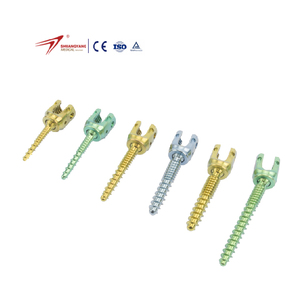
Shuangyang High Quality Meditech Orthopedic Implants Wholesale Titanium Alloy Polyaxial Pedicle Screw
- Material: ASTM F136 Ti-6Al-4V ELI
- Dual-thread design for rapid insertion
- ±50° polyaxial head angle flexibility
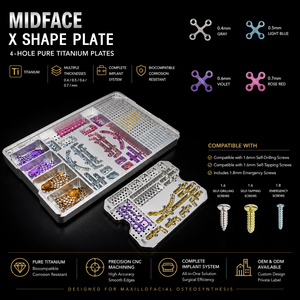
OEM & ODM Available Medical Titanium X Plate Maxillofacial Implant For Facial Reconstruction Orthopedic Implant Application
- Ultra-low profile (1.0mm - 1.5mm)
- Pure Titanium Grade 2 / Grade 4
- Anodized color coding system
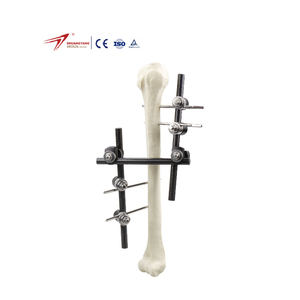
Shuangyang Orthopedic Implant New Innovation with Stainless Steel and Aluminum for Trauma Use AO Synthes Type External Fixator
- Radiolucent carbon fiber connection rods
- Snap-on multi-pin clamp fixation
- High stability for acute trauma cases
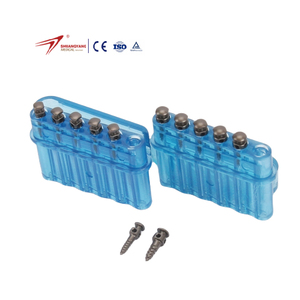
Shuangyang Orthodontic Screw Implant Higher Quality Product In Implants & Interventional Materials
- Micro-screw diameter (1.4mm - 2.0mm)
- Self-drilling and self-tapping tip
- Biocompatible Ti6Al4V alloy structure
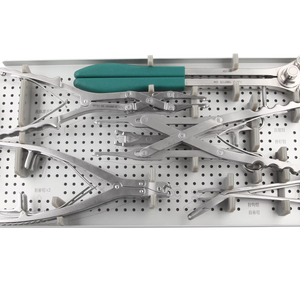
COX 6.0 Screw & Rod System Class I Implant Instruments for Orthopedic Surgery
- 6.0mm diameter titanium alloy rod
- Top-loading, self-locking set screw
- Ergonomic surgical instrument tray
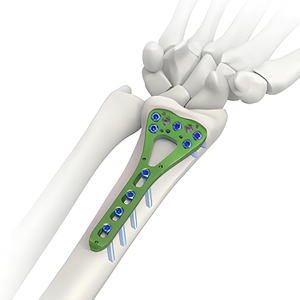
Orthopedic Trauma Implant Multi-axial Locking Plate Pure Titanium Distal Radius Medial Fracture Bone Fixation MDR/ISO 13485
- Variable angle locking technology (±15°)
- Anatomically contoured fit
- Complying with CE MDR & ISO 13485
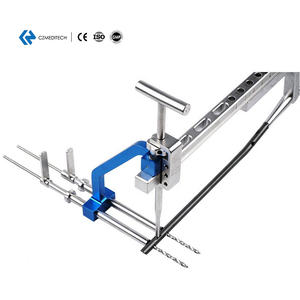
Tibial Intramedullary Nail Titanium Stainless Steel Orthopedic Trauma Implant for Tibia Fracture Fixation Custom Laser Mark
- Herzog bend for minimal articular insertion
- Multi-planar proximal & distal locking
- Laser etching for OEM batch tracking
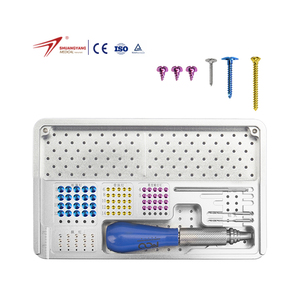
New Product GBR System Guided Bone Regeneration Titanium Screw Implant Kit Surgical Dental Tool Instrument Dental Implant
- Complete membrane fixation screw kit
- Micro-thread engagement geometry
- Autoclavable aluminum storage box
Strategic B2B Sourcing Guide
Evaluating Top China Orthopedic Implant Distribution Partners
A Data-Driven Whitepaper for Procurement Officers, Regional Distributors, and OEM Brand Holders.
The global orthopedic implants market is undergoing a structural transformation driven by rising surgical volumes, aging populations, and tightening healthcare procurement budgets. For international medical device distributors, finding a trusted orthopedic manufacturing partner in China is no longer merely about low unit cost—it is about securing scalable production capacity, strict regulatory alignment (CE MDR, FDA 510k, ISO 13485), absolute lot-to-lot traceability, and swift customization support.
1. Comparative Analysis: China Manufacturing vs. Legacy Tier-1 Suppliers
To help distribution procurement directors evaluate supplier partnerships, the table below contrasts China's top OEM/ODM manufacturing ecosystems with conventional European and North American suppliers across major operational metrics:
| Evaluation Metric | Top China OEM/ODM Partners (e.g., Ortix/Shuangyang) | Traditional Tier-1 US/EU Manufacturers | Strategic Advantage for Distributors |
|---|---|---|---|
| Manufacturing Capacity | 60,000 m² Facility | 450+ CNC Machines (~20,000 units/day) | High, but prioritized for direct-sales channels | Scalable supply preventing inventory stockouts |
| Minimum Order Quantity (MOQ) | Low & Mixed-SKU Orders Supported | High volume commitments required per SKU | Conserves working capital; supports long-tail sizes |
| OEM / ODM Customization | In-house R&D (70+ Engineers), rapid prototyping in 2-3 weeks | Slow custom design cycles, restrictive private labeling | Faster market entry with local customer requirements |
| Cost-to-Quality Ratio | Medical Grade Ti-6Al-4V ELI at 40%-60% cost efficiency | Premium pricing with high overhead margins | Higher profit margins for tender bidding |
| Regulatory Support Dossier | Full ISO 13485, FDA Registered, CE MDR tech dossiers | Complete, but locked behind local branch offices | Direct access to raw data & testing reports for local registration |
Manufacturing Excellence
State-of-the-Art Infrastructure & Quality Architecture
Operating out of a 60,000 m² modern manufacturing hub equipped with 450+ high-precision Japanese and German CNC machining centers.
Swiss-Type CNC Machining
Utilizing high-end DMG MORI 5-axis machining centers and Citizen Swiss-type lathes capable of achieving tolerances down to ±0.005mm for complex pedicle screws and intra-medullary locking channels.
Rigorous Biomechanical QC
Every implant lot undergoes comprehensive static shear, axial pull-out, torsional fatigue, and dynamic bending endurance tests according to ASTM F1717, ASTM F543, and ASTM F382 protocols.
ISO Class 8 Cleanroom Packaging
Cleanroom washing, ultrasonic passivating, micro-arc anodizing, and double aseptic blister pouch sealing under Class 100,000 (ISO Class 8) controlled environments ensuring bioburden-free sterilization compliance.
100% Raw Material Traceability
Exclusive use of certified medical-grade titanium (ISO 5832-3 / ASTM F136) and stainless steel (ISO 5832-1). Chemical composition and mechanical heat certificates are attached to every batch shipment.
Market Strategy
Global Procurement & Supply Chain Trends for Orthopedic Implants
Key Macro Trends Reshaping How Medical Importers and Distributors Manage Inventory, Tender Bidding, and Supplier Alliances.
1. Decentralization & Demand for Low-MOQ, Mixed-SKU Agility
Historically, orthopedic distributors were forced into rigid annual volume commitments by Western multinational brands. However, global market dynamics—particularly in Latin America, Southeast Asia, the Middle East, and Eastern Europe—are driving distributors toward agile inventory models. Importers require flexible factory partners that accept mixed-SKU shipments, allowing them to stock high-demand screw diameters and locking plate lengths without over-allocating capital to slow-moving sizes.
2. Value-Based Healthcare & Tender Competitive Pressures
National health authorities worldwide are adopting Volume-Based Procurement (VBP) and public tender mechanisms to control surgical costs. Under these competitive pricing structures, traditional premium-priced implants face margin compression. Top Chinese orthopedic implant manufacturers provide distributors with an optimal balance: premium metallurgical quality paired with competitive unit economics. This enables distribution partners to secure public hospital tenders while preserving healthy operating margins.
3. Complete Solution Sourcing (Implants + Customized Tool Kits)
Modern surgical teams demand complete systems rather than standalone implants. Procurement trends reveal a rapid transition toward bundled purchasing: an implant set must be accompanied by intuitive, color-coded, autoclavable instrument trays. Leading China manufacturers provide customized laser etching, color-anodized instrument handles, and modular aluminum cases that enhance surgical efficiency and reduce intraoperative assembly errors.
Innovation Frontier
Next-Generation Engineering Trends in Orthopedic Manufacturing
Discover How Advanced Materials, Additive Manufacturing, and Bioactive Surfaces are Elevating Clinical Outcomes.
Additive Manufacturing & 3D Porous Structures
Direct Metal Laser Sintering (DMLS) in titanium alloy allows the fabrication of biomimetic porous trabecular surfaces. Trabecular titanium fusion cages and joint interfaces closely mimic natural cancellous bone elastic modulus (1.5 - 3.0 GPa), drastically lowering stress shielding and accelerating bony in-growth without relying heavily on autologous bone grafting.
Advanced Surface Modifications & Antimicrobial Coatings
Surface treatment has evolved beyond simple Type II anodization. Modern manufacturing integrates micro-arc oxidation (MAO) and hydroxyapatite (HA) plasma spraying onto pedicle screws and intramedullary nails. Furthermore, silver ion deposition techniques provide localized antimicrobial barrier protection, reducing surgical site infection (SSI) risks in acute trauma and open fracture fixations.
Low-Profile & Anatomical Pre-Contoured Geometries
In maxillofacial reconstruction, distal radius, and anterior cervical procedures, soft tissue irritation remains a primary clinical complication. Next-generation trauma locking plates feature ultra-low-profile plate-screw interfaces with chamfered edges and pre-shaped anatomical contours based on 3D CT bone databases, cutting operating room bending time by up to 35%.
Partnership Blueprint
5-Step OEM / ODM Customization Process for Importers
A Seamless, Transparent Path from Conceptual Design to Market Distribution.
Requirements & Dossier
Initial engineering consultation to analyze market specs, targeted implant dimensions, raw material needs, and local regulatory dossiers.
CAD & FEA Simulation
3D CAD drafting and Finite Element Analysis (FEA) testing to model stress distribution, pull-out force, and fatigue limit under physiological loads.
Prototype & Evaluation
Rapid CNC machining of evaluation samples for clinical fitting, surgeon feedback, and mechanical bench verification within 14-21 business days.
Tooling & Mass QC
Production line setup under ISO 13485 control. In-line optical measurement and 100% thread gauge verification across all production lots.
Branding & Logistics
Private label laser marking, sterile or non-sterile custom packaging, IFU layout, and export customs clearance documentation support.
Distributor FAQ
Frequently Asked Questions by Medical Procurement Directors
Addressing Crucial Questions Regarding Quality Certification, Minimum Orders, Testing Reports, and Lead Times.
We manufacture strictly under an ISO 13485-certified Quality Management System and maintain active FDA establishment registration. For international distributors preparing local health authority registration (such as ANVISA, SFDA, MoH, or CE MDR markets), we supply comprehensive Technical Files, including Raw Material Mill Certificates, Biocompatibility Test Reports (ISO 10993), Mechanical Fatigue Test Reports (ASTM F1717 / ASTM F382), Sterilization Validation Dossiers, and Instructions for Use (IFUs).
We recognize that building market presence requires flexibility. We support low MOQ and mixed-SKU starter orders, enabling distributors to combine trauma plates, pedicle screws, intramedullary nails, micro-screws, and instrument sets within a single shipment. Custom OEM private labeling projects have dedicated MOQ tiers depending on specific packaging and laser marking requirements.
Yes. Our in-house R&D team consists of over 70 experienced biomedical and mechanical engineers. Utilizing advanced CAD/CAM software and 5-axis CNC machining, we can modify plate contours, alter thread pitch profiles, engineer custom instrument handles, or develop complete implant systems tailored specifically to your regional clinical preferences.
We source only high-grade, certified implant materials. Titanium implants utilize ASTM F136 Ti-6Al-4V ELI (Extra Low Interstitial) alloy or Grade 2/Grade 4 pure titanium for CMF plates. Stainless steel implants are fabricated from high-grade implant-quality 316L (ASTM F138 / ISO 5832-1). Spinal interbody cages also utilize medical-grade PEEK (Polyetheretherketone) per ASTM F2026.
Standard catalog items maintained in inventory typically ship within 7 to 14 business days. Bulk replenishment orders requiring standard manufacturing take approximately 25 to 35 days. Custom OEM projects—including sample prototyping, mechanical testing, and customized blister packaging design—generally follow an agreed 45 to 60-day schedule.
All surgical instrument sets (drills, taps, drivers, benders, quick-coupling handles, and depth gauges) are engineered concurrently with their corresponding implant systems. Every batch undergoes physical fitting and insertion verification before shipment to guarantee flawless intraoperative tool engagement and zero tolerance slop.
Partner with China's Premier Orthopedic Implant Manufacturer Today
Elevate your local distribution portfolio with ISO 13485 & FDA-registered spine, trauma, CMF, and dental implant systems. Contact our international export specialists to request catalogs, price lists, or evaluation samples.