Export Portfolio
Featured China Manufactured Orthopedic Systems
Precision-engineered titanium implants, stainless steel trauma systems, and specialized surgical instrument sets manufactured under ISO 13485 and FDA registered quality management systems.
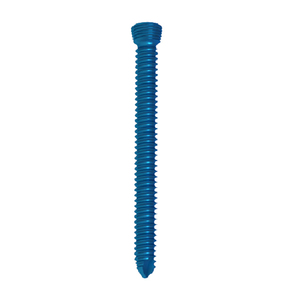
High Quality Orthopedic Implant Set Intramedullary Nail Implant for Humerus Multidimensional Locking Metal Medical Supplies
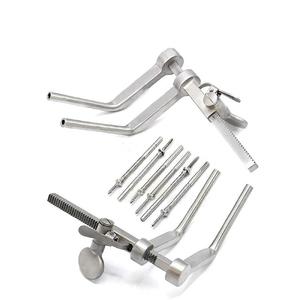
Hot Sale Caspar Style Distractor Spine Orthopedic Implant Instruments Set Quality Approved Steel Material
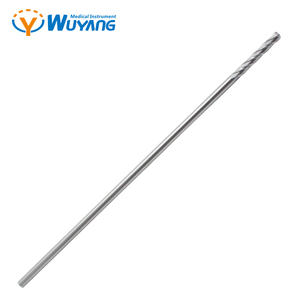
Wuyang Medical Stainless Steel Hollow Drill Bit Cannulated Drill Bit Orthopedic Trauma Implant Hollow Nail Instrument Set China
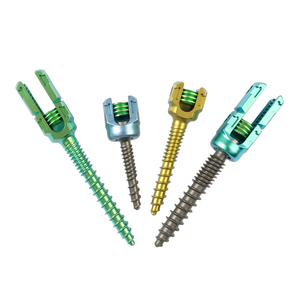
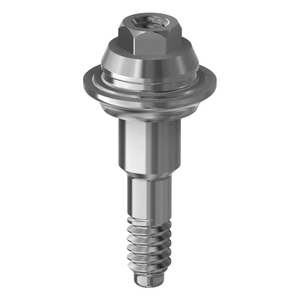
Orthopedic Pedicle Screw Titanium Internal Drive Connection Compatible Universal Spinal Fixation System Precision
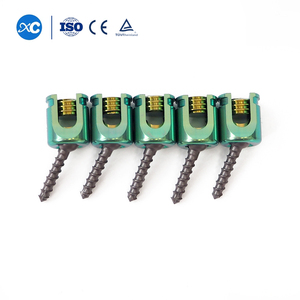
Distributor Price Titanium Columna Vertebral Pedicle Screw Spine Implants Orhtopedic for Spine Surgery
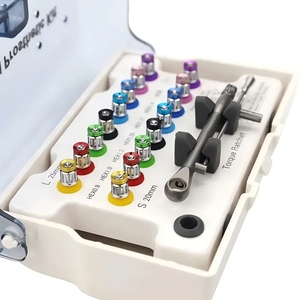
High Quality OrthoCare Medical Dental Surgical Implant Tool Box with CE Certificates
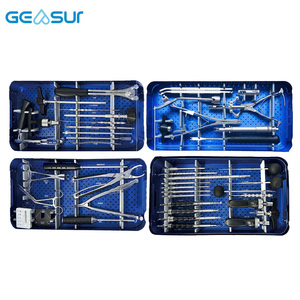
Orthopedic Implant Spinal Pedicle Screw Instruments Set Spine 5.5 System
Manufacturing Excellence
Industrial Scale & Quality Architecture
Operating from a state-of-the-art 60,000 m² production complex equipped with 450+ multi-axis CNC machining centers, our factory yields over 20,000 certified units daily to sustain global supply continuity.
60,000m²
Manufacturing Infrastructure
450+
Precision CNC Machines
70+
In-House R&D Engineers
20,000/day
Implant Production Capacity
ISO 13485 & FDA Compliance
Every lot undergoes rigorous dimensional, fatigue, and metallurgical audit. Full material certificates (MTR) and raw material heat-trace logs are furnished with every shipment.
OEM & ODM Private Labeling
From custom laser marking and micro-etched UDI barcodes to specialized tray layout and customized Instructions for Use (IFU), we accelerate your local market branding.
Low MOQ & High-Mix Orders
Consolidate your procurement across spine pedicle screws, intramedullary nails, trauma plates, and sports medicine anchors into a single optimized container export.
Industry White Paper
Strategic Analysis: China's Role in Global Orthopedic Implant Manufacturing
The global demand for high-performance surgical devices—specifically spinal fixation systems, trauma internal fixators, and total joint replacements—is undergoing an unprecedented structural shift. Healthcare systems across North America, Latin America, Europe, Asia-Pacific, and the Middle East are challenged by escalating hospital operating expenses and expanding surgical volumes driven by aging demographics. Within this landscape, leading Chinese medical device exporters and OEM/ODM factories have evolved from low-cost component suppliers into technologically advanced manufacturing partners equipped with end-to-end quality assurance systems, ultra-precise Swiss-type lathes, and additive 3D titanium printing capabilities.
For international procurement directors, healthcare tender managers, and regional orthopedic distributors, identifying a reliable supply partner in China requires evaluating technological capabilities, biocompatibility compliance, regulatory dossier support, and lot-to-lot structural consistency.
Key Strategic Takeaway: Tier-1 Chinese exporters like Ortix Medical combine certified ISO 13485 quality frameworks with high-throughput Swiss CNC machining (450+ units), reducing procurement costs by 30% to 50% without compromising pull-out strength, fatigue life, or biocompatibility standards defined by ASTM F136 and ISO 5832-3.
1. Metallurgy & Material Engineering Trends in Orthopedic Implants
Biomedical material performance determines intraoperative success and long-term implant survival. Leading Chinese exporters utilize medical-grade raw materials sourced under strict heat-lot verification protocols:
- Titanium Alloy (Ti-6Al-4V ELI - ASTM F136 / ISO 5832-3): Extra Low Interstitial (ELI) titanium remains the gold standard for posterior thoracolumbar pedicle screw systems, cervical plates, and trauma locking plates. Its modulus of elasticity (~110 GPa) is substantially closer to human cortical bone than stainless steel, reducing stress shielding while exhibiting exceptional corrosion resistance and fatigue life exceeding 5,000,000 cycles under axial loading.
- Polyetheretherketone (PEEK Optima): Widely utilized in interbody fusion cages (ACDF, PLIF, TLIF, XLIF), medical-grade PEEK offers a elastic modulus (3.6 GPa) closely matching cancellous bone. Its radiolucent property allows non-invasive radiographical assessment of bone graft maturation without artifact distortion on CT or MRI scans.
- Surgical Stainless Steel (316L / 316LVM - ASTM F138): Preferred in regional healthcare tenders for cost-sensitive trauma cases, high-nickel 316LVM vacuum-melted stainless steel provides high ultimate tensile strength for temporary internal fixation components including Kirschner wires, cannulated screws, and heavy-duty external fixator rods.
- Cobalt-Chromium Alloys (CoCrMo - ASTM F75): Employed in load-bearing femoral heads and articular total knee joint constructs due to superior scratch resistance, polished micro-smooth surface finish (Ra < 0.02 µm), and minimal wear debris generation.
2. Technological Innovations: 3D-Printed Porous Titanium & Surface Treatments
Modern Chinese implant factories are leading the integration of additive manufacturing (Direct Metal Laser Sintering - DMLS / Electron Beam Melting - EBM). By printing 3D trabecular bone matrices directly into titanium fusion cages and acetabular cups, engineers construct porous architectures with 60%–80% porosity and interconnecting pore diameters ranging between 300 to 600 microns. This micro-topography accelerates early cellular attachment, osteoblast migration, and physiological vascularization.
Furthermore, advanced surface engineering treatments—such as Type II Anodization (increasing surface hardness and friction coefficient on pedicle screw threads), Hydroxyapatite (HA) Plasma Spraying, and Micro-Arc Oxidation (MAO)—are deployed to optimize mechanical interlocking at the bone-implant interface, drastically reducing implant migration and late revision rates.
Biomechanical & Clinical Specification Matrix
| Implant Material | Standard Compliance | Yield Strength (MPa) | Modulus (GPa) | Primary Surgical Applications |
|---|---|---|---|---|
| Ti-6Al-4V ELI Grade 5 | ASTM F136 / ISO 5832-3 | ≥ 795 MPa | 110 GPa | Pedicle Screws, Trauma Locking Plates, Intramedullary Nails |
| PEEK Optima LT1 | ASTM F2026 | ≥ 90 MPa | 3.6 GPa | ACDF Cages, PLIF/TLIF Lumbar Cages, Cranial Plates |
| 316LVM Stainless Steel | ASTM F138 / ISO 5832-1 | ≥ 690 MPa | 200 GPa | Cannulated Screws, K-Wires, Trauma Bone Plates |
| Co-Cr-Mo Alloy | ASTM F75 / ISO 5832-4 | ≥ 450 MPa | 220 GPa | Femoral Components, Total Knee Replacement Joints |
3. Future Procurement & Sourcing Trends for Global Distributors
Procuring medical devices from international factories requires navigating complex regulatory barriers, freight logistics, and quality assurance protocols. Distributors operating across South America, Southeast Asia, Africa, and Eastern Europe are adopting four key strategic purchasing trends:
- Consolidation of Product Lines under One Factory Source: Sourcing spine, trauma, joint, sports medicine, CMF, and power tools from a single manufacturing partner reduces container freight expenses, minimizes vendor audit costs, and unifies customs clearance document processing.
- Demand for Complete Surgical Instrument Tray Compatibility: Implants cannot be placed without specialized, ergonomic instruments. Top China factories supply custom-fitted, autoclavable instrument sets—such as Caspar style distractors, torque-limiting screwdrivers, cannulated drills, and depth gauges—ensuring seamless intraoperative workflow.
- OEM/ODM Private Label Prototyping: Distributors building proprietary brand equity leverage Chinese engineering departments (such as Ortix Medical's 70+ engineer team) to perform custom CAD modifications, FEA stress simulations, rapid prototyping, and custom laser marking within 4 to 6 weeks.
- Full Regulatory Dossier Support for Local Ministry of Health (MOH) Registration: Leading exporters supply complete Technical Files (TF), ISO 13485 audit certificates, sterilization validation reports (ISO 11137), biocompatibility evaluation reports (ISO 10993), and CE/FDA registration documentation required for national public hospital tenders.
OEM/ODM Customization Timeline & Quality Inspection Flow
| Project Phase | Core Technical Deliverables | Standard Lead Time | Quality Assurance Benchmark |
|---|---|---|---|
| 1. Engineering & CAD Design | 3D CAD Modeling, FEA Stress Analysis, Drawing Sign-off | 1 - 2 Weeks | Biomechanical load distribution verification |
| 2. Prototype & Mechanical Testing | CNC Sample Prototyping, Static & Dynamic Fatigue Test | 2 - 3 Weeks | ASTM F1717 (Spine) & ASTM F1264 (Nails) standards |
| 3. Pilot Production & Tooling | Precision Machining, Surface Anodizing, Laser Marking | 2 Weeks | Optical CMM 100% dimensional tolerance check |
| 4. Packaging & Sterilization | Cleanroom Tyvek Sealing, UDI Barcoding, IFU Printing | 1 Week | ISO 11607 sterile barrier integrity testing |
Procurement FAQ
Frequently Asked Questions by Medical Device Buyers
Essential technical and commercial answers for hospital buyers, tender managers, and medical device distributors qualifying Chinese orthopedic factories.
What quality certifications and regulatory documents do top China orthopedic factories hold?
Leading exporters such as Ortix Medical operate under strict ISO 13485 certified Quality Management Systems and maintain U.S. FDA establishment registrations. To support distributors in local product registration with Ministry of Health (MOH) authorities, qualified factories provide complete documentation packages including Certificates of Free Sale (CFS), Raw Material Mill Test Certificates (MTR for Ti-6Al-4V ELI and PEEK), ISO 10993 Biocompatibility Test Reports, ASTM F1717 spinal fatigue test summaries, and sterilization validation dossiers under ISO 11137.
What is the standard Minimum Order Quantity (MOQ) for custom OEM orthopedic implants?
To support emerging distributors building initial inventory, top manufacturers offer flexible, low-MOQ programs. Standard catalog implants (such as pedicle screws, locking plates, and intramedullary nails) can be ordered in mixed-SKU batches starting at just 10 to 50 units per size. For custom OEM projects requiring dedicated laser etching, specialized color anodization, or private-label packaging, specific minimum lot sizes apply based on machine setup parameters.
How do Chinese factories ensure lot-to-lot dimensional precision and material consistency?
Quality control relies on high-precision manufacturing infrastructure. Operating 450+ multi-axis CNC Swiss-type automatic lathes and 5-axis machining centers, component tolerances are strictly maintained within ±0.005 mm. Automated Coordinate Measuring Machines (CMM), optical profile projectors, and 100% thread gauge verification are performed at raw material receiving, in-process machining, post-anodization, and cleanroom packaging stages.
Can distributors order surgical evaluation samples prior to executing bulk tender contracts?
Yes. Qualified medical distributors, orthopedic surgeons, and tender procurement agencies can request evaluation samples and non-sterile demo instrument kits. Sample packages allow surgical teams to evaluate tactile feedback, thread engagement smoothness, driver coupling security, instrument tray ergonomics, and surface finishing before issuing bulk purchase orders.
What are the standard production lead times and global delivery channels?
Standard catalog items maintained in buffer stock ship within 5 to 7 business days following order confirmation. Larger production runs of specialized sizes or high-volume OEM orders typically require 3 to 4 weeks. Shipments are dispatched globally via express air courier (DHL, FedEx, UPS) for urgent hospital requirements, or temperature-monitored air/ocean cargo for full container freight deliveries.
Are instrument sets fully autoclavable and compatible with existing system standards?
All surgical instrument sets—including Caspar distractors, bone holding forceps, cannulated reamers, and torque drivers—are manufactured from high-grade AISI 420 stainless steel and lightweight anodized aluminum. They are engineered to withstand repeated steam autoclave sterilization cycles (134°C / 273°F at elevated pressure) and feature standardized AO or quick-coupling drive interfaces compatible with modern surgical power tools.
Partner with China's Premier Orthopedic Manufacturer
Expand your product catalog with certified titanium spine screws, intramedullary nails, trauma plates, and custom surgical instrument sets. Contact our export engineering team today for catalogs, technical specifications, and factory-direct pricing.