CANWELL Titanium Distal Medial Femoral Locking Plate System
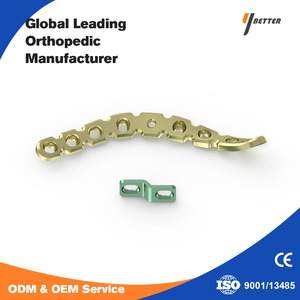
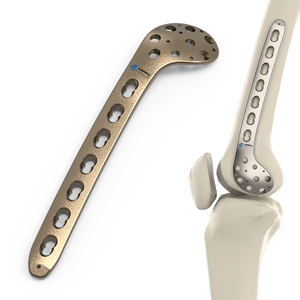
Anatomically contoured locking compression plate for complex distal femur fracture reconstruction and nonunion osteotomies.
Inquire NowExplore our flagship trauma, spinal, joint, and sports medicine implant systems, manufactured under ISO 13485 certification and 100% compliant with international biocompatibility standards.
Anatomically contoured locking compression plate for complex distal femur fracture reconstruction and nonunion osteotomies.
Inquire Now
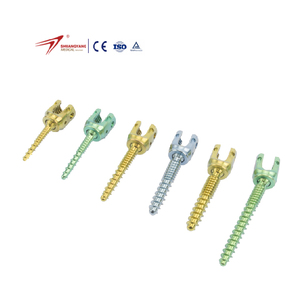
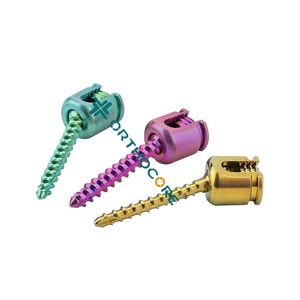
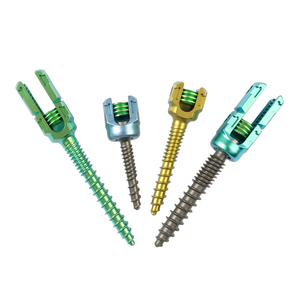
Advanced 360° polyaxial articulation offering wide angulation for seamless rod insertion during thoracolumbar spinal fusion.
Inquire Now
Flexible contouring reconstruction plate specialized for anterior pelvic ring and acetabular column fracture repair.
Inquire Now
Heavy-duty spinal fixation screw system tailored for canine, equine, and large animal spinal trauma and deformity repair.
Inquire Now
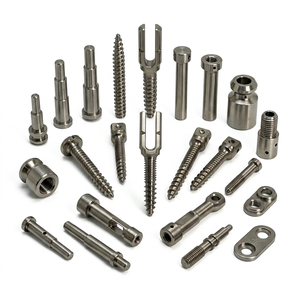
Ultra-precision CNC machined orthopedic components produced under strict ISO 13485 controls for international OEM brands.
Inquire Now
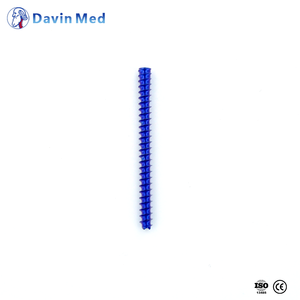
Minimally invasive cannulated screw providing interfragmentary compression for femoral neck and scaphoid fractures.
Inquire Now
High-strength titanium spinal screw construct featuring friction-head technology to reduce instrument assembly slipping.
Inquire Now
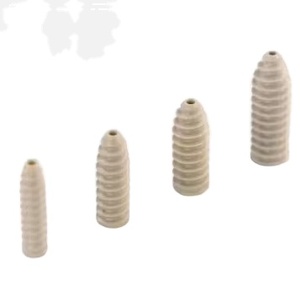
Biocompatible radiolucent PEEK-OPTIMA interference screw for secure tendon graft fixation in knee arthroscopy.
Inquire NowSourcing orthopedic implants requires more than just low unit prices. Modern hospital procurement teams demand rigorous compliance, repeatable precision, supply continuity, and swift time-to-market.
Equipped with 450+ high-precision 5-axis CNC Swiss-type lathes, automated optical measuring systems, and multi-axis milling machines producing 20,000+ implant units daily.
Full adherence to ISO 13485:2016 quality management frameworks, U.S. FDA establishment registration, and complete technical files ready for local MOH product registration.
Eliminate overstocking risks. Our flexible distributor fulfillment model permits low minimum order quantities and mixed-SKU shipments spanning spine, trauma, and joint systems.
From custom laser marking and bespoke color anodization to complete redesigns of instrument sets and private label packaging developed by our 70+ in-house engineers.
| Evaluation Parameter | Ortix Medical Distributor Program | Standard OEM Manufacturer | Traditional Trading Intermediary |
|---|---|---|---|
| Quality System Certification | ISO 13485:2016, FDA Registered, Full Traceability | Basic ISO 9001 or partial ISO 13485 | Relies on third-party supplier status |
| Raw Material Origin | Certified Ti-6Al-4V ELI (ASTM F136), PEEK-OPTIMA | Standard industrial grade titanium alloys | Variable / Unverified raw material batches |
| MOQ & Order Flexibility | Low MOQ, Mixed-SKU batching across catalogs | Strict high MOQ per individual SKU | High markup on small batch quantities |
| Instrument Set Support | Matched ergonomic surgical trays for every family | Implants only; instruments extra or mismatched | Limited instrument customization capability |
| Regulatory Dossier Assistance | Complete DHF, DMR, Test Reports & CE Files provided | Charge high fees for registration files | No direct engineering or regulatory access |
As healthcare systems transition toward value-based purchasing, medical device distributors must align their supply chains with shifting clinical demand, regulatory tightening, and cost optimization.
Global procurement teams are shifting away from initial purchase price toward Total Cost of Ownership. Hidden costs such as post-operative implant revision rates, surgical instrument wear, sterilization delays, and non-conforming product returns are now heavily audited.
By offering titanium implants manufactured from ASTM F136 medical-grade alloys with fatigue life exceeding 5 million dynamic cycles (per ASTM F1717 spinal fatigue standards), China's premier manufacturers provide low revision risks that substantially lower the long-term TCO for hospital networks.
Distributors are downsizing their supplier rosters to mitigate geopolitical and logistics vulnerabilities. Instead of managing separate vendors for trauma plates, spinal cages, sports medicine anchors, and power tools, procurement managers prefer single-source manufacturing hubs.
Consolidating purchase orders reduces ocean freight logistics costs by up to 30%, streamlines customs clearance documentation, and standardizes quality audits under a unified ISO 13485 QMS environment.
Surgeons and operating room directors increasingly demand pre-sterilized, single-packaged implants (gamma or EO gas sterilized) with barcode lot tracking. This transition eliminates hospital autoclave processing bottlenecks and guarantees 100% sterile barrier integrity prior to surgery.
Forward-thinking factories are establishing Class 10,000 (ISO Class 7) cleanroom packaging zones to deliver ready-to-use blister packaging directly to global healthcare facility shelves.
With the European Union MDR (Medical Device Regulation 2017/745) imposing stringent clinical data requirements, many legacy European OEM suppliers have inflated prices or discontinued niche lines. Top-tier Chinese manufacturers with comprehensive technical documentation packages and robust lab test data are rapidly filling this global market vacuum, allowing regional distributors to capture unprecedented market share.
The biomechanics of internal fixation are evolving rapidly. Discover the technological breakthroughs shaping modern trauma, spinal, and sports medicine implant design.
Electrochemical Type II anodization of titanium alloys forms a durable oxide layer that significantly reduces friction coefficients, prevents galling in polyaxial screw heads, and improves biological tissue response.
Polyetheretherketone (PEEK-OPTIMA) provides a modulus of elasticity closely matching natural cortical bone. In ACL/PCL interference screws and suture anchors, PEEK avoids post-op CT/MRI scattering artifacts and eliminates intraoperative screw breakage associated with brittle biocomposites.
Modern locking plates feature pre-shaped anatomical profiles derived from multi-ethnic 3D bone CT databases. This eliminates time-consuming intraoperative plate bending while facilitating Minimally Invasive Percutaneous Osteosynthesis (MIPO) techniques.
When evaluating orthopedic implant manufacturers, metallurgical integrity stands as the primary indicator of clinical performance. High-stress applications—such as pedicle screw fixation in osteoporotic vertebrae or distal femoral locking plates in high-energy trauma—require precise balancing of mechanical ductility and ultimate tensile strength.
At Ortix Medical, all titanium implants utilize certified Ti-6Al-4V ELI (Extra Low Interstitial) per ASTM F136 and ISO 5832-3 standards. By strictly limiting interstitial elements (oxygen, nitrogen, carbon, and iron), the alloy achieves superior fracture toughness and dynamic fatigue resistance compared to standard industrial titanium grades.
Furthermore, in trauma screw manufacturing, specialized thread geometries—such as self-tapping flutes and buttress thread forms—increase pull-out force while minimizing insertion torque. This engineering rigor prevents thread stripping in cancellous bone and ensures long-term construct stability for fast bone healing.
Direct technical, regulatory, and logistics answers tailored for hospital procurement directors, medical device importers, and OEM brand owners.
Ortix Medical operates under an audited ISO 13485:2016 quality management system and maintains U.S. FDA establishment registration. For qualified international distributors, we provide complete regulatory support packages including Certificate of Analysis (COA), raw material mill test certificates (ASTM F136 / ASTM F2026), biomechanical mechanical test reports (ASTM F1717 / ASTM F543), Instructions for Use (IFU), and CE technical dossier documents required for fast local Ministry of Health (MOH) product registration.
We offer flexible low MOQ policies designed to help regional distributors build market presence without binding excessive working capital. For standard catalog implants (such as locking plates, pedicle screws, and cannulated screws), mixed-SKU small batch orders are fully supported. For custom OEM/ODM projects requiring private laser marking or specialized anodization, MOQs are evaluated based on part geometry and tooling setups.
Yes. Every implant system—including our thoracolumbar pedicle screw systems, distal femur locking plates, PEEK ACL anchors, and cervical cages—is accompanied by a fully compatible, ergonomic surgical instrument tray. Instruments are manufactured from medical-grade stainless steel (17-4PH / 420 stainless steel) and silicone handles designed to endure repeated autoclave sterilization cycles.
Standard catalog products typically ship within 14 to 21 business days upon order confirmation. For OEM private labeling projects (which involve custom laser etching of distributor catalog numbers, customized box artwork, and specialized sterilization packaging), production schedules range between 30 to 45 days depending on batch volumes and customized tooling requirements.
Quality control begins with incoming raw material inspection. Every batch of titanium bars or PEEK rods undergoes chemical composition spectral analysis and mechanical tensile testing. During machining on our 5-axis Swiss CNC lathes, automated optical projectors and Zeiss 3D Coordinate Measuring Machines (CMM) enforce tight tolerances down to ±0.005mm. Final 100% visual and dimensional checks are performed prior to ultrasonic cleaning and cleanroom packaging.
Yes. Qualified distributors and hospital purchasing committees can apply for sample evaluation sets. This enables your orthopedic surgeons and biomedical engineering teams to physically evaluate surface finish, thread engagement, instrument ergonomics, and mechanical tolerances prior to committing to commercial bulk purchases.