High-Demand Orthopedic Implants & Medical Devices
Direct-from-factory orthopedic solutions engineered for global healthcare distributors, OEM/ODM partners, and hospital tender buyers.
Executive Whitepaper: Sourcing Orthopedic Implants from Top China Manufacturers
The global orthopedic implant market is undergoing a seismic paradigm shift driven by demographic aging, rising joint restoration and trauma interventions, and stringent healthcare budget controls. Global medical device distributors, hospital procurement groups, and OEM brand owners face mounting challenges in balancing uncompromising clinical quality, mechanical fatigue resistance, and micro-scale manufacturing precision against aggressive price competition. China has consolidated its position as the premier global engine for biomedical device manufacturing, progressing from traditional component assembly to advanced, vertically integrated research, 5-axis CNC micro-machining, and additive manufacturing (3D printing).
As a leading China orthopedic implants supplier factory and exporter, Ortix Medical Devices Co., Ltd. delivers institutional-grade trauma, spinal, joint, sports medicine, and craniomaxillofacial (CMF) systems. Operating under strict ISO 13485:2016 quality control frameworks and U.S. FDA establishment registration, our manufacturing operations provide global B2B buyers with the information gain, structural consistency, and regulatory dossiers mandatory for market leadership and tender success.
Biomedical Grade Metallurgy
Strict utilization of ISO 5832-3 certified Ti-6Al-4V ELI (Extra Low Interstitial) titanium alloys, PEEK OPTIMA, and CoCrMo alloys providing superior biocompatibility and extreme fatigue limits.
Full Regulatory Dossiers
Comprehensive technical file documentation supporting STED guidelines, material heat numbers, ISO 10993 cytotoxicity testing, and static/dynamic mechanical test reports.
Integrated Instrument Sets
Every implant system—from thoracolumbar pedicle screws to PFNA intramedullary nails—is supplied with ergonomically calibrated, matching stainless steel instrument trays.
Biomechanical Engineering & System Innovations across Key Product Lines
Surgical implants demand micro-inch surface integrity, predictable stress distribution, and biological osseointegration. Ortix Medical’s engineering team utilizes Finite Element Analysis (FEA) to eliminate mechanical stress concentration zones and enhance implant longevity.
1. Spinal Fixation and Fusion Platforms
Spinal pathology treatment requires rigid construct stability paired with dynamic load sharing. Our spinal range features:
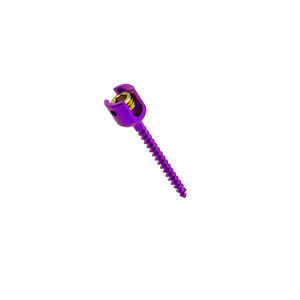
- Thoracolumbar Pedicle Screw Systems (5.5mm / 6.0mm Rod Constructs): Precision-machined from Ti-6Al-4V ELI, available in monoaxial, polyaxial, and cannulated minimally invasive surgical (MIS) configurations. Friction-fit saddle designs prevent head splay, while dual-lead thread geometries cut insertion time in half while preserving pull-out force in osteoporotic bone.
- PEEK & 3D-Printed Porous Titanium Interbody Cages: For TLIF, PLIF, and ACDF procedures. Incorporating radiolucent PEEK OPTIMA with titanium marker pins, alongside advanced 3D-printed porous titanium cages featuring 60-70% interconnecting porosity matching natural trabecular bone structure to accelerate bone ingrowth.
- Anterior Cervical Plating Systems: Ultra-low profile plates with intuitive dual-locking mechanisms that prevent screw back-out while preserving adjacent segment tissue.
2. Advanced Trauma Internal Fixation Systems
Trauma management demands high anatomical adaptability and stable fixation across complex fracture patterns. Our trauma portfolio encompasses:
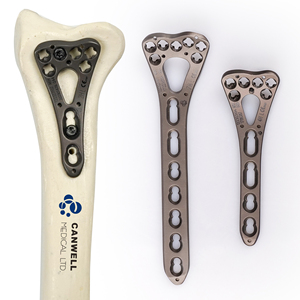
- Variable Angle (VA) Titanium Locking Compression Plates: Anatomically pre-contoured plates for distal radius, distal tibia, proximal humerus, and distal femur fractures. Featuring polyaxial locking screw technology allowing ±15° angle variation within the screw hole to target specific intra-articular fragments.
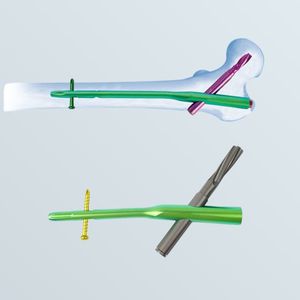
- Intramedullary Nailing Systems (PFNA, Femoral & Tibial): The Proximal Femoral Nail Antirotation (PFNA) system features a helical blade that compacts cancellous bone rather than removing it, dramatically increasing cut-out resistance in elderly intertrochanteric fractures.
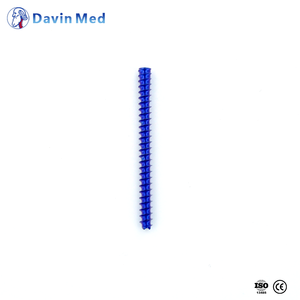
- Headless Cannulated Compression Screws: Engineered with differential thread pitches to generate powerful interfragmentary compression across scaphoid, osteochondral, and small bone fractures without hardware prominence.
3. Joint Arthroplasty & Reconstruction Components
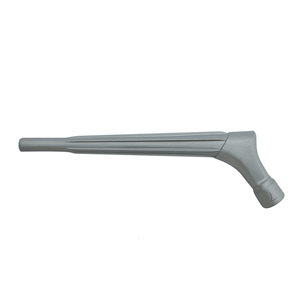
Total Hip Arthroplasty (THA) and Total Knee Arthroplasty (TKA) demand extreme surface finishes and wear resistance. Our forged Ti-6Al-4V femoral stems undergo vacuum heat treatment, micro-bead blasting, and optional plasma-sprayed Hydroxyapatite (HA) coating to optimize primary mechanical stability and long-term biological fixation. Coupled with CoCrMo femoral heads and highly cross-linked polyethylene (XLPE) acetabular liners, joint friction coefficients are minimized to mitigate osteolysis.
4. Sports Medicine & Craniomaxillofacial (CMF) Solutions
Modern sports medicine requires soft-tissue-to-bone fixation options. We offer PEEK suture anchors, non-absorbable composite anchors, and cannulated interference screws for ACL/PCL ligament reconstruction. In addition, our arthroscopic shaver blades are laser-welded for surgical precision. For CMF procedures, micro (1.5mm) and mini (2.0mm) titanium plating systems deliver high rigidity with ultra-thin profiles for facial trauma and reconstructive alignment.
Technical Specification Matrix: Implant Alloys & Biomaterials
All raw materials imported or sourced from certified medical-grade suppliers undergo independent mass spectrometry and tensile verification prior to machining.
| Biomaterial Standard | Chemical / Structural Composition | Mechanical Yield Strength | Primary Clinical Indication |
|---|---|---|---|
| ISO 5832-3 / ASTM F136 | Ti-6Al-4V ELI (Extra Low Interstitial) Titanium | ≥ 795 MPa | Pedicle Screws, Locking Plates, IM Nails, Hip Stems |
| ASTM F2026 PEEK | Polyetheretherketone (Radiolucent Polymer) | ≥ 95 MPa | Spinal Interbody Fusion Cages, Suture Anchors |
| ISO 5832-4 / ASTM F75 | Co-Cr-Mo (Cobalt Chromium Molybdenum Alloy) | ≥ 450 MPa | Femoral Heads, Knee Articular Surfaces |
| ISO 5832-1 / ASTM F138 | 316L Stainless Steel (Medical Grade) | ≥ 690 MPa | Surgical Instrument Sets, External Fixation Rods |
Future Global Procurement Trends in Orthopedic Manufacturing (2025–2030)
Procurement directors and commercial importers must adapt to sweeping changes in healthcare economics and international regulatory oversight. Understanding future market drivers ensures long-term supply chain resilience:
1. Value-Based Sourcing & Margin Preservation
Healthcare institutions are increasingly bypassing traditional Western tier-1 distributors who impose massive marketing markups. Importers are sourcing directly from certified Chinese OEM factories, securing 30% to 50% cost reductions while retaining equivalent clinical failure-free rates.
2. Pre-Sterilized Procedure-Ready Kits
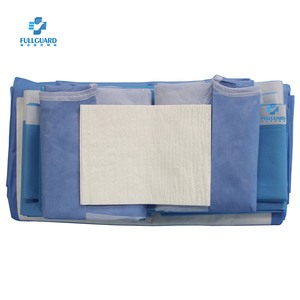
Hospitals are migrating away from bulky, autoclave-dependent metal instrument trays due to operating room turnaround times and sterilization overhead. The market is accelerating toward single-use, sterile-packaged procedure sets (such as sterile laparotomy and trauma packs) containing pre-loaded screws and disposable tools.
3. Additive Manufacturing & Patient Customization
Additive manufacturing (3D printing) using Electron Beam Melting (EBM) and Direct Metal Laser Sintering (DMLS) allows direct production of complex macro-porous titanium implants. Custom patient-specific implants (PSI) for oncological bone defect reconstructions and complex spinal deformities are transitioning from niche applications to standard surgical choices.
4. Strict Regulatory Dossier Standards
With EU MDR (2017/745) implementation and stricter regional registration authorities (such as Brazil ANVISA, Mexico COFEPRIS, and Saudi SFDA), buyers require comprehensive technical files. Successful factory partners must provide full raw material heat traceability, biocompatibility evaluations (ISO 10993), dynamic fatigue test validations, and UDI barcode laser marking.
Factory Technical Capabilities & Quality Control System
Ortix Medical operates a modern 60,000 square meter manufacturing campus equipped with over 450 advanced machine tools. Our production lines combine Swiss-type automatic CNC lathes (Citizen, Star) with DMG MORI 5-axis high-speed machining centers, maintaining dimensional tolerances within ±0.003 mm to ±0.005 mm.
End-to-End Buyer Journey & OEM/ODM Manufacturing Pipeline
From initial design concept to international logistics, our 5-step structured process minimizes sourcing risk and guarantees supply chain predictability:
Engineering Review
FEA biomechanical evaluation, material selection, and local market regulatory mapping.
Rapid Sampling
CNC precision prototyping for surgeon ergonomic fitting and dimensional verification.
Tooling & OEM Setup
Private label laser marking artwork, custom sterilizable packaging, and IFU design.
Class 10k QC Run
Cleanroom packaging, automated CMM optical scanning, and lot-level static/fatigue testing.
Global Dispatch
Complete customs clearance registration documentation, COA certificates, and export shipping.
Our quality assurance protocol includes triple-stage verification: Incoming Material Spectrometry, In-Process CMM Optical Measurement, and Final Mechanical Validation (fatigue compression testing per ASTM F543 / ISO 12189). All products packaged in our Class 10,000 cleanrooms are fully traceable via Unique Device Identification (UDI) laser etching.
Frequently Asked Questions (FAQ) for Global Procurement Managers
What quality certifications and regulatory documentation does Ortix Medical provide? +
Ortix Medical operates under an ISO 13485:2016 certified quality management system and maintains establishment registration with the U.S. FDA. For international distributor product registration, we supply full technical dossiers in STED format, including ISO 10993 biological evaluation reports, raw material chemical certificates, mechanical static/fatigue test reports (ASTM F543, ASTM F2193, ISO 12189), and Certificate of Free Sale (CFS).
What is your Minimum Order Quantity (MOQ) and can we order mixed SKUs? +
We provide low-MOQ flexibility tailored specifically to global distributors and hospital tender bidders. Importers can combine mixed SKUs—including different screw lengths, locking plate sizes, intramedullary nails, PEEK cages, and matching surgical instrument sets—within a single shipment batch. This prevents overstocking slow-moving sizes while building comprehensive clinical inventory.
Do you offer OEM private labeling and custom implant design (ODM)? +
Yes. Our in-house engineering team of 70+ biomedical specialists provides full OEM and ODM support. This includes customized fiber laser marking (brand logo, lot code, UDI barcodes), customized color anodization, tailored surgical instrument tray layouts, blister packaging design, and joint development of modified or novel anatomical implant geometries based on your regional surgeon preferences.
How can qualified healthcare distributors apply for evaluation samples? +
Qualified medical device distributors, orthopedic importers, and hospital procurement officers can apply for product evaluation samples through our Free Sample program. Evaluation samples allow surgical teams to inspect surface polish, thread tolerances, instrument engagement, and tray ergonomics prior to placing commercial bulk orders. Contact our sales department to initiate a sample dispatch.
What are your standard manufacturing lead times and daily production capacities? +
Our 60,000 m² factory runs 450+ high-precision CNC machines yielding a daily capacity of over 20,000 finished implant units. Standard catalog items in titanium trauma plates, pedicle screws, and PEEK cages typically ship within 10 to 15 business days. Custom OEM/ODM projects follow an agreed milestone schedule (typically 4 to 6 weeks from tooling validation to sterile packaging delivery).
How does Ortix Medical ensure lot-to-lot consistency and raw material purity? +
Every batch of titanium alloy bars, PEEK polymers, or stainless steel billets is sourced strictly with mill test certificates and undergoes optical emission spectrometry upon entering our facility. Machine tool paths are monitored via automated laser probe systems, and every lot undergoes 100% optical CMM dimensional verification before proceeding to micro-deburring, surface treatment, and cleanroom packaging.
Partner with China’s Leading Orthopedic Implant Factory
Expand your regional market share with ISO 13485 certified spine, trauma, joint, and sports medicine systems. Contact our export engineering team today for technical catalogs, pricing matrices, and evaluation samples.
Inquire Now