Featured Class III Medical Device Orthopedic Systems
High-precision orthopedic implants and surgical instrumentation engineered for spinal fixation, trauma stabilization, joint arthroplasty, and sports medicine.
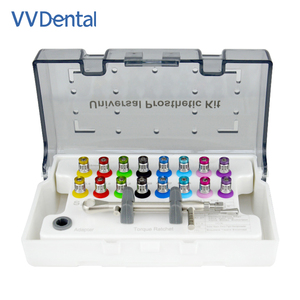
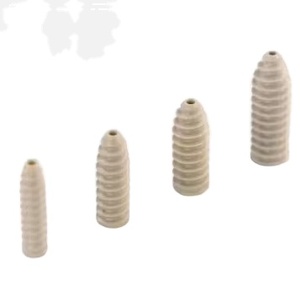
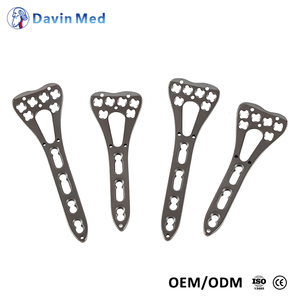
Navigating Class III Medical Device Manufacturing Quality & Compliance Standards
In global healthcare supply chains, Class III medical devices represent the highest regulatory risk tier, encompassing life-supporting, life-sustaining, or permanently implanted surgical devices. For hospital procurement officers, tender committees, and international orthopedic distributors, selecting a top-trusted Class III medical device orthopedic manufacturer and supplier requires an exhaustive evaluation of regulatory compliance, metallurgical purity, manufacturing precision, and clinical safety evidence.
Under regulatory bodies such as the US Food and Drug Administration (FDA 21 CFR Part 820), European Medicines Agency (EU MDR 2017/745 Annex IX), and international standard organizations (ISO 13485:2016), permanent implantable devices—such as thoracolumbar pedicle screw systems, PEEK cervical interbody fusion cages, multi-axial locking trauma plates, and arthroscopic PEEK interference screws—must undergo rigorous design verification, fatigue testing, and bio-compatibility validation (ISO 10993 series).
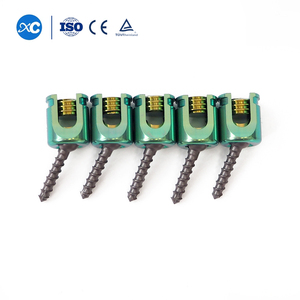
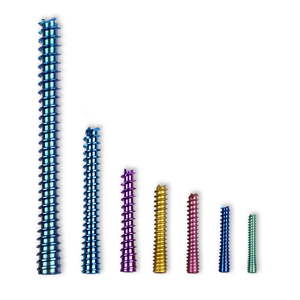
Ortix Medical Devices Co., Ltd. operates at the vanguard of Class III orthopedic hardware production. Utilizing raw medical-grade Titanium Alloy (Ti-6Al-4V ELI conforming to ASTM F136), Pure Titanium (Grade 2/4 conforming to ASTM F67), and PEEK-OPTIMA® polymer (conforming to ASTM F2026), our industrial ecosystem ensures seamless performance under dynamic physiological stress. Every titanium plate, pedicle screw rod, and cannulated compression screw undergoes advanced surface treatments—including Type II and Type III hard anodization and micro-arc oxidation—to eliminate fretting corrosion and enhance osseointegration.
Core Enterprise Advantages of Ortix Medical Manufacturing
Combining large-scale automated manufacturing with bespoke contract development for global orthopedic brands and distributors.
Full Portfolio Integration
Spine, trauma, joint replacement, sports medicine, CMF, and custom surgical instruments engineered concurrently to guarantee zero-tolerance mating fit during intraoperative assembly.
ISO 13485 & FDA Compliance
Full quality system certification with complete raw material heat-lot traceability, 100% optical dimension checks, and cleanroom packaging conforming to ISO Class 8 standards.
Turnkey OEM & ODM Customization
In-house laser engraving, localized packaging, instruction for use (IFU) printing, and rapid prototyping for modified plate geometries tailored to regional surgical requirements.
Low MOQ & Flexible Stocking
Empowering regional distributors to combine low minimum order quantities across anatomical categories into single shipments, reducing working capital constraints.
In-House Mechanical Testing Lab
Equipped with static shear, axial pull-out, cyclic fatigue, and torque-to-failure testing benches strictly abiding by ASTM F543, ASTM F1717, and ASTM F382 standards.
Dossier Support for Fast Registration
Providing comprehensive technical dossiers (STED), bio-compatibility reports, sterility validation data, and certificate of free sale (CFS) for national regulatory authority approval.
Future Procurement & Technological Trends in Orthopedic Implants (2025–2035)
Strategic analysis for healthcare purchasing managers, medical device distributors, and hospital procurement boards.
1. Transition from Standard Machining to 3D-Printed Additive Biomaterials
The global market for orthopedic implants is witnessing an accelerated migration toward 3D-printed additive manufacturing (Direct Metal Laser Sintering - DMLS and Electron Beam Melting - EBM). Additive manufacturing allows for the creation of porous trabecular titanium structures that mimic human cancellous bone elastic modulus (decreasing stress shielding). Cages and joint implants featuring 3D printed lattice designs demonstrate superior osteoconduction and osseointegration compared to traditional smooth titanium or un-coated PEEK.
Procurement agencies must partner with Class III manufacturers possessing integrated additive manufacturing lines and post-processing thermal treatment infrastructure to ensure long-term fatigue strength.
2. Variable-Angle & Anatomically Pre-Contoured Trauma Plating
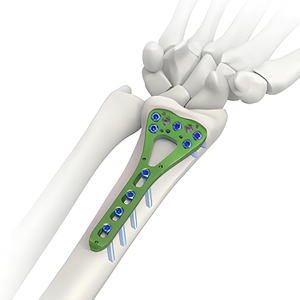
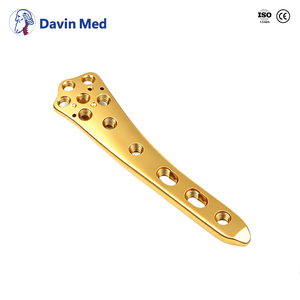
Conventional fixed-angle locking plates are increasingly being superseded by multi-axial and variable-angle locking systems (e.g., 2.7mm Volar Distal Radius Plates and Distal Humerus Plates). Variable-angle technology permits surgeons to trajectory-steer locking screws within a 30-degree cone, ensuring optimal subchondral bone purchase without risking joint penetration or screw collision in complex intra-articular fractures.
Distributors expanding their market share are targeting variable-angle systems bundled with color-coded, self-retaining drivers to reduce intraoperative operating room (OR) times and instrument confusion.
3. Growth of Bioresorbable & PEEK Soft-Tissue Anchors in Sports Medicine
Arthroscopic ligament repair (ACL/PCL reconstruction, rotator cuff repair) is rapidly shifting toward non-metallic radiolucent interference screws and suture anchors. Polyetheretherketone (PEEK) screws offer artifact-free postoperative MRI imaging and non-degradable mechanical stability, while biocomposite materials (such as PLLA-HA) provide gradual biological absorption and bone ingress.
Supplier selection requires strict verification of raw material grade, thread pull-out forces, and precision driver-to-screw engagement interface designs to prevent strip-out during soft-tissue tensioning.
4. Supply Chain Localization & Contract Manufacturing Consolidation
Heightened geopolitical friction, shifting regulatory demands (EU MDR transition), and hospital cost-containment programs are forcing distributors to consolidate vendor networks. Buying organizations are actively migrating away from multi-tier brokerage firms toward integrated Tier-1 Contract Manufacturers like Ortix Medical, who offer end-to-end capabilities spanning raw forging, Swiss-machining, cleanroom washing, sterile barrier packing, and global regulatory submission dossiers.
Class III Orthopedic Device Sourcing & Procurement FAQ
Essential technical and regulatory guidance for procurement executives and medical equipment distributors.
Ortix Medical operates strictly under a certified ISO 13485:2016 Quality Management System and holds registered establishment status with the U.S. FDA. All Class III implant families (spinal pedicle screws, trauma plates, cannulated compression screws, PEEK cages, sports medicine screws) are manufactured under cleanroom conditions with full material certificates (MTRs), biocompatibility testing (ISO 10993), and sterilization validation reports (ISO 11137 / ISO 11135) to support local health ministry registration for distributors.
Understanding that establishing inventory across diverse size matrices (e.g., varying plate lengths, screw diameters, cage heights) can strain capital, Ortix Medical offers flexible consignment and starter batching. Importers can aggregate small quantities of spine, trauma, and instrument sets into single consolidated orders, ensuring optimal inventory rotation without triggering massive holding costs.
We utilize exclusively implant-grade Titanium Alloy Ti-6Al-4V ELI (ASTM F136), Commercial Pure Titanium Gr2/Gr4 (ASTM F67), PEEK-OPTIMA® (ASTM F2026), and high-nitrogen 316L stainless steel (ASTM F138). Raw materials are sourced from accredited global suppliers accompanied by 3.1 chemical and physical test certificates. Each lot undergoes in-house X-ray fluorescence (XRF) spectroscopy verification and mechanical pull-out testing prior to machining.
Yes. Implant security and surgeon satisfaction rely directly on instrument ergonomics and tolerance precision. Ortix Medical designs and manufactures dedicated surgical instrument kits—including calibrated torque wrenches, benders, depth gauges, drill guides, and quick-coupling drivers—packaged in customizable anodized aluminum sterilizing trays (containers) tailored for immediate hospital operating room deployment.
Standard catalog items generally ship within 14 to 21 business days. Custom OEM/ODM projects involving laser marking, custom surface color-anodization, double-sterile blister packing, and private logo box design typically follow a 35 to 45-day cycle from initial 3D drawing sign-off and prototype clearance.
Partner with a Leading Class III Orthopedic Implant Manufacturer
Request comprehensive product catalogs, CAD specifications, regulatory dossier samples, or schedule a virtual factory tour with our biomedical engineering team.
Get Catalog