Featured Orthopedic Systems & Surgical Solutions
High-performance titanium alloy (Ti6Al4V ELI) and medical-grade stainless steel (316LVM) hardware engineered to satisfy rigid FDA Premarket Notification 510(k) and ISO 13485:2016 verification standards.
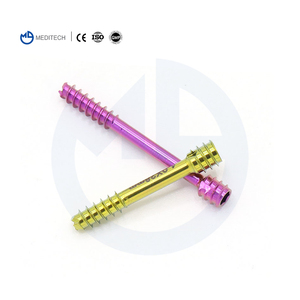
4.5mm Cortical Screw – CE & ISO 13485 Trauma Fixation
Precision cold-forged bone screw designed for cortical engagement in diaphyseal fractures. Features optimized thread pitch for maximum pull-out torque and reduced stripping risk.
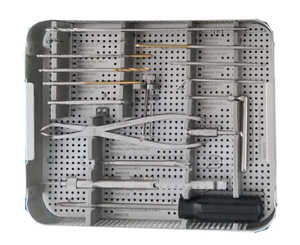
Small Fragment Orthopedic Instrument Set
Comprehensive surgical kit engineered for rapid reduction and fixation of radius, ulna, and fibula. Includes calibrated drill guides, depth gauges, and ergonomic torque drivers.
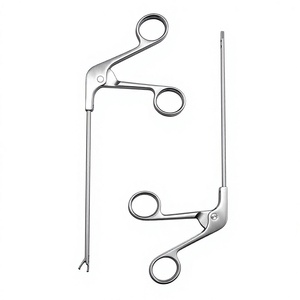
OEM 203mm Arthroscopy Grasping Forceps
High-tactile endoscopic instrument delivering atraumatic soft tissue grasp and foreign-body retrieval. Manufactured with passivated surgical stainless steel for extreme corrosion resistance.
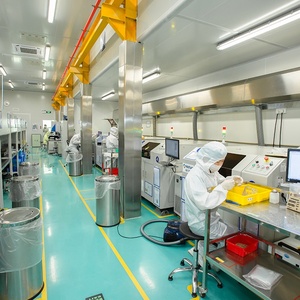
ISO 13485 Medical Device Sub-Assembly & Contract Mfg
Integrated medical device contract manufacturing handling complex PCB assemblies, medical polymers, and precision mechanical housings under sterile barrier packaging protocols.
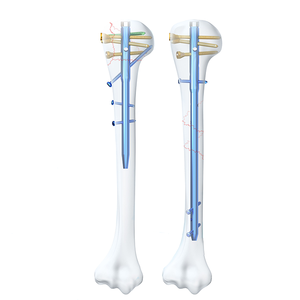
Humeral Intramedullary Nail for Osteoporotic Bone Fixation
Anatomically contoured intramedullary rod facilitating minimally invasive insertion. Features proximal multi-angle blade options specifically engineered for comminuted humeral fractures.
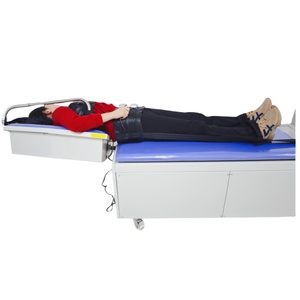
Multi-Angle Orthopedic Extension Traction Operating Bed
Engineered for precise anatomical positioning during cervical and lumbar spine operations. Fully compatible with intraoperative C-arm fluoroscopy and robotic navigation stations.
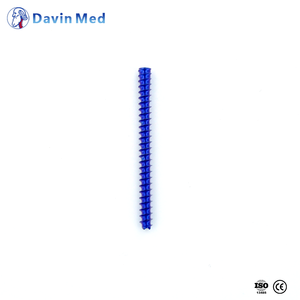
3.0mm Headless Compression Cannulated Bone Screw
Low-profile variable-pitch compression fastener providing controlled interfragmentary dynamic compression without hardware protrusion in articular joint reconstructions.
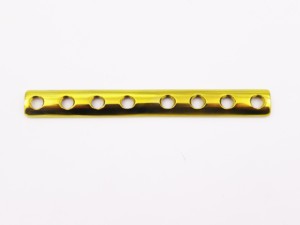
One-Third Tubular Small Head Titanium Locking Plate
Contoured osteosynthesis plate for lateral malleolus and distal fibula fractures. Undersurface cutouts preserve periosteal blood flow and minimize vascular disruption.
Navigating the FDA 510(k) Premarket Pathway for Orthopedic Osteosynthesis
In international orthopedic device distribution, procuring implants requires uncompromised regulatory scrutiny. An FDA 510(k) clearance represents far more than an administrative export clearance: it is concrete validation that the medical device demonstrates Substantial Equivalence (SE) to legally marketed predicate devices under Section 513(a)(1)(B) of the Federal Food, Drug, and Cosmetic Act.
For global implant distributors, institutional hospital tenders, and OEM brand holders, sourcing through Ortix Medical eliminates compliance friction. Every product manufactured across our 60,000 m² production floor conforms to stringent mechanical benchmarking, including dynamic axial fatigue thresholds (ASTM F1717 for spinal constructs, ASTM F543 for cortical bone screws, and ASTM F2077 for intervertebral fusion cages).
Information Gain Principle: Unlike brokers who trade relabeled components, Ortix Medical operates as an integrated Tier-1 manufacturer maintaining full Device Master Records (DMR), continuous Design History Files (DHF), and multi-lot mechanical verification data directly accessible to partner regulatory teams for overseas dossier submissions.
| Implant Classification | Standard Test Harmonization | Metallurgical Purity | Biological Safety Evaluation | Regulatory Dossier Status |
|---|---|---|---|---|
| Thoracolumbar Pedicle Screws | ASTM F1717 / ISO 12189 Static & Dynamic Fatigue | Ti-6Al-4V ELI (ASTM F136 Grade 23) | ISO 10993 Cytotoxicity & Hemolysis Clean | ✓ 510(k) Substantial Equivalence Ready |
| Trauma Locking Compression Plates | ASTM F382 Four-Point Bending & Fatigue Life | Pure Titanium Gr 3 / 316LVM (ASTM F138) | USP Class VI Implantation Tested | ✓ Full Technical Documentation Package |
| Cervical Interbody Cages | ASTM F2077 Static Compression & Dynamic Shear | Medical PEEK-OPTIMA / 3D Ti Porous | Pyrogen-free < 0.5 EU/mL LAL Validated | ✓ Audit-Ready Device Master File |
| Cannulated & Headless Screws | ASTM F543 Torsional Strength & Axial Pull-Out | Ti-6Al-7Nb / Ti-6Al-4V ELI | Extractables & Leachables Validated | ✓ Master File Authorization (MAF) |
Orthopedic Implants: Global Procurement Trends (2025–2030)
Procurement leaders are navigating intense macroeconomic pressures, shifting regulatory landscapes (EU MDR transition delays), and an urgent mandate for supply chain derisking. Sourcing strategies are evolving along five foundational vectors.
1. Consolidation & Vendor Rationalization
Health systems and Tier-1 distributors are actively reducing their vendor rosters from dozens of fragmented suppliers to single-source manufacturers capable of delivering trauma, spine, sports medicine, and power tools under one audited quality management system. Consolidating shipments lowers container freight overhead and streamlines lot quarantine logistics.
2. MDR-to-FDA Regulatory Arbitrage
With the European Medical Device Regulation (EU MDR) creating protracted submission queues and prohibitive Notified Body re-certification costs, global distributors across Latin America, Southeast Asia, and the Middle East increasingly accept FDA 510(k) clearances and ISO 13485:2016 audits as their primary regulatory benchmark for high-speed market authorization.
3. Agile Low-MOQ & Mixed-SKU Batches
Large minimum order volumes tie up working capital in slow-turning anatomical sizes. Forward-looking distributors demand flexible factory partners offering mixed-SKU containers—bundling micro fragment plates, pedicle screws, and sterilization trays in customized batch sizes without incurring OEM customization surcharges.
4. Sterile Pre-Packaged Procedure Kits
Hospitals are transitioning away from unsterile bulk implants that demand complex on-site washing and autoclave cycles. Pre-sterilized, single-use procedure packs with gamma or ethylene oxide (EtO) sterilization barriers ensure zero contamination risk, eliminate hospital reprocessing costs, and provide direct point-of-care barcode scanning.
5. Full Ingot-to-Implant Raw Material Provenance
In response to post-pandemic supply chain scrutiny, distributors require documented raw material certificates (MTR) originating exclusively from certified titanium and cobalt-chrome melt sources. Full traceability prevents catastrophic surgical hardware breakage caused by microscopic interstitial voids or inconsistent grain morphology.
Technological Horizons: Next-Gen Orthopedic Engineering
The convergence of additive manufacturing, surface bioengineering, and robotic-assisted surgical instrumentation is revolutionizing patient recovery and intraoperative safety.
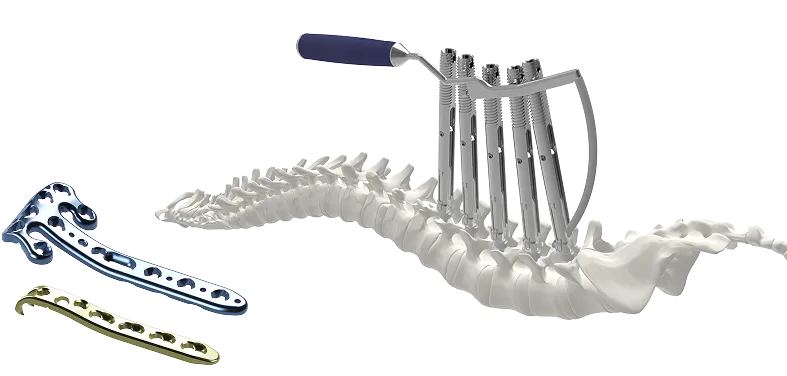
Engineered for Biomimetic Osseointegration & Surgical Accuracy
Modern osteosynthesis has transcended static mechanical stabilization. Today's clinical gold standard focuses on accelerated biological union, reduced bacterial biofilm adherence, and seamless interface with optical and electromagnetic intraoperative navigation stations.
- 3D Porous Titanium Latices: Pore sizes calibrated to 300–600 μm optimize osteoblast migration.
- Low Young's Modulus: Minimizes adjacent-segment degradation and hardware loosening.
- MIS Navigated Drivers: Ergonomic quick-coupling interfaces designed for robotic trajectory alignment.
- Type II Anodization: Hardened anti-galling thread finishes deliver uniform locking engagement.
Industrial Scale: Why Global Leaders Choose Ortix Medical
Combining an expansive 60,000 m² production footprint with 450+ multi-axis CNC machines and over 70 dedicated R&D biomedical engineers to provide end-to-end OEM/ODM execution.
Built for Scalable Global Export & Custom Brand Engineering
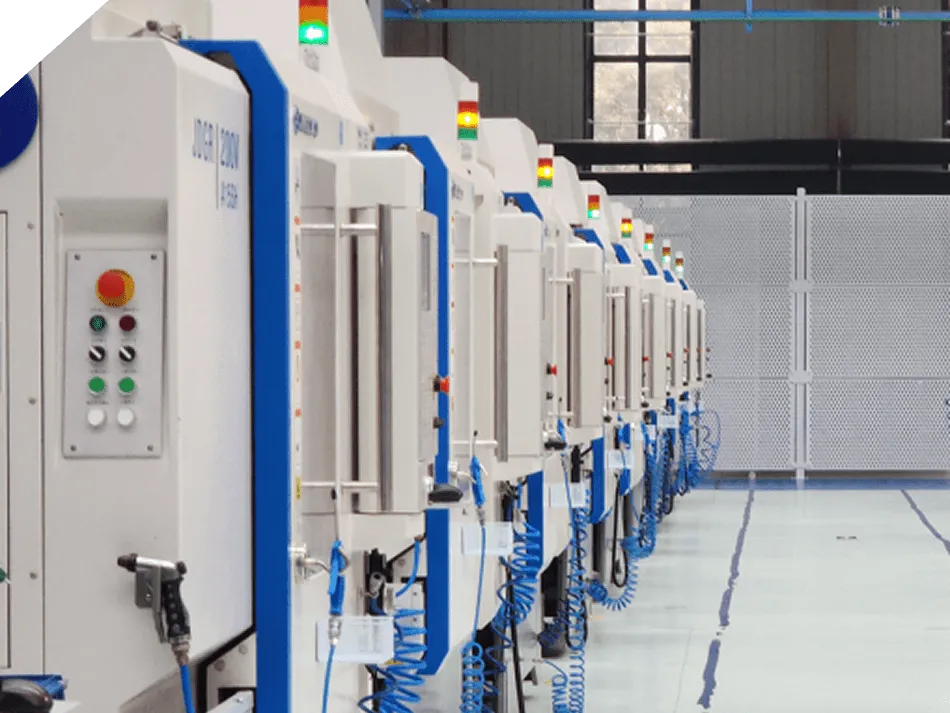
Ortix Medical operates one of the world's most advanced specialized orthopedic implants manufacturing campuses. From initial finite element analysis (FEA) and 3D prototyping through to multi-axis Swiss longitudinal turning, automated robotic deburring, and cleanroom blister sealing, every manufacturing stage is monitored under real-time statistical process control (SPC).
"Our daily output exceeds 20,000 precision implant units and matched instrument tools, enabling distributors to scale institutional hospital tender commitments without lead-time vulnerability."
- Cleanroom Packaging: ISO Class 7 and Class 8 controlled cleanrooms for sterile barrier pouching.
- Metrology Lab: Zeiss coordinate measuring machines (CMM) ensuring ±3 μm dimensional fidelity.
- Full Lot Traceability: Laser etching with GS1 2D DataMatrix and Unique Device Identification (UDI).
- Custom Tooling Kits: Ergonomic, color-coded aluminum and PPSU autoclave cases for every system.
From Evaluation Sample to Bulk Shipment: How We Work
Our structured five-phase collaboration protocol minimizes sourcing friction, confirms surgical ergonomics before commitment, and guarantees hassle-free import customs clearance.
Technical Review
Mapping your local regulatory classification, surgical preference sets, sizing curves, and required material grades.
Sample Evaluation
Dispatching evaluation samples allowing your key opinion leaders (KOLs) and orthopedic surgeons to test finish, fit, and tactile feedback.
OEM & Artwork
Custom fiber-laser logo etching, blister packaging artwork, multi-language Instructions for Use (IFU), and sterile barcoding.
Validated QC
Incoming raw material spectrometry, in-process CMM verification, ultrasonic degreasing, and final lot release certificates.
Export Logistics
Full documentation delivery: Certificates of Analysis (COA), Certificate of Free Sale (CFS), and direct cargo forwarding by air/sea.
Frequently Asked Questions by Implant Importers
Comprehensive answers addressing regulatory compliance, private labeling thresholds, batch testing protocols, and international shipping logistics.
What regulatory clearances and quality certifications back Ortix Medical orthopedic implants?
Ortix Medical operates under an audited ISO 13485:2016 quality management system certified specifically for design, manufacturing, and distribution of sterile and non-sterile orthopedic implants and surgical instruments. Furthermore, our manufacturing facility is FDA Establishment Registered under US 21 CFR Part 820 Quality System Regulation (QSR).
For distributors pursuing institutional hospital tenders or national health authority registrations (such as COFEPRIS in Mexico, ANVISA in Brazil, SFDA in Saudi Arabia, or local MOH registrations across Southeast Asia), we provide full technical dossier support. This documentation includes accredited third-party mechanical test reports (ASTM F1717, F543, F2077, F382), biocompatibility evaluations (ISO 10993 series), risk management files (ISO 14971), and Device Master File authorizations.
Can we order mixed-SKU containers and what is your minimum order policy (MOQ)?
Yes. We recognize that inventory velocity differs drastically between mainstream traumatic fracture plates and specialized anatomical reconstructive sizes. Therefore, Ortix Medical supports an agile, low-MOQ sourcing policy for qualified regional distributors.
- Standard Catalog Implants: Low initial commitment thresholds with flexible batch sizes across trauma plates, cortical/cancellous screws, and intramedullary nails.
- Mixed-SKU Consolidation: You can combine trauma hardware, spinal pedicle screw systems, sports medicine anchors, and autoclavable instrument kits within a single consignment.
- Custom OEM / Private Label Runs: Custom laser marking, specialized anodization colors, and dedicated packaging generally require minimum batch runs determined by machine setup times and laser cycling parameters.
What raw materials are utilized, and how is lot-to-lot metallurgical purity verified?
We exclusively utilize certified medical-grade raw materials sourced from aerospace and biomedical qualified melt facilities. Our core raw material portfolio consists of:
- Titanium Alloy: Ti-6Al-4V ELI (Extra Low Interstitial) conforming strictly to ASTM F136 and ISO 5832-3, offering superior fatigue life and biocompatibility.
- Medical Stainless Steel: 316LVM (Vacuum Arc Remelted) conforming to ASTM F138 and ISO 5832-1, delivering high ductility and corrosion resistance.
- Biocompatible Polymers: Implantable-grade polyetheretherketone (PEEK-OPTIMA®) meeting ASTM F2026 for radiolucent spinal fusion cages and suture anchors.
- Instrument Steels: Hardened martensitic and precipitation-hardening surgical stainless steels (17-4PH, 420B, 440C) for high wear resistance.
Every production heat is accompanied by an original Material Test Report (MTR) verifying chemical spectrometry analysis, tensile yield, elongation percentage, and microstructural grain sizing.
Do you offer full-cycle OEM / ODM private labeling and customized implant engineering?
Absolutely. Our in-house R&D engineering division comprises over 70 biomedical, mechanical, and materials engineers. We collaborate with OEM partners worldwide through two distinct service pathways:
1. Private Label OEM: Application of your proprietary commercial branding, custom trademark fiber laser etching, tailored color-coded anodization, customized sterile peel pouches, and local regulatory compliant IFU layout.
2. Comprehensive ODM Co-Development: If your surgical consultants require modified anatomical contours, non-standard screw pitch configurations, or revolutionary 3D trabecular structures, our engineers conduct finite element stress simulations (FEA), produce rapid metal prototypes, and fabricate custom surgical jigs tailored to your clinical specifications.
What is the standard production lead time and international export fulfillment schedule?
Leveraging a daily throughput capacity of approximately 20,000 units backed by a fleet of over 450 CNC machine centers, we maintain reliable lead times across our entire portfolio:
- Standard Finished Stock Implants: Available for immediate dispatch within 5 to 10 business days following purchase order confirmation.
- Standard OEM Labeling Runs: Typically completed and packed within 3 to 4 weeks depending on batch volume and packaging complexity.
- Custom ODM Mechanical Tooling: Prototyping and tooling fabrication span 4 to 8 weeks, followed by pilot batch dimensional verification and bio-cleaning validation.
Shipments can be routed via express door-to-door air freight (DHL, FedEx, UPS) for critical tender timelines, or scheduled sea/air consolidation with pre-cleared customs export manifests.
How are samples evaluated before committing to a commercial distributor contract?
We provide an institutional Evaluation Sample Program for verified distributors, healthcare group purchasing organizations (GPOs), and surgical clinics. This enables your clinical review board and orthopedic surgeons to physically inspect:
- Microscopic thread finish, burr-free edge radii, and optical anodization uniformity.
- Locking cap engagement torque and driver-screw mating tolerance.
- Instrument balance, quick-release chuck responsiveness, and sterilization tray ergonomics.
To apply for an evaluation sample kit, connect directly with our export desk through the inquiry button below.