Engineering Biocompatible Excellence in Orthopedic Implant Manufacturing
As the global demand for joint replacement, trauma osteosynthesis, and complex spinal reconstruction accelerates, selecting an ISO 13485:2016 certified medical device manufacturer is no longer merely a procurement checklist item—it is the foundation of patient safety, clinical efficacy, and regulatory compliance. Global healthcare distributors, hospital purchasing syndicates, and OEM medical device brand owners require manufacturing partners that combine metallurgic mastery with micron-level precision and end-to-end quality assurance.
Featured Medical-Grade Orthopedic Systems & Components
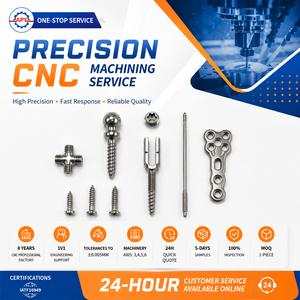
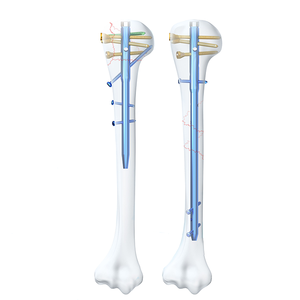
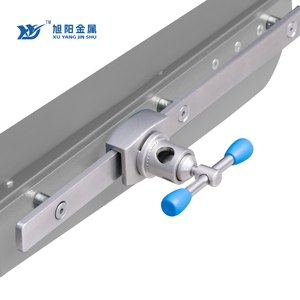
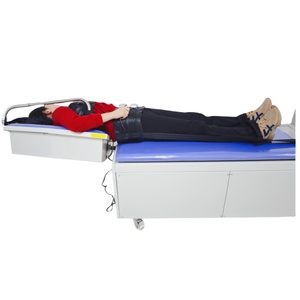
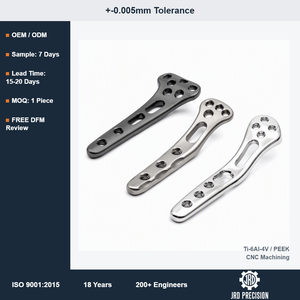
Explore our certified production catalog engineered under strict ISO 13485 quality control parameters, featuring high-strength titanium alloys, PEEK implants, and specialized surgical instrument assemblies.

State-of-the-Art Production & Quality Systems
Our smart manufacturing infrastructure operates under stringent ISO 13485:2016 and FDA 21 CFR Part 820 quality control frameworks, delivering unmatched precision and capacity for global buyers.
5/6-Axis Precision CNC Machining
Equipped with Swiss-type Citizen turning centers and 5-axis DMG MORI milling machines, achieving dimensional tolerances down to ±0.005mm for intricate pedicle screws, locking plates, and joint components.
- Sub-micron surface roughness (Ra < 0.4 μm)
- Complex anatomical micro-contouring
- Automated robotic cell loading
ISO 13485 & FDA Compliant QA
Integrated 100% full-process traceability from raw material titanium ingots to final laser-etched UDI labeling, verified via Zeiss 3D CMM metrology and fatigue testing rigs.
- ASTM F136 Ti6Al4V ELI material certification
- ISO 14644 Class 7/8 Cleanroom packaging
- EU MDR 2017/745 Technical Documentation
One-Stop OEM / ODM Partnership
From concept CAD modeling and FEM stress analysis to rapid prototyping and mass production, our in-house engineering team accelerates time-to-market for medical brand owners.
- Low MOQ & flexible mixed-SKU inventory buffers
- Custom laser marking & packaging design
- Full registration dossier (STED) support
Technological Innovations Driving the Future of Orthopedics
The orthopedic implant landscape is experiencing a paradigm shift toward advanced biomaterials, additive manufacturing, dynamic bio-fixation, and patient-tailored surgical solutions.
1. 3D-Printed Porous Trabecular Titanium & PEEK Structures
Traditional smooth or grit-blasted implant surfaces are rapidly giving way to 3D additive manufacturing (Direct Metal Laser Sintering - DMLS). By synthesizing biomimetic porous trabecular titanium architectures, modern implants achieve elastic moduli that match human cancellous bone. This drastically reduces stress shielding, promotes rapid bone osseointegration, and minimizes revision surgical risks.
Simultaneously, high-performance polymers like PEEK-OPTIMA (Polyetheretherketone) and Carbon-Reinforced PEEK are transforming spinal interbody fusion cages and cranial reconstruction. Radiolucent properties allow clear post-operative radiographic evaluation while providing biomechanical stiffness comparable to native cortical bone.
2. Smart Surface Modifications & Bioactive Coatings
Surface integrity determines the biological response at the bone-implant interface. Leading factories are implementing Type III electrochemical anodization (titanium color anodizing and hard-coat anodization), Hydroxyapatite (HA) plasma spraying, and Diamond-Like Carbon (DLC) low-friction coatings.
These surface enhancements significantly boost biocompatibility, reduce wear debris generation in total joint replacements (hip and knee arthroplasty), and provide anti-microbial properties that actively mitigate peri-implant infection rates in trauma fixation.
3. Minimally Invasive Surgical (MIS) Instrument Synergy
Modern orthopedic implants must be developed hand-in-hand with ergonomic, low-profile surgical instrument kits. Implants designed for Minimally Invasive Surgery (MIS)—such as percutaneous pedicle screw systems and retro-grade intramedullary nails—require high-rigidity guide wires, tissue retractors, and precision torque drivers.
Factories offering complete matching instrument sets alongside implants significantly reduce operating room times, lower surgical trauma for patients, and simplify procurement logistics for hospital networks.
4. Patient-Specific Implants (PSI) & Computer-Assisted Surgery
The integration of 3D CT/MRI DICOM data with advanced CAD/CAM algorithms enables rapid manufacturing of customized maxillofacial, cranial, and complex trauma fixation plates.
With 5-axis high-speed milling and 3D printing capabilities, custom patient-matched implants can now be designed, manufactured, validated, and shipped under cleanroom sterile protocols within reduced turnaround windows.
Global Procurement & Supply Chain Trends for Medical Implants
How forward-thinking medical device distributors and hospital chains are optimizing their supply chains in an evolving regulatory environment.
Diversification & Resilient Dual-Sourcing
Global healthcare buyers are moving away from single-source reliance. By establishing qualified partnerships with certified high-capacity Asian manufacturing hubs, importers ensure continuous stock replenishment, protect against regional logistics bottlenecks, and optimize unit procurement costs without compromising quality.
Turnkey Regulatory Dossier Support
With the tightening of European EU MDR requirements and national health registration mandates (ANVISA, US FDA, SFDA, MoH), buyers prioritize exporters who supply complete technical documentation—including biocompatibility testing (ISO 10993), mechanical fatigue reports (ASTM F543/F2193), and sterile barrier validation (ISO 11607).
Flexible SKU Buffer Management
Stocking every size variant of bone screws, intramedullary nails, and locking plates creates massive capital lock-up. Modern factories assist distributors through flexible small-batch manufacturing, low MOQs, and consolidated mixed-SKU shipments that match localized tender requirements.
Frequently Asked Questions by Orthopedic Buyers & Engineers
Essential technical, regulatory, and quality control queries addressed by our chief biomedical manufacturing team.
What quality management certifications and regulatory standards govern your factory operations? +
Our manufacturing facility operates under a fully audited and certified ISO 13485:2016 quality management system specifically tailored for medical devices. We adhere strictly to FDA 21 CFR Part 820 Quality System Regulations (QSR) and EU MDR 2017/745 standards. Every production batch undergoes comprehensive quality control inspections, including raw material chemical spectral analysis, dimensional CMM verification, surface roughness testing, and mechanical strength testing according to ASTM international standards.
What medical-grade raw materials are used for titanium plates, pedicle screws, and intramedullary nails? +
We source certified medical-grade raw materials directly from audited global metallurgical suppliers. Our primary material offerings include Ti6Al4V ELI (Extra Low Interstitial) Titanium Alloy (ASTM F136 / ISO 5832-3) for superior fatigue strength and corrosion resistance, 316L Implant-Grade Stainless Steel (ASTM F138 / ISO 5832-1), and PEEK-OPTIMA (ASTM F2026) for radiolucent spinal fusion devices. Every shipment includes official Mill Test Certificates (MTC) with heat number traceability.
How do you guarantee dimensional precision and surface roughness on complex 5-axis CNC machined implants? +
Our machining floor features Swiss-type automatic lathes and 5-axis CNC machining centers running high-precision carbide micro-tooling. Machining tolerances are maintained within ±0.005mm. Surface finishing protocols include ultrasonic multi-stage degreasing, electropolishing, dynamic deburring, and color micro-anodizing. Surface roughness is verified using non-contact optical profilometers to ensure Ra values below 0.4 μm, eliminating stress risers and micro-burrs.
What is the standard lead time for OEM custom manufacturing vs. standard catalog items? +
Standard catalog products held in stock can be dispatched within 5 to 7 working days. For OEM/ODM custom projects requiring CAD modification, tooling setup, rapid prototyping, and initial sample inspection reports (ISIR), the prototype turnaround is typically 2 to 3 weeks. Full-scale batch production cycles range between 30 and 45 days depending on batch complexity and cleanroom packaging requirements.
Can your facility handle cleanroom assembly, packaging, and sterilization validation under ISO 11607? +
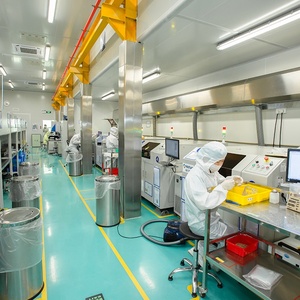
Yes. We operate state-of-the-art ISO 14644 Class 7 and Class 8 cleanrooms dedicated to final ultrasonic cleaning, assembly, primary sterile barrier pouching, and protective double-blister packing. We provide validated sterilization packaging conforming to ISO 11607 guidelines, supporting both Gamma Irradiation and EtO (Ethylene Oxide) sterilization protocols with complete sterile integrity documentation.
How can international distributors apply for product evaluation samples and technical registration dossiers? +
Qualified medical distributors, healthcare tenders, and hospital procurement committees can request evaluation sample kits through our direct support team. Samples are supplied with full dimensional inspection sheets, laser-marked UDI codes, and matching surgical instrument sets for clinical bench testing. Click the contact button below to connect directly with our regulatory compliance and export sales specialists.
Partner with a Verified ISO 13485 Orthopedic Exporter
Elevate your orthopedic product portfolio with world-class 5-axis CNC machining, rigorous quality management systems, competitive factory-direct pricing, and comprehensive regulatory dossier support.