Precision-Engineered Orthopaedic Implants & Instruments
Explore our flagship, CE/FDA compliant trauma, spinal, joint, and veterinary surgical components manufactured under rigorous quality control standards.
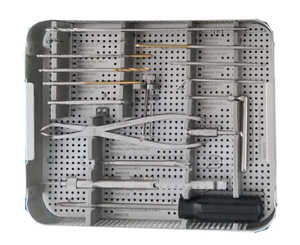
Orthopedic Instrument Small Fragment Surgical Instrument Set Medical Instruments
Get a Quote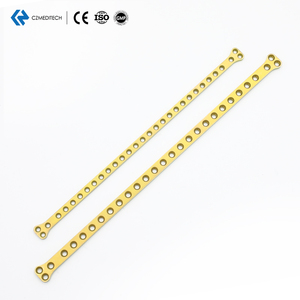
Factory Supply Veterinary Bone Straight Reconstruction Plates Orthopedic Trauma Implants
Get a Quote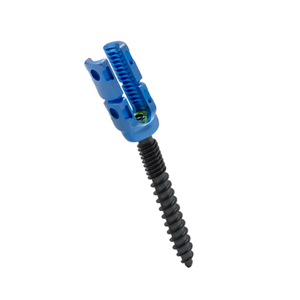
Geasure Orthopedic Implants 5.5 Breakable Polyaxial Reduction Pedicle Screw Spine System
Get a Quote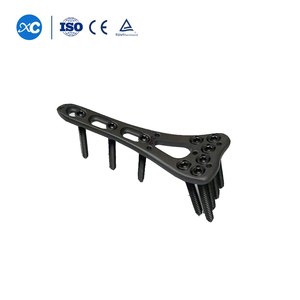
CE Approved Proximal Humerus Locking Bone Plate Titanium Orthopedic Implant
Get a Quote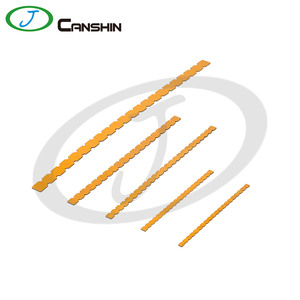
Veterinary Orthopedic Implants Model Aluminium Alloy Fracture Surgical Basic Instrument Set
Get a Quote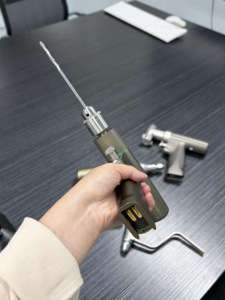
High Performance Orthopedic Bone Drill System for TKR THR Trauma & Joint Surgery
Get a Quote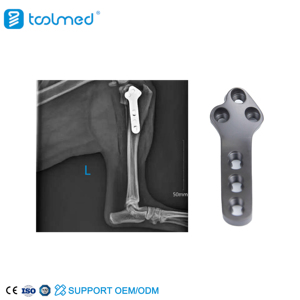
TOOLMED Orthopedic TPLO 3.5 II Titanium Plate CE Certified Class III Veterinary Implant
Get a Quote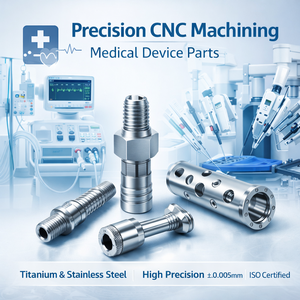
Custom CNC Machining Orthopedic Implant Components Titanium Medical Device Parts
Get a QuoteGlobal Manufacturing Footprint & Technical Capacity
Trusted Manufacturing Excellence for Global Distributors
We bridge the gap between high-precision biomechanical engineering and flexible supply chain management, offering unmatched regulatory support and factory-direct efficiency.
Full-Spectrum Product Catalog
Consolidate vendor management with a single factory offering Spine, Trauma, Joint Replacement, Sports Medicine, CMF, Power Tools, Sutures, and Veterinary surgical systems.
One-Stop OEM & ODM Services
From custom laser etching, customized tray configurations, and blister packaging to full engineering co-development for specialized implant geometries.
Low MOQ & Mixed-SKU Agility
Minimize holding capital without sacrificing variety. Combine plates, screws, nails, cages, and matching surgical tool sets within flexible order minimums.
Rigorous Quality Assurance
Operating under ISO 13485 QMS guidelines with U.S. FDA registration. Full raw material batch traceability (Ti-6Al-4V ELI, PEEK Optima, 316LVM) and CMM inspection.
Rapid Rapid-Replenishment
Our high-capacity automated machining lines ensure dependable lead times, protecting hospital tender fulfillment schedules and distributor inventory stability.
Regulatory Dossier Support
Comprehensive support for local product registration including technical files, certificates of analysis, biocompatibility test reports, and IFUs.
Future Procurement Trends in the Global Orthopaedic Implant Industry
The global orthopaedic implant supply chain is undergoing a fundamental structural transformation. Driven by shifting healthcare economics, stringent regulatory frameworks (such as EU MDR compliance challenges), and post-pandemic supply disruption risks, hospital procurement boards and medical device distributors are fundamentally altering how they source spinal hardware, trauma plates, and joint prosthesis systems. Transitioning from fragmented vendor networks to consolidated, highly certified manufacturing partners has evolved from a cost-saving measure into a critical strategic imperative.
Information Gain Key Takeaway: Procurement strategies in 2025 and beyond favor suppliers providing integrated "Implant + Surgical Instrument Set + Power Tool" bundles with ready-to-submit technical dossiers, significantly lowering market entry friction and inventory overhead for regional distributors.
1. Shift Toward Modular & High-Flexibility Inventory Models
Historically, distributors were forced into high Minimum Order Quantities (MOQs) for specialized titanium trauma locking plates or spinal pedicle screw systems, creating severe capital lockup in slow-moving SKU sizes. Future procurement frameworks prioritize manufacturers offering low MOQ thresholding coupled with mixed-SKU batching capabilities. This allows regional healthcare suppliers to stock comprehensive size runs across small fragment sets, intramedullary nails, and interbody fusion cages without taking on disproportionate working capital risk.
2. Rise of 3D-Printed Porous Titanium & Hybrid Material Constructs
Material science innovation is altering procurement specifications. Traditional solid titanium alloys are rapidly giving way to 3D-printed additive manufactured porous structures that mimic human trabecular bone architecture. These porous surfaces reduce elastic modulus mismatch—thereby mitigating stress shielding—while accelerating osseointegration. Concurrent with titanium innovation, medical-grade PEEK (Polyetheretherketone) combined with radiolucent markers remains the gold standard for cervical and lumbar interbody fusion cages, offering superior radiolucency for post-operative imaging.
3. Integration of Human & Veterinary Orthopaedic Product Chains
The veterinary surgical market—specifically small animal orthopaedics (e.g., TPLO plates, micro locking systems, and canine total hip arthroplasty)—is experiencing double-digit annual growth globally. Leading medical device factories are leveraging human-grade CNC Swiss precision tooling and biocompatible titanium materials (ASTM F136) to manufacture veterinary implants. Suppliers capable of serving both human clinical systems and high-precision veterinary requirements enable distributors to capture secondary high-margin market segments through a single validated vendor relationship.
Biomechanical Material Performance & Engineering Specifications
Selection of orthopaedic materials requires strict balance between mechanical yield strength, fatigue resistance, density, and cellular biocompatibility. Below is a comparative benchmarking matrix of core raw materials utilized across our manufacturing infrastructure:
| Material Specification | Tensile Strength (MPa) | Elastic Modulus (GPa) | Fatigue Limit | Primary Clinical Application |
|---|---|---|---|---|
| Titanium Ti-6Al-4V ELI (ASTM F136) | 860 - 960 | 110 - 114 | High (>10⁶ cycles) | Pedicle Screws, Trauma Locking Plates, Spinal Cages |
| PEEK Optima (ISO 10993 / ASTM F2026) | 90 - 100 | 3.5 - 4.1 | Moderate to High | Cervical & Lumbar Interbody Fusion Cages, Cranial Repair |
| Stainless Steel 316LVM (ASTM F138) | 650 - 950 | 190 - 200 | Very High | Temporary Fracture Fixation, K-Wires, Reconstruction Plates |
| Aluminum Alloy (Anodized Grade) | 310 - 450 | 69 - 72 | N/A (Non-Implant) | Surgical Instrument Trays, Sterilization Cases, Handles |
Technological & Development Trends in Orthopaedic Manufacturing
The manufacturing landscape for surgical devices has advanced past basic 3-axis milling into complex multi-tasking CNC Swiss machining, automated surface passivations, and robotic micro-finishing. Factories that fail to adopt advanced surface treatment methodologies or automated dimensional inspection will struggle to meet modern clinical standards.
Surface Engineering & Advanced Anodization Methodologies
Surface modification plays a central role in biological soft tissue response and bone-implant interface bonding. Modern implant factories utilize Type II Electrochemical Titanium Anodization to produce dense, corrosion-resistant oxide coatings that improve wear characteristics and reduce ion release. Color anodization across multi-axial pedicle screws and trauma plate systems provides critical intraoperative coding, allowing surgeons to rapidly identify screw diameters and plate lengths under intense operating room lighting.
Polyaxial Locking Mechanism Biomechanics
In spinal reconstruction and complex articular fracture management, static monoaxial fixation has largely been superseded by polyaxial and variable-angle locking technologies. Polyaxial pedicle screws utilizing breakable reduction tabs allow up to 45 degrees of freedom during rod contouring, minimizing stress concentration at the bone-screw interface during spinal deformity correction. Similarly, proximal humerus locking plates equipped with multi-directional thread holes allow targeted screw placement in osteoporotic bone fragments, dramatically improving pull-out strength and mechanical construct integrity.
Complete System Bundling: Surgical Power Tools & Matching Instrument Sets
A primary friction point for hospitals acquiring third-party implants is instrument incompatibility. Premier orthopaedic factories eliminate this barrier by engineering dedicated instrument kits—including depth gauges, drill bits, taps, sleeve guides, and high-performance surgical power tools—alongside their core implant lines. Providing perfectly calibrated driver bits matched to screw drive recessed geometry prevents stripping and prolongs instrument longevity during high-torque procedures.
Frequently Asked Questions on Procurement & OEM Supply
Get authoritative answers regarding quality systems, custom laser marking, regulatory documentation, minimum order quantities, and international logistics.
What quality management certifications and regulatory credentials does the factory hold? +
How does low MOQ and mixed-SKU ordering function for new distributors? +
What OEM and ODM customization options are available for private labeling? +
Can evaluation samples be provided prior to committing to a bulk contract? +
What are standard manufacturing lead times and daily production capacities? +
How are quality inspection and dimensional tolerances verified? +
Are matching surgical instrument sets and power tool systems fully compatible? +
What international shipping and customs clearance assistance is provided? +
Partner with a World-Class Orthopaedic Implant Factory
Whether you need standard catalog replenishment, low-MOQ mixed shipments for local hospital tenders, or full custom OEM titanium device manufacturing, our engineering and export specialists are standing by.