Featured Orthopedic Implants & OEM Components
Standardized and custom-machined medical devices designed for global trauma centers, orthopedic distributors, and contract manufacturing partners.
State of Modern Orthopedic Implant Manufacturing
An exhaustive technical evaluation on material selection, biomechanical stress distribution, fatigue limits, and regulatory compliance for global B2B procurement partners.
Biocompatibility & Metallurgical Integrity
In modern orthopedic surgery, the selection of implantable grade metals is paramount to clinical longevity. Leading orthopedic implant factories utilize Medical Grade Titanium Alloy (Ti-6Al-4V ELI / ASTM F136) and Implant-Grade 316L Stainless Steel (ASTM F138). Titanium Grade 5 ELI exhibits exceptional yield strength (minimum 795 MPa) combined with an elastic modulus (~110 GPa) significantly closer to cortical bone than traditional stainless steels (~200 GPa). This modulus matching minimizes stress shielding—a common biomechanical failure mode where rigid metallic implants absorb skeletal load, inducing adjacent bone resorption. Advanced micro-arc oxidation (MAO) and Type II anodization surface treatments further enhance titanium dioxide (TiO₂) passivation layer thickness, suppressing ion release and facilitating rapid hydroxyapatite precipitation for accelerated peri-implant osseointegration.
Ultra-Precision 5-Axis CNC Machining
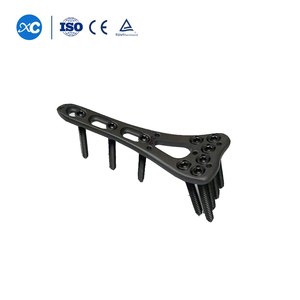
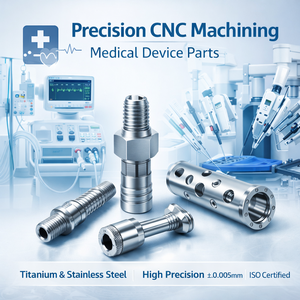
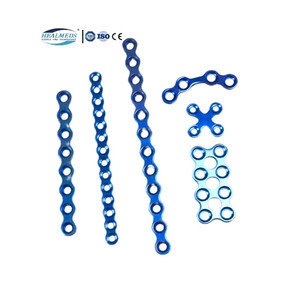
Manufacturing anatomical locking plates, polyaxial pedicle screws, and complex maxillofacial constructs demands sub-micron precision. State-of-the-art factories employ Swiss-type automatic lathes and multi-axis CNC machining centers equipped with high-pressure internal coolant delivery to prevent thermal alteration of metal crystal structures. For complex trauma locking plates, variable-angle thread machining requires exact positioning tolerances (±0.005 mm) to guarantee perfect locking screw engagement without galling or cross-threading during surgical insertion. Furthermore, specialized deburring through electrochemical polishing or automated ultrasonic bath cycles eliminates micro-burrs that could act as stress concentration points under cyclical physiological loading (ASTM F1717 spinal fatigue testing standards).
Biomechanical Comparison of Core Implant Materials
| Material Category | Standard Specification | Tensile Strength (MPa) | Elastic Modulus (GPa) | Primary Clinical Application |
|---|---|---|---|---|
| Titanium Ti-6Al-4V ELI | ASTM F136 / ISO 5832-3 | 860 – 960 | 110 – 114 | Spinal Screws, Trauma Locking Plates, Joint Stems |
| Unalloyed Titanium (CP Grade 4) | ASTM F67 / ISO 5832-2 | 550 – 680 | 105 | CMF Plates, Dental Implants, Reconstructive Mesh |
| Stainless Steel 316L | ASTM F138 / ISO 5832-1 | 490 – 1350 | 190 – 200 | Veterinary Implants, Temporary Fixation, K-Wires |
| PEEK (Polyetheretherketone) | ASTM F2026 | 90 – 100 | 3.5 – 4.0 | Spinal Interbody Fusion Cages, Cranial Repairs |
Why Ortix Medical Leads Global B2B Supply Chains
Referencing our original factory infrastructure, we combine high-volume production scalability with low MOQ flexibility to support distributors across 80+ countries.
60,000 m² Manufacturing Footprint
Our expansive industrial complex features ISO Class 7 (Class 10,000) cleanrooms for sterile packaging, dynamic fatigue test laboratories, and over 450 automated production machines capable of generating 20,000 precision implant units daily.
Complete Regulatory Technical Files
Distributors receive full documentation packages including ISO 13485 quality system certificates, FDA establishment registrations, mill test certificates (MTC), biocompatibility reports (ISO 10993), and surgical technique manuals for local hospital tender registration.
Turnkey OEM & ODM Customization
In-house engineering teams provide customized laser marking, private label packaging design, IFU layout, and custom CNC component fabrication based on client-provided 2D/3D CAD drawings or clinical prototypes.
Low MOQ & Mixed-SKU Consignment
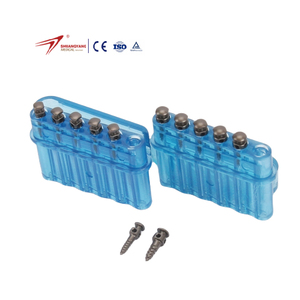
Eliminate inventory bottlenecks. We support small minimum order quantities (MOQ) and allow distributors to aggregate trauma locking plates, intramedullary nails, pedicle screws, and matched surgical tool kits in single shipments.
Matched Surgical Instrument Sets
Implants achieve optimal surgical outcomes only when paired with ergonomic instruments. We produce matched stainless steel drill bits, tap drivers, benders, and reamers optimized for seamless intraoperative handling.
Rapid Global Logistics & Stock Assurance
With strategic raw material stocks and standardized semi-finished inventories, catalog items are dispatched within expedited timelines to ensure uninterrupted surgical device availability for public and private healthcare facilities.
Future Procurement Trends in Orthopedic Supply Chains
Key developments shaping B2B purchasing strategies for hospitals, importers, and brand owners over the next decade.
1. Transition Toward Modular & Anatomical Pre-Contoured Plates
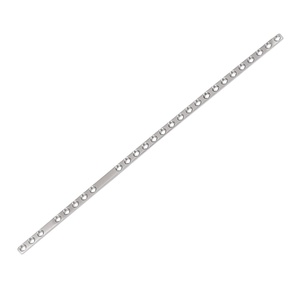
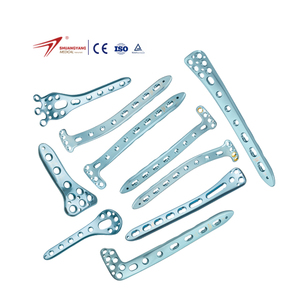
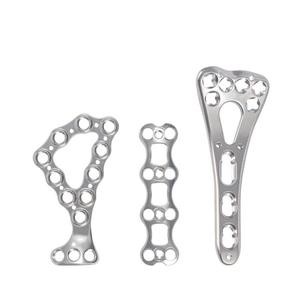
Hospital procurement committees are rapidly moving away from straight bone plates that require intraoperative manual contouring. Modern surgical demand favors pre-contoured anatomical locking plates (such as proximal humerus, distal tibia, and proximal femur plates). Pre-contoured designs reduce operative time, minimize metal fatigue induced by manual bending irons, and lower intraoperative soft-tissue stripping. Factories capable of modeling anatomical scan data into high-volume contoured plates are taking decisive market share in government healthcare tenders.
2. Stringent Regulatory Harmonization & MDR Impact
The transition to the European Union Medical Device Regulation (EU MDR 2017/745) and heightened FDA 510(k) auditing standards have increased compliance costs for small manufacturers. Consequently, global distributors are consolidating vendor lists, preferring to contract directly with robust orthopedic implant factories holding established technical files, comprehensive clinical evaluation reports (CER), and automated risk-management processes compliant with ISO 14971.
3. Rise of Contract OEM/ODM Machining for Niche Devices
Rather than investing tens of millions in capital equipment, major medical device brands increasingly rely on qualified contract OEMs for specialized component fabrication—including PEEK suture anchors, arthroscopic shaver blades, maxillofacial reconstruction grids, and custom CNC spinal rod connectors. OEM partnerships enable brands to launch innovative surgical lines rapidly while retaining high gross margins.
4. Supply Chain De-Risking & Dual-Sourcing Strategies
Global logistics disruptions have compelled hospital procurement directors to abandon single-source supplier reliance. Importers now actively adopt dual-sourcing strategies, maintaining a primary domestic vendor alongside an agile, cost-competitive international OEM manufacturer. This model preserves supply chain resilience during demand spikes without compromising mechanical quality standards.
Technological Innovations Driving Next-Gen Implants
How 3D printing, advanced bio-coatings, and patient-specific implant (PSI) engineering are redefining orthopedic surgery.
Porous 3D Printed Metal Lattice
Additive manufacturing using Selective Laser Melting (SLM) or Electron Beam Melting (EBM) enables factories to produce porous titanium structures mimicking natural cancellous bone architecture. Pore sizes between 400–600 μm with 60–70% porosity facilitate deep cellular ingrowth (osteoconduction), significantly increasing fixation strength in spinal fusion cages and joint revision components.
Bioabsorbable & PEEK Polymers
In sports medicine and spinal arthrodesis, radiolucent PEEK implants eliminate metallic CT/MRI artifacts, allowing surgeons to monitor fusion progress accurately. Simultaneously, bioabsorbable materials (like PLDLA and magnesium alloys) are emerging for interference screws and pin fixation, gradually degrading into harmless metabolites as native bone heals.
Patient-Specific Implants (PSI)
Combining patient CT DICOM data with CAD modeling allows custom CNC milling of cranial reconstruction plates, pelvic deformity reconstructions, and complex maxillofacial scaffolds. PSI solutions eliminate intraoperative plate contouring entirely, ensuring exact anatomical fit and optimal cosmetic outcomes.
Frequently Asked Questions (B2B Buyers & Distributors)
Detailed technical and commercial guidance for purchasing managers qualifying an orthopedic implant factory.