Primary Clinical Portfolio & Precision Implants
Certified Class III implants covering trauma, spine, CMF, and veterinary orthopedic applications.
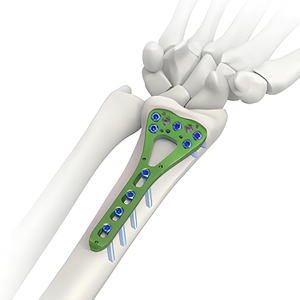
Orthopedic Trauma Implant Multi-axial Locking Plate Pure Titanium Distal Radius Medial Fracture Bone Fixation MDR/ISO 13485
Anatomic low-profile design fabricated from Grade 4 Pure Titanium. Multi-axial screw placement allows ±15° angulation for optimal metaphyseal fragment purchase.
Send an Inquiry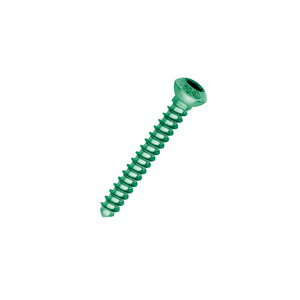
Dafinki 4.5mm Titanium Alloy Cortical Bone Screws-Locking Screws For Orthopedic Surgery Class III Implant
Precision CNC-machined Ti-6Al-4V ELI alloy cortical screws with optimized thread pitch for superior pull-out strength in diaphyseal trauma fixation.
Send an Inquiry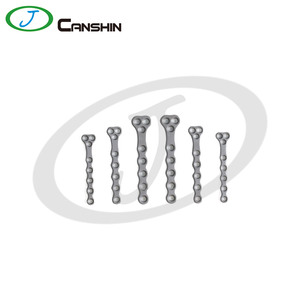
Veterinary Orthopedic Surgery Implant T Shape Reconstruction Locking Plate with Pure Titanium
Engineered for veterinary reconstructive procedures. Pure titanium contourable matrix designed for articular fracture repair in canine and feline biomechanics.
Send an Inquiry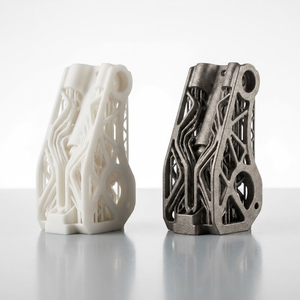
ISO 13485 Biocompatible Titanium SLM 3D Printed Bone Implants for Orthopedic Surgery
Selective Laser Melting (SLM) additive manufactured porous structures mimicking human trabecular bone geometry to accelerate bone ingrowth and osseointegration.
Send an Inquiry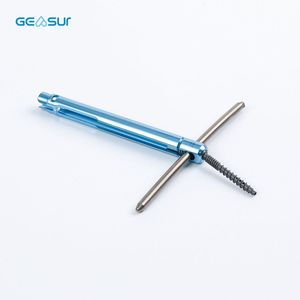
5.5 Titanium Minimally Invasive Pedicle Screw Set Orthopedic Implants For Posterior Spinal Fixation
Low-profile MIS spinal fixation system featuring extended tabs, self-tapping screw heads, and high-strength titanium alloy rods for thoracolumbar stabilization.
Send an Inquiry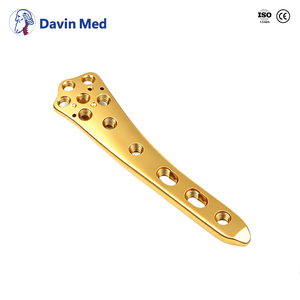
Davin Med Distal Humerus Lateral Locking Plate Titanium Orthopedic Bone Plate Trauma Implant CE ISO13485 OEM ODM Manufacturer
Anatomically pre-contoured lateral humerus locking system. Engineered to optimize distal articular fixation while preserving soft tissue attachments.
Send an Inquiry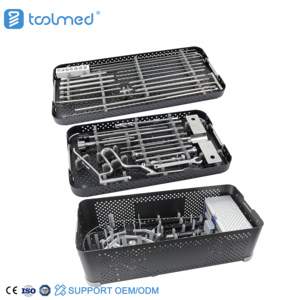
High Quality Titanium Femoral Intramedullary Nail Medical Orthopedic Implant Instrument Set TOOLMED
Interlocking intramedullary nailing system for complex femoral shaft fractures. Includes complete precision targeted surgical instrument set for streamlined OR workflow.
Send an Inquiry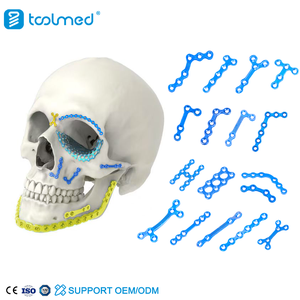
Toolmed Cmf Maxillofacial Surgery Orthopedic Titanium Alloy Implant Cost-Effective 2.0mm Rectangle Craniomaxillofacial Locking
Ultra-low profile 2.0mm micro-locking matrix for craniomaxillofacial trauma and reconstructive surgery. Excellent tactile feedback and tissue compatibility.
Send an InquiryManufacturing Infrastructure & Enterprise Scale
Ortix Medical Devices Co., Ltd. operates state-of-the-art production facilities engineered specifically to meet stringent international medical device regulatory standards (ISO 13485, US FDA 21 CFR Part 820, and EU MDR 2017/745). Our manufacturing architecture combines Swiss multi-axis CNC machining, additive manufacturing laboratories, cleanroom packaging, and comprehensive material testing.
1. Biocompatible Metallurgy and Manufacturing Rigor in Chinese Orthopedic Production
The global market for orthopedic devices has undergone a structural transformation over the past decade. Leading Chinese orthopedic implant manufacturers have transitioned from low-cost component manufacturing to advanced bio-engineering innovators. Today, Chinese manufacturing hubs supply high-precision implants for trauma, spine, joint arthroplasty, and craniomaxillofacial (CMF) surgeries across over 100 countries.
1.1 Raw Material Selection: ASTM F136 & ISO 5832 Compliance
The structural integrity and long-term biological safety of internal fixation devices depend entirely on raw material purity. Top-tier Chinese manufacturers utilize medical-grade titanium alloys (Ti-6Al-4V ELI - Extra Low Interstitial, governed by ASTM F136 and ISO 5832-3), Commercially Pure Titanium (CP-Ti Grades 2 and 4 under ASTM F67), surgical-grade implantable PEEK (Polyetheretherketone under ASTM F2026), and implant-grade 316LVM stainless steel (ASTM F138).
1.2 Surface Passivation, Anodization & Bio-Active Coatings
To minimize metal ion release and accelerate cellular adhesion, raw machined implants undergo rigorous chemical surface processing. Type II Anodization forms a controlled titanium oxide layer ($TiO_2$) that increases surface hardness, minimizes fretting corrosion at the plate-screw interface, and enhances fatigue life under cyclic loading conditions (validated up to 5,000,000 cycles under ASTM F382 standards).
For spinal interbody fusion cages and total joint arthroplasty components, advanced surface modifications—such as Hydroxyapatite (HA) plasma spraying, porous plasma-sprayed titanium coatings, and physical vapor deposition (PVD)—are utilized to create a porous matrix optimized for human osteoblast attachment and secondary mechanical fixation.
2. Comprehensive Product Classification & Technical Performance Benchmarks
Procurement directors and hospital sourcing managers require complete clarity regarding the clinical indication, dynamic biomechanics, and manufacturing tolerances of orthopedic implants. Below is an technical evaluation of core product lines produced by premier Chinese medical device suppliers.
Spinal Fixation Systems
Thoracolumbar pedicle screw systems (5.5mm / 6.0mm rod platforms), anterior cervical plates (ACDF), PEEK interbody fusion cages, and 3D printed porous cervical/lumbar spacers. Engineered to pass ASTM F1717 static and dynamic fatigue tests.
Trauma Internal Fixation
Anatomical locking compression plates (LCP), proximal femoral intramedullary nails (PFNA), distal radius plates, and cannulated screws. Designed with combi-holes allowing combined compression and locking screw placement.
CMF & Reconstructive
1.5mm, 2.0mm, and 2.4mm micro and mini locking plate matrices, emergency cranial repair plates, and custom-molded PEEK cranial implants for complex maxillofacial trauma reconstruction.
2.1 Comparative Material & Engineering Matrix
The following comparative benchmark outlines mechanical property differentials across primary implant-grade biomaterials utilized in ISO 13485 certified facilities:
| Implant Biomaterial | Tensile Strength (MPa) | Yield Strength (MPa) | Elastic Modulus (GPa) | MRI Compatibility | Primary Clinical Indications |
|---|---|---|---|---|---|
| Ti-6Al-4V ELI (Grade 5) | ≥ 860 | ≥ 795 | 110 - 114 | Excellent (Minimal Artifact) | Pedicle Screws, IM Nails, Trauma Locking Plates |
| Pure Titanium (Grade 4) | ≥ 550 | ≥ 480 | 104 - 108 | Excellent | Contourable Radius & Maxillofacial Plates |
| PEEK-OPTIMA Polymer | 90 - 100 | 110 (Flexural) | 3.5 - 4.0 | Complete Radiolucency | Spinal Interbody Fusion Cages, Cranial Mesh |
| Stainless Steel (316LVM) | ≥ 860 | ≥ 690 | 190 - 200 | Moderate Artifact Risk | Cost-Effective Trauma Fixation, K-Wires |
| 3D Printed SLM Ti-6Al-4V | ≥ 920 | ≥ 830 | 2.5 - 5.0 (Porous) | Excellent | Trabecular Fusion Cages, Custom Bone Defects |
3. Future Sourcing Trajectory & Procurement Trends (2025–2030)
Global orthopedic procurement is shifting rapidly from fragmented, high-cost Western suppliers toward strategic partnerships with highly automated Chinese manufacturing centers. Medical device importers, tenders, and healthcare networks must align their 5-year purchasing strategies with key emerging technological trends:
Trend A: Additive Manufacturing & Trabecular Lattice Engineering
Selective Laser Melting (SLM) and Electron Beam Melting (EBM) 3D printing technologies are transitioning from custom patient-specific implants to mass-standardized production lines. By controlling laser energy density and powder bed particle sizes (15–45 µm), Chinese manufacturers produce interbody fusion cages featuring interconnected porous lattices (60% to 80% porosity, pore size 300–600 µm). This structure mimics natural cancellous bone, dramatically accelerating bone graft integration without requiring secondary bone morphogenetic proteins (BMPs).
Trend B: Minimally Invasive Surgery (MIS) Platform Integration
Surgical trends globally favor reduced soft-tissue disruption, driving demand for low-profile MIS implants paired with specialized instruments. Modern Chinese trauma and spinal manufacturers are expanding integrated solutions—such as percutaneous pedicle screw extension towers, cannulated screws with radiolucent carbon-fiber targeting units, and self-stabilizing zero-profile cervical fusion cages.
Trend C: Digitalization of Quality Management Systems (QMS) & Regulatory Harmonization
With the full implementation of the European Union Medical Device Regulation (EU MDR 2017/745) and stringent US FDA 510(k) audit trails, top Chinese suppliers have digitalized full-lot traceability. From vacuum-melted raw bar stock receiving to CNC dimensional verification, automatic cleanroom cleaning, bioburden testing, and final ethylene oxide (EtO) or Gamma sterilization, every step generates a verified digital Device History Record (DHR).
4. Enterprise Strengths & Contract Manufacturing Capabilities
Choosing Ortix Medical as your manufacturing partner provides immediate access to an industrialized medical production ecosystem designed to optimize margin structures, ensure uninterrupted delivery schedules, and simplify regulatory submissions.
Full Orthopedic Range Consolidation
Eliminate supply chain fragmentation by sourcing Spine, Trauma, Joint, Sports Medicine, CMF, Power Tools, and Sutures from a single ISO 13485 manufacturer. Consolidate shipping logistics, lower customs overhead, and maintain uniform quality across all clinical categories.
One-Stop OEM & ODM Customization
Our 70+ in-house biomedical design engineers deliver full turn-key private labeling. Services include precision fiber laser marking, custom anodization color-coding by instrument size, custom blister shell packaging, IFU translation, and full engineering support for bespoke implant geometry.
Low MOQ & Mixed-SKU Batch Flexibility
We protect distributor cash flow by supporting low Minimum Order Quantities (MOQ) and flexible mixed-SKU ordering. Importers can combine plates, screws, intramedullary nails, and reusable instrument containers into a single batch order to enter new regional markets risk-free.
Rapid Turnaround & High Capacity
With a 60,000 m² production infrastructure housing over 450 precision multi-axis CNC machine centers, our daily output reaches approximately 20,000 finished units. High-volume catalog items maintain standard stock levels for rapid global dispatch within days.
5. Frequently Asked Procurement & Technical Questions (FAQ)
Essential regulatory, quality control, and logistics answers for medical device procurement managers and global distributors evaluating Chinese manufacturing partners.
Ortix Medical operates under an ISO 13485:2016 certified Quality Management System specifically tailored for medical device design and manufacturing. Our manufacturing facilities are establishment registered with the U.S. FDA, and our primary product lines carry CE marking compliance under European MDD/MDR guidelines. We provide qualified distributors with complete technical dossiers (STED), raw material certificates of analysis (CoA), mechanical test reports (ASTM F1717/F382/F543), and cleanroom sterilization validation data to facilitate seamless registration with local Ministries of Health.
Every batch of raw titanium bar stock or PEEK resin is sourced exclusively from certified medical-grade suppliers accompanied by full chemical and mechanical mill test reports. Production utilizes high-precision 5-axis Swiss-type automatic lathes and 5-axis CNC machining centers equipped with optical tool setters. In-process Quality Control (IPQC) performs 100% automated optical coordinate measurement machine (CMM) inspections on critical dimensions, screw thread profiles, and locking tapers, ensuring zero dimensional drift across production batches.
Yes. We operate a structured Free Sample & Evaluation Program for qualified medical device distributors, hospital procurement committees, and OEM partners. Sample evaluation kits allow surgical teams and biomedical engineers to verify surface finish, tactile driver engagement, plate contourability, and instrument box ergonomics prior to entering into long-term commercial supply agreements.
Standard catalog products held in safety stock ship within 5 to 7 business days following order confirmation. For private label OEM orders involving custom laser marking and custom packaging, standard lead times are typically 3 to 4 weeks. Turn-key ODM projects requiring custom cad modeling, prototype machining, mechanical validation testing, and custom tooling typically range from 6 to 10 weeks depending on complexity.
Final washing and primary packaging are conducted inside ISO Class 7 (Class 10,000) cleanroom environments utilizing medical-grade Tyvek blister trays and double-vacuum heat sealing under ISO 11607 validation standards. Implants can be supplied non-sterile for local hospital autoclave sterilization or pre-sterilized via validated Ethylene Oxide (EtO) or Gamma irradiation with a certified 5-year shelf-life barrier integrity.
We actively support hospital tender bids by offering price protection guarantees, customized surgical instrument tray configurations, authorization letters (LoA), and low MOQ mixed-SKU consignment options. Our regulatory team works directly with tender applicants to prepare complete technical submission packages matching regional public healthcare standards.
Partner with China's Premier Orthopedic Device Manufacturer
Streamline your medical device supply chain with certified ISO 13485 implants, complete surgical instrument sets, and competitive OEM/ODM programs tailored for global healthcare markets. Contact our technical export specialists today to receive product catalogs, technical dossiers, and volume pricing quotes.