Featured Orthopedic Systems & Surgical Instrumentation
Engineered for high-volume hospital tenders, clinical versatility, and stringent regulatory compliance across international markets.
Navigating Global Orthopedic Implant Procurement: Quality, Regulatory Compliance, and Supply Chain Excellence
An executive guide for medical device distributors, hospital purchasing syndicates, and OEM brand owners seeking reliable original equipment manufacturing and strategic market expansion.
1. Executive Overview: The Evolving Landscape of Global Orthopedic Supply Chains
The global orthopedic medical device market is undergoing a structural paradigm shift driven by demographic aging, expanding healthcare infrastructure in emerging economies, and rapid technological convergence in minimally invasive surgery (MIS) and additive manufacturing. For international distributors, regional hospital suppliers, and brand owners, selecting a qualified orthopedic implant supplier is no longer merely a transaction based on piece-part costs. It is a strategic alignment requiring rigorous validation of raw material purity, biomechanical precision, regulatory traceability, and agile supply chain resilience.
Implants utilized in spinal fixation, trauma reconstruction, joint arthroplasty, and craniomaxillofacial (CMF) procedures operate under severe mechanical fatigue conditions inside the human body. Consequently, manufacturing defects, metallurgical impurities, or micro-scale dimensional variations can lead to catastrophic implant failure, revision surgeries, and severe legal liability. Partnering with an established manufacturer certified under ISO 13485 and registered with global regulatory authorities (such as the US FDA and European competent authorities) is the essential foundation for mitigating commercial and clinical risk.
Strategic Sourcing Insight: Medical device distributors that consolidate their orthopedic purchasing with full-portfolio manufacturers achieve up to 35% lower administrative compliance overhead, streamlined customs registration through unified technical dossiers (STED format), and enhanced margin protection against volatile supply shocks.
2. Advanced Metallurgical Engineering & Precision CNC Manufacturing Standards
At the core of high-performance orthopedic implant manufacturing is advanced materials science. Our manufacturing facilities utilize exclusively implant-grade raw materials sourced from audited, certified mills with comprehensive chemical analysis and mechanical batch testing documentation:
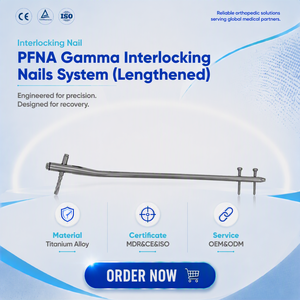
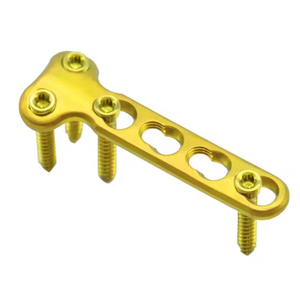
- Titanium Alloy (Ti-6Al-4V ELI / ASTM F136): Extra Low Interstitial grade titanium offering superior strength-to-weight ratio, extreme fatigue endurance, and uncompromised biocompatibility for pedicle screws, locking plates, trauma pins, and intramedullary nails.
- Polyetheretherketone (PEEK / ASTM F2026): Radiolucent biomaterial with an elastic modulus closely matching human cancellous and cortical bone, eliminating stress-shielding effects in cervical and lumbar interbody fusion cages.
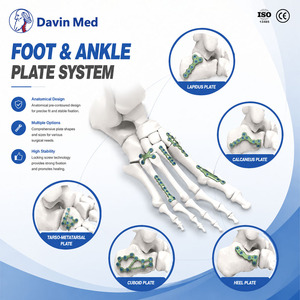
- Implant-Grade Stainless Steel (316LVM / ASTM F138): Vacuum-arc remelted surgical steel providing enhanced pitting corrosion resistance and maximum rigidity for temporary internal fixation components, calcaneal plates, and robust external fixators.
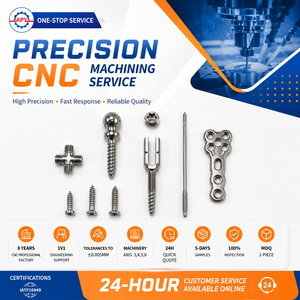
Our production lines feature over 450 advanced machine tools, including high-precision Swiss-type multi-axis CNC lathes, 5-axis simultaneous machining centers, laser marking units, and automated passivating and cleanroom packaging lines. Screw threads are precision-whirled rather than cut to preserve grain structure and eliminate micro-fractures, yielding thread pull-out strength profiles that consistently exceed ISO and ASTM benchmark standards.
Full-Spectrum Product Portfolio
Access spine, trauma, joint, CMF, sports medicine implants, and surgical power tools under one consolidated quality system, reducing vendor management fragmentation.
Flexible OEM & ODM Customization
In-house CAD/CAM engineering, rapid 3D prototyping, customized laser etching, private label branding, and tailor-made instrument tray configurations.
3. Future Trends in Orthopedic Device Sourcing & Manufacturing (2025–2030)
As the orthopedic industry evolves, procurement directors must anticipate technology trajectories to ensure their product catalogs remain competitive in public hospital tenders and private surgical centers. Key secular developments transforming orthopedic manufacturing include:
A. Additive Manufacturing & 3D-Printed Porous Architectures
Traditional smooth-surface implants are rapidly yielding market share to 3D-printed titanium constructs featuring trabecular porous structures. Selective Laser Melting (SLM) and Electron Beam Melting (EBM) enable the fabrication of interbody fusion cages and acetabular cups with interconnected porosity (60-80% pore ratio) mimicking natural cancellous bone. This micro-architecture encourages rapid osteointegration and vascularization, significantly shortening patient recovery timelines and reducing pseudarthrosis rates.
B. Integrated Modular Instrumentation & Single-Use Sterile Kits
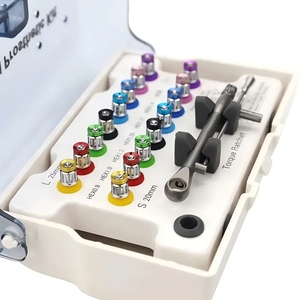
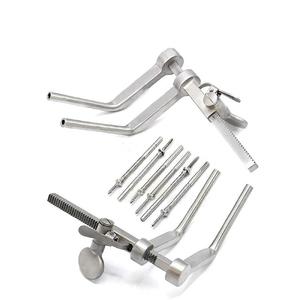
Hospitals are increasingly focused on reducing Operating Room (OR) turnover times and eliminating surgical site infection (SSI) risks associated with improper instrument reprocessing. Distributors demand modular, ergonomically designed instrument kits (e.g., Caspar distractors, PFNA insertion tools, pedicle screw drivers) crafted from high-grade stainless steel and autoclavable PEEK polymers, supplied alongside pre-sterilized single-use drill bits and shaver blades.
C. Regulatory Convergence & Demand for Low-MOQ Mixed Supply
With the implementation of EU MDR (Medical Device Regulation) and stricter regional registration frameworks (such as ANVISA in Brazil, CDSCO in India, and SFDA in Saudi Arabia), distributors require manufacturers capable of providing complete technical documentation packages (STED format), clinical evaluation reports (CER), and material certificates for every batch. Furthermore, distributors in emerging markets need low Minimum Order Quantity (MOQ) flexibility to stock diverse SKU sizes without over-leveraging working capital.
Orthopedic Material & Application Decision Matrix
Comparative analysis of core surgical materials and structural specifications to guide hospital purchasing boards and distributor sourcing teams.
| Material Class | Biomechanical Profile | Primary Clinical Indications | Surface Treatment Options | Quality Certification |
|---|---|---|---|---|
| Titanium Alloy (Ti-6Al-4V ELI) | Tensile Strength > 860 MPa Fatigue Limit > 510 MPa |
Pedicle Screws, Trauma Locking Plates, Intramedullary Nails, Bone Screws | Anodizing (Type II/III), SLA, Micro-Arc Oxidation | ISO 13485, FDA 510(k), CE MDD/MDR |
| PEEK Optima | Modulus 3.5 - 4.1 GPa (Bone-matching elastic response) |
Cervical & Lumbar Fusion Cages, Cranial Repair Plates | Plasma Spraying, Hydroxyapatite (HA) Coating | ISO 13485, FDA Registered, ASTM F2026 |
| 316LVM Stainless Steel | Ultimate Strength > 930 MPa High Rigidity Profile |
Calcaneal Plates, K-Wires, External Fixation Frames, Distractor Sets | Electro-polishing, Passivation (ASTM A967) | ISO 13485, CE Approved, ISO 5832-1 |
| Ultra-High Molecular Weight Polyethylene (UHMWPE) | High Impact Resistance Low Coefficient of Friction |
Acetabular Liners, Tibial Bearings, Suture Button Constructs | Gamma Sterilization in Vacuum/Inert Gas | ISO 13485, ASTM F648 Compliance |
Institutional Capabilities & Quality Assurance System
Demonstrated excellence in medical device manufacturing, regulatory support, and international distributor fulfillment.
Rigorous ISO 13485 & FDA System
Operated under audited Quality Management Systems certified to ISO 13485:2016 standards. Every production lot undergoes 100% dimensional inspection via CMM, optical comparators, and automated vision systems.
Full Dossier & Registration Support
We empower international distributors with complete regulatory dossiers, including technical files, biocompatibility test reports (ISO 10993), sterilization validation, and raw material mill certs for fast local registration.
Agile Logistics & Low MOQ
Support for mixed-SKU small-batch orders enables new distributors to test local demand without binding massive capital. Standard catalog implants ship rapidly via DHL/FedEx or consolidated air freight.
70+ In-House R&D Engineers
Our dedicated biomedical engineering group works directly with orthopedic surgeons and key opinion leaders (KOLs) to optimize implant geometry, anatomical fit, and surgeon-friendly instrument handling.
Frequently Asked Questions by Medical Device Buyers
Key answers regarding compliance, evaluation samples, OEM workflows, and global shipping policies.
What quality certifications and regulatory approvals do your orthopedic implants hold?
Our manufacturing plant operates under an audited ISO 13485:2016 Quality Management System and maintains establishment registration with the US FDA. Our product catalog complies with essential safety and performance requirements under European CE mark directives/regulations (MDD/MDR). Complete technical documentation, raw material mill certificates, and third-party biomechanical test reports (including pull-out strength, static torsion, and dynamic fatigue tests) are readily made available to qualified distributors to facilitate seamless local ministry of health registrations.
What is your Minimum Order Quantity (MOQ) policy for initial distributor orders?
We recognize that building market presence requires catalog breadth rather than excessive depth in a single size. We support low MOQ policies with flexible mixed-SKU combinations. Importers can combine pedicle screws, locking plates, intramedullary nails, fusion cages, and matching instrument sets within a single shipment. Custom OEM/ODM projects requiring special laser marking or custom packaging have specific MOQ thresholds tailored to the project scope.
Can we request evaluation samples prior to executing a formal supply agreement?
Yes. We strongly encourage evaluation sampling. Qualified hospital procurement managers and medical device distributors can apply for evaluation sample sets through our Free Sample initiative. Evaluation kits allow clinical teams to inspect surface finishing, thread precision, anodization quality, and instrument tray ergonomics prior to placing bulk commercial orders.
What OEM and ODM customization capabilities do you offer for private labeling?
We deliver complete end-to-end OEM/ODM private label programs. Services include custom fiber laser etching (for part numbers, lot codes, UDI compliance, and brand logos), custom anodization colors for easy size identification, tailored sterile-barrier blister packaging, branded aluminum surgical trays, and custom IFU (Instructions for Use) layout design built to match your company's corporate identity.
How do you ensure lot-to-lot consistency and raw material traceability?
Every single implant manufactured in our facility is assigned a unique batch/lot identification number mapped to the raw material heat number. Raw titanium, stainless steel, and PEEK bars are batch-tested upon arrival for chemical composition via spectrographic analysis and tensile strength verification. Detailed Device History Records (DHR) are preserved for over 15 years, ensuring total backward and forward traceability.
What is the typical production lead time for standard catalog items vs. custom orders?
Standard catalog orthopedic implants and standardized instrument sets maintained in our central warehouse stock ship within 5 to 10 business days. Custom OEM/ODM production runs or high-volume hospital tender orders generally require 3 to 5 weeks depending on component complexity, passivation requirements, and sterile packaging specifications.
Ready to Expand Your Orthopedic Product Portfolio?
Connect directly with our senior medical device export specialists. Receive comprehensive product catalogs, technical data sheets, wholesale distributor pricing, and sample evaluation packages tailored to your target market.