Precision-Engineered Orthopedic Implants & Systems
Every component manufactured at our facility features end-to-end material and processing traceability compliant with global UDI, ISO 13485, and FDA regulations.
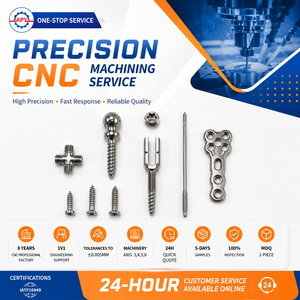
Precision CNC Machined Orthopedic Implants Titanium Bone Screws Spinal Fixation Parts OEM Custom Medical Components Manufacturer
Inquire Now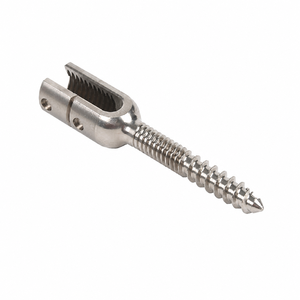
Titanium Pedicle Screw CNC Machining Service Spinal Orthopedic Bone Screw Custom Precision OEM Parts
Inquire Now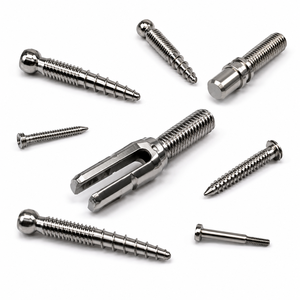
ISO 13485 CNC Machining Medical Stainless Steel Parts Surgical Bone Screw Dental Abutment Titanium OEM Precision Implant
Inquire Now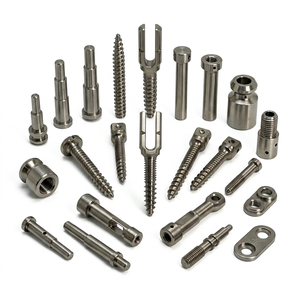
ISO 13485 CNC Medical Machining OEM Spinal Pedicle Screw Orthopedic Bone Screws Plates 5-Axis Precision Implant Parts
Inquire Now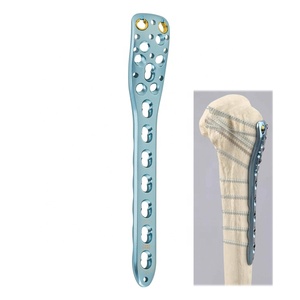
Variable Angle Neck Of Humerus Locking Bone Plate Titanium Orthopedic Trauma Implants
Inquire Now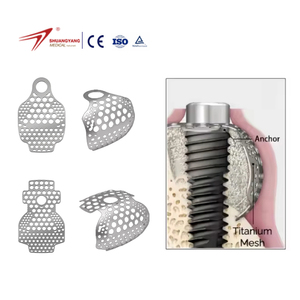
Dental Master GBR Bone Tack Kit Titanium Implant For Bone Regeneration CE ISO Certified Hospital Use Class III Medical Device
Inquire Now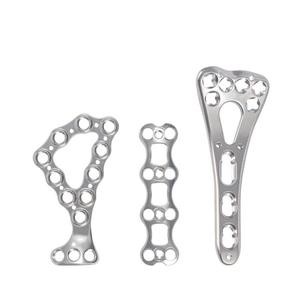
Custom Drawing Orthopedic Surgical Spine Implants High-Quality Titanium Minimally Invasive Pedicle Screw System
Inquire Now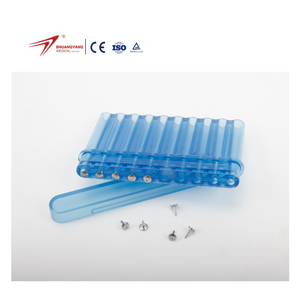
Shuangyang Orthopedic Implant Titanium Alloy Screw Gbr Membrane Bone Tack System Dental Hospital Use CEISO Certified 1 Year
Inquire NowThe Imperative of End-to-End Traceability in Global Orthopedic Implant Exporting
In the modern landscape of global surgical device procurement, selecting a top trusted orthopedic implant traceability exporter is no longer merely a logistics decision—it is an essential risk mitigation strategy. As international regulatory bodies such as the European Medicines Agency (under EU MDR 2017/745) and the United States Food and Drug Administration (FDA 21 CFR Part 830) enforce stringent mandates regarding Unique Device Identification (UDI), hospital procurement committees and regional medical distributors must demand complete chain-of-custody transparency for every implantable device.
Orthopedic implants—whether spinal pedicle screw systems, trauma locking plates, intramedullary nails, or CMF structural meshes—operate in high-load, load-bearing anatomical environments. A single micro-defect in titanium alloy grade, an unauthorized alteration in grain structure during 5-axis Swiss CNC turning, or an uncontrolled batch in anodization can cause catastrophic in-vivo hardware failure. Full traceability guarantees that every single bone screw or trauma plate can be audited back to its original titanium ingot heat melt number, raw material supplier certificate, specific CNC machine line, operator shift, and sterilization validation lot.
GS1 DataMatrix UDI Etching
Direct-part marking (DPM) utilizing ultra-short pulse fiber laser technology to etch high-density 2D DataMatrix barcodes on non-contact implant surfaces without creating stress concentration points.
Melt-to-Market Provenance
100% material certifiability linked directly to ISO 5832-3 (Ti-6Al-4V ELI) and ASTM F138 (316LVM Stainless Steel) mill test reports (MTR), preventing material degradation risks.
Recall Isolation Capability
Advanced digital warehouse integration allows immediate isolation of specific batch lots in the event of hospital feedback, reducing regional distributor recall liability by up to 99%.
Future Global Procurement Trends in Orthopedic Implants (2025–2030)
The global orthopedic implant market is undergoing a seismic shift driven by value-based healthcare, demographic aging, and rapid technological convergence. Procurement executives, hospital chain buyers, and international medical device exporters must align their supply chains with five core emerging procurement trends:
1. Transition to Additive Manufacturing & Trabecular Structures
Traditional subtractive CNC machining is increasingly complemented by 3D printing (Electron Beam Melting - EBM and Selective Laser Melting - SLM). Future hospital tenders heavily weight implants featuring porous titanium structures with pore sizes between 400–600 μm, mimicking native human cancellous bone to promote faster osseointegration and reduce stress shielding.
2. Mandated Digital Twin Packaging & Regulatory Dossiers
Exporters must supply digitized technical dossiers (STED compliant) alongside physical shipments. International buyers are prioritizing exporters capable of delivering real-time digital certificates of conformity (CoC), automated dimensional CMM inspection reports, and bioburden cleanroom logs directly to hospital ERPs.
3. Modular & Minimally Invasive Surgery (MIS) Instrument Bundling
Procurement models are moving away from unbundled component purchasing. Leading distributors demand complete, modular MIS system kits—where trauma plates, self-tapping cortical screws, expandable cages, and single-use ergonomic driver sets are delivered in color-coded, ready-to-sterilize tray configurations.
4. Hybrid Biomaterials: PEEK vs. Advanced Titanium Alloys
Spinal fusion cages are witnessing an evolution toward radiolucent Polyetheretherketone (PEEK) coated with titanium micro-layers, combining the modulus of elasticity close to human bone with the superior osteoconductive interface of pure titanium.
Our Manufacturing Infrastructure & Global Scale
As a world-class OEM/ODM contract manufacturer and global exporter, our facility operates with precision engineering metrics designed for high-volume, defect-free medical device supply.
ISO 13485:2016 Certified
Full Quality Management System coverage from raw material receiving inspection to final sterile barrier pouch sealing and export packing.
U.S. FDA Registered
Facility establishment registered and compliant with Good Manufacturing Practice (GMP) / Quality System Regulation (21 CFR Part 820).
Biomechanical Test Lab
Equipped with static and dynamic axial/torsional mechanical testing rigs operating per ASTM F1717 (Spine), ASTM F382 (Plates), and ASTM F543 (Screws).
Product Development & Material Science Breakthroughs
Our research and development engineering group focuses heavily on addressing biomechanical limitations inherent in legacy orthopedic implant designs. By integrating multi-axis precision machining, customized surface treatments, and advanced metallurgical alloys, our exported components achieve superior fatigue strength and biological integration.
Variable Angle Locking Mechanics
Our humerus, distal radius, and distal tibia trauma plates incorporate patented variable-angle locking bushings, allowing surgeons up to 15° of polyaxial screw trajectory adjustment per hole for precise fragment fixation in complex peri-articular fractures.
Type II Anodization & Micro-Arc Oxidation
Proprietary surface passivization treatments eliminate micro-fissures and increase titanium surface fatigue life by up to 35%, while preventing galling between screw threads and locking plate holes during intraoperative power-tool insertion.
Minimally Invasive Spine Fixation
Percutaneous pedicle screw systems featuring extended tab towers, cannulated screw shafts, and self-cutting lead threads that minimize surgical trauma, reduce intraoperative blood loss, and cut hospital stay duration.
Frequently Asked Questions by International Orthopedic Importers
Detailed answers regarding technical specifications, quality control documentation, OEM customization, and export compliance.
How does your facility guarantee lot-level traceability for exported orthopedic implants?
Every raw material batch (e.g., Titanium Grade 5 ELI bar stock per ASTM F136 or ISO 5832-3) receives a unique heat melt identifier upon entering our warehouse. During manufacturing, each production lot is assigned a digital routing code tracked across all 5-axis CNC machining, deburring, ultrasonic cleaning, anodizing, and laser-marking processes. Every finished implant features an indelible GS1 DataMatrix 2D barcode etched via high-precision fiber laser, linking directly to the lot's dimensional inspection records, material certs, and bioburden validation files.
What certifications and regulatory documents do you provide to assist local registration?
We provide comprehensive STED-format technical dossiers to qualified distributors and procurement partners. Our regulatory package includes ISO 13485:2016 quality management certificates, U.S. FDA establishment registration details, raw material Mill Test Certificates (MTR), biocompatibility test reports (ISO 10993 series), mechanical fatigue test summaries (ASTM F1717 / ASTM F382), Instructions for Use (IFU), and packaging sterilization validation protocol reports.
What is your minimum order quantity (MOQ) and batch flexibility for OEM/ODM clients?
We understand that regional orthopedic distributors require flexible inventory strategies. We support mixed-SKU small batch orders across our standard catalog—allowing distributors to aggregate trauma plates, pedicle screws, intramedullary nails, and matched surgical instrument kits in a single shipment. For full OEM custom engineering (custom drawing, private label laser marking, bespoke box packaging), MOQs depend on component geometry but are structured to support market launch pilot phases.
Are surgical instrument sets supplied with the implants, and are they compatible?
Yes. Every orthopedic implant family (thoracolumbar spine fixation, cervical plates, PFNA intramedullary nails, locking trauma plates, GBR dental tack systems) is supported by dedicated, modular surgical instrument sets manufactured from surgical-grade stainless steel (Custom 455 / 17-4PH). All instruments undergo 100% intraoperative fit-and-function verification against implant tolerances to guarantee smooth torque transmission and zero thread stripping.
How do you ensure cleanroom standards and prevent bioburden contamination?
Final cleaning and primary packaging take place inside our ISO Class 7 (Class 10,000) cleanroom facility using multi-stage automated ultrasonic cleaning tanks running purified water (PW) systems. Implants are sealed in medical-grade Tyvek blister packaging suitable for Ethylene Oxide (EO) or Gamma irradiation sterilization, verified per ISO 11607 sterile barrier integrity standards.
Can I request sample components for mechanical and intraoperative surgeon evaluation?
Yes. Qualified medical device distributors, hospital purchasing directors, and OEM clients can request evaluation sample kits. Sample requests include full dimensional inspection reports and material certificates, enabling your clinical advisors and orthopedic surgeons to test finish, thread engagement, screw head driver fit, and plate contouring prior to placing bulk contracts.
Partner with a Top Trusted Orthopedic Implant Exporter
Elevate your local market competitiveness with ISO 13485 certified, fully traceable spinal systems, trauma plates, and custom OEM manufacturing. Contact our medical engineering team today to review your project specifications.