Precision-Engineered Orthopedic Implants & Systems
Direct manufacturer access to high-precision trauma osteosynthesis, spinal fixation, maxillofacial plates, and custom 3D-printed orthopedic solutions.

Navigating the Global Orthopedic Implant Supply Chain
The global market for orthopedic implants and trauma fixation hardware is undergoing a structural transformation. Medical device procurement officers, regional healthcare distributors, and hospital purchasing consortiums face a dual challenge: maintaining strict clinical safety parameters under rigorous regulatory frameworks (such as US FDA 21 CFR Part 820 and EU Medical Device Regulation 2017/745) while optimizing inventory turnover and supply chain agility.
Selecting reliable wholesale orthopedic implant suppliers requires an exhaustive evaluation of manufacturing infrastructure, metallurgic purity, biomechanical validation, and regulatory dossier support. Premium suppliers do not merely ship components; they provide integrated clinical systems comprising precision implants, ergonomic surgical instrumentation, and full lot traceability.
Metallurgical Standards & Precision CNC Machining Architecture
Biomechanical success in osteosynthesis and joint replacement relies heavily on material science. Modern orthopedic devices demand materials with high fatigue strength, optimal elastic modulus to reduce stress shielding, and exceptional biocompatibility for osseointegration.
Grade 5 Titanium (Ti-6Al-4V ELI)
Utilized extensively in spinal fusion cages, pedicle screws, and locking compression plates. Extra Low Interstitial (ELI) titanium conforms to ASTM F136 standards, offering superior fracture toughness and bio-inert performance in permanent long-term implants.
Medical 316L Stainless Steel
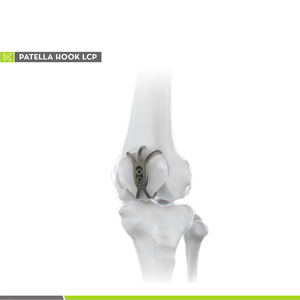
Compliant with ASTM F138, refined 316L stainless steel provides maximum mechanical stiffness and tensile strength, making it ideal for high-load temporary trauma fixation systems such as patella claw plates and external fixators.
PEEK & Porous 3D Titanium
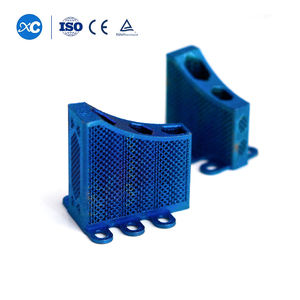
PEEK-OPTIMA polymers provide radiolucency for post-operative imaging, while additive 3D-printed titanium constructs mimic trabecular bone geometry, promoting rapid vascularization and biological bony ingrowth.
Future Procurement Trends in the Orthopedic Wholesale Sector
How leading hospital groups and medical device importers are restructuring their supply chains for 2025 and beyond.
1. Shift Toward Integrated Surgical Ecosystems
Procurement teams are moving away from purchasing isolated implants. Instead, buyers favor turnkey packages where implants, single-use shaver blades, power tools, and ergonomic surgical tray sets are bundled from a single ISO 13485 certified manufacturer to guarantee intraoperative compatibility.
2. Low MOQ & Flexible Mixed-SKU Orders
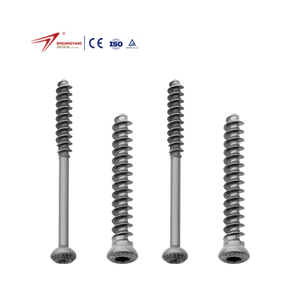
To mitigate cash flow stagnation and excessive warehousing overhead, regional distributors demand flexible Minimum Order Quantities (MOQ). Combining trauma locking plates, cannulated screws, intramedullary nails, and spinal cages within a single consolidated container has become standard practice.
3. Mandatory UDI & Digital Traceability
Global regulatory agencies increasingly require Unique Device Identification (UDI) laser-marked directly on individual bone screws and plates. Traceability from raw bar stock melt lot to cleanroom sterile packaging ensures swift recall management and clinical liability protection.
Key Technological Development Trends in Orthopedic Engineering
Driven by aging global demographics and increased physical activity, orthopedic implant design is advancing along three critical technological vectors:
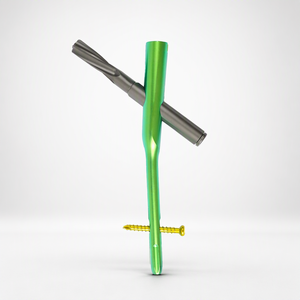
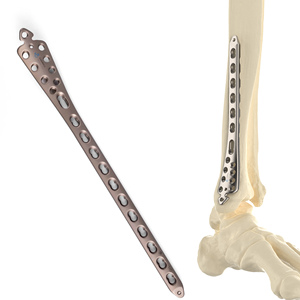
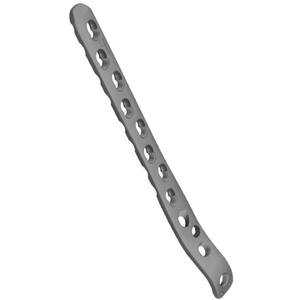
Anatomical Pre-Contouring Implants such as distal medial tibial locking plates and proximal femoral intramedullary nails (PFNA) are digitally optimized using large anatomical CT databases. Pre-contoured profiles minimize intraoperative bending, reducing surgical time and preserving metal fatigue life.
Patient-Specific 3D Printing Additive manufacturing enables customized titanium implants for complex revision arthroplasty, maxillofacial reconstruction, and specialized veterinary surgeries (such as Tibial Tuberosity Advancement - TTA implants). porous lattices encourage rapid cellular attachment.
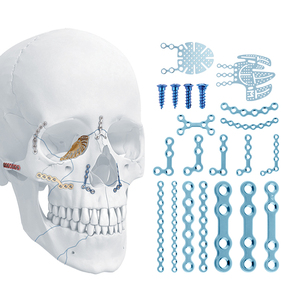
Minimally Invasive Surgery (MIS) Hardware Low-profile screws, self-drilling cannulated systems, and expandable lumbar fusion cages cater to endoscopic and MIS spinal procedures, significantly reducing soft-tissue disruption and accelerating patient recovery times.
Why Top Global Distributors Partner with Ortix Medical
Ortix Medical Devices Co., Ltd. serves as a leading OEM/ODM contract manufacturer and direct exporter for orthopedic implants worldwide. Operating from a state-of-the-art 60,000 m² industrial park equipped with over 450 high-precision CNC multi-axis turning centers, Ortix Medical delivers a reliable production output of approximately 20,000 precision units per day.
Supported by a dedicated R&D engineering team of more than 70 biomedical specialists, our facility holds full ISO 13485 Quality Management Certification and complete U.S. FDA Establishment Registration. We provide global buyers with comprehensive technical dossiers (STED), raw material certification, mechanical fatigue testing reports (ASTM F543/F1717), and full OEM private labeling capabilities.
Strict Quality Control & Validation
Every production batch undergoes 100% optical CMM dimensional inspection, surface roughness verification, and destructive mechanical torque testing prior to cleanroom packaging.
Turnkey OEM & ODM Co-Development
From custom laser marking and modified screw thread pitch to complete custom instrument tray design, our R&D team transforms napkin sketches into regulatory-compliant commercial implants.
Export Document Dossiers
We supply complete technical documentation, Certificate of Free Sale (CFS), ISO 13485 certificates, and detailed IFUs to ensure seamless product registration in target export markets.
Frequently Asked Questions by Orthopedic Buyers & Importers
Essential compliance, operational, and commercial answers for healthcare purchasing managers.
Partner with a World-Class Orthopedic Implant Manufacturer
Elevate your medical product portfolio with ISO 13485 certified trauma, spine, joint, and CMF implants. Connect with our international trade and engineering support team today.
Get Catalog